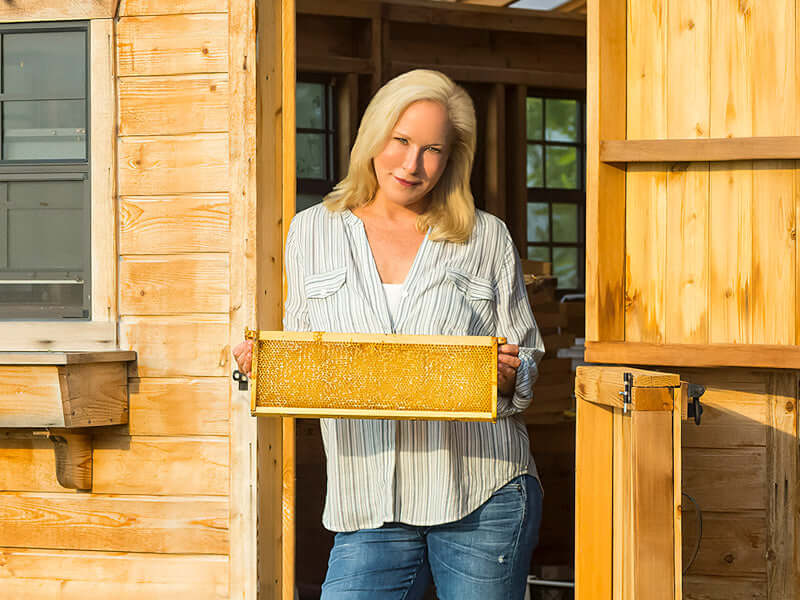


Sourwood honey is a monofloral honey made by bees foraging almost exclusively from the blossoms of the sourwood tree (Oxydendrum arboreum), a tree native to the southern Appalachian Mountains. It is widely considered one of the rarest and most distinctive honeys produced in the United States, and not because of marketing. The reason is geography and timing. Sourwood trees bloom for roughly three weeks each year, they grow only in a narrow band of mountainous terrain from North Georgia through the Appalachian highlands, and the honey they produce tastes unlike anything else in the hive. Our own Sourwood Honey comes from beekeepers working that narrow band.

Where Does Sourwood Honey Come From?
The sourwood tree grows naturally in the mountain forests of the southeastern United States, primarily North Georgia, western North Carolina, and parts of the Blue Ridge. It’s a mid-sized tree with drooping clusters of small white flowers that appear in mid-summer, typically July, depending on elevation and rainfall that year. The bloom window is short: three to four weeks, sometimes less. Beekeepers who work with sourwood time their hives to the bloom with precision. Position them too early and the flowers aren’t open. Too late and the bloom has passed and the bees have moved on to whatever else is flowering. Because the tree’s range is geographically limited and the harvest window is so narrow, sourwood honey is only produced in meaningful quantities in a small number of counties across a handful of Appalachian states. This is why it costs more than wildflower or clover honey. It is not scarcity as a marketing strategy, it is scarcity as a fact of the tree’s biology and habitat.

What Does Sourwood Honey Taste Like?
Sourwood honey has a buttery, smooth sweetness with a burnt-caramel finish. There are subtle spice notes underneath, a faint hint of anise and sometimes clove, that give it a complexity most honeys don’t have. It’s not sharp or aggressively floral the way orange blossom honey can be. It’s not earthy or bold the way buckwheat is. It sits somewhere in between: nuanced and layered, with an aftertaste that lingers pleasantly without overpowering. The color is light to medium amber. The texture is smooth and pourable, and it stays that way. Sourwood is one of the few minimally filtered honey varietals that resists crystallization due to its relatively high fructose content. A jar kept at room temperature will stay liquid for months, sometimes more than a year, without any warming or intervention.

Is Sourwood Honey Really That Rare?
Yes, and the rarity is structural, not manufactured. The sourwood tree doesn’t grow outside the Appalachian region in any meaningful quantity. Within that region, not every area produces equally. Soil, water, forest composition, and year-to-year weather variation all affect how well the trees bloom. A wet July can reduce nectar production. A late spring can shift the bloom window. Beekeepers who specialize in sourwood honey are working against variables they can’t fully control, and even in a good year, the total supply is limited by how many trees are blooming and how many hives are positioned to work them. For the beekeeper, it’s a three-week window that determines whether a year’s investment pays off.

How Is Sourwood Honey Different from Other Honeys?
The most useful comparison is against the other slow-crystallizing varietals. Tupelo honey, sourced from tupelo trees in Florida’s Gulf Coast swamps, is the most famous example of a honey that resists crystallization, and it’s the varietal most often discussed alongside sourwood. Both are monofloral, both are rare, both stay liquid. The flavor profiles are different: tupelo is lighter, milder, and more delicate. Sourwood has more depth and that distinctive caramel-spice finish that makes it immediately recognizable once you’ve tasted it. Compared to common varietals like clover or wildflower, sourwood is more complex and more expensive. The price reflects the harvest difficulty and limited supply, not the cost of production. Most people who try sourwood honey for the first time describe it as the honey that changed their mind about honey. For a full side-by-side on flavor, texture, price, and when to reach for each, see our sourwood honey vs. wildflower honey comparison.

How to Use Sourwood Honey
Because sourwood has a defined flavor, buttery and caramel with a faint spice, it works best in applications where that flavor can come through rather than disappear into other ingredients. Drizzle it over warm cornbread, buttermilk biscuits, or a bowl of yogurt where the heat or creaminess lets the flavor open up. Use it on a cheese board with aged cheddar, a sharp blue, or fresh chèvre. The caramel notes hold their own against strong cheese without being overpowered. Stir it into black coffee or Earl Grey instead of sugar. Brush it onto roasted vegetables or grilled proteins in the last few minutes of cooking, where the natural sugars caramelize on the surface. For baking, substitute it for sugar in scones or quick breads, where it adds moisture and a subtle complexity that sugar can’t replicate. And occasionally, skip all of that and eat it straight from the spoon, which is how most people end up finishing the jar faster than they planned.
If you want to try any of that, our Sourwood Honey is the jar these notes were written from. It pours in January the way it did in August, so there is no warming step between you and the cornbread.

What to Look for When Buying Sourwood Honey
Real sourwood honey is minimally filtered, gently strained to remove large particles but otherwise left as the bees made it. It should list a specific sourcing region (North Georgia, western North Carolina, Appalachian highlands) rather than a vague country-of-origin. It should be single-origin, meaning it comes from sourwood trees and not blended with other varietals. Color-wise, expect light to medium amber. If a sourwood honey is very dark or lists multiple floral sources, it may be adulterated or mislabeled. True sourwood is a monofloral honey and its flavor reflects that. Kosher certification, while not specific to sourwood, is a meaningful quality signal that the production process meets a documented third-party standard.
Ours meets every one of those marks: single-origin sourwood from Appalachian beekeepers, minimally filtered, light amber, Star-K kosher certified. You can see the full sourcing detail on the Sourwood Honey page.

Sourwood Honey FAQs
How do you use sourwood honey?
Sourwood works best where its buttery, caramel character can be tasted rather than buried. Drizzle it over warm cornbread, biscuits, or yogurt. Serve it on a cheese board alongside aged cheddar, blue, or fresh chèvre. Stir it into black coffee or Earl Grey in place of sugar. Brush it onto roasted vegetables or grilled proteins in the last few minutes of cooking so the sugars caramelize. In baking, it substitutes for sugar in scones and quick breads and adds moisture along with the flavor.
Why is sourwood honey so expensive?
The sourwood tree grows only in a narrow band of Appalachian terrain and blooms for about three weeks a year. Beekeepers have to position hives precisely against that window, and a wet July or a late spring can cut the harvest sharply. The supply is limited by the biology of the tree rather than by any decision a producer makes, and the price follows the supply.
Does sourwood honey crystallize?
More slowly than most. Sourwood has a relatively high fructose content, which means a jar kept at room temperature will typically stay liquid and pourable for many months and often longer than a year. Crystallization is normal in any raw honey and does not indicate a problem, but sourwood tends to resist it.
What is the difference between sourwood and tupelo honey?
Both are rare monofloral honeys that resist crystallization, which is why they are so often mentioned together. The difference is flavor. Tupelo is lighter, milder, and more delicate. Sourwood has more depth, with a burnt-caramel finish and a faint anise or clove note underneath. If you want to go deeper on the comparison, our guide to where tupelo honey comes from covers the other half of the story.
How can you tell if sourwood honey is real?
Look for a specific sourcing region rather than a country of origin, a single-origin designation rather than a blend, and a light to medium amber color. Very dark color or a label listing several floral sources is a sign the honey is blended or mislabeled. Third-party certification, such as kosher certification, indicates the production process has been documented and audited.

Keep Reading
- Where Does Tupelo Honey Come From?
- What Is Monofloral Honey?
- Southern Cornbread, the first thing to put it on
Ready to taste it? Shop Sourwood Honey.
FAQs About What Is Sourwood Honey?
How do you use sourwood honey?
Sourwood works best where its buttery, caramel character can be tasted rather than buried. Drizzle it over warm cornbread, biscuits, or yogurt. Serve it on a cheese board alongside aged cheddar, blue, or fresh chevre. Stir it into black coffee or Earl Grey in place of sugar. Brush it onto roasted vegetables or grilled proteins in the last few minutes of cooking so the sugars caramelize. In baking, it substitutes for sugar in scones and quick breads and adds moisture along with the flavor.
Why is sourwood honey so expensive?
The sourwood tree grows only in a narrow band of Appalachian terrain and blooms for about three weeks a year. Beekeepers have to position hives precisely against that window, and a wet July or a late spring can cut the harvest sharply. The supply is limited by the biology of the tree rather than by any decision a producer makes, and the price follows the supply.
Does sourwood honey crystallize?
More slowly than most. Sourwood has a relatively high fructose content, which means a jar kept at room temperature will typically stay liquid and pourable for many months and often longer than a year. Crystallization is normal in any raw honey and does not indicate a problem, but sourwood tends to resist it.
What is the difference between sourwood and tupelo honey?
Both are rare monofloral honeys that resist crystallization, which is why they are so often mentioned together. The difference is flavor. Tupelo is lighter, milder, and more delicate. Sourwood has more depth, with a burnt-caramel finish and a faint anise or clove note underneath.
How can you tell if sourwood honey is real?
Look for a specific sourcing region rather than a country of origin, a single-origin designation rather than a blend, and a light to medium amber color. Very dark color or a label listing several floral sources is a sign the honey is blended or mislabeled. Third-party certification, such as kosher certification, indicates the production process has been documented and audited.