

Growing a good beard takes more than patience. Left alone, facial hair tends to grow coarse, the skin underneath gets dry and itchy, and the whole thing starts to look a little wild. A quality beard oil is what closes that gap, softening the hair and conditioning the skin underneath so your beard looks deliberate instead of accidental. Commercial beard oils usually run $15 to $25 a bottle. A homemade version costs a couple of dollars per batch and lets you dial in the scent and the oils to your own skin.

If you’d rather skip the mixing, our Sea+Tea Body Oil doubles as a hair, body, and beard oil, no recipe required. But there’s a real satisfaction in blending your own, and it’s genuinely easy. Here’s how.
What a Good Beard Oil Actually Does
The recipe is simple at its core: a carrier oil (the base that makes up most of the bottle) plus a few drops of essential oil for scent. That combination does a handful of useful things:
- Softens coarse, wiry beard hair so it’s easier to comb and style
- Adds moisture to the skin hiding underneath the beard
- Helps cut down on the itch and flaking some people call “beardruff”
- Leaves a light, natural scent instead of a synthetic one
- Makes the whole beard more manageable day to day
Why Make Your Own?
It’s Cheaper
Store-bought beard oils typically cost $10 to $20 for one or two ounces. Blend your own and you’re looking at $2 to $3 for the same amount, with carrier oil left over for several more batches. It’s the same logic behind making things at home generally: less packaging, more control, and you know exactly what you’re putting on your face. It fits naturally with our Living Seasonally philosophy.
You Control the Blend
You pick the carrier oil to suit your skin and the essential oils to suit your nose. Lighter base for oily skin, richer base for dry skin, woodsy scent or citrus, scented or completely plain. It’s the same idea behind single-origin honey, where each Eastern Shore honey varietal takes on the character of the flowers the bees worked. Small changes in the inputs, big changes in the result.
No Water Means No Preservatives
This blend is anhydrous, meaning water-free. Without water there’s nothing for bacteria to grow in, so you don’t need preservatives to keep it shelf-stable. The oils will slowly oxidize over time, though, so plan to use a batch within six months.
Choosing Your Carrier Oil
The carrier oil is most of what’s in the bottle, so this is the choice that matters most. Pick one, or blend two. Here are the most popular options and who each one suits.
Jojoba Oil: the All-Rounder
Our top pick for most people. Jojoba is technically a liquid wax, and its structure is close to the skin’s own oils, so it sinks in fast without leaving a greasy film. It works for nearly every skin type, including oily and breakout-prone skin, and it keeps well for two years or more.
Sweet Almond Oil: the Budget Pick
Light, smooth, and easy to find. Sweet almond oil has a mild scent of its own and plays nicely with sensitive skin, which makes it a friendly starting point if you’re new to this.
Avocado Oil: the Rich One
Heavier and more substantial, with naturally occurring vitamin E. A good choice for dry skin or for winter, when the air pulls moisture out of everything.
Sunflower Oil: the Featherweight
Very light, high in vitamin E, and a solid match for oilier skin that doesn’t want anything heavy sitting on it. Shelf life runs around two years.
A couple of others worth knowing: coconut oil is deeply moisturizing but solid at room temperature and can feel heavy on oily skin, and argan oil is lightweight and rich in vitamin E if you want to splurge.
Add Essential Oils for Scent (Optional)
Essential oils are where the personality comes in. They’re concentrated, so a little goes a long way: 3 to 8 drops per ounce of carrier oil is the usual range. Popular choices include lavender (soft and calming), cedarwood (woody), sandalwood (warm), orange or lemon (bright and fresh, though some citrus oils make skin more sun-sensitive), peppermint (cooling, use sparingly), tea tree (clean and sharp), and eucalyptus (fresh and green).
One safety note: essential oils are potent. Always dilute them in a carrier oil, never apply them neat, and do a patch test on a small patch of skin before you commit. If your skin is sensitive or you just prefer no fragrance, leave them out entirely. The oil works fine plain.
The Basic Beard Oil Recipe
Here’s the simplest version to start with. The full measurements, steps, and a short video are in the recipe card below.
- 1 ounce (2 tablespoons) of your chosen carrier oil
- 3 to 8 drops of essential oil for scent (optional)
- One 1-ounce amber glass dropper bottle
Pour the carrier oil into a clean, dry amber bottle (amber glass shields the oils from light). For a first batch, pure jojoba or a 50/50 jojoba and sweet almond blend is hard to beat. Add your essential oils a few drops at a time, starting low, since you can always add more but can’t take it back out. Cap it, shake gently, and store it somewhere cool and dark.


How to Apply Beard Oil
A little technique goes a long way here:
- Start clean and slightly damp. Right after a shower is ideal, when the beard is washed and still a touch damp. The oil spreads and absorbs better.
- Use less than you think. Three to five drops in your palm for most beards, a bit more for longer ones.
- Warm it first. Rub it between your palms for a second to warm and spread the oil.
- Work it all the way in. Massage from the roots out to the tips, and don’t forget the skin underneath, which is the part that gets itchy.
- Comb to finish. A beard comb or brush distributes the oil evenly and helps with shape.
Most people apply once a day after showering, with the occasional touch-up. A little before bed works well for overnight conditioning too.
Beard Care Beyond the Oil
Oil is one piece of the routine. The rest is straightforward: wash with a gentle cleanser made for facial hair, trim to keep your shape, and brush regularly to train the hair and spread the oil. Light exfoliation of the skin underneath helps too. Our guide to dry brushing walks through how to clear away dead skin so your oil has a cleaner surface to work with.
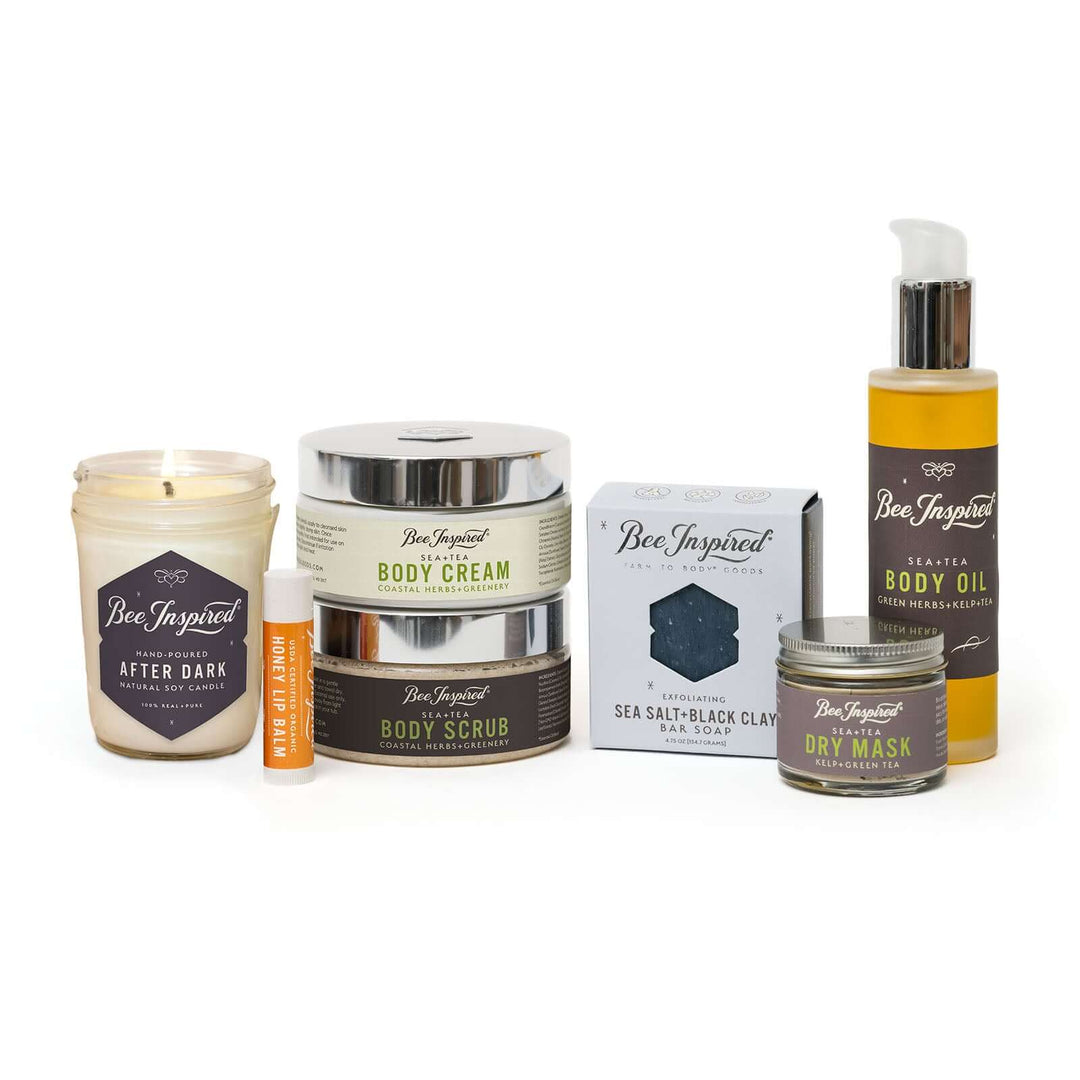
When you’re cleaning up your neckline or cheek lines, a good shave soap makes a difference. Our Sea Salt+Black Clay Bar Soap gives you slip for a clean line without the harsh, drying lather of a lot of commercial soaps. And if you’re curious how honey fits into a guy’s routine more broadly, our roundup of the benefits of honey for men covers grooming, fuel, and more.
Matching the Blend to Your Skin
Oily or breakout-prone: lead with jojoba, skip coconut oil, and a drop or two of tea tree can help.
Dry: reach for avocado or sweet almond, consider a drop of vitamin E oil, and lavender or sandalwood are nice here.
Sensitive: stick to gentle carriers like jojoba or sweet almond, keep essential oils minimal (lavender if any), and always patch test before the first full application.
Adjusting Through the Year
Beekeepers change how they work the hive with the seasons, and your beard routine can shift the same way. In summer’s heat and humidity, lighter oils like jojoba or sunflower feel best. In winter, a richer oil like avocado, or a touch of coconut oil, gives more protection against cold, dry air. Spring and fall are good times to experiment with new blends. Jojoba, for what it’s worth, holds up year-round.
Storage and Shelf Life
Keep your oil in amber glass, somewhere cool and dark, and out of the bathroom cabinet where shower steam and temperature swings can speed up oxidation. Keep the cap on tight. Most blends stay good for six months to a year. Trust your nose: a rancid or sour smell, a color shift, or visible separation means it’s time to mix a fresh batch. The expiration date on your carrier oil is a good outer limit to work from.
A Few Blends to Try
Once you’re comfortable with the basic recipe, these are fun starting points:
Woodsman: 1 oz jojoba oil, 3 drops cedarwood, 2 drops sandalwood.
Fresh Morning: 1 oz sweet almond oil, 4 drops lavender, 2 drops lemon (go easy on sun exposure afterward).
Outdoorsman: 1 oz avocado oil, 3 drops eucalyptus, 2 drops peppermint, 1 drop tea tree.
Troubleshooting
Feels greasy? Use less (start with 2 to 3 drops), switch to a lighter carrier like jojoba, and apply to damp rather than dry skin.
Scent too strong or too faint? Start at 3 drops of essential oil and adjust. Remember scents can intensify as the oil sits, and some oils are simply stronger than others.
Any irritation? Stop using it, drop the essential oils, switch to a gentler carrier, and patch test before trying again.
Ready-Made Options
If you’d rather buy than blend, a few of our oils work beautifully on a beard:
- Sea+Tea Body Oil, a multi-purpose oil for hair, body, and beard.
- Rose+Lavender Facial Oil, a lightweight option if you prefer a softer, floral scent.
- Original Honey Body Scrub, for exfoliating the skin beneath the beard before you oil.
- Plastic-Free Honey Lip Balm, to round out your grooming kit.
Find Your Blend
Making your own beard oil is cheap, quick, and endlessly customizable. Start with the basic jojoba recipe, then play with carrier oils and scents until you land on something that feels like yours. Consistency is what does the real work: regular use keeps the hair soft and the skin underneath comfortable. Whether you mix your own or grab a bottle of our Sea+Tea Body Oil, the point is a routine you’ll actually keep up.
Share your blends with us on Instagram with #beeinspired, and browse the rest of our blog for more natural living ideas, from honey recipes to seasonal projects.

FAQs About DIY Beard Oil
Can I use cooking oils like olive oil for beard oil?
You can, but cosmetic-grade oils are refined specifically for skin, so they tend to absorb better and last longer. If olive oil is what you have, it will work in a pinch.
How long does homemade beard oil last?
Stored properly in amber glass away from heat and light, about six months to a year. Use the expiration date on your carrier oil as your outer guideline, and replace the batch if it smells off.
Can I make a larger batch of beard oil?
Yes, just scale the recipe up proportionally. Larger batches are more economical, but mix only what you’ll use within a few months so it doesn’t oxidize before you finish it.
Is homemade beard oil safe for sensitive skin?
It can be. Stick to gentle carrier oils like jojoba or sweet almond, skip the essential oils if you have known sensitivities, and always patch test a small area before applying it to your whole beard.
Can I add vitamin E oil to my beard oil?
Yes. One to two drops per ounce helps slow the oils from oxidizing so a batch keeps longer, and it adds a bit of extra conditioning feel for the skin.