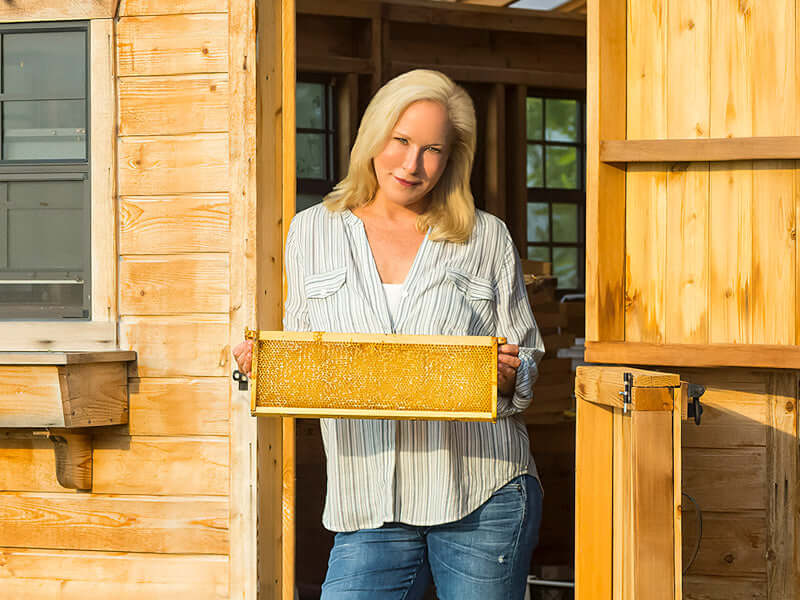


When our colonies are thriving and the bees are healthy, we like to expand the bee yard the hands-on way: by starting new hives ourselves. There are a few ways to grow your number of hives, and for new beekeepers the first real decision is usually this one. Do you start with package bees that arrive in a screened box, or with a nucleus colony, the small working hive that beekeepers call a “nuc”? Both can become a strong hive. They simply get there along very different paths.

This post walks through what each option actually is, the honest pros and cons of both, and a step-by-step look at how we install a nuc here on the farm. If you are weighing your first hive (or your fifth), this is the comparison we wish someone had laid out for us when we started in 2015.

What Are Package Bees?
A package of bees is exactly what it sounds like: a screened box of loose bees with a separately caged queen, shipped or picked up so you can install them into fresh equipment. In those early days, I learned you order from a reputable bee grower and the bees arrive in the mail, which prompted a flurry of nervous questions. What if they escape the box? What if they do not survive the trip? The best question I asked was whether a local beekeeping group could show me how it is done. That is exactly what we did. A group of us hobbyist beekeepers pitched in, someone made the long drive to the supplier, and came back with boxes of bees for each of us.

Here is what a typical package contains:
- About 3 pounds of bees, which works out to roughly 10,000 worker bees gathered from several different colonies
- One caged queen the workers have not yet accepted as their own, introduced slowly so they bond with her
- A can of sugar syrup inside the box to feed the bees during transit
- No comb, brood, or established colony structure, so the bees start building from nothing in your equipment
Because those bees come from many sources, they are not a single related family, and they go through real stress during packaging and travel. It takes time for a package to settle into its roles, accept the queen, draw fresh comb, and become productive. The upside is that packages are usually cheaper, available earlier in spring, and easy to ship long distances, which makes them the most common starting point for brand-new beekeepers.
What Is a Nucleus Colony (a “Nuc”)?
A nucleus colony, or “nuc” (pronounced “nuke”), is a small but fully functioning hive made from a larger one. The name points to the heart of the thing: a nuc is built around a laying queen, the nucleus of the colony, with everything the bees need to keep growing already in place. A typical nuc is a five-frame box containing a mated, laying queen, frames of drawn comb, brood in all stages (eggs, larvae, and capped pupae), and stored honey and pollen, plus the worker bees to care for it all.
We make our own nucs from our healthiest, most overcrowded hives. Once the weather is reliably warm and the queen is laying steadily, we take frames of capped brood from a strong hive and use them to start a new one. Then we introduce a new mated queen as part of making the “split.” In effect, you are handing the bees a colony that is already in motion rather than asking them to build one from scratch.
Because a nuc arrives with comb and brood already present, it tends to expand quickly into a full hive. One trade-off worth knowing: nucs are usually a little more expensive than packages, they often are not available until May (which can mean missing the earliest spring nectar flow), and since they include frames of fragile comb, they cannot be mailed. They have to be picked up or delivered locally.
Package Bees vs. Nucs: How to Choose
There is no single right answer here. The best choice depends on your budget, your timing, and how much hand-holding you want for your first season. Here is how the two stack up side by side.
| Consideration | Package Bees | Nucleus Colony (Nuc) |
|---|---|---|
| What you get | ~3 lbs loose bees, caged queen, syrup can | 5-frame mini hive: laying queen, brood, comb, food, workers |
| Cost | Lower | Higher, often close to double |
| Availability | Earlier in spring | Often not until May |
| Shipping | Can be mailed long distances | Local pickup or delivery only |
| Speed of growth | Slower; bees build from nothing | Faster; brood and comb already present |
| Queen status | New queen, not yet accepted | Queen already laying and accepted |
| Best for | Lower upfront cost, wider availability | A faster, steadier start |
Why We Like Starting With Nucs
No matter how gently bees are handled, a package goes through stress before it ever becomes a settled colony, and sometimes that packaging process sets the bees back. Working with nucs over the years, here is what we have consistently noticed:
- A strong start, with an established queen and workers already functioning as a unit
- Faster colony development, thanks to brood already present and hatching
- A steady laying cycle, since the queen is mated and laying from day one
- Easier installation, because you are simply moving frames rather than coaxing loose bees into place
When I added two hives to our yard, I pulled frames of brood from our lively, healthy colonies, set them into new hive boxes with empty frames alongside to give the bees room to grow, and introduced a freshly purchased queen to each. The brood on those nuc frames hatches and the colony builds from there. The “hive mentality” takes hold from the very beginning in a home-like environment. Give a colony the right conditions, time, and space, and it will thrive. As a general rule, nuc colonies grow faster than package colonies.
How to Install a Nuc, Step by Step
Installing a nuc is one of the more satisfying jobs in beekeeping because you are essentially transplanting a small, living hive into its forever home. A nuc can be a little more defensive than a package since the bees have brood and food to protect, so take your time and stay calm. Here is the process we follow.
- Set up the receiving hive first. Place your bottom board and a deep brood box on a level, permanent stand where you want the hive to live. Fill it with frames, then remove the center frames to leave an open gap the same width as your nuc frames.
- Position the nuc beside the hive. Set the nuc box right next to the open hive with its entrance facing the same direction, so returning foragers find their way home.
- Gear up and light your smoker. Put on your veil and protective gear. Unlike a docile package, a nuc benefits from a little cool smoke, so puff a small amount near the nuc entrance to calm the bees and ease the alarm response.
- Open the nuc and lift the first frame. Starting from an outer frame, gently remove one frame at a time. Glance at each frame as you go to spot the queen or signs she is laying, but do not linger so long that you stress the colony.
- Transfer frames in the same order. Place each nuc frame into the center gap of the new hive, keeping them in the exact order and orientation they came in. The bees built their brood nest a certain way, and keeping it intact reduces stress.
- Coax out the stragglers. Once all frames are moved, tap or gently shake any remaining bees from the nuc box into the hive. Set the empty nuc box beside the hive for a while so the last few bees can find their own way in.
- Close the gaps with empty frames. Fill the outer edges of the brood box with your remaining frames, ideally drawn comb, giving the bees room to expand. Maintaining proper spacing between frames keeps comb building tidy.
- Add a feeder and close up. Unless there is a strong nectar flow, set up a feeder so the colony has fuel to draw new comb. Put your inner cover and lid on, and let the bees settle.
- Check back in a few days. Return after several days to confirm the queen is present and laying eggs. If a colony ever turns up queenless, most nuc suppliers will help you source a replacement queen.
From there, the colony does what colonies do. The brood hatches, the workers draw comb and forage, and your nuc grows into a full, productive hive over the season.
A Few Tips for Nuc Success
Beyond the install itself, a couple of habits go a long way. Keep feeding a new colony until it has drawn out plenty of comb and built up its stores, since drawing wax takes a lot of energy. Give the bees room before they feel crowded; running out of space is one of the most common reasons a colony decides to split off and swarm on its own. And stay in regular, gentle contact with the hive so you can spot what the bees need before small issues become big ones. Healthy forage matters too, which is why we have dedicated much of our farm to growing good bee food.
All that work in the bee yard is what eventually fills the jars on our shelves, from everyday favorites to rare finds like our Tupelo Honey, harvested in Florida. You can explore the full range in our Eastern Shore Honey collection.
FAQs About Starting a Beehive With a Nuc
What is a nucleus colony in beekeeping?
A nucleus colony, or “nuc,” is a small but complete honey bee hive, usually built on five frames. It contains a mated, laying queen, frames of drawn comb, brood in all stages, stored honey and pollen, and the worker bees to care for it all. Because the colony is already functioning, it can be transferred into a full-size hive and continue growing right away.
What is the difference between package bees and a nuc?
Package bees come as roughly 3 pounds of loose bees with a separately caged queen and no comb or brood, so the colony builds itself from scratch. A nuc is an established mini hive with a queen already laying, plus comb, brood, and food. Packages are cheaper and easier to ship, while nucs cost more but tend to grow into strong hives faster.
Is a nuc better than a package for beginners?
Many beekeepers find a nuc easier for a first hive because the queen is already accepted and laying, the brood is hatching, and installation is mostly a matter of moving frames. Packages are still a fine choice, especially when budget or earlier availability matters most. Both can become healthy hives with good care.
How long does it take to install a nuc?
The hands-on installation is usually quick, often around fifteen to twenty minutes once your receiving hive is set up. The key is to work calmly, keep the frames in their original order, and make sure the queen makes it safely into the new hive.
When can you buy a nuc?
Nucs are commonly available starting in May, somewhat later in the season than packages. Because they contain frames of fragile comb, they cannot be shipped through the mail and are picked up locally or delivered by the supplier, so it helps to reserve one early with a nearby beekeeper.
Do you need to feed bees after installing a nuc?
Feeding a newly installed nuc is a good idea unless there is a strong natural nectar flow. A feeder gives the colony the energy it needs to draw out new comb and build up stores. Keep feeding until the bees have filled out several boxes of comb, then taper off as the colony becomes self-sufficient.
Caring for this land and these communities is at the core of who we are. It’s why we created Roots & Wings, our giving initiative that connects every purchase to something that matters. See how we give back.