

Most people come to honeybush the same way I did — through rooibos. You've had rooibos, you like it well enough, and then someone hands you a cup of something that tastes like rooibos's smoother, sweeter sibling and you realize you've been settling. That's honeybush. Same part of the world, same caffeine-free profile, entirely different plant — and once you taste it, the comparison mostly stops mattering.

Where Honeybush Comes From
Honeybush — botanical name Cyclopia — is a shrub native exclusively to the fynbos biome of South Africa's Western Cape. The fynbos is one of the most botanically diverse regions on the planet, a stretch of coastal and mountain scrubland that supports thousands of plant species found nowhere else on earth. Honeybush is one of them. It doesn't grow in China, India, Japan, or anywhere else tea is typically grown. If it's real honeybush, it came from South Africa.
There are around 23 recognized Cyclopia species, but the two most commonly harvested for tea are Cyclopia intermedia — a mountain-growing variety — and Cyclopia subternata, which grows at lower elevations near the coast. Both produce the same characteristic sweetness. The plant grows wild across the Cape mountains and is also cultivated on farms in the Overberg and Langeberg regions, where the fynbos terrain and Mediterranean-style climate give it exactly what it needs.

Why It's Called Honeybush
The name comes from the flowers, not the tea. When honeybush blooms — bright yellow clusters that appear in late winter and spring — the entire plant fills the air with a warm, honey-like fragrance. Anyone walking through a hillside of flowering honeybush in August would understand the name immediately. The scent is distinctive enough that South African beekeepers have long recognized it, and honeybees are drawn to the flowers as a nectar source during a season when other fynbos plants aren't producing as heavily.
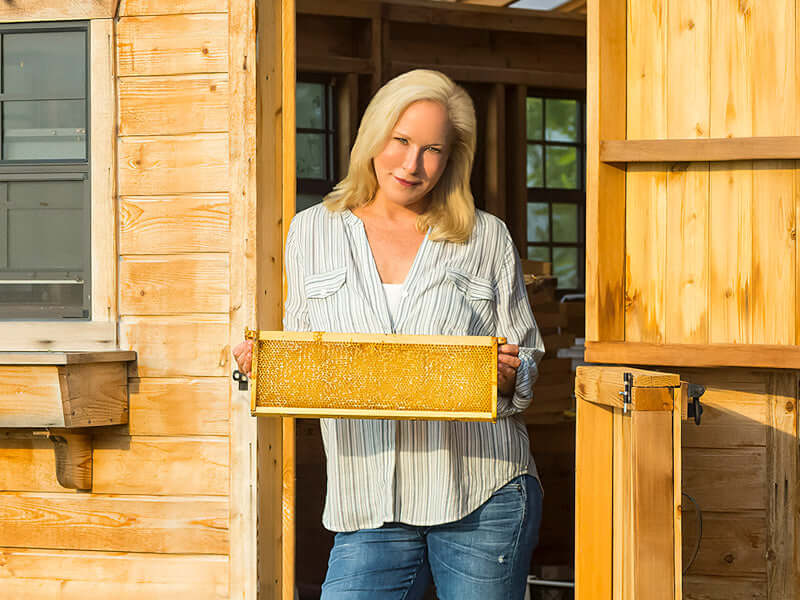
That relationship between honeybush and bees is part of what drew me to it. At Chesterhaven Beach Farm, we think about what bees are drawn to — what plants reward them and what plants reward us in return. Honeybush sits squarely in that overlap. The plant produces flowers that bees want. Bees help the plant reproduce. And the same plant produces leaves that, when dried and steeped, taste genuinely sweet without a single grain of added sugar. That loop made sense to me in a way that felt right for Bee Inspired.

How the Plant Grows and Is Harvested
Honeybush is a woody, evergreen shrub that typically reaches about a meter in height, though mountain varieties can grow taller in the right conditions. It thrives in the rocky, acidic soils of the Cape fynbos, where few other crops would survive. The plant is largely self-sufficient in its native habitat — it fixes its own nitrogen, tolerates drought, and requires no pesticides to produce in the wild.
Harvesting involves cutting the green stems and leaves, then fermenting them through a natural oxidation process — similar to how rooibos is processed — before drying. This fermentation step is what develops the characteristic amber color and deepens the flavor. Green (unfermented) honeybush also exists and produces a lighter, grassier cup, but the fermented version is what most people know and what we carry in Bee's Knees.
Because honeybush grows only in specific ecosystems and harvesting wild plants at scale creates sustainability concerns, most commercial honeybush today comes from cultivated farms in the Western Cape. We source through a trusted importer who works with those farms directly.

What Honeybush Tastes Like
Here's what I can tell you from actually drinking it: it's not acidic the way rooibos can be. There's a nuttiness to it — toasted, warm — and the finish is genuinely smooth. Not flat, not watery, just smooth. The sweetness is upfront but not cloying. It tastes like caramel and a hint of molasses, and because it's low in tannins, it doesn't go bitter if you steep it too long or forget about it on the counter.
The other thing worth knowing: honeybush is excellent with honey. Hot or iced, a small drizzle of honey — particularly something floral, like orange blossom or spring wildflower — deepens the already-sweet character of the tea in a way that feels entirely natural. The name honeybush is doing real work there.
What Honeybush Smells Like
Dry, the leaves have a subtle, warm fragrance — faintly sweet, a little woody. When you pour hot water over them, the cup opens up considerably: honey notes, caramel, something faintly floral. It smells like what it tastes like, which isn't always the case with herbal teas. There are no sharp or medicinal notes. Nothing that would make someone hesitant to pick up the mug.
Honeybush vs. Rooibos
They come from the same region and share the same caffeine-free, naturally sweet profile, but they're different plants with different flavor characters. Rooibos (Aspalathus linearis) has more earthiness and a slightly woody, sometimes slightly acidic edge — depending on the batch. Honeybush is smoother, sweeter, and less tannic. People who find rooibos slightly too astringent often prefer honeybush. People who want more body and depth sometimes land the other direction. They're worth having both.

Honeybush and Caffeine
Honeybush is naturally caffeine-free. This isn't a processing choice — the Cyclopia plant simply doesn't produce caffeine. It can be brewed in the morning, mid-afternoon, or late at night without affecting sleep. For people reducing their caffeine intake or looking for a warm drink they can have freely throughout the day, this is a meaningful characteristic rather than a marketing point.
Bee's Knees Honeybush Tea from Bee Inspired Goods
Most honeybush teas on the market are bagged, blended with other herbs or flavorings, or both. Bee's Knees is neither. It's a single ingredient — pure Cyclopia intermedia leaves from South Africa's Western Cape — packaged loose leaf in a recyclable glass jar. Nothing added, nothing blended in, no tea bag to muddy the flavor. What you're tasting is exactly what the plant produces.
Loose leaf matters here because honeybush leaves are coarser than fine-cut tea bag material. When you give them room to steep fully in an infuser or strainer, you get a cleaner, more complete extraction of the natural sweetness and those caramel-molasses notes. A crushed, dust-grade honeybush in a bag can taste flat by comparison. The difference is noticeable.
What's in It
One ingredient: honeybush tea leaves. That's the whole list. No added flavoring, no blends, no sweeteners, no fillers. Each 2.5oz jar yields approximately 20 servings.
What Honeybush Contains
Honeybush naturally contains polyphenols and antioxidants — plant compounds present in the Cyclopia plant itself. It also contains no caffeine and is low in tannins, which is why it doesn't produce the astringent, drying sensation some teas leave behind. It's gluten-free, though not all of our ingredients come from gluten-free certified suppliers.
How to Brew It
Heat water to 206°F — just below boiling. Use 1 teaspoon of loose leaves per 8oz of water and steep for 5–7 minutes. Strain and drink plain to taste the full natural sweetness, or add a drizzle of honey. A small pour of oat milk or dairy turns it into a simple latte — see our full honeybush tea latte recipe for the method. For iced tea, brew double strength (2 teaspoons per 8oz), let it cool completely, and pour over ice — an orange slice works well alongside it. Strong-brewed and chilled, it also pairs well with bourbon as a cocktail base, where the caramel and molasses notes hold their own against dark spirits.
One note on honey pairings: honeybush takes particularly well to floral varietals. Orange blossom honey brings out the delicate sweetness in the cup without competing with it. A light spring wildflower does the same. The name honeybush isn't an accident — the two belong together. For a warm-weather take, our honey ginger iced tea shows how Bee's Knees performs cold just as beautifully as it does hot.


FAQs About What Is Honeybush Tea?
What is honeybush tea good for?
Honeybush makes a genuinely good cup of tea — that's the honest answer. It's naturally caffeine-free, which makes it a practical choice at any time of day. It's low in tannins, so it doesn't go bitter. It tastes sweet without added sugar, which means it's useful as a base for iced teas, lattes, and cocktail mixers without needing to sweeten it. Beyond that, it's a single-ingredient, nothing-added tea from a plant that has been harvested in South Africa for generations.
What does honeybush tea taste like?
Caramel and molasses, with a hint of toasted nuttiness and a smooth, clean finish. Less earthy than rooibos, not acidic, and genuinely sweet without anything added. Most people who try it for the first time comment on how approachable it is — there's no bitterness to push through.
How much caffeine is in honeybush tea?
None. Honeybush is naturally caffeine-free at the plant level — it's not decaffeinated, it simply doesn't contain caffeine. It's safe to drink at any time of day.
Is honeybush the same as rooibos?
No — they're different plants from the same region of South Africa. Both are naturally caffeine-free and both produce a reddish-amber brew, but honeybush is sweeter and smoother, while rooibos has more earthiness and slightly more tannin. Many tea drinkers who've tried rooibos but found it too earthy prefer honeybush.