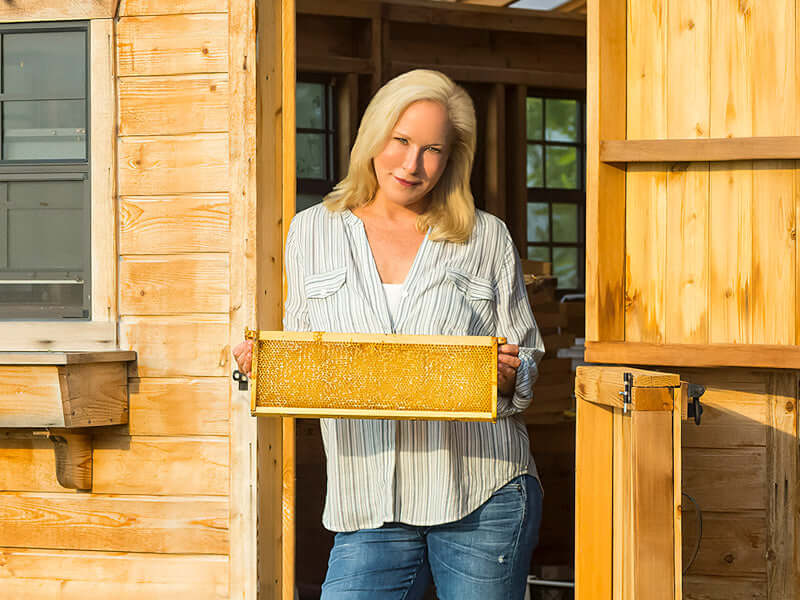


The day I drove out to the farm, the thermometer was pushing past 100 degrees. It had been a little while since my last hive check, so I wasn’t sure what I’d find. What I found stopped me in my tracks: both hives were so thick with bees that the boxes practically disappeared underneath them. For a second it looked like something out of an old creature movie, a living blanket of bees draped over the woodenware.
My first thought was, of course, the worst one. Were they about to leave?
I had picked up a little about swarming on an earlier visit with Dale, our beekeeper, so I did the sensible thing instead of panicking. I snapped a photo, texted him, and called to talk it through. He looked at the picture and reassured me right away: this was normal. He suspected the hives had simply gotten crowded, and when he came out a few days later, he confirmed it. The colonies were unusually far along, roughly four months ahead of where he’d expect, which says a lot coming from someone with more than forty years of experience reading hives.
Why a Crowded First-Year Hive Needs More Room
Here is the thing I learned that day: a young colony will pack a hive faster than you think. When the boxes fill up and the bees run out of space to store nectar and raise brood, they start looking for somewhere roomier to live. Giving them more room before they reach that point is one of the simplest ways to keep a strong colony settled and working at home rather than packing its bags. If you want the full picture of why colonies leave and how that natural cycle works, we cover it in our guide on why bees swarm.
First-year colonies don’t usually leave home, but that’s no reason to get complacent. The job is to stay a step ahead of them and make sure there’s always somewhere for the colony to expand as it multiplies. Thirty-two days after we installed these hives, we were looking at roughly 35,000 bees in each one. The brood boxes had gotten genuinely heavy, the kind of heavy where you brace your back before you lift. We were about four weeks out from our very first honey harvest, with a hopeful estimate of more than 100 pounds of honey per hive.
What We Did on the Day 32 Hive Inspection
So the plan for the visit was straightforward: give the bees more space and take stock of where things stood. Here is what we worked through together:
- Inspected the frames to see how honey storage was coming along
- Added a second super to both hives so the colonies had room to keep building
- Removed the wooden excluder at the entrance to ease traffic in and out
- Talked bees with Joyce Wallace, a friend who’s thinking about keeping hives of her own one day
- Mapped out the timing for our first honey harvest, somewhere in the next two to four weeks
Adding that second super is the small, unglamorous move that makes all the difference. It gives a fast-growing colony a place to put everything it’s gathering, which keeps the bees focused on filling frames instead of feeling boxed in. For a first-year hive running ahead of schedule, that bit of extra headroom is exactly what they needed.
If a hot, busy day in a Maryland bee yard makes you want a taste of what all that work produces, you can find our small-batch Eastern Shore Honey harvested right here on Chesterhaven Beach Farm.
Caring for this land and these communities is at the core of who we are. It’s why we created Roots & Wings, our giving initiative that connects every purchase to something that matters. See how we give back.
FAQs About Visiting the Hives on Day 32
What does adding a super to a beehive do?
Adding a super gives the colony extra boxes to store nectar and build comb above the brood nest. When a hive fills up, the bees can feel crowded and start looking for a roomier home, so adding a super at the right time gives a growing colony space to keep working and expanding where it already lives.
When should you add a second super to a new hive?
A common guideline is to add the next box once the frames below are roughly 75 to 80 percent drawn out and busy with bees. On our farm, the colonies filled up unusually fast in their first season, so we added a second super just over a month in to stay ahead of how quickly they were growing.
Do first-year bee colonies usually leave the hive?
First-year colonies are far less likely to leave than established ones, since they are still building comb and growing their numbers. Even so, a new hive can fill up quickly in a good season, so it is worth checking regularly and giving the bees more room before they run out of space.
How many bees are in a healthy first-year hive?
Colony size varies with the season and conditions, but a strong, fast-growing first-year hive can reach tens of thousands of bees within a couple of months. Ours held roughly 35,000 bees per hive about a month after installation, which is part of why the brood boxes had gotten so heavy to lift.