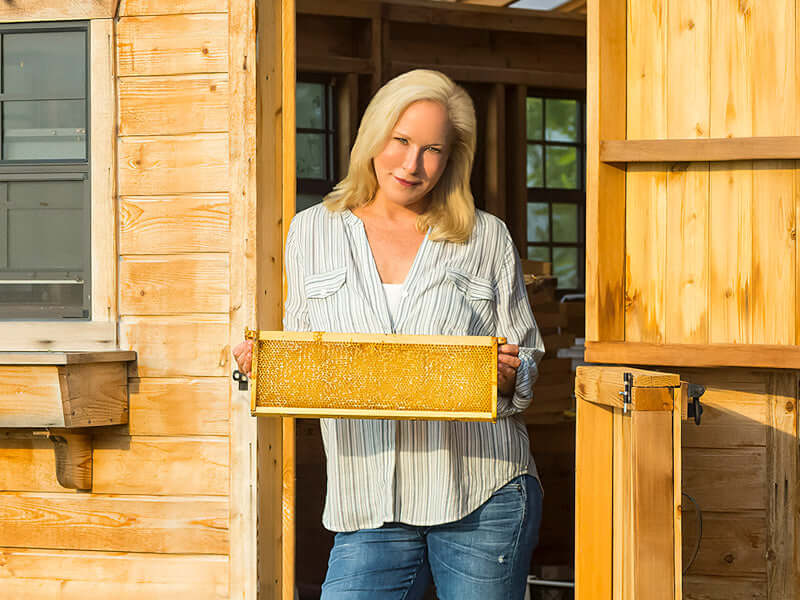


There is a particular kind of nervous excitement that comes with installing your first handful of packages of bees. You have read the books, you have watched the videos, and then one cool spring morning the boxes actually arrive and it is all very real. This is the story of one of those mornings on our Eastern Shore farm, written when I was still very much a “new-bee,” along with the timeline and notes I wish someone had handed me sooner.
Preparing for the bees took a small army. From early seeding to ordering plugs and non-GMO seeds, to lining up farmers and crews for clean-up, to setting a couple more pads for new hives, the work started months before a single bee showed up.

Jeff Wolinski preparing for the bees on our farm with wildflower seed

Jeff Wolinski sharing the “showy mix” seed
Step one happens in January, not April
The single biggest thing I learned is that a good install starts months early. If you wait until spring to think about bees, you are already behind. Here is the timeline that worked for us:
- Package bees were ordered back in January. As a rule, all bee orders should be placed by the end of January.
- I purchase my hives rather than hand-make them, and I ordered those in January too. If you want to dig into hardware, parts, and costs, I walk through all of that in our guide on starting a new hive.
- All pads and prep work for the new hives were finished about a week ahead, so that when the bees arrived our only job was installing them.
- Farming and seed conversations also began in January and simply kept going.
- The first round of wildflower seed went out at the end of March.

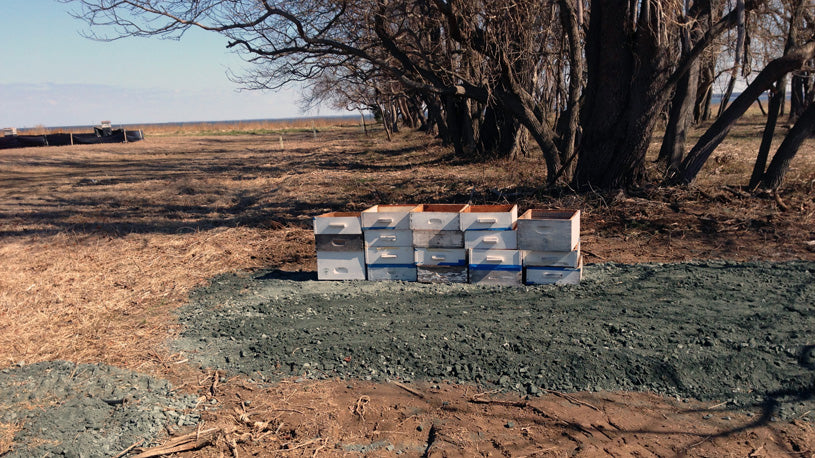
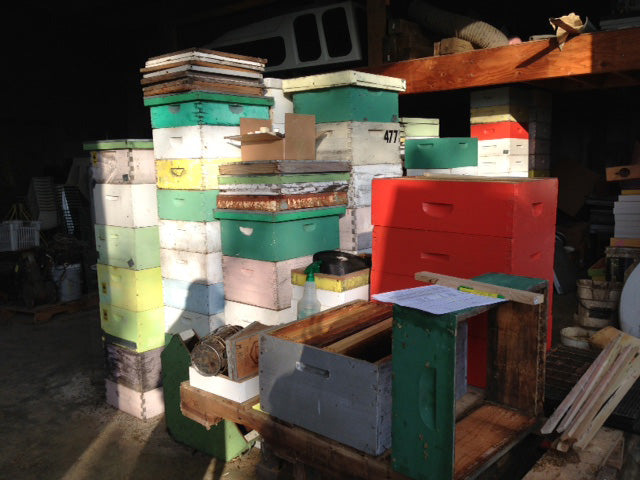
Supers waiting for the bees
Where good package bees come from
This year I ordered my package bees from Michael Embry at the University of Maryland Wye Research and Education Center, where he teaches the beekeeping 101 class here on Maryland’s Eastern Shore. Buying from someone that knowledgeable, who also works with so many local beekeepers, made a real difference for a beginner.
He drove twenty-four hours straight down to Georgia and back to pick up the bees, and had us all lined up to collect ours the moment he returned. The bees were fresh, and even though it had been cool, the very next day climbed close to eighty degrees. I was hoping the girls already felt welcome and settled in their new home. If you are weighing where to source from, one of my five beekeeping tips is to buy from a reputable grower rather than a factory operation.
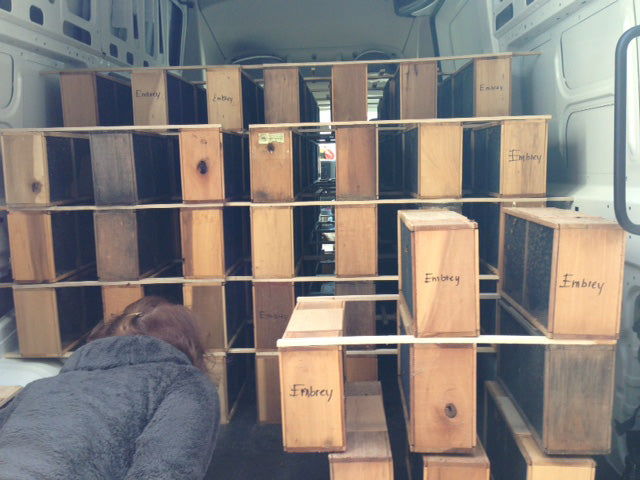
Michael Embry drove up from Georgia, where he picked up the bees, and shared footage of the collection process.
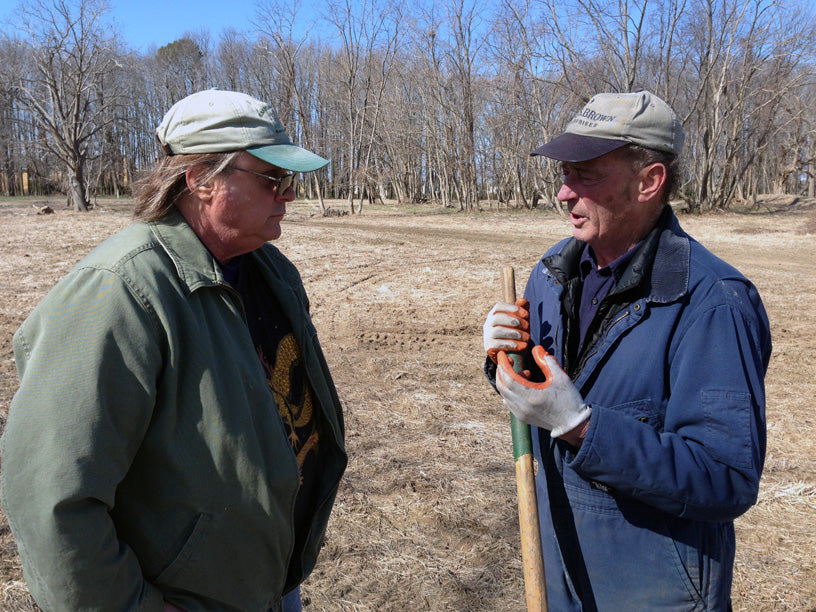
Michael Embry and Dale Large, two of the beekeepers I learned from
Install day: nine hives in unpredictable weather
We installed nine new hives on April 7, 2013. It had been the typical Eastern Shore “unpredictable” weather for a couple of weeks. Our original delivery was scheduled a week earlier and got pushed back by colder temperatures and rain, which is its own lesson: the calendar is a suggestion, and the weather has the final say.
Because every pad was already set, install day stayed calm and focused. If you want to see what the physical setup looks like, hive box by hive box, with the queen excluder and that first frame of food going in, my mentor Dale Large walks through it with me in how do I set up hives.
Queen release: the part beginners worry about most
Here are my notes from installation day:
- Michael Embry suggested we follow the “Indirect Queen-Release Method I,” outlined thoroughly in The Beekeeper’s Handbook, Fourth Edition by Diana Sammataro and Alphonse Avitabile. We planned to return to the hives by Thursday to remove the queen cages.
- Our queens were marked, so there was no hunting for an unmarked queen, a genuine relief for a new beekeeper.
That first inspection a few weeks later is its own story. Dean Burroughs, a Maryland State Apiary Inspector for more than twenty-five years across six Eastern Shore counties, walked me through my hives, found the queen, and showed me exactly what a healthy brood frame should look like. If you want to see what a first inspection teaches a brand-new beekeeper, I wrote it all down in my first bee inspection.
After the bees are in and the queen is releasing, the next question is almost always about food. Whether and when to feed a newly installed package depends on the season and what your bees can forage, and I cover the timing in detail in our guide on when to feed bees.
Michael Embry’s bee shed at the University of Maryland Wye River Educational Center
What this season eventually became
Those nine packages were the start of years of learning, and eventually of the honey we bottle today. The flowers we plant for the bees, pear, apple, lavender, clover, sunflower, and acres of wildflowers, are the same blooms that shape the flavor of our Eastern Shore Honey. Our Spring honey, complex and floral, comes straight from that mix.
If you are about to install your own first packages, my best advice is simple: order early, prep everything before the bees arrive, lean on a mentor, and give yourself grace. Nobody installs their first hive with confidence. You build it one season at a time.
FAQs About Installing Package Bees
When should I order package bees?
Order package bees by the end of January. Suppliers sell out quickly, and ordering early also gives you time to research and order your hive hardware, which should be done by late February or early March.
How many hives should a beginner start with?
Many new beekeepers start with one or two, but starting with more than one lets you compare colonies and gives you a backup if one struggles. We installed nine in this particular season, though that reflected an established farm setup rather than a typical first-year start.
What is the indirect queen-release method?
It is a method where the queen stays in her cage inside the hive for a few days so the colony can grow used to her scent before she is released, which reduces the risk of the bees rejecting her. We followed the “Indirect Queen-Release Method I” from The Beekeeper’s Handbook, Fourth Edition and returned to remove the cages a few days later.
Does weather affect when package bees can be installed?
Yes. Cold temperatures and rain can delay delivery and make installation harder on the bees. Our delivery was pushed back a week by cold and rain, then the day after install warmed to nearly eighty degrees, which is typical Eastern Shore spring unpredictability.
Should I feed package bees right after installing them?
It depends on the season and available forage. Newly installed packages often benefit from feeding as they build comb, but timing matters more than volume. See our full guide on when to feed bees for the seasonal details.
In loving memory of Dean Burroughs, the original Maryland State Apiary Inspector and a true icon in the beekeeping community. Dean was an EAS Master Beekeeper, a Professor and Coach at Salisbury University, and the founder of the Lower Eastern Shore Beekeepers Association, but to those of us lucky enough to know him, he was a cherished mentor, an inspiration, and a dear friend. He was the first Master Beekeeper I ever met, and I always looked forward to our time together in the apiary. I like to imagine all of my early mentors in beekeeping reunited now, working together to watch over the bees from above. His wisdom lives on in all of us who were fortunate enough to learn from him.