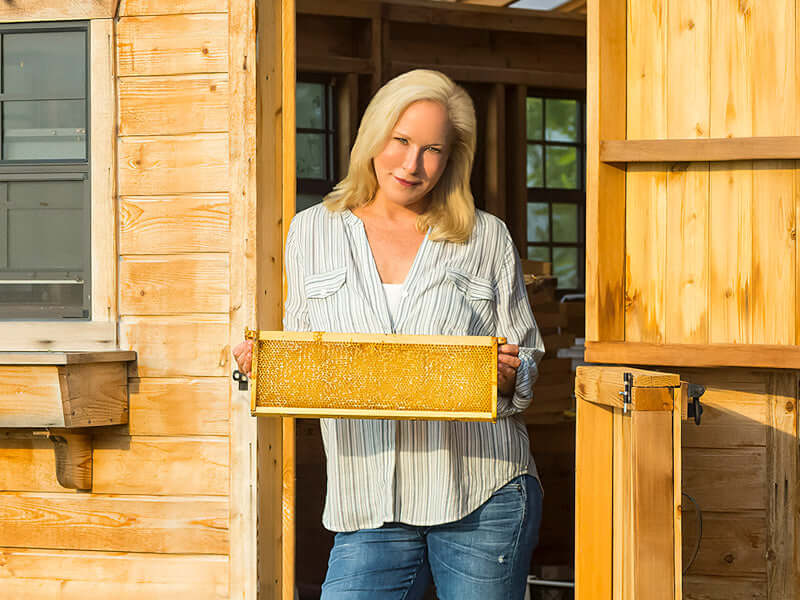


Setting up your first hives is exciting, but the real questions start the moment the bees are in the boxes: now what? I set up my first two hives on our farm at Chesterhaven Beach with a mentor named Dale, an honest-to-goodness “old bee guy,” and a lot of what I expected turned out to be different from what actually happened. Years later, I am still learning, and I have come to accept that what one season teaches me does not always carry cleanly into the next. Here is what I wish someone had walked me through about those first weeks after setup, and about the choice that shapes them: package bees or a nuc.
Package Bees vs Nucs: The Choice That Shapes Your First Weeks
When you start a colony, you are usually choosing between two things. Package bees come as a screened box of loose bees, roughly three pounds, shipped to you with a queen in a separate cage that the colony has not raised on its own. A nuc, short for nucleus colony, is a small but already-working hive of four or five frames that comes with a laying queen, brood in progress, drawn comb, and stored food. One is a fresh start; the other is a colony that is already running.
My first couple of years, we bought package bees. The honest reason was cost. Packages are less expensive than nucs, and for a brand-new beekeeper watching every dollar, that matters. If you want to weigh the trade-offs in more depth, the differences between packaged bees and nucleus colonies are worth reading before you order, because the cheaper option up front is not always the cheaper option by the end of the season.
Why Package Bees Work for Beginners
Package bees are a perfectly good way for a new beekeeper to get colonies in place. They ship widely, they are affordable, and they let you learn the rhythm of installing and managing a hive without a large investment. For a lot of people, that lower barrier to entry is exactly what gets them into beekeeping in the first place. Most package orders are placed in late winter for delivery in spring, so the timing lines up with the start of the season.
Where Package Bees Went Wrong for Me
Then came my third year. I ordered packages, and two of them failed right out of the gate: in one, the queen failed, and the other arrived without the queen it was supposed to include. All that money I “saved” cost me two hives before the season even started. The supplier was apologetic, but because the bees had shipped from far away, there was nothing they could really do once the boxes were in my hands. That is the quiet risk with a mailed package: when something goes wrong, the loss tends to land entirely on you.
It is not that packages are bad. It is that distance removes accountability. A box of bees that has traveled a long way has already been through stress before it ever becomes a settled colony, and sometimes that shows up as a weak start.
The Case for Buying a Nuc Locally
This is where a nuc changes the math. When you buy a nuc from a nearby beekeeper, you are buying local stock you can actually look at, and if something is wrong, you can usually bring it back. The losses do not have to be your own. On top of that, locally raised bees are already adapted to your regional climate and bloom, which on Maryland’s Eastern Shore is no small thing. That combination of accountability and regional fit is why so many experienced keepers nudge beginners toward a good local nuc, even at the higher price.
What to Actually Expect in the First Weeks
Once the bees are installed, the hardest skill is patience. The colony needs time to accept its queen, draw comb, and start raising brood. When I set up with Dale, he handed me some reading and told me he would be back in three to four weeks, which is a sensible window for a new keeper: give the hive room to settle before a full inspection, while still keeping a light eye on what is happening at the entrance. Bees coming and going with purpose, especially with pollen on their legs, is a good early sign.
The interview Dale gave me that first day is as real as it gets, and I have kept the video below so you can hear it straight from an old bee guy rather than filtered through me.
What Comes Next
Healthy colonies are the whole point, and what you feed the land around them matters as much as the bees themselves. If you want your hives to thrive after setup, it helps to understand what makes good bee food and how to plant for a long bloom season. And of course, the reward at the end of all this care is the honey itself: you can taste the result of healthy hives in our Eastern Shore Honey collection.
Caring for this land and these communities is at the core of who we are. It’s why we created Roots & Wings, our giving initiative that connects every purchase to something that matters. See how we give back.
FAQs About Package Bees vs Nucs: What to Expect After Setup
What's the difference between package bees and a nuc?
A package is a screened box of loose bees, usually about three pounds, shipped with a separately caged queen the colony has not yet raised. A nuc, short for nucleus colony, is a small working hive of four to five frames that already has a laying queen, brood, comb, and food stores. The package is essentially a fresh start, while the nuc is a colony that is already up and running.
Are package bees or nucs cheaper?
Package bees are typically less expensive than nucs, which is the main reason many new beekeepers choose them. A nuc usually costs more because you are buying an established colony with drawn comb, brood, and a proven queen rather than a box of bees that still has to build everything from scratch.
What can go wrong with package bees?
Because a package ships from a distant supplier, a few things can go sideways: a queen can fail to be accepted by the colony, a package can occasionally arrive without the queen that was supposed to be included, or the bees can be stressed and weakened from transit. When that happens with a mailed package, there is often little the supplier can do once the box is in your hands.
Why do some beekeepers prefer buying a nuc locally?
A nuc bought from a nearby beekeeper is local stock you can inspect, and if something is wrong you can usually bring it back. Local bees are also already adapted to your regional climate and bloom. That accountability and regional fit are a big part of why experienced keepers often steer beginners toward a good local nuc.
How long after setup before the first hive inspection?
In these early weeks the colony needs time to settle, accept its queen, and begin drawing comb and raising brood. A common rhythm for a new keeper, especially one working with a mentor, is to leave the hive largely alone for roughly three to four weeks before a thorough inspection, while still keeping a light eye on activity at the entrance.