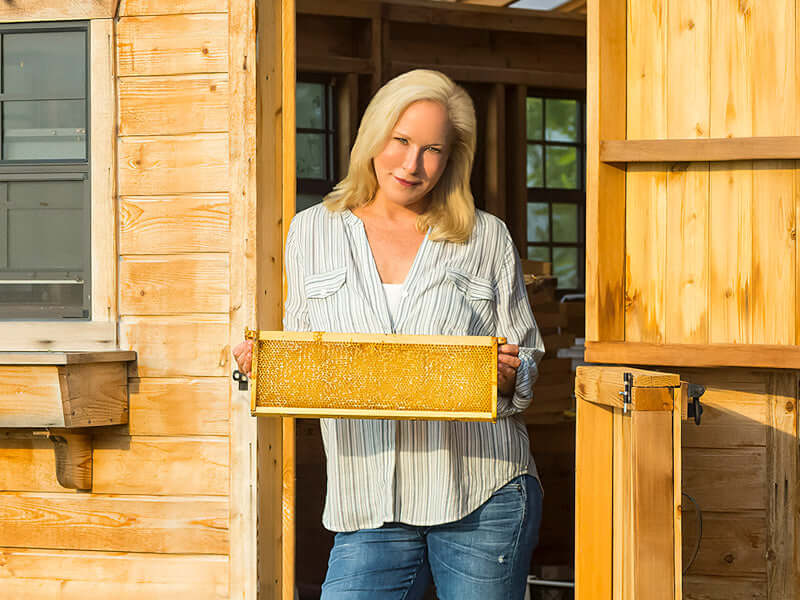


Hello fellow makers. Today I’m sharing our team’s experience filtering beeswax, including one expensive detour through a commercial machine that, for us, turned out to be a mistake. If you’re weighing whether to buy a commercial wax melter, our story might save you some trouble. This post focuses on the filtering step itself: the methods that actually work, the equipment, the safety rules, and the cleanup nobody warns you about.
If you’re earlier in the process and want to know how to harvest and prepare your cappings first, start with our guide to processing beeswax. For the biology of where the wax itself comes from, see where beeswax comes from.
What Filtering Beeswax Actually Does
Filtering is the step that separates clean, usable beeswax from everything you don’t want in the finished block: honey residue, pollen, propolis, cocoon silk, and general debris. The trick is removing those impurities without wrecking the wax through overheating or contamination along the way.
Temperature is the whole game. Beeswax melts at roughly 145°F. Push it past 185°F and it discolors, and the change is permanent. Everything happens in that narrow window, and holding it steady is harder than it sounds once your batch gets big. That single fact drives almost every method below.

Prep Your Wax Before You Filter It
How you handle wax before it ever reaches a filter matters as much as the filtering method. The single most important prep step, which we learned the hard way, is a thorough rinse before freezing.
- Rinse right after harvest: Rinse your wax caps with cold water as soon as you can after collecting them. Don’t put it off. Caps that go into the freezer without a proper rinse carry far more slumgum* through the melt, which clogs filters and complicates everything downstream.
- Freeze promptly: If you’re not processing right away, freeze the caps after rinsing. Wax left at room temperature is an open invitation to wax moths and to fermentation from leftover honey moisture. Freezing holds the quality until you’re ready.
- Store sealed: Use freezer-safe bags with as much air pressed out as you can manage. We flatten gallon freezer bags, which works well.
Cappings wax is consistently cleaner than old brood comb, which makes it the better starting material any time purity matters. For a full walkthrough of collecting, separating, and cleaning cappings before this stage, see our complete beeswax processing guide. When you’re filtering for cosmetic use, you’ll need finer filtration than you would for candles or wood polish, simply because the purity bar is higher. That’s the same cosmetic grade beeswax we use in our own formulations.

Our Experience With a Commercial Wax Melter
We ran a large batch of caps through the Primo 150 Wax Melter. In theory, a commercial machine should make scaled-up filtering easier. In practice, the problems stacked up fast:
- No instructions included: The unit arrived with no manual, and searching online for guidance on this specific machine turned up almost nothing. We were on our own from the start.
- Steep learning curve: It’s not intuitive. The manufacturer seems to assume you already understand commercial wax processing, and there was no documentation to close that gap.
- Slumgum buildup: Our biggest operational mistake was not washing the caps thoroughly enough before freezing. The excess slumgum piled up in the tank above the level the machine is designed to expel, which caused problem after problem.
- Water is required: After troubleshooting with WaxMelters.com, we learned that water has to be added to the tank to help the wax melt, especially with a mix of comb types. Nothing about that was obvious without instructions.
- Time and cost: Filtering, re-melting, and re-filtering that one batch stretched across several days. Years later, a repair ran over $1,500 and was a hassle to arrange. The company feels built for large commercial accounts, not small handmade operations.
- Fill requirement: The whole unit has to be filled before you turn it on, which changes how you plan a batch. We only discovered that through trial and error.
Our honest conclusion: for a small to mid-scale operation like ours, this equipment wasn’t the right fit. We wouldn’t buy it again.
Beeswax Filtering Methods That Actually Work
After the commercial detour, we went back to simpler approaches and found several that give reliably clean results:
- Water bath method: Add hot water to the wax container to help it melt while keeping it from overheating. The water does double duty as a heat-transfer medium and a cleaning agent, since impurities settle into the water while the wax floats to the top. Don’t add water to already-melted wax, or it will splatter. And don’t let the water boil, since that overheats the wax sitting above it.
- Double boiler technique: Indirect heat through a double boiler gives you precise temperature control and cuts burn risk substantially. A crockpot or multi-cooker on low does the same job for smaller batches.
- Cheesecloth filtering: Pouring melted wax through cheesecloth catches the larger debris before the wax sets. Layer several sheets for finer filtration, and for cosmetic-grade wax, finish with a paper coffee filter for one last pass.
- Sedimentary filtering: Let melted wax cool slowly in a water bath and the impurities settle to the bottom of the solidified disc. Scraping that dirty underside off after it cools is a simple, effective second cleaning step that needs no extra equipment.
- Solar wax melting: After all that, a beekeeper friend showed us a solar wax melter. There’s nothing sophisticated about it, the sun does the work, and yet it produced clean wax in a fraction of the time with far easier cleanup. It’s our top recommendation for anyone with the climate and the daylight to support it: no energy cost, no burn risk, almost nothing to clean.
Safety When You’re Filtering Hot Wax
- Never leave melting wax unattended. Beeswax is flammable.
- Never melt beeswax directly over an open flame.
- Always use indirect heat, like a double boiler or water bath.
- Wear thick gloves and goggles when handling hot wax.
- Work in a well-ventilated space to avoid wax fume buildup.
- Keep a fire extinguisher rated for grease fires within reach.
- Keep cool running water accessible in case of burns.
- Use dedicated pots and utensils. Wax is nearly impossible to fully remove, so keep it separate from anything you cook with.
- Lay down parchment paper or a drop cloth under your work area to catch spills.
Cleaning Up After Filtering
Cleanup is one of the more time-consuming parts of the whole job, so plan for it. Adding boiling water to wax-coated equipment helps dissolve and lift the residual wax as it cools, which beats scraping hardened wax off cold surfaces. Let the water cool, lift off the solidified wax disc, then dispose of the water.
Once your wax is filtered, pour it into molds and let it cool overnight. Flexible silicone molds release cleanly; metal molds pop out more easily after a brief stint in the freezer, which makes the wax contract. When the blocks are set, wrap them in unbleached paper or muslin and store them in a cool, dry place in sealed containers to keep pests out.
Troubleshooting Common Filtering Problems
Discolored wax: Usually overheating or leftover impurities. Re-melt with fresh water and filter through a finer material. Each melt-and-filter pass improves the color.
Wax won’t harden: Residual honey or water is almost always the cause. Re-melt using the water bath method, and the water pulls the moisture out as the wax separates cleanly to the surface.
Too much slumgum: This traces back to insufficient cap washing before freezing nearly every time. There’s no good fix once it’s in the filter; the solution is upstream. Wash caps thoroughly with cold water right after harvest, every single time.
Clogged filters: High slumgum clogs cheesecloth fast. Swap filter material often instead of forcing wax through a saturated filter, which drops effectiveness and can push debris back into the wax.
Off odor: Usually fermentation or mold from caps that weren’t dried well before storage. Discard badly affected batches. Next time: rinse, dry fully, then freeze.
What We’d Do Differently
Filtering beeswax should be simpler than we made it. The commercial route added cost, complexity, and time that the simpler methods just don’t require, at least at the scale we were working. The solar melter costs a fraction of commercial equipment, has almost no learning curve, and consistently outperformed our Primo 150 experience on both output quality and cleanup.
If we were starting over, we’d wash caps more thoroughly before freezing, begin with a solar melter, and save the commercial-equipment conversation for a much larger operation where the volume actually justifies the investment and the learning curve.
For everything that comes before this step, see our guide to processing beeswax from harvest to mold. For what to do with clean wax once you have it, browse our full list of beeswax uses around the home. And if you’d rather enjoy the hive without the labor, our fresh honeycomb comes with the wax exactly as the bees made it.
Have you filtered beeswax with commercial equipment? We’d love to hear what you learned.

*Slumgum: the impure residue, made up of cocoons, propolis, and debris, that’s left after wax is extracted from honeycombs.
Caring for this land and these communities is at the core of who we are. It’s why we created Roots & Wings, our giving initiative that connects every purchase to something that matters. See how we give back.
Updated 4/10/26

FAQs About How to Filter Beeswax: Methods, Safety, and What We Learned the Hard Way
What temperature should beeswax be filtered at?
Beeswax melts at about 145°F, and you want to stay under 185°F, since anything hotter discolors the wax permanently. Indirect heat, like a water bath or double boiler, makes it much easier to hold that window than direct heat does.
What is the best way to filter beeswax at home?
For most home beekeepers, a water bath or double boiler paired with layered cheesecloth gives clean results with basic equipment. A solar wax melter is our favorite when the climate cooperates, since it produces clean wax with no energy cost and very little cleanup.
Why is my filtered beeswax still dirty or discolored?
It usually means leftover impurities or overheating. Re-melt with fresh water and filter through a finer material such as a paper coffee filter. Each additional melt-and-filter pass improves the color and clarity.
What is slumgum in beeswax?
Slumgum is the impure residue left after wax is extracted: cocoons, propolis, and general debris. Excess slumgum almost always traces back to caps that weren't washed thoroughly with cold water before freezing.
Do you need water to filter beeswax?
In the water bath and crockpot methods, yes. Water acts as both a heat-transfer medium and a cleaning agent, since impurities settle into the water while clean wax floats to the top. Just never add water to already-melted wax, because it splatters.