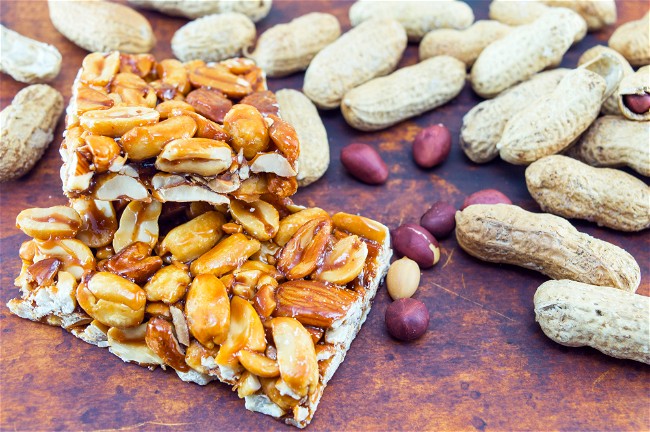


Peanut brittle is one of those old-fashioned candies that never really goes out of style. There’s something about the shatter, the salt, the caramel pull that makes it feel like a treat worth making from scratch. This version swaps refined white sugar for coconut palm sugar, skips the corn syrup entirely, and lets our Sweet Clover Honey do the heavy lifting in the flavor department. The result is a deeply golden, slightly floral brittle that tastes a little more complex than what you’d find in a tin at the checkout line.
It’s also a fantastic gift. Pack pieces into a jar or a wax-paper-lined tin and you’ve got something people will actually remember. Make a batch for the holidays, a hostess, a neighbor—or honestly, just for yourself.

Why Sweet Clover Honey?
Not all honeys behave the same way in candy-making, and that matters here. Sweet Clover Honey is one of the lightest, mildest varietals you can cook with—smooth sweetness with a very subtle vanilla-like undertone that doesn’t overpower the peanuts or the caramelized sugar. When you cook it to the hard-crack stage, those delicate notes concentrate into something nutty and warm. A bolder honey (like buckwheat) would turn this brittle much more intense. A clover honey keeps everything balanced and lets the peanuts stay the star. It’s also one of the best all-purpose baking honeys we carry, which is exactly why it anchors this recipe. Learn more about what makes Sweet Clover Honey unique.
A Little Brittle History
Peanut brittle has a surprisingly murky origin story, which—honestly—makes it more fun. According to candy lore, the American version may have started as a happy accident: a Southern cook substituting baking soda for cream of tartar while making salt-water taffy. The baking soda reacted with the hot sugar, creating those thousands of tiny air bubbles that give brittle its characteristic texture—crunchy but not jaw-breaking. Across the Atlantic, some food historians trace a version of it to Celtic confectionery traditions. Either way, it’s been around for centuries, and the combination of salty nuts and hard-cooked sugar is apparently timeless.
What Each Ingredient Does
Candy-making is more of a science than most cooking, so it’s worth understanding what each ingredient actually brings to the pan before you start. Here’s a breakdown:
Coconut palm sugar is the primary structural sweetener. It behaves similarly to white or brown sugar at high heat, but it carries a deeper, more caramel-forward character. It’s less processed than refined white sugar and has a subtle molasses undertone that adds complexity to the finished brittle without making it taste like toffee. It pairs naturally with the floral notes in Sweet Clover Honey.
Sweet Clover Honey does two things here: it adds sweetness and flavor, and it also acts as an interfering agent—meaning it helps prevent the sugar from recrystallizing as it cooks and cools. This is the same job that corn syrup typically does in traditional brittle recipes. By using honey instead, you skip the corn syrup entirely and get a brittle with genuine flavor rather than a neutral sweet base. Lighter varietals like Sweet Clover work best because they don’t overpower the peanuts.
Salt is non-negotiable in brittle. It cuts the sweetness, draws out the natural nuttiness of the peanuts, and creates that salty-sweet contrast that makes it hard to stop eating. Don’t skip it or reduce it.
Peanuts go in mid-cook rather than at the beginning. Adding them once the sugar mixture has already started cooking means they toast in the hot caramel as it climbs to hard-crack temperature, picking up flavor along the way. Use dry-roasted, lightly salted peanuts for the best result.
Unsalted butter goes in off heat at the very end. It adds richness and a slightly creamy finish, and it helps the brittle release cleanly from the pan. If you want to make this completely dairy-free, substitute an equal amount of refined coconut oil.
Coconut cream is the ingredient that sets this recipe apart from a standard brittle. A small amount stirred in at the end adds a slight chew and a subtle richness. It also makes the finished brittle a little more forgiving—less glassy and shattery than a bare-sugar brittle. As a bonus, it keeps the recipe dairy-free.
Baking soda is the last thing you add, and it’s responsible for the texture more than anything else in the recipe. When baking soda hits the superheated sugar, it reacts immediately and creates thousands of tiny carbon dioxide bubbles throughout the candy. Those bubbles are what make brittle light and snappable rather than hard as glass. Do not substitute baking powder—it won’t produce the same reaction at candy temperatures.

How to Make It: Step-by-Step
First: Prepare your workspace
This is the most important thing you can do before you turn on the heat. Spray your baking sheet thoroughly and set it on the counter near the stove. Measure out your butter, coconut cream, and baking soda and have them within arm’s reach. Once the sugar hits 300°F, you will have about 30 to 60 seconds to act before the candy starts to set. There is no time to go hunting for a measuring spoon.
Second: Cook the sugar base
Combine the coconut palm sugar, Sweet Clover Honey, salt, and water in a heavy-duty medium saucepan. Heavy-duty matters here—thin pans create hot spots that can scorch your sugar unevenly. Stir over medium-low heat until the sugar has fully dissolved and the mixture comes to a boil. Clip your candy thermometer to the side of the pan now, making sure the tip is submerged but not touching the bottom of the pan.
Third: Add the peanuts and climb to hard crack
Stir in the peanuts and continue cooking, stirring frequently, until the thermometer reads 300°F. This is the hard-crack stage. You can verify it with the cold-water test: drop a small spoonful of the mixture into a bowl of very cold water. If it immediately turns completely hard and brittle, you’re there. If it’s still pliable or chewy, keep cooking. This stage can take 15 to 25 minutes depending on your stove and pan, so don’t rush it by turning up the heat.
Fourth: The fast finish
Pull the pan off the heat the moment you hit 300°F. Immediately stir in the butter, coconut cream, and baking soda all at once. The mixture will foam up dramatically—this is exactly what you want. Stir quickly to incorporate everything, then pour immediately onto your prepared baking sheet. Use two forks to stretch and spread the mixture across the pan. It won’t be perfectly even, and that’s part of the charm. Rustic is the point.
Fifth: Cool and break
Let the brittle cool at room temperature for at least one hour until it is fully hardened. Resist the urge to put it in the fridge to speed things up—the moisture will make it sticky. Once completely set, use a mallet or the handle of a heavy knife to crack it into irregular pieces. For cleaner breaks, you can also place the cooled sheet in the freezer for five minutes before cracking.

Pro Tips for Perfect Brittle Every Time
A few things that separate a successful batch from a sticky or grainy one:
- Use a heavy-bottomed saucepan. Even heat distribution is everything in candy-making. A thin pan will have the candy burning in some spots while other spots haven’t reached temperature yet.
- Don’t walk away. Once the peanuts go in, the mixture can go from perfect to burnt quickly. Stay at the stove and stir frequently.
- Trust the thermometer. Color is a helpful visual cue, but temperature is the only reliable indicator of stage. A mixture that looks golden might be 20 degrees short of hard crack. Don’t pull it early.
- Work fast at the end. Once the baking soda goes in, you have a short window before the candy starts to set. Pour and spread immediately.
- Don’t scrape the pan. Pour the brittle from the pan but resist the urge to scrape every last bit. The candy that sits in the pan may have started to set or cool unevenly and can introduce crystallization into your finished brittle.
- Humidity is the enemy. Brittle is highly sensitive to moisture. If you’re making this on a very humid day, it may take longer to set and may stay tacky longer than expected. A dry, cool kitchen is ideal.
Variations Worth Trying
This recipe is a great starting point, but brittle is one of the most forgiving candy formats for experimenting. A few ideas:
- Mix up the nuts: Pumpkin seeds, almonds, pecans, or a combination all work beautifully. Use the same total volume and add them at the same stage as the peanuts.
- Add heat: Stir in ½ teaspoon of chili flakes or a small pinch of cayenne in the last step, right before the baking soda, for a sweet-and-spicy brittle that goes surprisingly well on a cheese board.
- Bacon brittle: Fold in a couple tablespoons of cooked, crumbled bacon right before adding the baking soda. Sweet, salty, smoky—yes.
- Chocolate drizzle: Once the brittle has cooled and hardened completely, drizzle with a little melted dark chocolate and let it set before breaking into pieces.
- Use honey-roasted peanuts: For a more pronounced peanut flavor, swap in honey-roasted peanuts for the dry-roasted. The extra sweetness on the nuts plays nicely against the slight bitterness of the caramel.
- Sesame seed brittle: Replace half the peanuts with raw sesame seeds for a nutty, slightly earthy twist that leans more toward a Middle Eastern-style confection.

Storing and Gifting
Brittle keeps well in a cool, dry place in an airtight container—up to two weeks at room temperature. Avoid the refrigerator, which introduces moisture and will make it sticky. If you’re layering pieces in a tin, separate them with sheets of parchment or wax paper so they don’t fuse together. For gifting, a mason jar tied with twine looks simple and intentional. A candy tin lined with wax paper works beautifully too, especially around the holidays.
If you love making honey-sweetened treats to give, our Lavender Honey Marshmallows are another Sweet Clover Honey recipe that packages beautifully—especially alongside a mug and a bag of cocoa. And if you want something on the savory side, our Honey BBQ Sauce and Honey Roasted Brussels Sprouts are two more ways we put Sweet Clover Honey to work in the kitchen. For a light, creamy dessert to serve alongside the brittle, try our Dairy-Free Panna Cotta—also sweetened with Sweet Clover Honey.
If you make this brittle, we’d love to see it. Share a photo and tag us with #beeinspired on Instagram.
Shop our Eastern Shore Honey collection to find Sweet Clover Honey and all of our other raw varietal honeys.
Honey Peanut Brittle FAQs
Can I substitute corn syrup with honey in peanut brittle?
Yes, and that’s exactly what this recipe does. Corn syrup’s main job in traditional brittle is to prevent crystallization by interfering with the sugar molecules as they cool. Honey does the same thing, and it brings its own flavor along with it. The key is using a lighter varietal like Sweet Clover Honey so the honey flavor stays in the background and complements rather than dominates. Darker honeys like buckwheat will produce a much more assertive brittle—still delicious, but a very different result.
What temperature is hard-crack stage for brittle?
Hard-crack stage is between 300°F and 310°F (149°C to 154°C). This is the temperature at which the sugar structure sets into a fully rigid, glassy candy that shatters cleanly when broken. Pull your brittle at 300°F for a slightly lighter, snappable texture. Cook it a little longer toward 310°F if you want a more classically hard, glass-like break. Above 310°F, the sugar begins to caramelize deeply and can quickly cross over into burnt territory, so watch your thermometer closely in those last few degrees.
Why didn’t my peanut brittle harden?
The most common reason brittle doesn’t harden is that it didn’t reach hard-crack temperature before you pulled it off the heat. Even a few degrees short can leave you with sticky toffee instead of brittle. The second most common culprit is humidity—sugar is hygroscopic, meaning it absorbs moisture from the air, which keeps it from setting fully. If your brittle is tacky after an hour of cooling, try moving it to an air-conditioned or very dry room. On very humid days, candy-making is genuinely harder, and some batches will simply never set as firm as they would on a dry day.
What can I use if I don’t have a candy thermometer?
A candy thermometer is strongly recommended for this recipe, but the cold-water test is the traditional alternative. Drop a small spoonful of the hot candy mixture into a bowl of very cold (ideally ice) water. At soft-ball stage, the candy will form a soft, pliable ball. At hard-crack stage—which is what you need for brittle—the mixture will immediately turn completely rigid and shatter when you tap it. If it’s still bendy or chewy, keep cooking. The test takes about 30 seconds per check, so keep a bowl of ice water next to the stove.
Can I make peanut brittle without corn syrup?
Yes. Traditional recipes use corn syrup as an interfering agent to prevent crystallization, but honey and even a small amount of acid (like a drop of lemon juice or a splash of apple cider vinegar) can do the same job. This recipe skips corn syrup entirely and relies on the honey to keep the sugar from turning grainy. The result is a cleaner-tasting brittle with genuine flavor from the honey rather than a neutral sweetness.
Why does baking soda go into brittle?
Baking soda reacts with the acidic components in the hot sugar mixture (including the honey) and produces carbon dioxide bubbles almost instantly. Those bubbles get trapped in the rapidly setting candy and create a lighter, more porous texture that snaps cleanly rather than being rock-hard. Without baking soda, brittle would be much denser and significantly harder on your teeth. The dramatic foam you see when you stir it in is exactly what you want—that’s the texture forming in real time. For this reason, do not substitute baking powder, which reacts differently and won’t produce the same effect at candy-making temperatures.
How long does homemade peanut brittle last?
Stored in an airtight container at room temperature in a cool, dry place, homemade peanut brittle will keep for up to two weeks. Separate layers with parchment or wax paper to prevent sticking. Do not refrigerate it—the moisture in a refrigerator will cause the sugar to absorb humidity and turn tacky. For longer storage, brittle can be frozen in an airtight container for up to three months; bring it back to room temperature before serving and keep it sealed until it’s fully thawed to avoid condensation.
Is this peanut brittle recipe dairy-free?
Almost—the recipe uses a small amount of unsalted butter (2 tablespoons), but that’s easy to swap. Substitute an equal amount of refined coconut oil for a fully dairy-free brittle. Refined coconut oil has a neutral flavor at this quantity and won’t affect the finished taste. The coconut cream already in the recipe is naturally dairy-free, so that substitution is the only adjustment you’d need to make.
What is coconut palm sugar and can I substitute regular sugar?
Coconut palm sugar is made from the sap of coconut palm tree blossoms. It’s less refined than white granulated sugar and has a naturally rich, slightly caramel flavor that pairs well with honey. You can substitute regular white sugar or light brown sugar in equal amounts if you can’t find coconut palm sugar. Brown sugar will give you a slightly deeper, more molasses-forward brittle. White sugar will produce a cleaner, more neutral base that lets the Sweet Clover Honey flavor come forward a little more prominently.