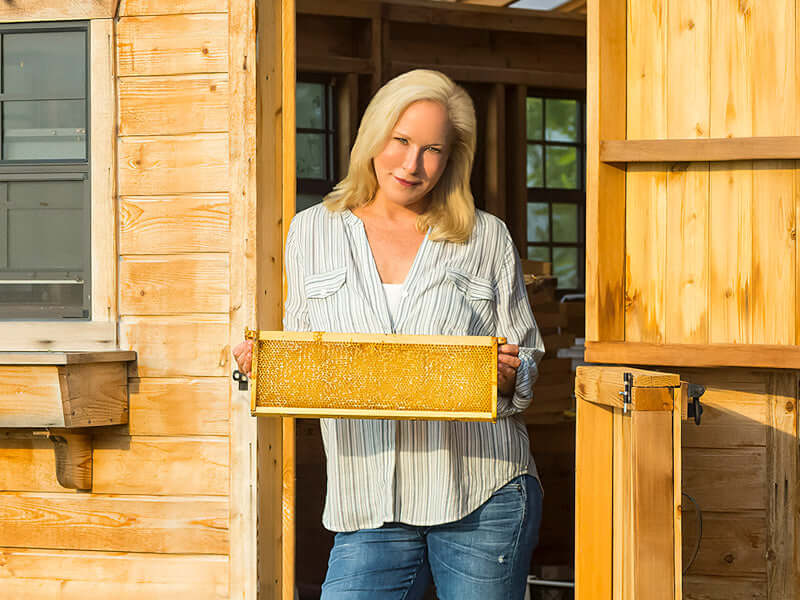




Honey is one of those things people have known their entire lives and almost never stopped to think about. It goes on toast, it goes in tea, it sits in the pantry for what seems like forever, and yet the actual story of what honey is, where it comes from, and why it tastes the way it does is one of the more remarkable things that happens in nature. Once you understand it, you stop thinking of honey as a sweetener. You start thinking of it as a record of a place, a season, and a bee.

How Bees Turn Nectar into Honey
It starts with a flower. Worker bees fly out from the hive and use their long tongues to draw nectar from blossoms, storing it in a second stomach — called the honey stomach — that exists entirely for this purpose. On a single foraging trip, a bee may visit several hundred flowers. By the time she returns to the hive, the nectar has already begun to change. Enzymes produced in the honey stomach start breaking down the complex sugars from the flower into simpler forms — primarily glucose and fructose — that are more stable and more resistant to fermentation.
Back at the hive, forager bees pass the nectar to house bees through repeated regurgitation and re-ingestion. It sounds unglamorous, but it's the mechanism that continues the enzymatic transformation and begins to reduce the water content. The processed nectar is deposited into the hexagonal wax cells of the honeycomb, where house bees fan it continuously with their wings. That fanning evaporates water until the moisture content drops to around 18 percent — low enough that the honey is shelf-stable and won't ferment. Once it reaches that point, bees seal each cell with a thin cap of beeswax, and the honey is finished.
The whole process, from flower to capped cell, is carried out by tens of thousands of bees working in coordination. A single pound of honey represents roughly two million flower visits.

What Honey Is Actually Made Of
About 80 percent of honey is natural sugars — primarily fructose (roughly 38 to 40 percent) and glucose (roughly 30 to 35 percent), with small amounts of other sugars depending on the floral source. The remaining 20 percent is mostly water, along with a collection of compounds that vary by flower, region, and season: natural enzymes from the bees' processing, amino acids, trace minerals including calcium, potassium, and iron, pollen particles, organic acids, and naturally occurring flavonoids and other plant compounds carried over from the nectar.
That last category — the plant compounds — is part of what makes honey from different flowers taste, smell, and behave differently. Buckwheat honey is dark and assertive because buckwheat carries a different set of compounds than, say, orange blossom. Tupelo honey resists crystallization because of its unusually high fructose-to-glucose ratio. Sourwood has a faint anise note that you won't find anywhere else because sourwood trees produce it and nothing else does. The bees don't add these things — they carry them faithfully from the plant into the jar.

Raw and Minimally Filtered — Why Processing Matters
Not all honey is made the same way once it leaves the hive. Commercial honey is typically heated and filtered aggressively — a process that extends shelf life, creates a uniform appearance, and prevents crystallization on store shelves. It also removes pollen, reduces enzyme activity, and strips out much of the variation that makes different honeys taste different from each other.
Raw and minimally filtered honey skips most of that. It's extracted from the comb, strained to remove wax and debris, and jarred. The pollen stays in. The enzymes stay in. The color, flavor, and crystallization behavior remain true to the source. That's why raw honey from different floral sources looks and tastes genuinely different — and why a jar of raw wildflower honey from Maryland and a jar of raw wildflower honey from the Pacific Northwest are not the same product, even though they share a name.

Why Every Honey Tastes Different
Floral source is the primary driver of flavor, color, and character in honey — and it's the reason monofloral honeys (honeys produced primarily from a single flower type) have such distinct personalities. When bees are foraging in an area where one plant is dominant during bloom — orange groves in Florida, sourwood trees in the Appalachians, tupelo trees along the Florida Panhandle — the honey they produce reflects that plant almost exclusively.
Color is a useful rough guide. Light honeys tend to be milder and more delicate. Dark honeys tend to be bolder and more complex. But within those broad categories, the variation is significant. A light honey from clover tastes nothing like a light honey from acacia. A dark honey from buckwheat is entirely different from a dark honey from forest flowers. Geography and season layer on top of floral source — the same bee working the same flowers in a wet year versus a dry year may produce honey with noticeably different character.
Wildflower honey, which comes from bees foraging across whatever is in bloom rather than a single dominant source, captures that variation in a different way. It shifts with the season and the landscape. A spring wildflower honey from the Eastern Shore of Maryland will taste different from a summer wildflower honey from the same region — because the flowers are different. That's not inconsistency. That's the point.
For a closer look at the range of varietals available, see our guide to honey types and what makes each one distinct.

Crystallization — What It Means When Honey Goes Solid
Real honey crystallizes. It's not a defect, and it doesn't mean the honey has gone bad — it means the honey is pure. Crystallization happens because glucose, one of the two primary sugars in honey, is only partially soluble in the small amount of water present. Over time, glucose molecules naturally settle into a crystalline structure. Temperature accelerates the process — cooler storage encourages crystallization, which is why honey kept in a pantry often crystallizes faster than honey kept somewhere warmer.
Different honeys crystallize at different rates depending on their glucose-to-fructose ratio. Clover honey crystallizes relatively quickly. Tupelo and black locust crystallize very slowly. Buckwheat crystallizes firmly. None of this affects flavor or quality — the honey is the same either way.
If you prefer liquid honey, warm the jar gently in a bowl of warm (not boiling) water until the crystals dissolve. Avoid microwaving or using very hot water, which can damage the natural enzymes. For more on this, see our post on why honey crystallizes and what to do about it.

How to Use Honey
The most straightforward uses are also the most revealing — spread on bread or drizzled over cheese, honey has nowhere to hide, and a genuinely good varietal will taste like something specific rather than just sweet. Mild honeys like clover or orange blossom work well where you want sweetness without competition. Stronger honeys like buckwheat or sourwood hold up in baking, in glazes, and alongside flavors that can meet them at the same level.
In the kitchen, honey's behavior differs from refined sugar in ways that matter. It's hygroscopic, meaning it attracts and holds moisture — baked goods made with honey tend to stay moist longer. Its acidity is slightly higher than sugar, which affects how it interacts with baking soda. And because it contains more fructose than sucrose, it's sweeter by volume, so recipes often call for less of it. Honey syrup — honey dissolved in warm water at a roughly 1:1 ratio — is one of the most versatile preparations, useful for cocktails, lemonade, and anywhere a sweetener needs to incorporate smoothly into a cold liquid.
Raw honeycomb deserves its own mention. Honeycomb is honey in its most intact form — the wax cells still sealed, the honey inside exactly as the bees left it. It can be eaten whole, placed on a cheese board, or broken up and used as a garnish. The wax is edible and adds texture. It's also the clearest illustration of what raw honey actually looks like before it's ever been touched.

Where Bee Inspired Honey Comes From
We operate our own apiaries at Chesterhaven Beach Farm on Maryland's Eastern Shore. The Spring, Summer, and Autumn honeys in our catalog come directly from those hives — wildflower honeys named for the season in which they were produced, reflecting whatever is in bloom on the Shore at that time of year. Each one is a snapshot of a specific place and moment.
The rest of our honey catalog is sourced from beekeepers across the United States and, in two cases, from outside the country. Every sourced varietal is chosen for its floral authenticity — we're looking for honeys that genuinely taste like what they're supposed to be, not approximations. Raw and minimally filtered is the standard across the board.
You can explore the full range at our Eastern Shore Honey collection.

Honey in History and Culture
Honey is one of the oldest foods humans have consumed — cave paintings in Spain document honey harvesting that dates back 8,000 years, and traces of honey have been found in Egyptian tombs still intact after millennia. It appears in religious texts across traditions, has been used as currency, and has held ceremonial significance in cultures on nearly every continent. The role of honey in world religions and cultural traditions is a longer story than most people expect.
What honey meant to people before refrigeration is worth understanding — it was one of very few naturally preserved foods available, stable for years or decades when stored properly, and sweet in a world where sweetness was rare and expensive. The relationship between humans and bees predates agriculture. We have been finding honey and valuing it for longer than we have been growing food.

Frequently Asked Questions
Is it safe to give honey to infants?
No. Honey should not be given to children under one year old. Honey can contain spores of Clostridium botulinum that are harmless to adults and older children but can cause infant botulism in babies, whose digestive systems are not yet developed enough to handle them. After age one, honey is safe.
What is the difference between raw honey and processed honey?
Raw honey has not been heated above hive temperature or heavily filtered. It retains natural pollen, enzymes, and the flavor variation that comes from its floral source. Processed honey is typically heated and filtered to create a uniform product with a longer shelf life, but that process reduces much of the variation and some of the naturally occurring compounds present in raw honey.
Why does my honey look different from what I bought before?
If the honey is from a natural, minimally processed source, variation between batches is normal — and expected. Wildflower honeys shift with the season and the bloom. Even single-varietal honeys can vary slightly year to year based on growing conditions. If the honey has crystallized, that's a sign of purity, not spoilage.
How can I tell if honey has been adulterated?
Source transparency is the most practical indicator available to consumers. Honey that lists a specific floral source, a region, and a producer is more traceable than honey labeled only as "pure honey" with no origin information. Crystallization is one sign of an unprocessed product — heavily filtered honey often won't crystallize because the particles that seed crystal formation have been removed.
What is the difference between wildflower honey and a varietal honey?
Wildflower honey comes from bees foraging across multiple flower species in a given area — the flavor reflects the local landscape and the season. A varietal honey (sometimes called monofloral) comes from bees foraging primarily on one dominant flower type, such as orange blossom or buckwheat. Varietal honeys have more defined, consistent flavor profiles. Wildflower honeys are more variable and seasonally expressive.
Does honey ever go bad?
Pure honey does not spoil if stored correctly. Its low moisture content and natural acidity create an environment where bacteria and mold cannot grow. Honey found in ancient tombs has been tasted and confirmed still edible. The main risks are fermentation (if water gets in and raises the moisture content) and quality degradation from heat or prolonged exposure to light. Store honey in a sealed container away from direct heat and sunlight.