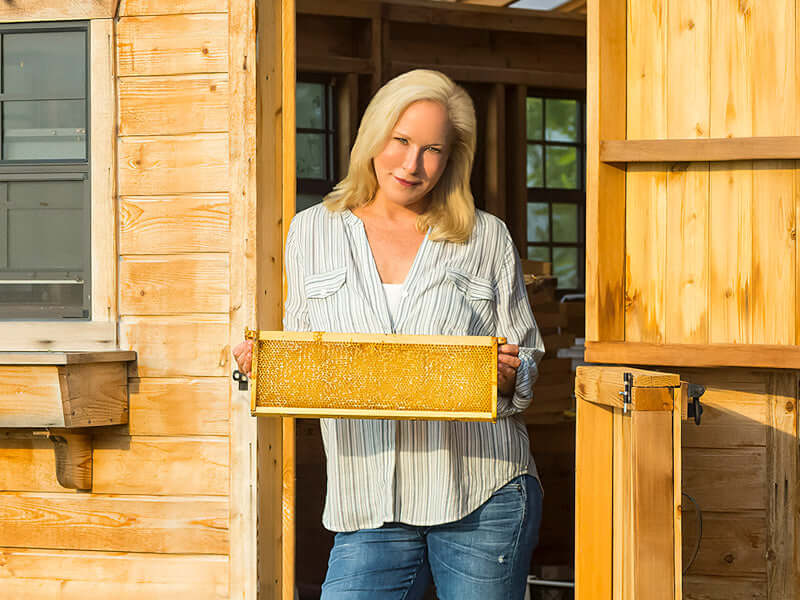


Here’s something most people don’t realize when they reach for that familiar bear-shaped bottle at the grocery store: what’s inside is just one tiny corner of an incredibly vast world. There are more than 300 recognized types of honey, each shaped by the flowers the bees visited, the region where the hive lives, the season of harvest, and even the year’s weather. No two are exactly alike.
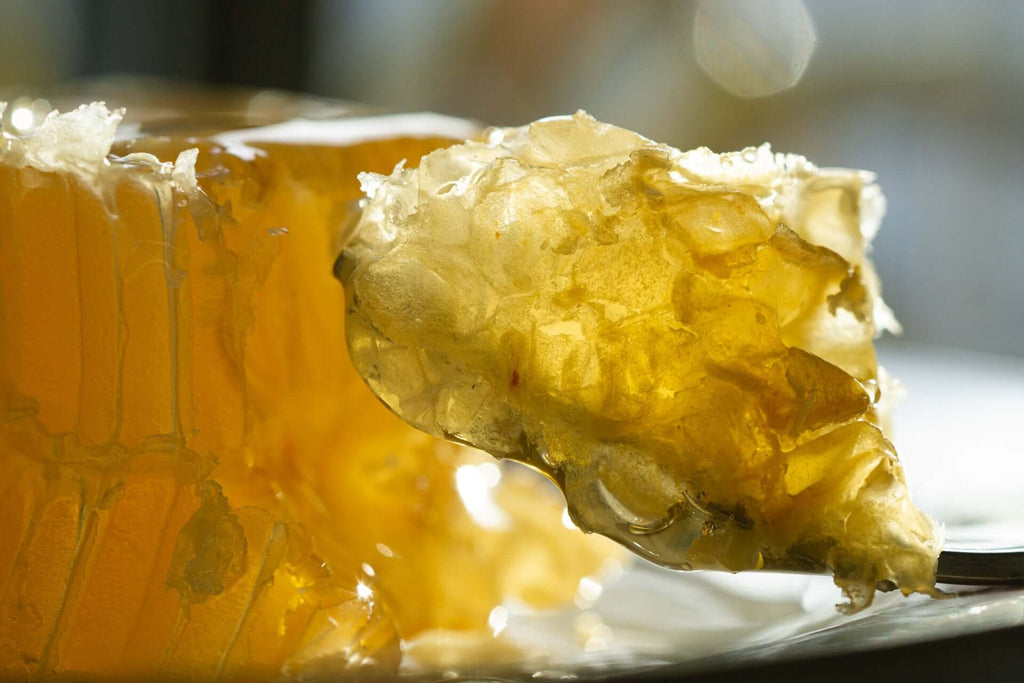
Curious about the comb itself? Try our Honeycomb, or read about how honeycomb is made and why it’s worth experiencing on its own.
Think of honey the way wine lovers think about terroir. A Buckwheat honey from New York tastes nothing like a Tupelo from Florida’s Gulf Coast. A Wildflower from Maryland’s Eastern Shore in spring tells a completely different story than one harvested in late summer from the same farm. Once you start exploring, there’s no going back to generic.
This guide walks you through the most popular honey varietals, their flavor profiles, colors, and best uses, plus a complete list of honey types found across the USA. Whether you’re a curious home cook, a beekeeper, or someone looking for the perfect honey to pair with a cheese board, you’re in the right place.

Monofloral vs. Wildflower Honey: The Two Big Categories
Before diving into specific varieties, it helps to understand the two broad categories that nearly every honey falls into. For the full deep-dive, see our companion guide on what monofloral honey actually means.
Monofloral honey (also called varietal honey) comes predominantly from the nectar of one type of flower. This is only possible when beekeepers strategically position hives near large concentrations of a single blooming plant: fields of clover, Tupelo swamps, blueberry farms, and so on. The result is a honey with a distinctive, consistent flavor that reflects that single nectar source. Not every honey can achieve true monofloral status, which is what makes varietals like Tupelo or Sourwood genuinely special. To understand the craft behind it, learn how varietal honey is made.
Wildflower honey (or polyfloral honey) is produced by bees foraging from a mix of whatever is blooming nearby. The flavor shifts with the season, the year, and the farm. No two batches are ever quite the same, which, for many people, is exactly the point. Our own Spring, Summer, and Autumn farm honeys all fall into this beautiful, complex category.
Light vs. Dark Honey: A Quick Flavor Guide
One of the easiest ways to navigate different types of honey is by color. Generally speaking, lighter honey tends to be milder and more delicate in flavor, while darker honey carries bolder, more complex, sometimes robust notes. It’s not a perfect rule (Tupelo is light but remarkably rich), but it’s a solid starting point.
Here’s a rough color spectrum, from lightest to darkest, of the varieties we carry:
- Palest / Nearly White: Alfalfa, Sweet Clover (crystallized)
- Light Amber: Orange Blossom, Tupelo, Spring
- Medium Amber: Wildflower, Blueberry, Clover, Summer, Lavender from Spain
- Dark Amber: Sourwood, Gallberry, Cranberry, Sunflower
- Very Dark / Nearly Black: Buckwheat, Bamboo

If you’d like to experience this full spectrum firsthand, our Honey Tasting Tower is the ideal starting point: a curated flight of five varietals arranged from light to dark, designed to help you find your favorites. For a more structured approach, our honey tasting guide walks you through it like a sommelier.
Exploring the diverse types of honey highlights the unique character of each variety, but it also raises a question that comes up a lot: why monofloral honey varieties command premium prices. Limited availability, specialized hive placement, and the distinct flavor profiles all play a role.
Honey Varieties at a Glance
| Honey Variety | Color | Flavor Profile | Best Used For |
|---|---|---|---|
| Tupelo | Light amber, green hue | Delicate, jasmine, cinnamon, citrus | Drizzling, cheese pairings, tea |
| Sourwood | Light amber | Buttery, anise, cinnamon, light caramel | Biscuits, drizzling, tea |
| Sweet Clover | Pale gold to light amber | Bright, vanilla, caramel, molasses | Baking, everyday sweetener |
| Alfalfa | Nearly white, creamy | Delicate, lightly sweet, clean | Baking, savory dishes, all-purpose |
| Buckwheat | Very dark amber, near-black | Bold, deep, caramel, dark chocolate | Hearty baking, marinades, BBQ |
| Wildflower | Medium amber (varies) | Complex, robust, floral | Cooking, pancakes, vinaigrettes |
| Orange Blossom | Light, clear | Refreshing, citrus, floral | Tea, beverages, light desserts |
| Spring (Farm) | Light, golden | Floral, delicate, sometimes lavender notes | Yogurt, goat cheese, green tea |
| Lavender from Spain | Medium amber | Mild sweetness, herbaceous, gently floral | Goat cheese, brie, baking, tea |
Tupelo Honey

If honey had a "grand cru," Tupelo honey would be it. Produced in the river swamps of the Florida Panhandle and coastal Georgia, Tupelo comes from the white Ogeechee Tupelo tree, a bloom so short and so location-specific that this honey is produced in limited quantities every spring. The trees flower for only two to three weeks each year. When conditions are right, beekeepers float their hives into the swamps on barges to capture the bloom. When they’re not, there’s simply no Tupelo honey that year.
What makes Tupelo stand out beyond its rarity is its unusually high fructose-to-glucose ratio. That means it resists crystallization far longer than most other honey varieties, staying smooth and spreadable almost indefinitely. The flavor is elegant: a gentle, almost floral sweetness with notes of jasmine, cinnamon, and a whisper of citrus. Not sharp, not cloying, just balanced and quietly remarkable. For more on what makes this varietal so distinctive, read our deep-dive on Tupelo honey.
Best for: Drizzling over cheese, stirring into herbal tea, pairing with biscuits, or anywhere you want the honey to be the star.
Sourwood Honey

Sourwood is the honey that Southern foodies whisper about. Harvested from the white bell-shaped blooms of the Sourwood tree in the Appalachian mountains, Sourwood honey is one of the most coveted varietal honeys in the country, and one of the rarest. The bloom is short, the trees grow at altitude, and a bad weather year can shut down the harvest entirely.
The flavor is buttery, smooth, with subtle notes of anise and cinnamon, and a finish that lingers just long enough to make you reach for a second spoonful. It’s one of the four honeys in our Honey Royale tier alongside Tupelo, Spring, Lavender from Spain, and others.
Best for: Drizzling on warm biscuits, stirring into Earl Grey, pairing with sharp cheeses, or enjoying straight off the spoon.
Sweet Clover Honey

Picture vast open fields of yellow and white sweet clover swaying across the Dakotas. That’s where our Sweet Clover honey begins. Unlike the small Dutch clover creeping through backyard lawns, this is tall-stemmed, abundant Western Clover, a nectar-rich bloom that bees love.
Our Sweet Clover honey often arrives crystallized, which is a mark of its purity. The color ranges from a delicate pale gold to a soft, hazy light amber, and the taste is genuinely layered: bright and bold up front, then settling into gentle whispers of vanilla, caramel, and a touch of molasses. Accessible enough for everyday use, complex enough to reward attention.
Best for: Baking, spreading on toast, sweetening hot or iced tea, or any recipe that calls for a classic-tasting honey.
Alfalfa Honey

Alfalfa honey is one of the most underappreciated varietals in the American honey world. Made by bees pollinating vast fields of purple alfalfa blossoms across the western United States, this is a legume honey, and legumes produce a spectacular amount of nectar. The result is a creamy, nearly white honey with a delicate, clean sweetness that won’t overpower anything it touches.
Because its flavor is so mild, Alfalfa honey is a remarkable culinary chameleon. It enhances both savory and sweet dishes without announcing itself, letting the other ingredients shine. Minimally filtered, with no added dyes or colorants.
Best for: Baking (where you want sweetness without strong honey flavor), glazing vegetables, yogurt parfaits, general all-purpose use.
Buckwheat Honey

Not everyone is ready for Buckwheat honey, but those who are tend to become devoted. This is the boldest, darkest, most assertive honey we carry. Derived from the small white blossoms of the buckwheat plant, it pours the color of deep amber, almost black, and delivers a flavor that’s deep and slightly earthy with notes of caramel and dark chocolate. Some people taste molasses. Some get a hint of malt. It’s complex in a way that lighter honeys simply aren’t.
In the kitchen, Buckwheat shines in recipes that need a honey with presence. Its caramel notes make it brilliant for an easy honey caramel sauce, and it stands up beautifully to strong spices, hearty baked goods, and robust marinades where a lighter honey might get lost.
Best for: Baking (gingerbread, dark breads, cookies), barbecue sauces, marinades, glazes, honey caramel sauce, coffee.
Wildflower Honey

Wildflower honey is honey in its most expressive, unpredictable form. Rather than coming from a single nectar source, it’s made from whatever wildflowers are blooming in the bees’ foraging range, which means no two batches are ever identical. The season, the location, the rainfall that year, all of it shows up in the flavor.
What you can generally expect is a medium-amber honey with a robust, pronounced floral character and genuine complexity. It’s the kind of honey that rewards you differently each time you open a new jar.
Wildflower is incredibly versatile and works wonderfully across a broad range of culinary applications. Drizzle it over pancakes, stir it into salad dressings, use it for mead, use it to balance an acidic vinaigrette, us it as your apple dipping honey for Rosh Hashanah, or let it do its thing in honey-glazed roasted carrots.
Best for: Everyday cooking, baking, salad dressings, cheese boards, anywhere you want a more complex flavor than standard clover.
Blackberry Blossom Honey

Blackberry blossoms grow in dense, sprawling brambles that tend to take over roadsides and fence lines. The spring bloom, typically April through June, produces masses of small white and pale pink flowers, and beekeepers position hives nearby to let the bees work the blackberry blossoms almost exclusively. The result is a true monofloral honey with a flavor that’s smooth, rich, and subtly fruity with a distinctive waxy, floral finish. Medium amber in color, thick in texture, medium in sweetness. For more on this Pacific Northwest varietal, read our full guide to blackberry honey.
Best for: Cheese boards (goat cheese and aged cheddar especially), pork and chicken marinades, baking with fresh berries, drizzling over Greek yogurt, pie, and vinaigrettes.
Orange Blossom Honey

Of all the honey varieties on this list, Orange Blossom honey is the most light and refreshing. Made by bees working the citrus groves of Florida, it carries the essence of those delicate white blossoms in every drop. The flavor is a subtle, floral citrus sweetness, not sharp or tangy like orange juice, but soft and aromatic, like standing in a grove at bloom time.
It pairs exceptionally well with tea, particularly lighter varieties like green, white, or chamomile, where its citrus notes complement rather than compete. It’s also a natural in lemonade, iced tea, light cocktails, and any dessert where you want a floral, summery sweetness.
Best for: Tea, beverages, light salad dressings, drizzling over fruit, light baked goods, yogurt.
Spring Honey from Our Farm

Our Spring honey is something truly personal. It comes from our own apiary on Chesterhaven Beach Farm on Maryland’s Eastern Shore. We’ve planted over 40 acres of bee food including hundreds of lavender plants, fruit trees, and early-blooming wildflowers, so this honey captures the story of what our bees found first each year.
Every year, Spring honey tastes a little different. Some seasons it comes in delicate and floral with a clear lavender note; other years it shifts toward Black Locust or early fruit blossoms. That variation is the whole point. It’s a living record of one season on one farm, which is why Spring is one of our Honey Royales, a tier reserved for our rarest honeys, never discounted.
It’s lovely over a dollop of Greek yogurt, a log of goat cheese, or stirred into a mug of green tea. It also works beautifully as a honey to use in place of sugar in cakes, pastries, and cookies where a floral, delicate note is welcome.
Best for: Light desserts, yogurt, tea, goat cheese pairings, spring baking.
Lavender Honey from Spain

Lavender Honey from Spain is the newest addition to our Honey Royale tier and the only imported honey we carry. The bees produce it from the nectar of wild Spanish lavender, which blankets the hillsides of central Spain and along the Spanish-Portuguese border each May. Medium amber in color, with a mild sweetness, a herbaceous edge, and a gently floral finish that lingers without overwhelming.
Lavender from Spain is the honey that converts skeptics. People expect a soapy or perfumed flavor and instead get something almost savory in its depth, closer in spirit to a fine extra-virgin olive oil than a candy-shop honey. It’s the perfect bridge between a casual everyday honey and the bold rarities of the Royale tier.
Best for: Drizzling over brie, goat cheese, or aged Manchego, baking into shortbread and madeleines, stirring into Earl Grey or chamomile, and pairing with fresh fruit and ricotta.
Types of Honey Found in the USA: A Complete List
This list covers the most recognized honey varietals produced across the United States, from common to rare. Many of these are available in our Eastern Shore Honey Collection, and the ones we don’t currently carry are still worth knowing about.
- Acacia
- Alfalfa
- Apple Blossom (coming soon)
- Aster
- Autumn
- Avocado
- Bamboo (Japanese Knotweed)
- Beechwood
- Blackberry
- Black Locust
- Blueberry
- Blue Gum
- Buckwheat
- Butterbean
- Cherry Almond
- Chestnut
- Clover
- Coffee Blossom
- Cranberry
- Dandelion
- Eucalyptus
- Fireweed
- Orange Blossom
- Gallberry
- Heather
- Iron Bark
- Lavender
- Linden Basswood
- Macadamia
- Manuka
- Mixed Berry
- Pine
- Pumpkin
- Raspberry
- Rosemary
- Sage
- Sourwood
- Spring
- Summer
- Sunflower
- Sweet Clover
- Thyme
- Tupelo
- Wildflower
Looking beyond the United States? Our Lavender Honey from Spain is one of two imported varietals we carry, sourced from beekeepers working the wild lavender blooms of central Spain and the Spanish-Portuguese border. The other offshore honey we acquire is Coffee Blossom Honey from Guatemala.

How to Start Exploring Honey Types
If you’re new to honey tasting, the best approach is the same one wine and cheese lovers use: start with a side-by-side comparison. Line up two or three varieties with distinct profiles, say, Tupelo (light, floral) next to Buckwheat (dark, bold), taste each on its own, then try them with different foods to see how the pairings change the experience.
Our Honey Tasting Tower was designed exactly for this: a flight of five varietals arranged from lightest to darkest, with tasting notes included. It’s the most efficient way to discover which types of honey you gravitate toward before investing in full-sized jars. Our full honey tasting guide walks you through the methodology if you’d like a more structured approach.
Once you find a varietal you love, it’s worth exploring how it behaves in the kitchen. Some honeys, like Buckwheat, get better when they’re cooked into something. Others, like Tupelo, are best appreciated raw, drizzled directly over food. For ideas, browse our honey recipes.
How to Spot Fake Honey in Your Pantry
Spotting fake honey and adulteration can be tricky without a lab coat, but your senses are your best tools.
- The Texture Test: Real honey is a living thing. If your honey eventually turns cloudy or solid (crystallizes), celebrate. That’s a sign of purity. Fake honey often stays suspiciously runny and clear forever on the shelf.
- The Taste Test: Scoop a little onto your tongue. Real honey has a complex finish: you might taste floral notes, woodiness, or fruitiness that lingers. Adulterated honey hits you with a sharp, one-dimensional sweetness that vanishes quickly, much like a spoonful of table sugar.
- The Water Test: Drop a spoonful into a glass of water. Pure honey is dense; it will lump and settle at the bottom. Fake honey often dissolves immediately, disappearing into the water.

So Many Types of Honey to Discover
From the velvet delicacy of Tupelo to the bold, earthy depth of Buckwheat, from the refreshing citrus brightness of Orange Blossom to the complex, season-specific story of a farm Wildflower, every varietal is its own experience. Once you start exploring, "honey" stops being a single ingredient and becomes a whole world.
The best way to find your favorites? Taste, explore, compare. Let your palate lead you somewhere unexpected. Browse our full Eastern Shore Honey Collection and start discovering what minimally filtered varietal honey actually tastes like, or pick up our Honey Tasting Tower and sample five varietals side by side. Then check out our honey recipes to put them to work in the kitchen.
Caring for this land and these communities is at the core of who we are. It’s why we created Roots & Wings, our giving initiative that connects every purchase to something that matters. See how we give back.

FAQs About Types of Honey: A Complete Guide to Varietals, Flavors & Uses
How many types of honey are there?
There are more than 300 recognized types of honey worldwide, each shaped by the flowers the bees visited, the region, the season, and the year's weather. The complete list in the USA alone includes more than 40 distinct varietals, from common Clover and Wildflower to rare monoflorals like Tupelo and Sourwood.
Which honey has the strongest taste?
Buckwheat honey is widely considered the boldest and most assertive of the common varietals. Its flavor is deep, dark, and earthy with notes of caramel, dark chocolate, and sometimes molasses. If you love robust flavors, it's a great place to start. If you prefer something mellower, try Wildflower or Clover as a bridge.
What is the sweetest type of honey?
Most people find lighter-colored honeys like Alfalfa, Acacia, and Orange Blossom to be the sweetest-tasting, primarily because their mild flavor makes the sweetness more prominent. Darker honeys like Buckwheat have just as much natural sugar, but their complex, slightly bitter notes balance the sweetness out.
What is the difference between raw honey and regular honey?
Raw honey is minimally processed: extracted from the hive and lightly strained to remove large particles like wax, but otherwise left untouched. It retains its authentic flavor profile, natural texture, and trace amounts of pollen. Regular grocery store honey typically goes through pasteurization (heating) and ultra-filtration, which creates a clear, shelf-stable product but strips much of the natural texture and complexity. All of our honey is minimally filtered.
What is the difference between wildflower honey and single-source honey?
Wildflower honey (polyfloral) comes from bees foraging a diverse mix of flowers, producing a complex, season-specific flavor that changes from batch to batch. Single-source honey (monofloral or varietal) comes predominantly from one type of flower, giving it a consistent, distinctive flavor profile tied to that specific plant.
Does all honey crystallize?
Most raw honey will crystallize eventually, and it's a sign of purity, not spoilage. The speed depends on its fructose-to-glucose ratio. Honeys high in glucose (like Clover and Sunflower) crystallize quickly. Honeys high in fructose (like Tupelo and Locust) resist crystallization much longer. If your honey crystallizes, simply warm the jar gently in a bowl of warm water (do not microwave) and it will return to liquid form.
What honey is best for baking?
It depends on what flavor you want to add. Alfalfa or Clover are neutral and work in almost any baked good without changing the flavor profile. Buckwheat brings a deep, dark character to gingerbread, dark breads, and rich cookies. Wildflower adds a floral complexity to cakes and muffins.
What is the rarest honey?
Tupelo and Sourwood are two of the rarest commercially available American honeys. Tupelo can only be produced in a small geographic region of the Florida Panhandle and coastal Georgia during a narrow two-to-three-week window each spring when the Ogeechee Tupelo trees bloom. Sourwood has a similarly short bloom in the Appalachian mountains. Weather can wipe out an entire season's harvest for either one, which is why both command a premium price and a devoted following.
What is the mildest, most neutral honey?
Alfalfa honey is one of the most neutral, a light, clean sweetness that won't overpower other flavors. Acacia is similarly mild. Both are excellent choices when you want the function of honey without a strong honey flavor dominating the dish.