

If you want to swap honey for sugar in a recipe you already love, the good news is that it is genuinely simple once you know a few rules. The trick is that honey is not a one‑to‑one replacement. It is sweeter than sugar, it carries its own moisture, and it browns faster in the oven, so a little adjusting goes a long way. This guide walks through the exact conversion, the four adjustments that matter, and how to pick the right honey for what you are making.

Why Cook and Bake With Honey Instead of Sugar
When you reach for honey instead of the sugar canister, you are trading a single‑note sweetener for one with actual character. Both add sweetness, but honey brings flavor along with it, and that is the part that changes a recipe. If you’re weighing honey cup by cup against other sweeteners, our comparisons of honey vs. sugar in tea and honey vs. maple syrup show where each one earns its place.
Flavor With a Point of View
Honey is made by bees from flower nectar, and it is minimally filtered rather than heavily refined, so more of the original character stays in the jar. Different varietals taste noticeably different from one another. A spoonful of Wildflower, Sweet Clover, or Buckwheat honey each leaves a different impression on the finished dish. Sourwood, for example, adds a buttery, caramel‑spice note that plain sugar simply cannot give you.
Moisture That Lasts
Honey is a humectant, which is a fancy way of saying it holds onto moisture. In practice, that means cookies, cakes, and quick breads made with honey tend to stay soft and hold their freshness a little longer than the sugar version. Minimally Filtered Honey Sticks are also handy when you want a pre‑measured pour for a single batch.
A Whole Range to Choose From
Granulated sugar is granulated sugar. Honey comes in dozens of varietals, each with its own personality, which is half the fun of cooking with it. Our Honey Tasting Tower includes five varietals side by side, so you can taste the differences and figure out which one belongs in which recipe. And because honey contains no gluten, it slots easily into a gluten‑free diet as an everyday sweetener. Our gluten-free apple pie is a good example, with honey doing the work of both the sugar in the filling and the egg wash on the crust.

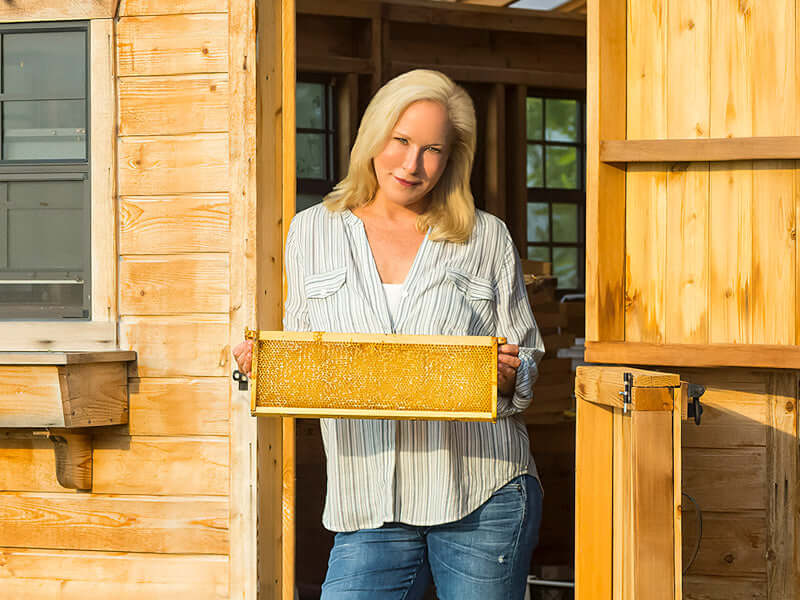
Honeycomb is honey in its most intact form, and every part of it is edible.
How to Substitute Honey for Sugar: The Conversion Rule
The Basic Ratio
Here is the core conversion to memorize:
- Use ½ to ¾ cup of honey for every 1 cup of sugar. Honey is sweeter than sugar by volume, so you need less of it.
- Start at the lower end, around ½ cup, then taste and adjust up if you want it sweeter.
- For every 1 cup of honey you use, reduce the other liquids in the recipe by ¼ cup.

The Four Adjustments That Matter
Reduce the liquid. Honey is roughly 17 to 20% water, so it adds moisture that sugar does not. Pull back the other liquids by about ¼ cup per cup of honey to keep the balance right.
Add a little baking soda. Stir in ¼ teaspoon of baking soda for each cup of honey. Honey is slightly acidic, and the baking soda balances that and helps baked goods rise properly.
Lower the oven temperature. Drop the heat by 25°F. Honey browns faster than sugar, and a slightly cooler oven keeps the outside from darkening before the inside is done.
Mix thoroughly. Honey is thicker and denser than sugar, so it takes a beat longer to work into a batter. Give it a proper mix so it distributes evenly.

Want to go deeper on the baking side specifically, with troubleshooting and technique tips? Our full guide to baking with honey picks up where this conversion leaves off.
Choosing the Right Honey for the Job
Matching the honey to the recipe is where the real difference shows up. A delicate honey disappears into a bold dish, and a bold honey can steamroll a delicate one. Match intensity to intensity and you will not go wrong.
Lighter Varietals for Delicate Recipes
- Spring Honey: bright and floral, lovely in delicate pastries and light cakes.
- Blueberry Honey: light and fruity, made for muffins and fruit‑forward desserts.
- Sweet Clover Honey: mild and smooth, the easy all‑purpose choice for everyday baking and drinks.
Bolder Varietals for Rich Recipes
- Buckwheat Honey: dark and almost molasses‑like, perfect for gingerbread and spiced cookies.
- Wildflower Honey: full and flexible, great in savory glazes and marinades.
- Coffee Blossom Honey: deep and roasty, wonderful in chocolate desserts and coffee drinks.

Our Spring Honey comes from our hives at Chesterhaven Beach Farm and carries bright, floral notes.
Tips for a Smooth Swap
In Baking
- Grease your measuring cup or spoon first so the honey slides right out.
- Warm thick honey gently to loosen it, but do not overheat it.
- Whisk honey into the wet ingredients before combining with the dry ones.
- Expect a slightly denser crumb and a deeper golden color.
In Beverages
- Dissolve honey in a warm liquid first, then add cold ingredients.
- Coffee Blossom Honey is a natural fit for morning drinks.
- For cocktails and iced drinks, make a quick honey syrup so it blends smoothly into cold liquid.
In Savory Cooking
- Add honey toward the end of cooking to keep its flavor bright.
- Use it in marinades and glazes, where it caramelizes into a glossy finish.
- It also pairs beautifully with cheese on a board.

Blueberry Honey makes a beautiful charcuterie board when paired with cheese.
Choosing a Quality Honey
What to Look For
Not every jar on the shelf is the same. When you are picking a honey to cook with, look for:
- Pure honey with nothing added.
- Minimal filtering, so the natural character stays intact.
- Clear sourcing, so you know where it came from.
- Glass packaging, which stores honey well.
Sourcing You Can Feel Good About
Choosing honey from careful, responsible beekeepers supports healthy hives and the broader landscape they forage. Bees are essential to pollination, which makes their wellbeing a real part of the food system. Our Eastern Shore Honey collection is jarred by hand in Maryland, with every jar labeled for exactly what the bees were visiting.

Where to Put Your New Honey Swap to Work
In the Oven
- Baking with honey gives you a moister crumb that keeps longer.
- Try it in honey gingerbread cookies or a loaf of beer bread.
- It also makes lovely glazes and frostings.
In the Blender and the Glass
- Stir honey into smoothies for natural sweetness.
- Mixed Berry Honey is a natural match for fruit‑based drinks.
- Warm it into a cup of ginger lemon honey tea when the weather turns.

Honey earns its keep beyond the kitchen, too. Our Honey Body Scrub shows how it works in skincare.
Getting Started
The easiest way to get comfortable is to start with a forgiving recipe. Honey‑baked apples or a batch of simple honey desserts let you practice the conversion without much fuss.
From there, reach for a honey you actually enjoy the taste of, since that flavor carries into everything you make. Our collection of Eastern Shore honey varietals covers everything from delicate baking to bold savory cooking.
Most of all, give yourself room to experiment. Make small batches, adjust as you go, and try different varietals until you land on the pairings you love. Once honey earns a spot in your baking, you may find yourself reaching for it all over the house. Here are five more ways to use minimally filtered honey, in the kitchen and beyond.

FAQs About Substituting Honey for Sugar
How much honey do I use to replace one cup of sugar?
Use ½ to ¾ cup of honey for every 1 cup of sugar, since honey is sweeter by volume. Start at ½ cup and taste before adding more. Then reduce the other liquids in the recipe by ¼ cup per cup of honey, add ¼ teaspoon of baking soda per cup of honey, and lower the oven temperature by 25°F.
Does substituting honey change the taste?
Yes. Honey adds its own flavor, and how much depends on the varietal. A light honey like Spring Honey keeps things subtle, while a bold honey like Buckwheat adds a pronounced, almost molasses‑like note. Choosing the varietal is part of how you shape the final flavor.
Will my baked goods look different?
They will usually brown more deeply, since honey caramelizes faster than sugar. That is why lowering the oven temperature by 25°F helps. The result is often a richer golden color and a slightly denser, more tender crumb.
How should I store baked goods made with honey?
Because honey holds moisture, honey‑based baked goods often stay fresh a little longer. Keep them in an airtight container at room temperature.
What does the baking soda do?
Honey is mildly acidic, and ¼ teaspoon of baking soda per cup of honey balances that acidity and supports proper rising in baked goods.
Can I use minimally filtered honey for baking?
Yes. Heat changes some of honey’s delicate qualities, but minimally filtered honey works just fine in the oven. Many bakers like it for the flavor depth it brings even after baking.