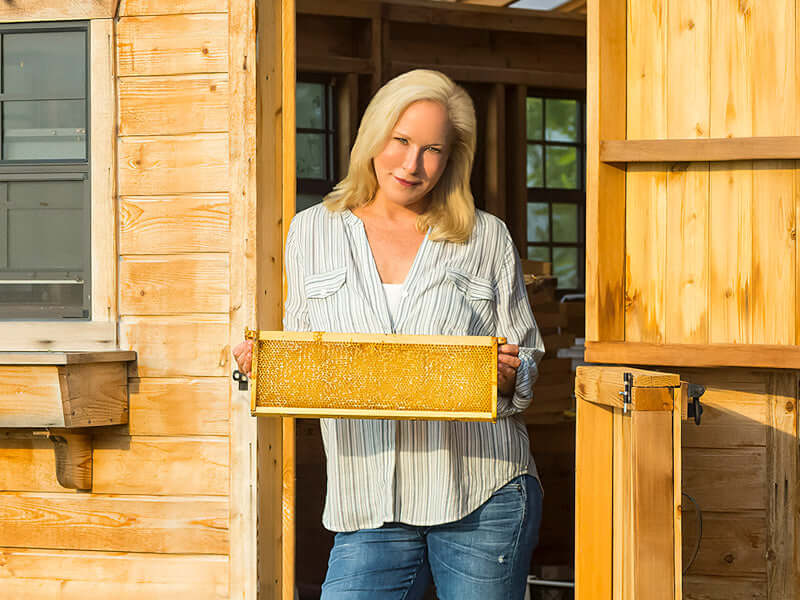




There is a version of lavender honey most people have encountered — golden, floral, usually labeled "lavender infused" — and then there is the real thing. They are not the same product. One is made by adding lavender to honey. The other is made by bees, from lavender, in the way that honey has always been made: slowly, precisely, and entirely on the plant's schedule. If you have only had the infused version, you have not yet met lavender honey.
A Plant That Demands Patience
Lavender is not a forgiving crop. It grows where other things struggle — on sun-scorched plateaus and rocky hillsides where the soil is thin and the air is dry and bright. In Spain, where some of the world's most extraordinary lavender honey is produced, the plant stretches across the high interior landscape in long violet rows as far as a bee can see. The elevation matters. The soil matters. The weeks of relentless sun matter. These are not conditions you can replicate or rush.
The bloom itself lasts only a few weeks in late spring. The lavender flowers open, the nectar flows, and the window closes. That is the whole year's work condensed into a narrow stretch of time when everything either cooperates or it doesn't. Too much rain and the nectar dilutes before the bees can collect it. Too much heat and the flowers close early, sealing off before the hives have had a chance to work them. A late frost in the weeks before bloom can compromise the entire season. This is what makes lavender honey genuinely rare. It is not a marketing claim. It is a function of the plant's biology and the weather's indifference.
If you want to understand lavender as a plant — how it grows, what it needs, and why beekeepers pay close attention to it — our beekeeping blog goes deep on lavender as a forage crop.

What the Bees Do With It
When conditions are right, the bees do what they always do: they work. A forager bee leaving the hive during lavender bloom will fly toward the fields, land inside an open blossom, and collect nectar from the base of the flower — the same nectar the plant produces to attract pollinators. She carries it back to the hive in a structure called the honey stomach, where enzymes begin breaking it down during the flight. Back at the hive, she passes it to a house bee, who continues processing it, moving it from bee to bee, and finally depositing it into the comb.
The bees then fan the comb with their wings for days, evaporating moisture until the nectar concentrates into honey. When the water content drops low enough, they cap the cell with beeswax to preserve it. Every bit of flavor in the jar — the floral delicacy, the lemon lift midway through, the long herbaceous finish — comes from what those bees collected in that field during those weeks. Nothing is added. Nothing is infused. The honey is a direct record of the bloom.

The Relationship Between Beekeeper, Bee, and Bloom
Monofloral honey doesn't happen by accident. It requires intentional beekeeping — positioning hives within or immediately adjacent to the lavender fields during the bloom window so the bees are foraging predominantly on one source. Our beekeepers in Spain do exactly this. They move their hives to the lavender plateau at the right moment in the season and manage them through the bloom with the kind of attention that comes from doing this work for generations.
The relationship between beekeeper, plant, and bee is one of the things that makes honey unlike any other agricultural product. The beekeeper cannot make the lavender grow. The lavender cannot pollinate itself. The bee connects the two, and in doing so, produces something that could only come from this place, this plant, and this season. What ends up in the jar is the result of that three-way relationship playing out the way it has for thousands of years — and it is precisely why monofloral honeys like lavender are treated as a category apart from blended or wildflower varieties.

What Lavender Honey Looks Like
Lavender honey is immediately, visually distinctive. It is pale — light gold, almost translucent — nothing like the deep amber of a buckwheat or the warm gold of a wildflower. Hold a jar up to natural light and it has a luminous quality that catches you off guard. The texture is silky and slow-flowing. It moves through the jar differently than a denser honey, and when you pour it, it falls in a thin, clean stream rather than a heavy ribbon. This is part of what makes it so well-suited for delicate applications — it doesn't overwhelm what it touches.
Like most raw honeys, lavender honey may crystallize over time. This is a sign of quality, not age. Raw honey crystallizes because it contains naturally occurring glucose, which precipitates out of solution at cooler temperatures. The flavor doesn't change — and returning it to liquid is simple. Set the jar in warm water, never boiling, and let it come back slowly.

What Lavender Honey Smells Like
The scent is the first thing most people notice, and it tends to stop them. It is clean and floral in the way of warm air moving over a field in late spring — not perfumed, not soapy, not the synthetic lavender most people associate with candles or sachets. It is softer than that. More alive. There is a reason lavender has been cultivated for centuries in proximity to apiaries. The scent the honey carries is a quieter version of the flower — the same character, but filtered through the bee's processing and the honey's concentration into something more restrained and more layered.
What Lavender Honey Tastes Like
Lavender honey rewards slow attention. This is not the honey you stir into your coffee without thinking. It is the one you pause for.
The entry is soft and buttery, with none of the assertiveness you might expect from a strongly floral source. The lavender note is present but composed — a whisper, not a shout. It is there if you look for it, but it doesn't announce itself. Midway through, something shifts: a bright, clean lift of lemon zest that gives the honey its remarkable lightness and separates it from every other floral variety. The finish is long and faintly herbaceous — the kind that lingers without asking anything of you. Sweetness level is worth noting: lavender honey is noticeably less sweet than clover or wildflower. This is part of what makes it so useful at the table. It adds complexity without adding weight.

Lavender Honey vs. Lavender Infused Honey
This distinction matters, and the market does not always make it easy to see.
Lavender infused honey is made by steeping dried lavender flowers — or sometimes lavender essential oil — in raw honey over a period of weeks, then straining. The honey absorbs the floral compounds from the added lavender and takes on a distinctly floral character. It is a legitimate, enjoyable product that you can make at home. What it is not is monofloral lavender honey.
True monofloral lavender honey is made entirely by bees from lavender nectar. No lavender is introduced to the jar. The flavor is a product of what the bees collected during the bloom — which means it carries a different flavor profile, a different texture, and a fundamentally different relationship to the flower. Infused honey absorbs lavender's essential oils. Monofloral honey is built from lavender's nectar, from the inside of the flower, transported by a bee, and concentrated in the comb.
When reading a label: "lavender infused" or "lavender flavored" means lavender was added to the honey after the fact. "Monofloral" means the bees made it from lavender nectar. The distinction is not subtle once you taste them side by side.

How to Use Lavender Honey
Lavender honey is one of the most versatile honeys in the pantry precisely because it is not too sweet, not too assertive, and not too anything. It enhances without taking over. For a full look at the range of ways to use it, our guide to the best uses for lavender and honey is worth reading alongside this one.
At the cheese board, lavender honey belongs next to Manchego — the nuttiness of a well-aged sheep's milk cheese and the delicate floral note of the honey are made for each other. It works equally well alongside triple-cream brie, where the fat in the cheese absorbs the honey's lighter elements and softens both. A few walnuts, some good crackers, and you have a pairing that needs nothing else.
In beverages, stir a small spoonful into Earl Grey or chamomile. The lemon zest notes in the honey meet the bergamot in the Earl Grey halfway — it is one of those combinations that feels like it was designed. For something cooler, our lavender honey tonic is a clean, refreshing way to let the honey lead.
For cooking, lavender honey is exceptional as a glaze on roasted stone fruit. Halve peaches, plums, or apricots, brush them with honey before roasting, and finish with flaked sea salt when they come out of the oven. The heat caramelizes the sugars and the floral notes deepen slightly — this works as a dessert, alongside cheese, or as a component in a simple grain bowl. It also makes an elegant salad dressing base: whisk it with good olive oil, a splash of white wine vinegar, a pinch of salt, and a small amount of Dijon. The floral character holds up to the acid and turns a simple green salad into something worth paying attention to.
In baking, lavender honey pairs naturally with lemon. Our Lavender Honey Lemon Cake is built around exactly this combination — the honey's floral character amplified by the citrus and vice versa. Lavender Honey Scones work the same way, the richness of the butter in the scone giving the honey somewhere to settle.
And for the simplest possible use: pour a small amount into a shallow dish, set out good bread, and let it speak entirely for itself. This is the test every serious honey passes or fails. Lavender honey passes.

Where to Find Real Lavender Honey
Most lavender honey sold in the United States is infused, not monofloral — which means sourcing the real thing takes some intention. Our Spanish Lavender Honey is sourced from beekeepers who position their hives directly within the lavender fields at bloom in Spain. Raw and minimally filtered, Star K Kosher certified, soon available in an 11oz jar year-round. One flower, one season, one honey — handled as little as possible between the hive and the jar.
Lavender Honey FAQs
What is lavender honey?
Lavender honey is a monofloral honey produced when bees forage primarily on lavender blossoms during the bloom. The flavor and character of the honey come entirely from the nectar the bees collected — no lavender is added to the jar. True monofloral lavender honey is distinct from lavender infused honey, which is made by steeping lavender flowers or oil in raw honey after the fact.
Is lavender honey real?
Yes — but the name is used loosely in the market. True lavender honey is a genuine monofloral variety produced when bees forage predominantly on lavender blooms, most commonly in Spain and France where lavender grows at scale. Much of what is sold as "lavender honey" is actually lavender infused honey — a different product made by adding lavender to honey rather than by bees foraging on lavender. Reading the label carefully and looking for the word "monofloral" is the clearest way to tell them apart.
What does lavender honey taste like?
The entry is soft and buttery, with a composed floral note that is present but not assertive. Midway through, a clean lift of lemon zest emerges, giving the honey its distinctive lightness. The finish is long and faintly herbaceous. It is noticeably less sweet than clover or wildflower honey, which makes it exceptionally versatile at the table.
What does lavender honey smell like?
Clean and floral — the scent of warm air moving over a lavender field in late spring. Not perfumed, not soapy. It carries the character of the flower in a quieter, more restrained form, filtered through the bee's processing into something more layered than the bloom itself.
Where does lavender honey come from?
The finest lavender honey is produced in Spain and France, where lavender grows at scale across high-altitude plateaus and the bloom window allows for true monofloral production. Our Lavender Honey is sourced from Spanish beekeepers who manage their hives within the lavender fields during bloom — one flower, one season, traceable from hive to jar.
Does lavender honey crystallize?
Yes — like most raw honeys, lavender honey may crystallize over time. This is a sign of quality and minimal processing, not spoilage. The flavor remains unchanged. To return it to liquid form, set the jar in warm water and allow it to come back slowly. Never use boiling water, as high heat compromises the honey's raw character.
How is lavender honey different from lavender infused honey?
Lavender infused honey is made by steeping dried lavender flowers or lavender oil in raw honey, then straining it. The floral character comes from the added lavender. True monofloral lavender honey is made entirely by bees from lavender nectar — no lavender is introduced to the jar after the fact. The sourcing story, flavor profile, and texture are all different. Labels that say "infused" or "flavored" indicate the former; "monofloral" indicates the latter.
How do you use lavender honey?
Lavender honey is exceptionally versatile. It pairs naturally with aged cheeses like Manchego and triple-cream brie. Stir it into Earl Grey or chamomile tea, where its lemon zest notes complement the bergamot. Use it as a glaze on roasted stone fruit, as a base for vinaigrette, or in baking alongside lemon. It also works on its own poured into a shallow dish with good bread — simple, and worth doing at least once.
For a full look at how lavender and honey work together across cooking, baking, and self-care, see our guide to the best uses for lavender and honey.