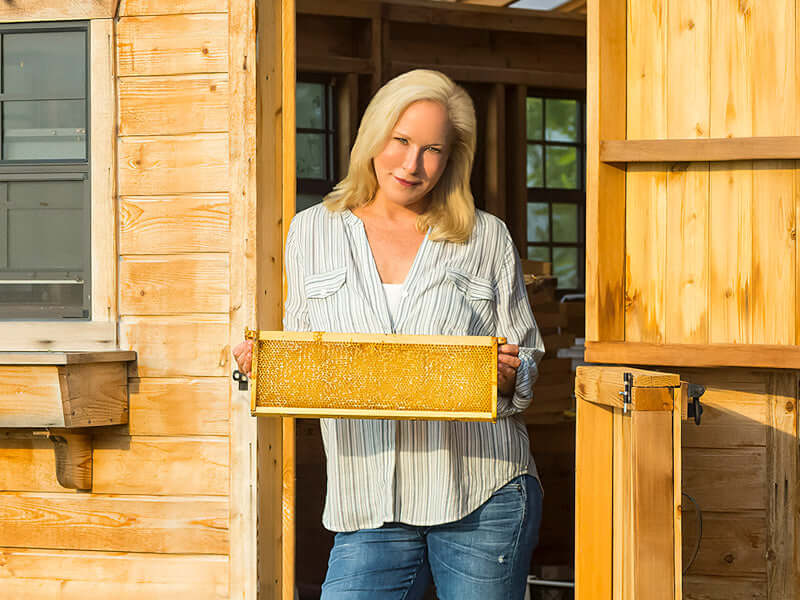


There's something about lavender and lemon together that just feels like spring arrived on a plate. This lemon lavender cake made with honey (of course) has been one of our most-requested recipes ever since Kara first made it from the lavender we grow right here at Chesterhaven Beach Farm. It's floral without being perfume-y, sweet without being cloying, and just elegant enough for a special occasion while still being totally doable on a weekend afternoon. The secret ingredient? Our raw Spring Honey, a light, delicate honey collected from our farm's spring blossoms that pairs beautifully with culinary lavender and bright citrus. Spring Honey is one of our Honey Royales, the tier reserved for our rarest honeys, which means each year's harvest is genuinely limited and often sells out before the next season begins.
If you've been looking for ways to bake with spring honey, this cake is the perfect place to start.
Why You'll Love This Lemon Lavender Cake
Most cakes rely on refined sugar as their only sweetener. This one uses honey as the primary sweetener, and that makes a real difference in the final result. Honey adds moisture to the crumb, deepens the flavor, and lets the lavender and lemon shine without any one ingredient overpowering the others. Our Spring Honey — with its lighter, more floral character compared to a darker fall honey — keeps the whole thing bright and fresh-tasting. Our Lavender Honey brings a more herbal taste to the cake without being overly fruity. Whether you use Spring Honey or Lavender Honey it's a genuinely beautiful combination.
If you're into cooking with lavender and floral honeys, lavender honey on goat cheese is the next pairing to explore: same flavor neighborhood, same kind of crowd-pleaser at a gathering. Have you heard of Lavender Honey before? If your curious about its taste or ways to use it, check out our guide to Lavender Honey from Spain.
Whether you're baking for a baby shower, a Mother's Day brunch, a garden party, or just because it's spring and you feel like it, this loaf cake delivers every time.
A True Farm-to-Table Recipe
Every year, our fields at Chesterhaven Beach Farm produce a gorgeous lavender harvest. After years of drying bundles and infusing everything we could think of, Kara landed on this cake as her all-time favorite use for culinary lavender. The bees love our lavender fields too — and that pollination is part of what gives our Spring Honey its distinctly floral, light flavor. It's farm-to-table in the most direct sense possible.
This cake pairs beautifully with our Good Night Tea or alongside an Earl Grey honey cocktail — perfect for afternoon gatherings or special occasions. We also love serving this cake alongside our other lavender honey desserts: lavender scones, lavender ice cream, and even lavender marshmallows. The lavender lovers in your life will need to try each one.

Tips for Working with Culinary Lavender
Not all lavender is created equal when it comes to baking. You want buds that are specifically labeled "culinary lavender" — these are food-safe varieties with a more delicate flavor than ornamental lavender. Using the wrong kind can make your cake taste soapy, and nobody wants that.
- Grind it fine. For this recipe, finely grind your dried culinary lavender buds before measuring. This distributes the flavor evenly through the batter without any chewy or gritty bits.
- Less is more. Lavender is potent — stick to the 1 teaspoon called for in the recipe. If you want a stronger floral note, the honey syrup (steeped with Raven Tea, which contains dried lavender buds) is where that comes through anyway.
- The syrup does heavy lifting. Our Raven Tea is steeped directly into the honey-lemon syrup, infusing it with a second layer of lavender flavor that soaks into the warm loaf. It's the combination of both that gives this cake its signature depth.
- Want even more lavender flavor? Try using lavender infused honey or Lavender Honey in place of some or all of the Spring Honey in the syrup. Our blog on the difference between the two will help you figure out which one you want in your cake.

Ingredients
For the Cake
- 2 sticks (1 cup / 226g) unsalted butter, room temperature
- 1 cup Bee Inspired Spring Honey
- 4 large eggs, room temperature
- ⅓ cup fresh lemon zest (from about 4–5 lemons)
- 3 cups all-purpose flour
- ½ teaspoon baking powder
- 1 teaspoon baking soda
- 1 teaspoon kosher salt
- 1 teaspoon finely ground culinary-grade dried lavender buds
- ¼ cup fresh-squeezed lemon juice
- ¾ cup buttermilk, room temperature
- 1 teaspoon pure vanilla extract
For the Honey Lavender Syrup
- ½ cup Bee Inspired Spring Honey
- ½ cup fresh-squeezed lemon juice
- 1 tablespoon Raven Tea (loose leaf — the lavender buds in the tea infuse the syrup)
For the Lemon Glaze
- 2 cups confectioners' sugar
- 3½ tablespoons fresh-squeezed lemon juice
Optional garnish: Fresh-picked culinary lavender sprigs or edible flowers

The Key to a Perfect Crumb
The most important thing you can do for this cake is bring all your ingredients to room temperature before you start. Cold butter won't cream properly, cold eggs won't incorporate smoothly, and the result will be a dense, uneven loaf. Give yourself 30–45 minutes before baking to pull everything out of the fridge. That one step makes a bigger difference than anything else.
The second rule: don't overmix once the flour goes in. Mix just until each addition disappears — no more. Overmixing develops gluten and turns your tender, moist cake tough. Gentle hands, every time.

Step-by-Step Instructions
Step 1 — Prep Your Ingredients
Pull your butter, eggs, and buttermilk out of the fridge 30–45 minutes ahead of time. Zest and juice your lemons. Preheat your oven to 350°F. Grease and flour a 9x5-inch loaf pan, or line the bottom with parchment paper. Having everything measured and ready before you turn on the mixer makes the whole process smoother and helps ensure an even batter.
Step 2 — Cream the Butter and Honey
In the bowl of a stand mixer fitted with the paddle attachment, beat the room temperature butter and Spring Honey together on medium speed until light and fluffy, about 3 minutes. Add the eggs one at a time, beating well after each addition. Mix in the lemon zest.
Step 3 — Combine the Dry Ingredients
In a separate bowl, sift together the all-purpose flour, baking powder, baking soda, salt, and finely ground lavender buds. Whisk to combine and distribute the lavender evenly.
Step 4 — Combine the Wet Ingredients
In a third bowl or large measuring cup, whisk together the lemon juice, buttermilk, and vanilla extract.
Step 5 — Build the Batter
With the mixer on low, alternate adding the flour mixture and the buttermilk mixture to the butter-honey base, beginning and ending with the flour. Mix just until each addition is incorporated — do not overmix.
Step 6 — Bake
Pour the batter into the prepared 9x5-inch loaf pan and smooth the top. Bake at 350°F for 55–60 minutes, until a toothpick inserted in the center comes out clean. If the top begins to brown too quickly, tent loosely with foil after 40 minutes.
Step 7 — Make the Honey Lavender Syrup
While the cake bakes, combine the Spring Honey and lemon juice in a small saucepan over medium-high heat. Stir to combine and bring to a boil. Reduce heat to low, add the Raven Tea loose leaf, and allow to steep and simmer for about 10 minutes until the mixture thickens slightly. Remove from heat, cool slightly, and strain out the tea leaves.
Step 8 — Soak the Cake
When the loaf comes out of the oven, allow it to cool in the pan for 10 minutes. Remove from the pan and set on a wire rack placed over a sheet pan to catch drips. While the cake is still warm, spoon or brush the honey lavender syrup generously over the top and sides, allowing it to soak in fully. Let the cake cool completely before glazing.
Step 9 — Make the Lemon Glaze and Finish
Whisk together the confectioners' sugar and lemon juice until smooth and pourable. Add lemon juice a little at a time — you want a glaze that flows but isn't too thin. Pour over the completely cooled loaf and allow it to drizzle naturally down the sides. Let the glaze set for about 30 minutes before slicing.
Step 10 — Garnish and Serve
Garnish with fresh-picked culinary lavender sprigs or edible flowers. Only use flowers that are confirmed food-safe and free of pesticides. Slice and serve at room temperature.

How to Serve and Store
This cake is best served the day it's made, but it keeps well covered at room temperature for up to 2 days or refrigerated for up to 4 days. If you refrigerate it, let it come back to room temperature for 30 minutes before serving — honey cakes firm up a bit when cold and are much better at room temp.
More Spring Recipes with Honey
If this cake has you in a spring baking mood, you're in the right place. Our Spring Honey is incredibly versatile — its lighter flavor works beautifully in everything from pastry glazes to savory roasted vegetables. Here are a few more recipes to explore:
- Honey Strawberry Scones — a tender, flaky scone with fresh strawberries and a honey glaze
- Earl Grey Cake with Honey — a double-infused Raven Tea loaf with a wildflower honey glaze, a natural companion to anything lavender.
- Soft Pretzel Bites with Honey Mustard Sauce — perfect for spring entertaining
- Honey Mustard Roasted Carrots — an easy, crowd-pleasing spring side dish
- How to Use Spring Honey — all our favorite ways to cook and bake with spring honey
Want to learn more about what makes spring honey so special? Our guide to what is spring honey covers everything from how it's made to how its flavor differs from other seasonal varieties. And if you're curious how spring and fall honeys compare, check out our breakdown of spring vs. fall honey.

Lemon Lavender Cake with Honey
Kara Brown
12 slices
20 minutes
1 hours
456
American
Dessert
A tender, fragrant loaf cake sweetened with Spring Honey and scented with culinary lavender, bright lemon zest, and a tea-steeped honey syrup. Light enough for an afternoon treat, elegant enough for any spring occasion.

Ingredients
For the Cake
- 2 sticks (1 cup / 226g) unsalted butter, room temperature
- 1 cup Bee Inspired Spring Honey
- 4 large eggs, room temperature
- ⅓ cup fresh lemon zest (from about 4–5 lemons)
- 3 cups all-purpose flour
- ½ tsp baking powder
- 1 tsp baking soda
- 1 tsp kosher salt
- ¼ cup fresh-squeezed lemon juice
- ¾ cup buttermilk, room temperature
- 1 tsp pure vanilla extract
- 1 tsp finely ground culinary-grade dried lavender buds
For the Honey Lavender Syrup
- ½ cup Bee Inspired Spring Honey
- ½ cup fresh-squeezed lemon juice
- 1 tbsp Raven Tea (loose leaf, steeped — the lavender buds in the tea infuse the syrup)
For the Lemon Glaze
- 2 cups confectioners' sugar
- 3½ tbsp fresh-squeezed lemon juice
Optional Garnish
- Fresh-picked culinary lavender sprigs or edible flowers
Directions
Preheat oven to 350°F. Grease and flour a 9x5-inch loaf pan, or line the bottom with parchment paper. Bring butter, eggs, and buttermilk to room temperature if you haven't already.
In the bowl of a stand mixer fitted with the paddle attachment, beat the butter and Spring Honey together on medium speed until light and fluffy, about 3 minutes. Add the eggs one at a time, beating well after each addition. Mix in the lemon zest.
In a separate bowl, sift together the flour, baking powder, baking soda, salt, and finely ground lavender buds. Whisk to combine.
In a third bowl or large measuring cup, whisk together the lemon juice, buttermilk, and vanilla extract.
With the mixer on low, alternate adding the flour mixture and the buttermilk mixture to the butter-honey base, beginning and ending with the flour (flour → buttermilk → flour → buttermilk → flour). Mix just until each addition is incorporated — do not overmix.
Pour the batter into the prepared loaf pan and smooth the top. Bake at 350°F for 55–60 minutes, until a cake tester or toothpick inserted in the center comes out clean. If the top begins to brown too quickly, tent loosely with foil after 40 minutes.
While the cake bakes, combine the Spring Honey and lemon juice in a small saucepan over medium-high heat. Stir to combine and bring to a boil. Reduce heat to low, add the Raven Tea, and allow to steep and simmer for about 10 minutes until the mixture begins to thicken slightly. Remove from heat, cool slightly, and strain out the tea leaves.
When the cake comes out of the oven, allow it to cool in the pan for 10 minutes. Remove from the pan and set on a wire rack placed over a sheet pan to catch drips. While the cake is still warm, spoon or brush the honey lavender syrup generously over the top and sides, allowing it to soak in. Let the cake cool completely before glazing.
Whisk together the confectioners' sugar and lemon juice until smooth and pourable. Add lemon juice a little at a time — you want a glaze that flows but isn't too thin. Pour over the completely cooled loaf and allow it to drizzle naturally down the sides.
Garnish with fresh-picked culinary lavender sprigs or edible flowers. Slice and serve at room temperature.
FAQs About Lemon Lavender Cake
Can I use a different honey for this recipe?
You can, but we genuinely recommend our Spring Honey for this one. Its lighter, more delicate flavor lets the lavender and lemon come through without competing. A darker, stronger honey would overpower the floral notes you're going for here.
What kind of lavender should I use in baking?
Always use dried culinary lavender — buds that are specifically labeled food-safe. Ornamental lavender can be treated with pesticides and has a much more pungent, almost medicinal flavor. For this recipe, grind the buds finely before measuring so they distribute evenly through the batter.
Can I make this cake ahead of time?
Yes — you can bake the loaf a day ahead, wrap it tightly, and store at room temperature. Apply the honey syrup while the loaf is still warm, then add the glaze the day you're serving it for the best appearance.
Why does my honey cake sink in the middle?
The most common cause is opening the oven door too early, underbaking, or overmixing the batter. Because honey adds more moisture than sugar, this cake needs the full bake time — use a toothpick to confirm the center is done before pulling it from the oven.
What does spring honey taste like compared to regular honey?
Spring honey has a lighter color and a more delicate, floral sweetness than many everyday honeys. Because it's collected from early-blooming flowers — including the lavender on our farm — it carries subtle blossom notes that make it an especially beautiful match for this recipe.