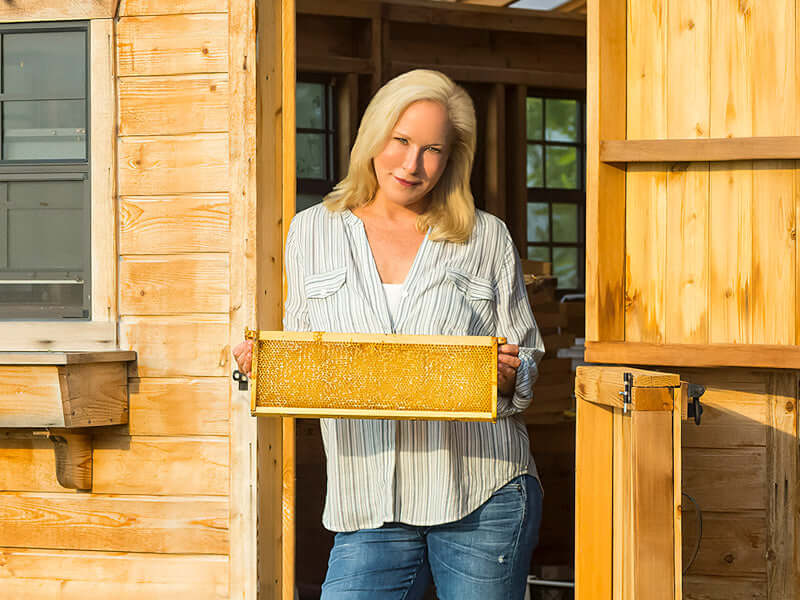


Bee pollen is one of nature’s most fascinating bee products, gathered by honeybees as they move from flower to flower. These tiny golden granules have been part of food traditions across many cultures for centuries, and they’re drawing fresh interest from people who want to understand where their food comes from and what’s actually in it.
If you’ve ever wondered what bee pollen is, how bees make it, and what it brings to the table nutritionally, you’re in the right place. Let’s walk through this remarkable little granule together.
Our bees collect pollen and nectar throughout the foraging season
What Is Bee Pollen?
Bee pollen starts when honeybees collect pollen from flowering plants during their foraging trips. Back at the hive, the bees pack it into cells and combine it with nectar and their own secretions. This stored, fermented form is often called “bee bread,” and it serves as the colony’s main source of protein. When beekeepers fit a small pollen trap at the hive entrance, they can gather a modest amount of these granules without disrupting the colony’s own supply.
One of the most interesting things about bee pollen is that no two batches are exactly alike. What ends up in the granule depends on:
- The kinds of flowers the bees visited
- The season the pollen was gathered
- Geographic location and climate
- The diversity of plants growing nearby
Because of that variation, bee pollen from one region can look, taste, and read differently on a nutrition panel than pollen from another. That’s a big part of why local bee pollen appeals to people who like knowing exactly where their food was made.

Minimally filtered honeycomb naturally carries bee pollen. Discover how honeycomb is made and the structure behind it
What Is in Bee Pollen? A Look at the Nutrition
Bee pollen has earned a reputation as a nutrient-dense food. The exact makeup shifts from batch to batch, but most bee pollen contains a recognizable mix of the following.
Macronutrients
- Proteins and amino acids, including essential amino acids
- Carbohydrates
- Lipids and fatty acids
- Dietary fiber
Vitamins
- B vitamins such as B1, B2, and B6
- Vitamin C
- Vitamin E
- Beta-carotene, which the body uses to make vitamin A
Minerals
- Potassium
- Magnesium
- Calcium
- Zinc
- Iron
Plant Compounds
- Flavonoids
- Polyphenols
- Carotenoids
- Naturally occurring plant enzymes

Every one of our honey varieties carries naturally occurring bee pollen, whatever the type of honey
What Research Says About Bee Pollen
Scientists have looked at the composition of bee pollen for decades, and the picture they’ve built is one of genuine complexity. Researchers have identified a range of bioactive plant compounds in bee pollen. It’s worth knowing that much of this work has been done in the lab or in animal studies rather than in large human trials, so the findings describe what is in the granule more than they describe a specific outcome in people.
Plant Compounds
Laboratory analysis has identified plant compounds such as flavonoids, carotenoids, and phenolic acids in bee pollen. These same families of compounds turn up in many colorful fruits, vegetables, and other plant foods that round out a varied diet.
Protein and Amino Acids
Bee pollen contains protein and a spread of amino acids, the building blocks the body uses for countless everyday functions. The exact amino acid profile tracks back to the plants the bees foraged.
Vitamins and Minerals
Depending on its botanical source, bee pollen can contribute a variety of vitamins and minerals to a meal, which is part of why people fold it into an already balanced way of eating rather than treating it as a stand-alone fix.

Our Pollen Set brings together three honey varieties from different floral sources, each one minimally filtered so the naturally occurring pollen stays put
Why People Reach for Bee Pollen
People add bee pollen to their routines for all sorts of reasons:
- As a nutrient-dense food: with its varied profile, bee pollen appeals to anyone looking to bring more plant-based nutrition to the table.
- For a local connection: some people are curious about local pollen and the idea of foods that reflect their own region’s plant life. If you’re exploring this, talk it through with a healthcare provider first, especially if you have known pollen allergies. For the folk tradition and the research around honey and seasonal allergies, see our guide on honey and allergies.
- To support local beekeepers: buying from nearby beekeepers helps keep small apiaries and local pollinators going.
- As a whole food: many people simply like that bee pollen is minimally processed and arrives close to the form the bees made it in.

Our Honey Sticks are an easy way to enjoy honey and its naturally occurring bee pollen wherever you are
What to Know Before You Try Bee Pollen
Bee pollen is a food, and like any food it deserves a little common sense. The quality of what you buy matters too. Some heavily processed honey is ultra-filtered, which strips out the pollen and makes the honey’s origin much harder to trace. If you want to understand how honey fraud works and how to buy the real thing, our guide on counterfeit food digs into it.
A few other things to keep in mind:
Allergic Reactions
Bee pollen can trigger allergic reactions in some people, especially those with:
- Pollen allergies or hay fever
- Bee sting allergies
- A known sensitivity to bee products
Reactions can range from mild, such as itching or a rash, to severe, including difficulty breathing or anaphylaxis. If you have any allergy to pollen or bee products, talk with a healthcare professional before trying bee pollen.
Medication Interactions
Bee pollen may interact with certain medications, including:
- Blood thinners such as warfarin
- Other anticoagulants
If you take any medication, check with your healthcare provider before adding bee pollen to your routine.
Special Situations
- Pregnant or nursing: there isn’t much research on bee pollen during pregnancy and breastfeeding, so check with your healthcare provider.
- Children under age 2: bee products are best avoided for very young children.
- Ongoing health conditions: talk with your doctor before adding bee pollen to your diet.
Quality and Handling
Like other natural foods, bee pollen that isn’t handled or stored well can develop problems. Research has noted that poorly handled pollen can sometimes contain mold-related mycotoxins, trace pesticide residues, or bacterial contamination. That’s a strong argument for buying from producers who handle and store their pollen carefully.
How to Use Bee Pollen
Bee pollen comes in a few different forms, so you can pick whatever suits you.
Forms You’ll Find
- Granules: the most natural form, with a gently sweet, floral taste
- Powder: easy to stir into smoothies and other foods
- Capsules: handy if you’d rather skip the taste
Easy Ways to Enjoy It
- Stir granules into a smoothie or a bowl of yogurt
- Sprinkle over cereal or oatmeal
- Add to artisanal tea or another warm drink
- Blend into homemade energy balls or snacks
- Work it into honey-based recipes
A Sensible Way to Start
Start small. Begin with just a few granules to see how you respond, especially if you have seasonal allergies.
Build up slowly. If it agrees with you, you can gradually increase the amount over several days.
Find your amount. Many people settle on one to two teaspoons a day, though everyone is different.
Pick a time that sticks. Some folks like it in the morning or before a meal, mostly because it’s easy to remember that way.
Why Local Bee Pollen Is Worth Seeking Out
Choosing local bee pollen comes with a few real advantages:
- Freshness: local pollen often reaches you sooner, having traveled a much shorter distance from hive to pantry.
- A regional signature: local pollen mirrors the plant life around you, giving it a profile that’s specific to where you live.
- Support for pollinators: buying from local beekeepers backs the bee populations in your own community.
- Thoughtful practices: small beekeepers often lean on careful, bee-friendly methods that put colony health first.
- A lighter footprint: buying local trims the transportation behind your food.
How We Keep Our Beekeeping Sustainable
At Bee Inspired Goods, we put a few things first:
- Bee health and welfare above all
- Minimal intervention in the hive
- No harmful pesticides near our colonies
- Supporting local ecosystems through pollination
- Careful, respectful harvesting
Where Bee Pollen Shows Up in Honey
Here’s something a lot of people don’t realize: minimally filtered honey naturally contains bee pollen. When honey is only lightly strained, those tiny golden granules stay suspended right in the jar, traveling along with every spoonful.
All of our Eastern Shore honey varieties carry naturally occurring bee pollen because we filter as little as possible. That means you’re getting that pollen whenever you reach for our:
Fitting Bee Pollen Into Your Day
Working bee pollen into a daily routine is genuinely simple. A few ideas:
- Add it to your morning smoothie
- Sprinkle it over cereal, yogurt, or oatmeal
- Stir it into herbal tea
- Fold it into homemade energy bars or snacks
- Whisk a little into a salad dressing
- Stir it into nut butter
How to Judge Bee Pollen Quality
Not all bee pollen is the same. Here’s what to look for.
Good Signs
- Bright, varied color across yellow, orange, and brown tones
- A gentle floral aroma
- A dry but slightly tacky texture
- No musty or off smells
Source Matters
- Know where your bee pollen comes from
- Choose producers who test for contaminants
- Look for proper storage in cool, dry conditions
- Support beekeepers who are transparent about their practices
Storing It at Home
- Keep it in a cool, dry spot
- Some people refrigerate or freeze it to extend freshness
- Use it within one to two years of purchase
- Toss it if you notice any musty smell or appearance
Bee Pollen Compared to Other Bee Products
It helps to see how bee pollen sits alongside the hive’s other products:
- Bee pollen: flower pollen packed by bees, notable for its protein, vitamins, and minerals
- Honey: nectar transformed by bees into natural sugars, with enzymes and trace amounts of pollen
- Royal jelly: a secretion fed to queen bees, rich in protein and fatty acids
- Propolis: a resinous mixture bees use to seal the hive, studied for its plant compounds
- Beeswax: secreted by bees to build comb, and a favorite ingredient in natural body care
Each one has its own composition and its own traditional uses, and the depth of research behind each varies quite a bit.
Supporting Bee Health Through What You Buy
Every time you choose bee products from responsible beekeepers, you’re backing:
- Pollinator conservation: healthy bee populations that food production depends on
- Biodiversity: varied ecosystems that support a wide mix of plants
- Sustainable agriculture: farming that works alongside nature
- Local economies: small beekeepers caring for their colonies year-round
- Environmental stewardship: practices that protect habitat and cut chemical use
At Bee Inspired Goods, ethical beekeeping comes first. Our colonies forage across the diverse landscape of Maryland’s Eastern Shore, and the honey and pollen they produce reflect that variety.
FAQs About Bee Pollen
What is bee pollen?
Bee pollen is flower pollen collected by honeybees and combined with nectar and bee secretions. It serves as the main protein source for the hive and contains a mix of proteins, vitamins, minerals, and plant compounds.
Is bee pollen safe to eat?
For most people, bee pollen is fine to eat in reasonable amounts. People with pollen allergies, bee sting allergies, or certain health conditions should check with a healthcare provider before trying it.
How should I take bee pollen?
Start with a very small amount, just a few granules, to see how you respond. If it agrees with you, you can gradually work up to one to two teaspoons a day. Bee pollen can be stirred into smoothies, yogurt, or cereal, or taken on its own.
Can bee pollen cause allergic reactions?
Yes. Reactions can range from mild, such as itching or a rash, to severe, including difficulty breathing or anaphylaxis, particularly in people with pollen or bee sting allergies. Start with a tiny amount and stop right away if you notice any adverse reaction.
Why should I buy local bee pollen?
Local bee pollen is often fresher, reflects the plant life in your region, and supports nearby beekeepers and pollinators. Buying local also trims the transportation behind your food.
Does honey contain bee pollen?
Yes. Minimally filtered honey naturally contains bee pollen. All of our honey varieties include naturally occurring bee pollen because we filter as little as possible.
Disclaimer: These statements have not been evaluated by the Food and Drug Administration. Bee pollen is not intended to diagnose, treat, cure, or prevent any disease. This information is for educational purposes only and is not medical advice. Always talk with a qualified healthcare provider before making changes to your diet, especially if you have allergies, medical conditions, or take medications.