

Body butter is a thick, oil-based skin care formula made from plant butters, carrier oils, and sometimes active ingredients like minimally filtered honey. Unlike lotion — which is mostly water with a small amount of oil — body butter contains much less water, which is why it feels richer, absorbs differently, and lasts longer on the skin. The name describes what it is: a concentrated, butter-like consistency built primarily from fats.

What Body Butter Is Actually Made From
The base of any body butter is one or more plant butters — shea, cocoa, mango, and kokum are the most common. These are solid at room temperature and melt on contact with skin. They're dense in fatty acids and have long been used in skincare for their emollient properties, meaning they create a soft layer that helps the skin hold on to moisture.
Carrier oils are the second building block. Where plant butters provide density and staying power, oils adjust the texture and absorption rate. Sweet almond, jojoba, apricot kernel, avocado, and sunflower are common additions — each absorbs differently and brings a different fatty acid profile. Sweet almond oil sinks in relatively quickly without leaving shine; coconut oil adds richness; rose hip oil contributes a different nutritional composition altogether. The ratio of butters to oils is where formulators do the most meaningful work: changing that ratio changes everything about how a body butter behaves on skin.
From there, formulas diverge. Some add beeswax to create a richer, longer-staying texture — this is what makes Rose Garden and Autumn Harvest Body Butter noticeably thicker than the others in our line. Others incorporate botanical extracts like seaweed or rosemary. Fragrance comes last. At Bee Inspired, most formulas use essential oil blends pressed directly from plants; Nectar+Honey and Haute Cocoa use phthalate-free fragrance oils formulated to behave safely on skin. Either way, the ingredient list shows exactly what was used — no vague "fragrance" hiding something synthetic.
For a closer look at why small-batch production matters when it comes to ingredient quality and formula integrity, see our post on small-batch vs. mass production in skincare.
Body Butter vs. Lotion vs. Cream: What's the Difference
The key variable is water content — and water content changes everything about how a formula behaves.
Lotion is mostly water with a small percentage of oil held together by an emulsifier. It absorbs quickly, feels light, and works well for daily use on skin that doesn't need a lot of extra moisture. The trade-off: the water evaporates, and the effect doesn't last as long as a richer formula.
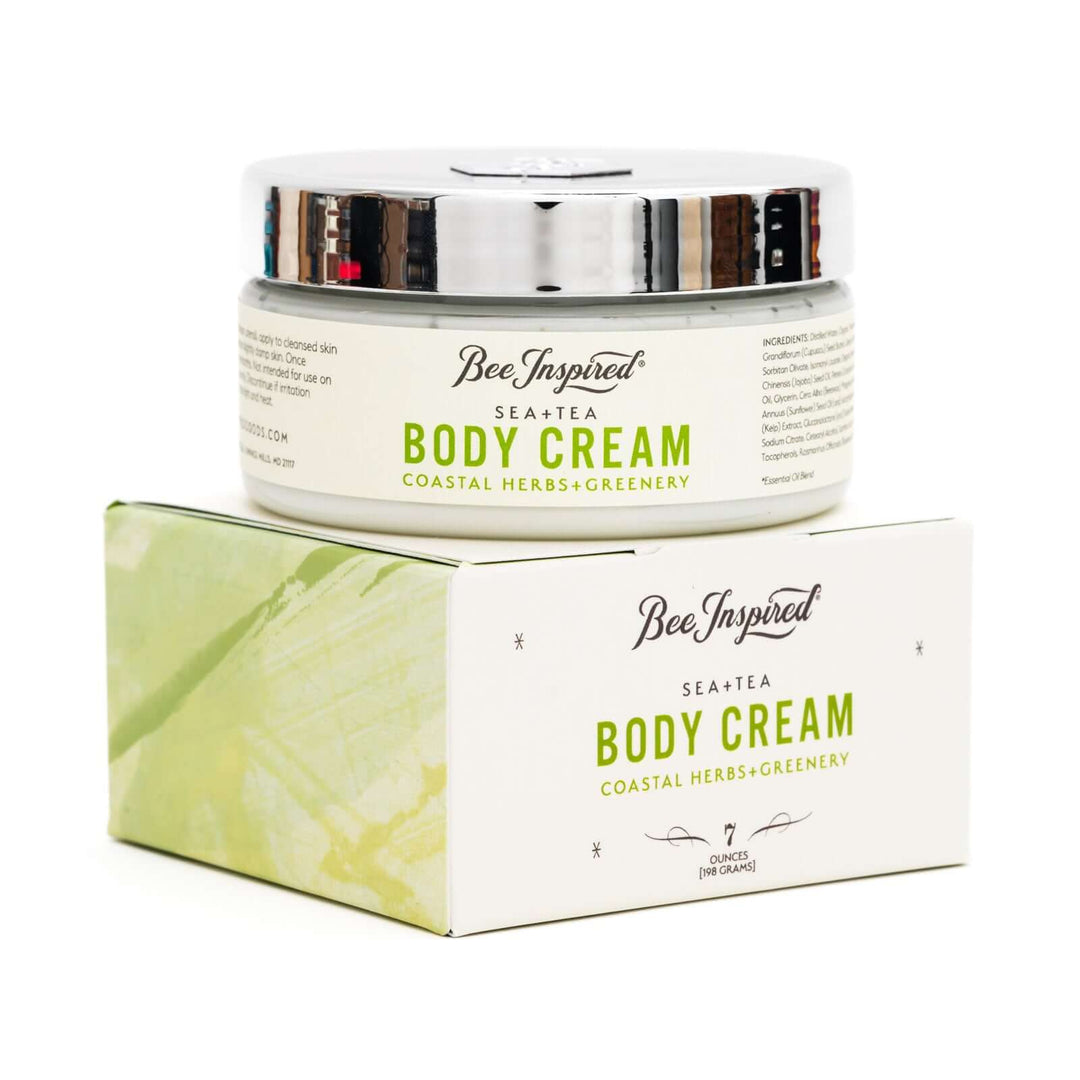
Body cream sits in the middle — more oil than lotion, less than a traditional body butter. It absorbs without leaving a heavy residue and works well for normal to dry skin across most seasons. Bee Inspired's Sea+Tea Body Cream falls into this category. Built on cupuacu seed butter with jojoba, avocado oil, and seaweed extract, it absorbs in about thirty seconds — which makes it a better fit for people who want to get dressed immediately after applying. It was developed over more than a year in collaboration with the spa at Cliff House Maine.
Body butter is oil-heavy, lower on water, and built to stay on the skin longer. It's the right choice when the skin needs sustained moisture: dry elbows, rough heels, hands that spend time outdoors, or skin that feels tight within an hour of a shower. Because body butter contains much less water than lotion, it requires fewer preservatives to stay shelf-stable — and formulas without any water at all, like Bee Inspired's Winter Body Mousse, need none.

Why Honey Goes Into Body Butter
Minimally filtered honey is a humectant — it draws moisture from the air and holds it against the skin's surface. It also contains naturally occurring enzymes, amino acids, and trace minerals. In a body butter formula, honey contributes to the way the product interacts with the skin's outer layer alongside the oils and butters that make up the base.
At Bee Inspired, the honey in our body butter formulas comes from the same network of beekeepers whose honey we sell in jars — minimally processed, not refined into a shelf-stable syrup. Most of the body butters in the line contain Bee Inspired honey directly in the formula: Nectar+Honey, Rose Garden, Citrus Blossom, Place in the Sun, Peace of Mind, Haute Cocoa, and Autumn Harvest all include it. Sea+Tea Body Cream and Winter Body Mousse do not — those formulas are built around different base ingredients.
To understand more about how honey functions as a skincare ingredient, see our post on honey as a moisturizer.

The Body Butter Lineup: What Makes Each Formula Different
Most of the body butters in the Bee Inspired line share a common base: distilled water, sweet almond oil, coconut oil, organic cocoa butter, and Bee Inspired honey. What makes each one distinct is the scent, the specific ratio of butters and oils, and in a few cases, the addition of beeswax — which changes the texture meaningfully.
Nectar+Honey Body Butter leads with honey more explicitly than any other formula in the line — both as an ingredient and in the scent. A phthalate-free fragrance oil adds a warm, faintly sweet honey character that doesn't read as candy or floral. Absorbs in about thirty seconds. Pairs with the Nectar+Honey Body Scrub.
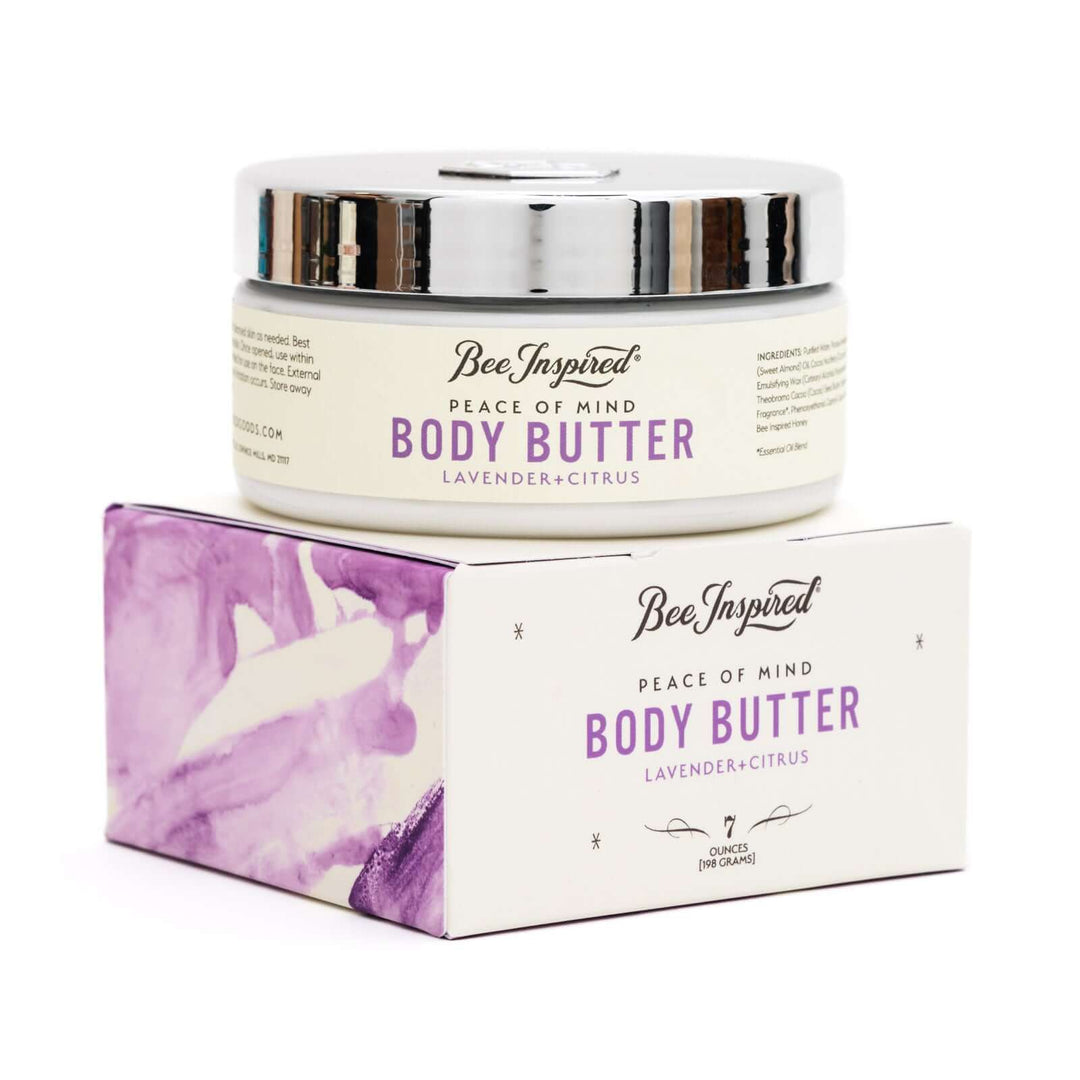
Peace of Mind Body Butter is scented with Bulgarian lavender and citrus essential oils — plant-pressed, not synthetic. Strong for the first hour, then settles to something faint that carries on skin overnight. Works as well kept by the bed for hands and feet as it does right after a shower.
Rose Garden Body Butter is the richest of the standard body butters because it includes organic beeswax alongside the cocoa butter base. That beeswax makes the formula thicker in the jar and slower to fully absorb — warm it between your palms for about fifteen seconds before applying. Scented with rose, lavender, and geranium essential oils: layered and floral, not synthetic. The scent lingers on fabric overnight.
Haute Cocoa® Body Butter has more organic cocoa butter in the formula than any other in the line, making it intentionally thicker. Scented with a skin-safe, phthalate-free dark chocolate fragrance oil that reads as real dark chocolate — slightly bitter, not candy-sweet. Best for spots that get very dry: heels, elbows, knees, hands. Takes thirty to sixty seconds to fully absorb.
Citrus Blossom Body Butter is scented with citrus and geranium essential oils — clean citrus with floral undertones. Bright without reading as sweet or sharp, floral without being heavy. Absorbs in about thirty seconds without leaving film or residue.
Place in the Sun Body Butter uses a phthalate-free fruity-herbal fragrance oil — bright without going tropical or candy-sweet, herbal without being sharp. Medium-weight formula. Strongest for the first thirty minutes, then settles into something faint on skin.
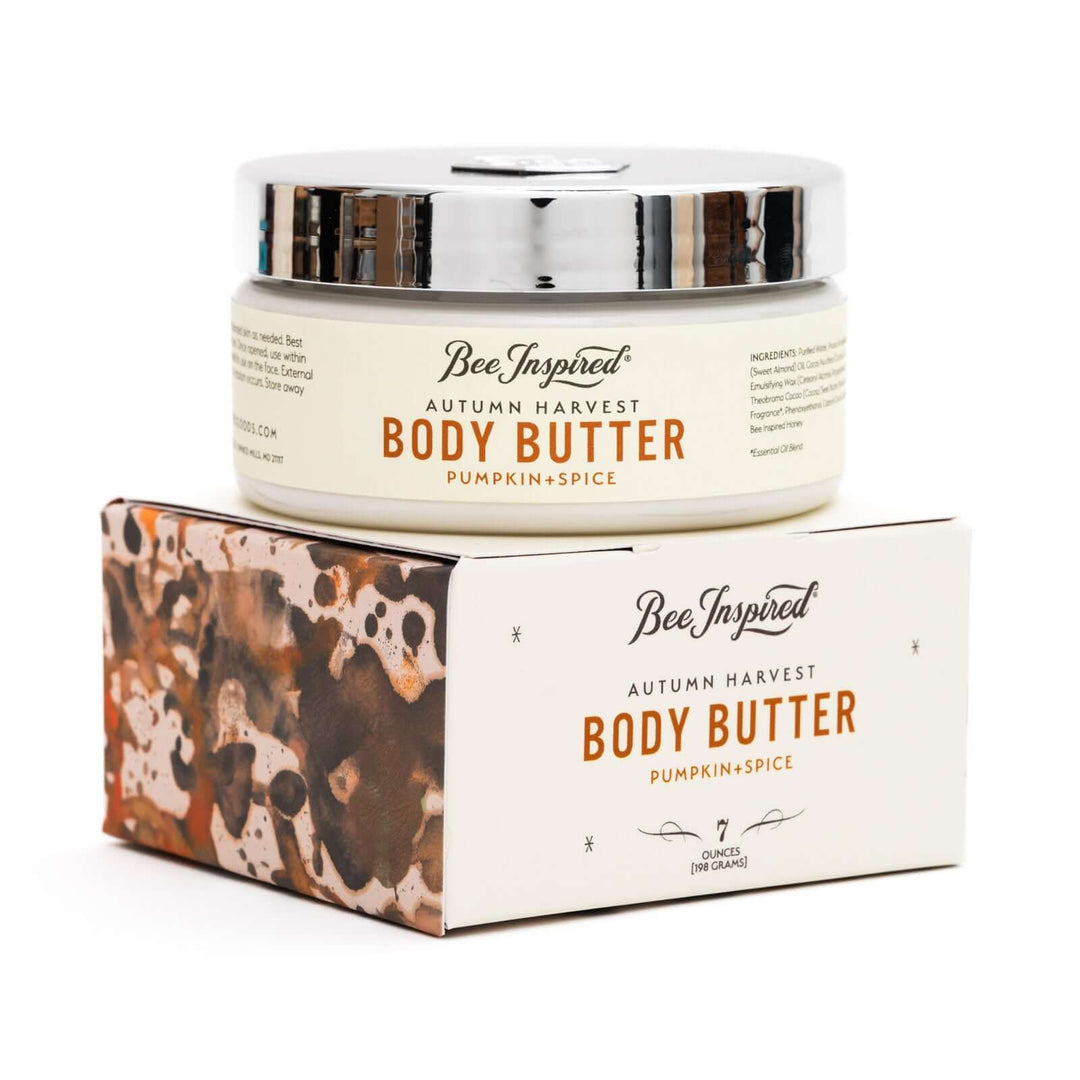
Autumn Harvest Body Butter also includes organic beeswax, making it richer than the lighter formulas in the line. Scented with a pumpkin, cinnamon, and clove essential oil blend — warm and specific, not artificial. Available year-round, though it sells fastest in fall and winter.
Sea+Tea Body Cream is built on a completely different base: cupuacu seed butter, jojoba, avocado oil, and seaweed extract (Ascophyllum nodosum). No honey. Developed in collaboration with the spa at Cliff House Maine over more than a year. The lightest option in the collection and the fastest to absorb. Scented with gardenia, yarrow, lavender, bergamot, and rosemary essential oils — herbal and fresh, not perfume-forward.
Winter Body Mousse contains no water at all — only organic shea butter, sunflower oil, apricot kernel oil, cocoa butter, kokum butter, jojoba, arrowroot, and rose hip oil. No water means no preservatives needed. Hand-whipped in small batches — each batch takes a full day to make. Solid in the jar, it melts to oil on contact with warm, damp skin: apply immediately after a shower while skin is still damp, and it mixes with the water on your body to create a lightweight but deeply hydrating finish. Scented with lavender and citrus essential oils in the same direction as Peace of Mind Body Butter. Available October through February only.
For guidance on building a skin care routine around body butter in the colder months, see our winter skincare tips.

How to Apply Body Butter
Timing matters more than most people realize. Body butter applied to damp skin — not wet, but not completely dry — absorbs more evenly and more effectively than body butter applied to fully dried skin. A few seconds with a towel after a shower, then apply immediately. This is especially important for Winter Body Mousse, where damp skin is essential to how the formula performs.
For the standard body butters, scoop a quarter-sized amount and warm it between your palms until it softens, then apply before the skin fully dries. A little goes further than you expect — a 7oz jar used daily typically lasts about a month. Rose Garden and Haute Cocoa benefit from an extra fifteen seconds of warming in the palms because the beeswax content makes them slower to soften. Apply to the driest spots first — elbows, knees, heels — then spread any remainder.
Sea+Tea Body Cream absorbs in about thirty seconds with no wait time, which makes it workable for people who get dressed immediately after applying. Winter Body Mousse should always go on damp skin: scoop a quarter-sized amount, rub between your palms until it melts to oil, then apply to dry spots first before spreading everywhere else.
If you're applying a new body butter for the first time, especially with sensitive skin, a patch test first is the right move. We have a full guide on how to patch test a new skincare product if you're unfamiliar with the process.
Choosing the Right Formula for Your Skin
Formula choice comes down to three things: how dry your skin runs, how quickly you want it to absorb, and what scent direction you want.
For the fastest absorption with no wait time before getting dressed: Sea+Tea Body Cream. For a medium-weight daily formula: Nectar+Honey, Peace of Mind, Citrus Blossom, or Place in the Sun. For very dry skin, rough patches, or heavy winter use: Rose Garden or Autumn Harvest (beeswax base, longer-staying), Haute Cocoa (extra cocoa butter, best for specific dry spots), or Winter Body Mousse on damp skin for the most concentrated hydration in the line.
On scent: honey-forward — Nectar+Honey. Floral — Rose Garden (rose, lavender, geranium), Citrus Blossom (citrus and geranium), Peace of Mind (Bulgarian lavender and citrus). Warm and spiced — Haute Cocoa (dark chocolate), Autumn Harvest (pumpkin, cinnamon, clove). Bright and fruity-herbal — Place in the Sun. Fresh coastal-herbal — Sea+Tea. Clean lavender and citrus — Peace of Mind and Winter Body Mousse share the same scent direction and pair well used together across seasons.


FAQs About Body Butter
What is body butter used for?
Body butter is used as a skin care moisturizer for the body — primarily for areas that tend to get very dry, like elbows, knees, heels, and hands. It works as an emollient, creating a layer on the skin's surface that softens and helps retain moisture. Some people use it all over after every shower; others keep it for specific dry spots or drier months.
Is body butter better for you than lotion?
Neither is universally better — they're built for different needs. Lotion is lighter, absorbs faster, and works well when the skin doesn't need intensive moisture. Body butter is richer and longer-lasting, and a better fit when the skin is very dry or when you want something that holds up through the day. If you want something between the two, a body cream like Sea+Tea may be the right fit.
What ingredients should I look for in a body butter?
Plant-based butters, shea, cocoa, mango, kokum, cupuacu, should appear near the top of the ingredient list. Quality carrier oils like sweet almond, jojoba, apricot kernel, or avocado contribute to how the formula absorbs. If you want a honey body butter specifically, look for honey listed as an actual ingredient, not just used as a marketing term or scent name. At Bee Inspired, honey from our beekeeper network goes directly into most formulas in the line, the same minimally filtered honey we sell in jars.
Can body butter help with eczema or very sensitive skin?
We can't make any claim that body butter treats or addresses eczema — that's medical territory, and any brand making that claim outright should raise a flag. What we can say: our formulas are dye-free, paraben-free, and cruelty-free. If you have a diagnosed skin condition, a dermatologist is the right person to advise on what topical products are appropriate. If you have sensitive skin and want to try something new, a patch test on a small area first is always the right move.
Does body butter clog pores?
It depends on the formula and the individual. Heavier plant butters like cocoa butter have a higher comedogenic rating than lighter oils like jojoba, meaning they're more likely to clog pores on acne-prone skin. Body butter is formulated for use from the neck down, not on the face. If you apply body butter to your chest or back and have acne-prone skin in those areas, test cautiously.
What's the difference between body butter and lotion for very dry skin in winter?
In winter, skin loses moisture faster — lower humidity outdoors, dry forced air indoors, and hot showers all pull moisture from the skin. Lotion evaporates along with that moisture. Body butter stays on the skin longer. A waterless formula like Winter Body Mousse, applied to damp skin immediately after a shower, is the most concentrated option we make and our strongest recommendation for people dealing with significant seasonal dryness.
What's the history of body butter in skincare?
Plant butters have been used in body care for thousands of years — shea butter in West Africa, cocoa butter in Central and South America, kokum butter in India. The modern concept of a branded body butter as a distinct retail product category emerged from the natural skincare movement of the late twentieth century and became widely available through specialty retailers in the 1990s.