

There’s a window every June when our farm smells like nothing else on earth. The lavender is in full bloom, the bees are working it from sunrise to sundown, and the whole field hums. That window is short, and what you do during it matters. Harvesting lavender at the wrong moment leaves you with stems that won’t hold their scent or buds that shatter before you can use them. Get the timing right and you’ll be tying off bundles that stay fragrant on your kitchen counter for a year.

Lavender harvesting is one of those rare farm jobs that genuinely feels good while you’re doing it: the fragrance, the bees, the steady clip of pruners through green stems. The technique is the same whether you’re tending a long row at Chesterhaven Beach Farm or a single pot on a patio. Cut at the right time. Bundle properly. Dry slowly out of sunlight. Below is the full walkthrough.

Harvesting Lavender at a Glance
Harvest lavender on a dry morning, after the dew has evaporated and before the heat of the day rises. Cut stems when about one-third to one-half of the buds on each spike have opened, just above a leaf node on green growth (never into the woody base). Gather 10 to 20 stems per bundle, tie with twine, and hang upside down in a cool, dark, well-ventilated space for one to three weeks until the stems snap crisply and the buds feel papery. Store the loose dried buds in an airtight glass jar away from light.
That’s the short answer. The rest of this guide walks through each step in detail, plus how to choose the right lavender variety, what to do with the leaves, and how to set yourself up for a second harvest.

Choosing the Right Lavender Variety to Harvest
Three lavender species dominate American gardens, and each behaves differently at harvest time. Knowing which lavender plant you have will save you frustration later.
English Lavender (Lavandula angustifolia)
English lavender is the variety we grow at Chesterhaven Beach Farm and the one we recommend for almost every use. It’s hardy in USDA zones 5 through 9 (the entire mid-Atlantic falls inside that range), grows in tidy mounds to about 18 to 24 inches tall, and produces narrow spikes of lavender flowers with a soft, sweet fragrance. The buds dry beautifully without losing their purple color, which is why English lavender is the standard for sachets, baking, tea, and dried bouquets.
If you’re shopping for plants, the most reliable English lavender cultivars for harvest are Hidcote (deep purple, compact, very fragrant), Munstead (lighter purple, classic culinary cultivar), Royal Velvet (dark purple, long stems, excellent for bundles), and Grosso (technically a Lavandula x intermedia hybrid, but treated like English in most American gardens and prized for oil production). For a white-flowered option, look for Edelweiss or Melissa.
French Lavender (Lavandula stoechas)
French lavender is hardy in USDA zones 7 through 10, so it survives outside in coastal Maryland but generally needs winter protection or container culture further north. The distinguishing feature is the bract at the top of each flower spike, which looks like a small leafy flag. The fragrance is sharper and more camphor-forward than English lavender, which makes it less popular for cooking but excellent for ornamental dried arrangements. Harvest French lavender later in the season, often into late summer, when the bracts have fully colored up.
Spanish Lavender
Spanish lavender, sometimes confusingly sold under the same Lavandula stoechas name as French, is also hardy in zones 7 through 10. It looks similar to French lavender with the showy top bracts but has a stronger pine note in the fragrance. Best used for craft and ornamental purposes, not culinary.
For everything from culinary use to sachets to skincare infusions, stick with English lavender. The species name to look for on the plant tag is Lavandula angustifolia.

Leave some blooms standing so the bees and butterflies can keep working the field.
When to Harvest Lavender
Timing is the single biggest factor in how your harvest turns out. The same plant cut on different days can give you wildly different results in fragrance and color retention.
The Best Time of Year
In Maryland and similar mid-Atlantic climates, the prime harvest window for English lavender runs from late June through early July. French and Spanish lavender often run later, into late summer. The visual cue matters more than the calendar. Watch for these signs that your lavender is ready to harvest:
- About one-third to one-half of the flower buds on each stem have opened
- The opened buds are deep purple at the tip, with unopened buds still tight and green-gray
- The stems snap cleanly when bent rather than folding limply
- The fragrance is at its strongest when you brush against the plant
If you’re harvesting lavender flowers for dried bouquets and wreaths, you can wait until the buds are fully open. If you’re harvesting for culinary use, sachets, or to keep the most fragrant buds, cut when the buds are only partially open. That’s the stage when the essential oils inside the bud are at their peak concentration.
The Best Time of Day
Cut lavender in the cool of the morning, after the dew has dried but before the sun gets high. Heat encourages the volatile aromatic compounds in the buds to evaporate, so a bundle cut at noon on a 90-degree day will smell noticeably weaker than the same bundle cut at 8 a.m. On especially hot days, harvest before sunrise if you can manage it.
Skip rainy days entirely. Wet stems take much longer to dry and are more prone to mold during the drying process.

Want the scent without the garden labor? Our French Lavender Luxe Soy Candle captures the field in a jar.

A Note on Growing Lavender Before You Harvest
This guide assumes your plants are already established and blooming. If you’re still in the planting phase, the basics matter: lavender wants full sun (six to eight hours daily), well-draining slightly alkaline soil with a pH between 6.5 and 8.0, and deep but infrequent watering once established. Lavender prefers lean soil, so resist the urge to over-fertilize.
For the full method, including soil preparation, spacing, and winter care, see our guide to growing lavender in Maryland. The rest of this post focuses on the harvest itself.

What You’ll Need
Gather these items before you start. Nothing exotic, but having everything in hand makes the work go faster:
- Sharp bypass pruners or floral scissors, cleaned and dry
- A flat basket, tray, or shallow box to lay stems in (avoid piling them deep)
- Twine, rubber bands, or jute string for bundling
- Paperclips, S-hooks, or pushpins for hanging
- A cool, dark, well-ventilated room or closet for drying
- An old sheet or sheet of butcher paper to catch buds during processing
A dull blade crushes stems instead of slicing them cleanly. Take a minute to wipe your pruners with rubbing alcohol before you cut so you’re not moving plant pathogens around the garden.

How to Harvest Lavender Step by Step
Once you’ve confirmed the buds are at the right stage and the morning is dry, you’re ready to cut. The technique below protects the plant’s ability to regrow and gives you the longest, cleanest stems for bundling.
- Locate the woody base of the stem. Lavender plants have a hard, woody crown near the soil and softer green growth above. You want to cut into the green growth, never into the wood.
- Identify the first set of green leaves above the woody base. Aim to cut about two inches above that point. Cutting too low into the wood can stress or kill the plant.
- Gather a small handful of stems at a time. Hold them gently at the base of the flower spikes so you don’t crush the buds, then slide your other hand down to the cutting point.
- Make a clean cut at a slight angle. Just above a leaf node, on green growth, with sharp pruners. The angled cut sheds water and encourages the plant to push out new side branches from that point.
- Lay stems flat in your basket as you go. Don’t toss them in a pile. Layering them lightly keeps the buds intact and makes bundling much easier later.
- Stop when you’ve taken about one-third of the plant. Leave plenty of green growth in place so the plant can recover. Healthy, established plants will often give you a second flush of blooms later in the season if you cut this way.
Take a step back and check the plant before you move on. You’re looking for a balanced, rounded shape with enough green foliage left to fuel the next round of growth. If a plant looks lopsided after your cuts, even it out before you walk away.

Our Spring Honey carries lavender pollen from these same fields.
What About Lavender Leaves?
The lavender leaves themselves often go unused, but they’re worth saving. The gray-green foliage carries a milder version of the same aromatic compounds found in the buds, and it dries just as easily. Strip leaves from any stems too short for bundling and dry them in a single layer on a screen or tray. Once crisp, they can go into the same airtight jar as your buds or be kept separately for:
- Simmer pots: a handful of dried leaves with citrus peel and a cinnamon stick gently warmed in water gives off a clean, herbal scent that lasts for hours
- Compost: lavender leaves break down readily and add aromatic bulk to a compost pile
- Garden tea: steep leaves in water for a week and use the strained liquid as a mild aromatic in homemade cleaning sprays
- Sachet filler: blend leaves with buds for a more budget-friendly mix that still smells like the field
Don’t use lavender leaves in culinary applications unless you’re working with a specifically culinary English variety. The flavor is sharper and more bitter than the buds, and a little can go a long way the wrong direction in food.

How to Bundle Lavender for Drying
How you bundle stems matters more than people realize. Bundles that are too tight or too thick will trap moisture, which leads to mold and discoloration. Loose, airy bundles dry evenly and hold their color.
- Sort by stem length. Group stems of similar length together. This keeps the bundle balanced when it hangs and makes the dried bouquet look intentional.
- Gather 10 to 20 stems per bundle. A bundle the diameter of a quarter is about right. Larger bundles look impressive but rarely dry well in the middle.
- Align the cut ends. Tap the bottom of the bundle gently on a flat surface so the stem ends sit flush.
- Wrap twine or a rubber band tightly around the base. Stems shrink as they dry, so what feels snug today will be loose in a week. Rubber bands give you a built-in tightening mechanism.
- Slip a paperclip or S-hook under the band. This is your hanger.
Handle the bundles by the cut ends only. Squeezing the flower heads bruises the buds and knocks oil out before you’ve even started drying.

Dried lavender buds become part of our Peace of Mind Body Care Duo and the rest of the lavender skincare line.

How to Dry Lavender
Lavender wants three things to dry well: darkness, airflow, and time. Sunlight bleaches the buds from purple to gray within days. Stagnant air invites mold. Rushing the process makes the stems brittle before the buds fully cure.
Air Drying (The Method We Use)
- Find a dark space with steady airflow. An interior closet, a pantry, a garage corner, or a guest room with the curtains drawn all work. Avoid attics, which often get too hot.
- String a length of twine between two hooks, or install a curtain rod across the space. You want to hang bundles upside down with the flower heads pointing toward the floor.
- Use the paperclip on each bundle to hook it onto your line, spaced about two inches apart. Crowding bundles slows drying and traps moisture.
- Wait one to three weeks. Humidity is the variable. In a dry climate, expect about 10 days. In a humid Maryland summer, plan for closer to three weeks.
- Check for readiness by snapping a stem. If it breaks crisply rather than bending, the bundle is dry. Buds should feel papery and easy to roll off the stem between your fingers.
Faster Methods When You’re in a Hurry
If you don’t have weeks to wait, a food dehydrator works well. Lay stems in a single layer on the trays and run the dehydrator at 95 to 110 degrees Fahrenheit. Most loads finish in one to two hours, but check often because the buds dry out quickly at this temperature. The fragrance will be slightly less intense than air-dried lavender, but the color holds beautifully.
An oven on its lowest setting with the door cracked can also work in a pinch, though it’s harder to control the temperature precisely. We’d skip the microwave entirely. It tends to scorch the buds before the stems are dry.

Our Lavender Honey Lollipops are made with culinary lavender from the same fields.
How to Process Dried Lavender
Once your bundles are completely dry, you can either leave them whole as decorative bouquets or process them down to loose buds for cooking, sachets, and infusions.
- Lay down a clean cotton sheet or sheet of butcher paper. This catches every bud and makes cleanup easy.
- Hold a bundle horizontally over the sheet. Run your closed fist or thumb and forefinger gently down the length of the stem, working from the cut end toward the flower head. The dried buds will pop off and fall onto the sheet.
- For a faster batch process, rub two bundles together over the sheet, or lay several stems flat and roll them under your palms. Most of the buds will release within a few seconds.
- Sift the loose buds through a fine-mesh sieve. This separates the buds from any stem debris, leaves, or bits of dried calyx that fell into the pile.
- Transfer the cleaned buds to an airtight container. Glass jars with tight lids work best. Store in a cool, dark place.
Properly dried and stored lavender buds keep their fragrance for about a year, sometimes longer if you keep the jar sealed and out of direct sunlight. For maximum freshness in culinary applications, some growers store a portion of their harvest in the freezer.
Can You Get Two Harvests in One Season?
Yes, in many cases. Healthy, established English lavender plants will often push a second flush of blooms about six to eight weeks after the first harvest if you cut them correctly the first time. To set yourself up for a second harvest:
- After the main harvest, lightly shape the plant by trimming back another inch or two of green growth. Never cut into the woody base.
- Water deeply once, then return to your normal infrequent watering schedule. Don’t fertilize. Lavender prefers lean soil.
- Watch for new bud spikes forming over the following weeks. A second harvest is usually smaller than the first, but the fragrance can be just as strong.
- Stop harvesting at least six weeks before your first expected frost. Lavender needs that window to harden off before winter.
French and Spanish lavender varieties are less reliable for second harvests. They tend to put their energy into one main bloom window and resent heavy cutting.

Lavender pulls in pollinators all season. See our guide to butterflies on the Eastern Shore.
What to Do With Your Harvest
This is the fun part. A pound of dried lavender goes a long way, and once you have a stash, you’ll find new uses for it constantly. Some of our favorites:
- Culinary: Grind a small amount of culinary-grade English lavender into shortbread dough, scone batter, or a sugar rub for roasted stone fruit. A little goes a long way. Start with a half teaspoon per recipe and scale up to taste. Our Lemon Lavender Honey Cake is a good place to start.
- Infusions: Steep dried buds in warm honey for a week to make lavender-infused honey. Our full method is in our guide to making lavender-infused honey.
- Tea additions: A small pinch of dried lavender buds dropped into the cup with a black tea like our Raven Earl Grey Tea rounds out the bergamot beautifully.
- Sachets and drawer fresheners: Fill small muslin or cotton bags with dried buds and tuck them into linen closets, sock drawers, or under pillows for a gentle, lingering scent.
- Wreaths and bouquets: Whole dried stems hold their shape and color for a year or more when kept out of direct sunlight.
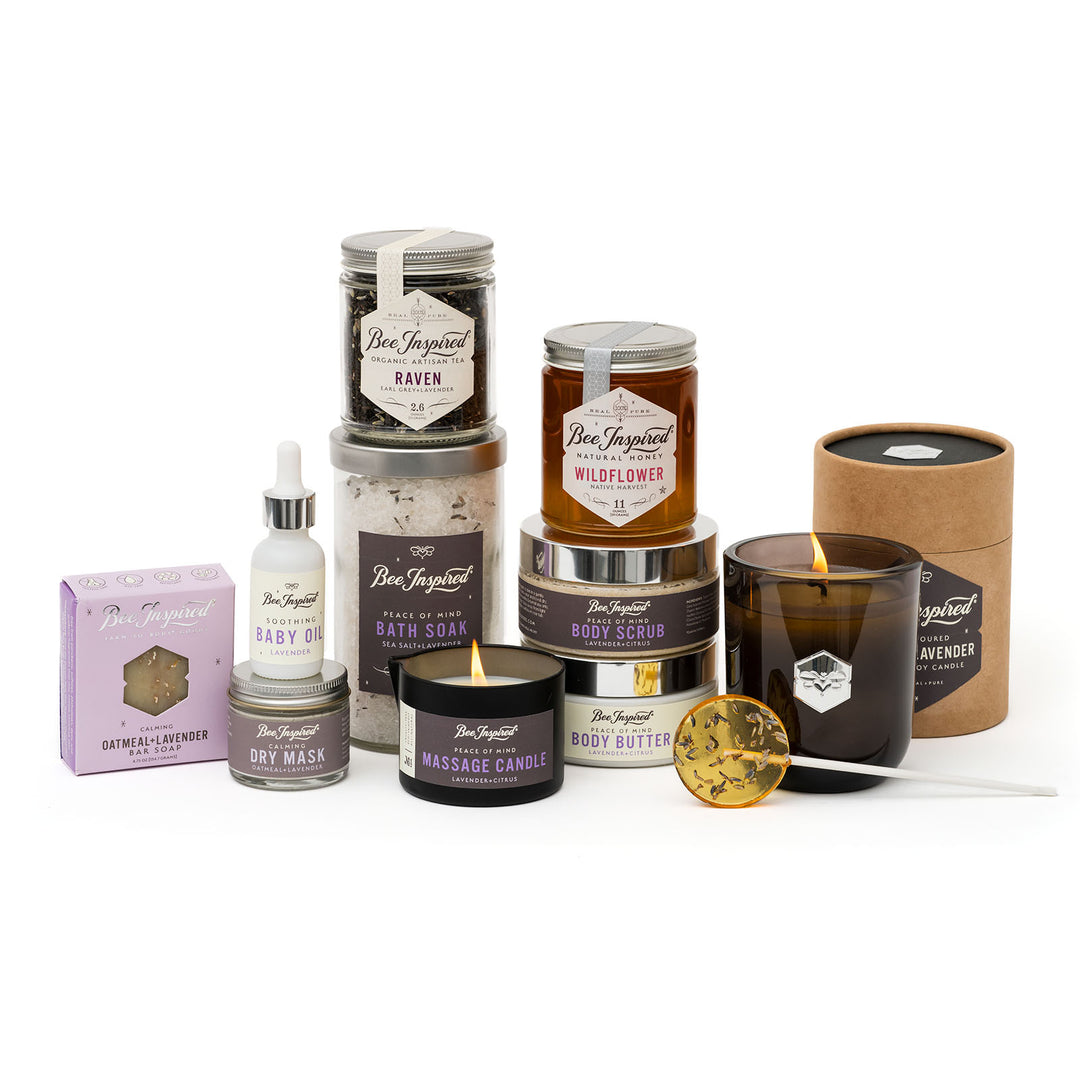
- Bath and body: Add a tablespoon of dried buds to a warm bath, or browse the rest of our Peace of Mind lavender collection for ready-made options.
A Note on Pairing Your Harvest With Honey
Lavender flowers and honey are two sides of the same plant. The buds you cut in your garden capture one side of the story. The other side is what the bees do with lavender when they forage on it for weeks at a time, producing a single-origin monofloral honey with the flower’s flavor built into the honey itself. We carry both, and they play together beautifully. Use your dried homegrown buds to infuse a mild honey like our Spring or Wildflower Honey, or skip the infusion entirely and reach for our Lavender Honey from Spain, sourced from the lavender fields along the Spain-Portugal border where the bees do the work for you.
For a deeper dive into uses beyond the harvest itself, our guide to twenty ways to use lavender covers culinary, home, and skincare ideas in detail.

Not a gardener? Our Lavender Experience Set brings the harvest home in one box.
A Few Final Tips From the Farm
- Cut your lavender on the day you intend to bundle it. Letting cut stems sit on a counter overnight before bundling causes the buds to lose oil unnecessarily.
- Don’t harvest every plant in your garden in the same week. Stagger your cuts by a few days so the bees have flowers to work the whole season.
- Save the trimmings, including the leaves. Even short stems and stripped foliage can go into the compost, into a bath, or into a simmer pot on the stove.
- Keep a small notebook with harvest dates each year. Lavender bloom windows shift with weather, and your own records will be more reliable than any calendar.
- Walk your garden weekly through May and June. The window from “almost ready” to “past peak” is usually about ten days, and the only way to catch it is to be looking.
One last note: harvesting lavender well takes practice, but the plants are forgiving. Slow down, enjoy the fragrance, and trust the process. The whole field will be brown again by August, and you’ll have jars of dried buds carrying you through the rest of the year.

We distill some of every harvest into Lavender Flower Water, the gentle hydrosol behind a lot of our skincare.
Caring for this land and these communities is at the core of who we are. It’s why we created Roots & Wings, our giving initiative that connects every purchase to something that matters. See how we give back.

Frequently Asked Questions About Harvesting Lavender
When is the best time of year to harvest lavender?
In Maryland and similar mid-Atlantic climates, the best window for English lavender is late June through early July. Watch for the moment when about one-third to one-half of the buds on each stem have opened. That's when the essential oils in the bud are at their highest concentration. French lavender often runs a little later, into late summer.
What time of day should I harvest lavender?
Cut in the cool of the morning, after the dew has dried but before the heat of the day rises. Volatile aromatic compounds in the buds evaporate quickly in high heat, so a bundle cut at 8 a.m. will smell noticeably stronger than the same bundle cut at noon. On very hot days, harvest before sunrise if possible.
How do you cut lavender so the plant grows back?
Cut about two inches above the woody base of the stem, on green growth, just above a leaf node. Use sharp bypass pruners and make a clean angled cut. Never cut into the hard, woody crown of the plant, which can stress or kill it. Leave at least two-thirds of the green growth on the plant so it can recover and push new shoots.
How long does it take to dry lavender?
Air-dried lavender takes between one and three weeks, depending on humidity. In a dry climate, expect about 10 days. In a humid Maryland summer, plan for closer to three weeks. The bundles are ready when stems snap crisply instead of bending and the buds feel papery and roll off the stem easily between your fingers. A food dehydrator at 95 to 110 degrees Fahrenheit will finish a batch in one to two hours.
Can you harvest lavender more than once a year?
Yes, in many cases. Healthy, established English lavender plants will often push a second flush of blooms about six to eight weeks after the first harvest if you've cut them correctly. The second harvest is usually smaller than the first. Stop harvesting at least six weeks before your first expected frost so the plant has time to harden off before winter. French and Spanish varieties are less reliable for second harvests.
How do you store dried lavender buds?
Once the buds are completely dry, transfer them to an airtight container, preferably a glass jar with a tight lid. Store in a cool, dark place out of direct sunlight. Properly stored dried lavender keeps its fragrance for about a year, sometimes longer. For maximum freshness in culinary applications, some growers store a portion of their harvest in the freezer.
Which lavender variety is best for cooking?
English lavender (Lavandula angustifolia) is the variety to use for culinary applications. It has a sweeter, softer fragrance than French or Spanish lavender, and the buds hold their shape and color well when dried. Look for plant tags that specifically say "culinary lavender" if you intend to bake or cook with the harvest. French lavender (Lavandula stoechas) has a sharper, more camphor-forward scent that's better suited to sachets and dried arrangements than to food.