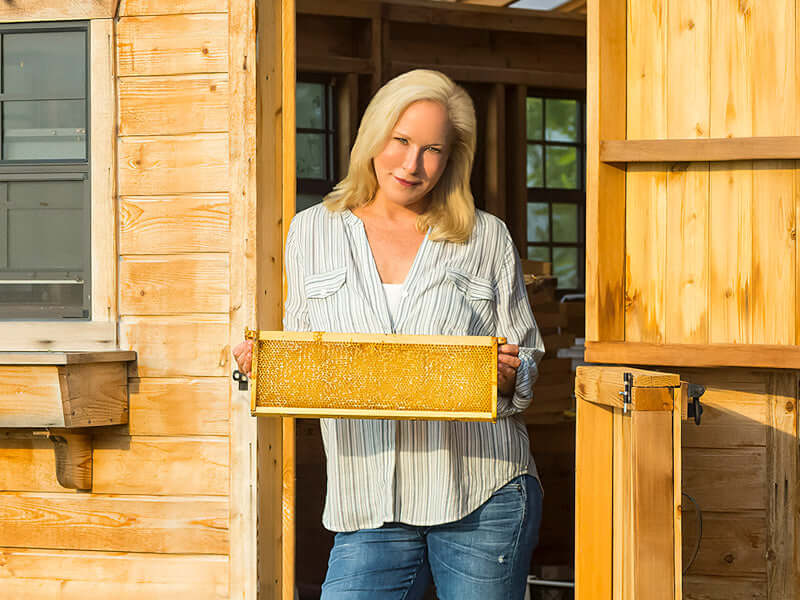


Honeycomb is honey still sealed in the wax the bees built to hold it. Cut into a piece and you’re looking at four things: honey, beeswax, a little pollen, and a trace of propolis. Nothing has been drained out, strained, or poured in. That’s the whole difference between comb and a jar.
Here’s what each part is, where it comes from, and what’s actually in a serving.
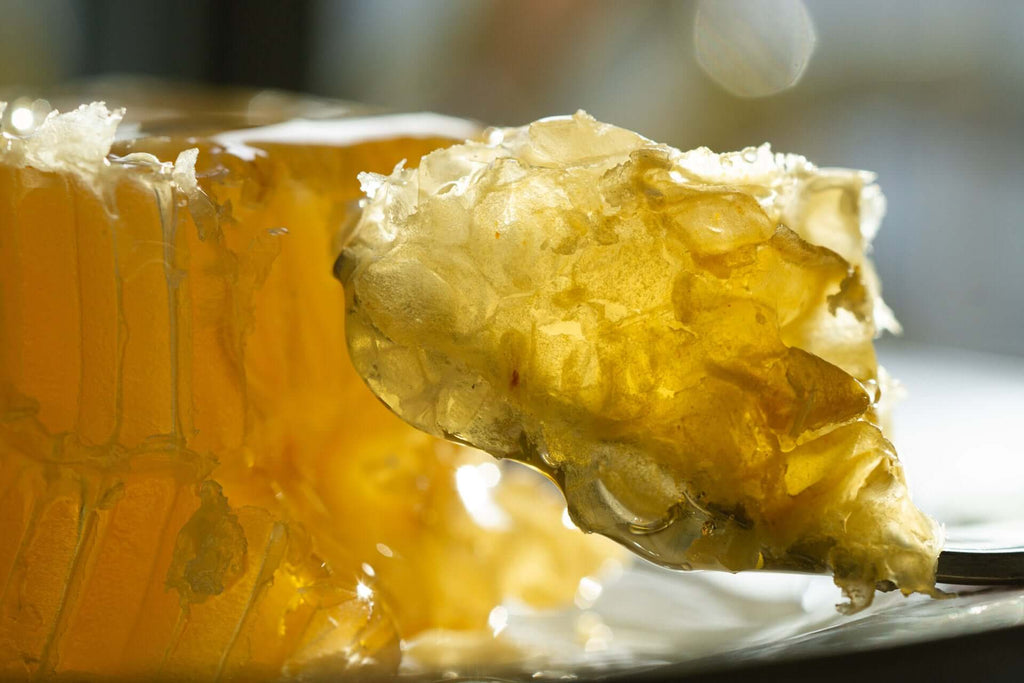
Honey: Most of What You’re Eating
The honey in the comb starts as flower nectar. Foragers carry it back to the hive and pass it from bee to bee, adding enzymes as they go: invertase, which splits sucrose into glucose and fructose, along with diastase and glucose oxidase. Then the bees fan their wings over the open cells until enough water evaporates, and seal each cell with a thin wax cap once the honey is ready.
By weight, honey is roughly 80 percent sugars, mostly fructose and glucose, and around 17 percent water. The rest is a small mix: amino acids, organic acids, trace minerals, and plant compounds called flavonoids. Honey contains antioxidants and flavonoids that come from the flowers the bees visited, which is also why a comb from one place and season tastes different from the next.
Beeswax: The Comb Itself
Worker bees make wax from glands on the underside of their abdomens. It comes out as thin, clear flakes, and the bees chew and shape those flakes into six-sided cells. How bees make beeswax is its own small marvel, and so is the math behind the hexagon.
Beeswax is made mostly of esters, fatty acids, and long-chain alcohols. It’s edible. It has almost no flavor of its own, so in honeycomb it reads as texture: soft and chewy at first, a little waxy once the honey is gone. Some people swallow it. Some chew it like gum and spit it out.
Outside the kitchen, beeswax is used in skincare for its emollient properties, which is why it shows up in our honey body care.
Pollen: The Colony’s Protein
Bees collect pollen to feed the colony. It’s their protein, gathered alongside nectar during pollination. Most of it gets packed into separate cells, but small amounts end up in the honey too, carried in on the bees and mixed in as they work.
Those grains are specific enough that researchers can trace where a honey came from by looking at its pollen under a microscope. When honey is extracted and finely filtered, much of that pollen is removed. In comb honey, it stays where the bees left it.
Propolis: The Hive’s Sealant
Propolis is a sticky resin bees gather from tree buds and bark. They use it to seal cracks, cover rough spots, and narrow the hive entrance. Beekeepers know it best as the stuff that glues the frames in place. Honeycomb contains naturally occurring propolis in trace amounts. You won’t taste it, but it’s part of what comes along when the comb is left whole.
Honeycomb Nutrition Facts
Nearly all the nutrition in honeycomb comes from the honey. The wax adds weight to a piece but contributes very few calories. For reference, here is one tablespoon of honey, using USDA data:
| Per 1 tablespoon (21 g) of honey | Amount |
|---|---|
| Calories | About 64 |
| Carbohydrates | About 17 g |
| Sugars | About 17 g |
| Protein | Less than 1 g |
| Fat | 0 g |
A tablespoon-size piece of honeycomb holds a little less honey than that, because part of its weight is wax.
Comb Honey vs. Jarred Honey
It’s the same honey either way. The difference is what happens after the frame comes out of the hive.
| Comb honey | Jarred honey | |
|---|---|---|
| How it’s harvested | Left in the comb and cut into pieces | Caps sliced off, honey spun out and strained |
| Pollen and propolis | Whatever the bees sealed in stays | Depends on filtering; fine filtering removes most |
| Wax | Edible, part of every bite | None |
| Texture | Chewy wax, then liquid honey | Pourable, or creamy once it crystallizes |
| Best for | Cheese boards, toast, eating plain | Tea, baking, dressings, glazes |
Our jarred honeys are minimally filtered, which sits in between: strained enough to pour, not so fine that the pollen is gone.
How People Eat It
If there’s a piece in front of you, start simple. Cut a cube, chew until the honey runs out, and decide what to do with the wax. Our guide to eating honeycomb covers the rest, and a honeycomb charcuterie board is the easiest way to serve it to a crowd. Whatever’s left keeps well covered at room temperature; here’s how to store honeycomb so it stays that way.
For the full story of how bees build comb, cell by cell, read what honeycomb is made of. And if you’d rather taste it than read about it, our honeycomb from U.S. beekeepers comes in a 12 oz piece.
FAQs About What Is Inside Honeycomb
What is inside honeycomb?
Honey, beeswax, and small amounts of pollen and propolis. Honey makes up most of the weight. The wax is the comb the bees built to store it, and the pollen and propolis are trace amounts carried in from the hive and sealed in with the honey.
How many calories are in honeycomb?
Nearly all of them come from the honey. A tablespoon of honey has about 64 calories and 17 grams of sugar, according to USDA data. A piece of honeycomb the same size has a little less, because part of its weight is wax.
Can you eat the wax in honeycomb?
Yes. Beeswax is edible. Most people chew a piece until the honey is gone, then swallow the wax or spit it out. It has very little flavor of its own, so in honeycomb it comes across as texture more than taste.
What is propolis, and why is it in honeycomb?
Propolis is a sticky resin bees gather from tree buds and bark and use to seal and patch the hive. Trace amounts end up in honeycomb because the comb is left whole instead of being extracted and strained.
Is there pollen in honeycomb?
Usually, in small amounts. Bees carry pollen into the hive as food for the colony, and some of it mixes into the honey. Fine filtering removes most pollen from jarred honey. Comb honey keeps whatever the bees sealed in.