

Apples get dipped, challah gets drizzled, and the whole table tilts toward sweetness — but it’s honey, specifically, that Rosh Hashanah turns to for that sweetness, and not by accident. Honey carries a weight in Jewish life that ordinary sugar never could. Here is where that meaning comes from, and why a beekeeper finds the New Year a fitting time to think about it.

The custom most people picture — apple slices and a bowl of honey — is its own deep tradition, with its own history and blessing. We cover that in full in the tradition of apples and honey. This page is about the honey itself: why this one sweet substance, and not another, sits at the center of the holiday.

Why Honey, and Not Some Other Sweetness
There are plenty of sweet things a family could reach for. Tradition reaches for honey, and the reason runs back to the desert. The manna that sustained the Israelites for forty years is described in the Torah as tasting “like honey wafers.” So honey on the New Year table isn’t only a flavor — it’s an echo of divine provision, of being carried through a hard season and fed. When you taste it at Rosh Hashanah, you’re tasting a memory as much as a hope.
That association deepens elsewhere in scripture. The Promised Land is described again and again as a place “flowing with milk and honey” — honey as the very image of abundance and arrival. To ask for a sweet year over a bowl of honey is to ask, in the same breath, for that kind of plenty.

The Kosher Question
Is honey kosher? Here is the puzzle observant families have long noticed: bees are not kosher. By the ordinary rules, something produced by a non-kosher creature would be off the table. Yet honey is permitted — tradition holds that bees gather and concentrate nectar rather than producing honey from their own bodies, so the sweetness was never theirs to make impure.
Many read a quiet lesson into that exception: something pure can come from an unlikely source. On a holiday built around renewal — the hope that this year we might become better than last — honey makes a fitting symbol. The sweetness redeems its origin. For families who want certainty that their honey meets every requirement, certified options remove the guesswork; you can read more in our guide to kosher honey certification.
We give you the peace of mind by only selling Star-K Kosher Certified honey. Our Sweet New Year Honey Gift Set takes four varietals of those honeys and brings you a set full of different flavors in one Rosh Hashanah themed box.

Honey Beyond the Apple
The apple gets the attention, but honey works its way through the whole holiday season. Families dip challah in honey instead of the usual salt, carrying the theme of sweetness rather than tears from the table into every blessing over bread. Honey glazes the carrots, sweetens the cake, finishes the roast. The bowl that starts the meal is only the beginning — the sweetness is meant to run all the way through. Our Rosh Hashanah dinner menu includes recipes that all use honey to celebrate the sweet new year. For more on the Rosh Hashanah food traditions, see our guide that explains the symbolism of each food and why they are eaten on Rosh Hashanah.
A Beekeeper’s View of the New Year
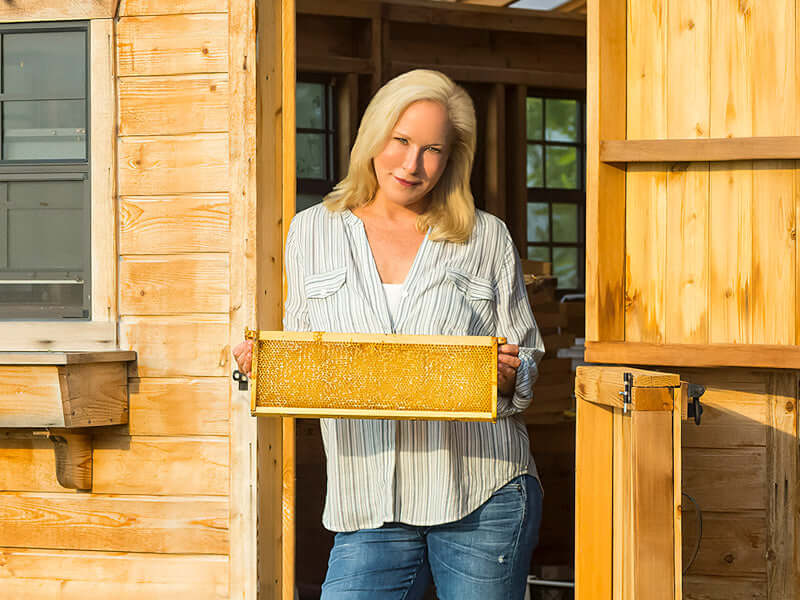
There’s a reason this holiday feels close to home for us. The work of tending bees lines up with values the New Year asks us to sit with — stewardship of the land, patience, taking only what the hive can spare. Our bees spend the season building something larger than themselves, and the honey on your table is the proof of it.
The timing is what gets us. Rosh Hashanah lands just as we begin preparing the hives for winter — the end of one productive season folding into the start of a new one. The bees wind down as we turn toward renewal. It’s hard to tend them through that turn and not feel the holiday in it.

Bringing Honey to Your Own Table
If this is the year you want your honey to mean something — raw, traceable, certified — that’s the whole reason we do what we do. Every honey in our Eastern Shore collection is raw, minimally filtered, and Star-K certified kosher. Which variety to choose for dipping, and how the lighter and darker honeys differ, is something we walk through in the apples and honey guide.
We love a good honey dessert and we think your Rosh Hashanah table deserves the best apple and honey desserts. Our Puff Pastry Apple Tart is a simple and sweet way to serve the two foods together. Our Apple Spice Cake puts a warm spiced twist on the classic honey apple cake. See our blog for more on celebrating Rosh Hashanah at home.
And if you’d rather send the sweetness than serve it, our Rosh Hashanah honey gifts were made for it.
L’shanah tovah u’metukah — may you have a good and sweet new year.
Frequently Asked Questions
Why is honey used on Rosh Hashanah?
Honey carries layered meaning in Jewish tradition — the manna of the desert was described as tasting like honey, and the Promised Land as flowing with milk and honey. Using it on the New Year ties the hope for a sweet year to a longer story of provision and abundance.
Is honey kosher if bees aren’t?
Yes. Although bees themselves are not kosher, honey is permitted, since tradition holds the bees gather and concentrate nectar rather than producing honey from their own bodies. Many families choose certified honey for the holiday for added certainty.
What does dipping challah in honey mean?
Through the High Holiday season, families dip challah in honey rather than the usual salt, carrying the theme of sweetness rather than tears into every blessing over bread.
What honey should I use for Rosh Hashanah?
Any raw, kosher-certified honey suits the holiday. For how the lighter and darker varieties differ and which to choose for dipping apples, see our apples and honey guide.