

If you keep a kosher kitchen, or you’re shopping for someone who does, one question comes up before any other: is honey kosher? The short answer is yes, honey is widely considered kosher by nature. The longer answer, the one that matters when you’re buying a jar to bring to someone’s table, is that most observant households look for a reliable hechsher (kosher certification) before they’ll use it. This guide walks through how honey earns kosher status, why a certification symbol matters, and what makes a jar of honey kosher or not.
Is Honey Kosher Without a Hechsher?
Pure honey is kosher. Jewish law has long held that honey is permitted even though bees are not, because bees gather and concentrate nectar rather than producing honey from their own bodies. The practical question is verification: honey without certification can contain additives, blended syrups, or contaminants introduced in processing, and there's no way to know from the label alone. That's why a hechsher matters. Every jar of Bee Inspired honey carries Star-K kosher certification, and our honey lollipops are OU certified. Customers who keep kosher, or who share gifts for Rosh Hashanah with friends and family who do, tell us the hechsher on the jar is what lets them serve it without a second thought. Reasonable people land in different places on uncertified honey; if you're gifting, certified removes the question.

Our Apple Honey is one of the newest additions to our collection: delicately sweet with earthy undertones, and Star-K Certified Kosher.
Honey is an unusual food, which is exactly why the kosher question gets interesting. Below we’ll cover the different types of honey and their kosher status, and whether honey needs a hechsher to count as kosher in the first place.
Honey comes from the nectar of flowers, gathered by bees and transformed in the hive. Bees themselves are not kosher, since they are neither a land animal nor a fish with fins and scales. The honey they produce, however, is considered kosher, because it’s made from flower nectar rather than from the bee itself.

This bee is working an alfalfa plant, the floral source behind our Alfalfa Honey.
Wild Honey Does Not Require Kosher Certification
When wild bees make honey from flowers growing in the wild, that honey doesn’t require certification, because it’s highly unlikely to contain non-kosher substances. The catch is that most commercial honey isn’t truly wild honey made by wild bees.
Some commercial beekeepers (not us at Bee Inspired) feed their bees corn syrup or sugar-water, which the bees then turn into honey. If a beekeeper feeds non-kosher inputs like those, the resulting honey may not be kosher. That distinction is one of the reasons certification exists.
Bees collect nectar and store it in a honey sac, where it mixes with enzymes before being deposited into the honeycomb. Honeycomb itself is not certified kosher by Star-K, because honey in comb form may contain bee parts, and there’s no practical way to filter comb.
Like many brands, we work with a kosher certifier to determine the status of our honey. In our case, that’s Star-K. They investigate how the bees were fed, confirm the floral sources, and assess the equipment and manufacturing process. A certified brand carries the hechsher symbol that signals kosher status, and checking for that symbol is the most reliable way to know.
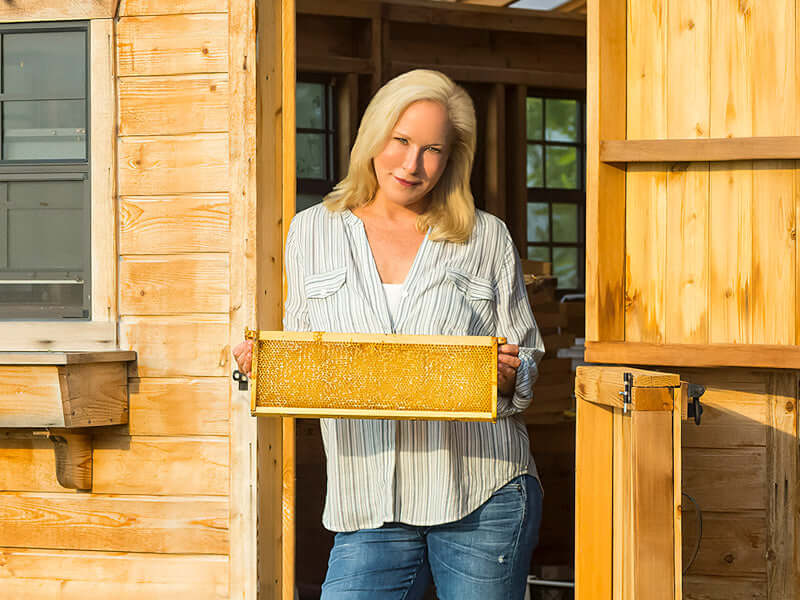
Beyond meeting kosher dietary rules, the goal in our Honey House is honey that tastes like the flowers it came from, jar after jar.
It’s worth understanding that opinions differ. Some hold that honey is kosher regardless of how it was made. Others maintain that honey should come from a reliable kosher source. For anyone following the traditional laws of kashrut, the safe path is to choose honey with a trustworthy hechsher.

Our Honey Tasting Tower includes five varietals to try, each Star-K Certified Kosher.
What Star-K Certification Actually Involves
While honey is kosher by nature, certified kosher honey, the kind accepted for use in observant homes, is only certified once an organization like Star-K confirms it. Certification places the honey within the broader category of kosher food that adheres to strict dietary laws.
You can confirm ours directly. Visit the Star-K database and search “honey” and “Bee Inspired” to see our listing.
In the summer of 2017, we went through certification for all of our varietal and artisanal Eastern Shore Honey. Star-K certification followed weeks of emails, phone calls, and on-site inspections of our production facilities. Today we carry more than 20 varietals to suit nearly any taste.

Honey and the Jewish Faith
Honey holds a central place in Jewish culture, going back to the Hebrew scriptures, where the land of Israel is described as flowing with milk and honey. Across that tradition, honey has long symbolized strength, survival, and sweetness.
The most popular time of year for honey is Rosh Hashanah, the Jewish New Year. To celebrate, families dip both apples and challah into honey, a custom rooted in the wish for a sweet new year. For more on the symbolism, see our guide to Rosh Hashanah food traditions, and our deeper look at honey in religions around the world.

Celebrate the new year with our Wildflower Honey, a traditional and reliably sweet choice for dipping apples.
Where to Buy Kosher Honey for Rosh Hashanah
Bee Inspired Goods sells Star-K certified kosher honey online at beeinspiredgoods.com and in person at our Honey House in Owings Mills, Maryland, with Rosh Hashanah honey gifts that ship anywhere in the US. For the holiday itself, our limited fall Apple Blossom Honey and OU certified honey lollipops are made for the apples-and-honey tradition; order at least a week before the holiday to allow for shipping.
How Our Kosher Honey Is Made
Being free from additives is a big part of kosher certification. It helps to have a Honey House that keeps outside food out of the processing area. Extraction and processing must follow set standards so there’s no cross-contamination. Because our honey and our process meet these kosher standards, you can feel confident about what’s in the jar. For broader guidance on food handling, Keep Food Safe offers resources on safe-food standards.
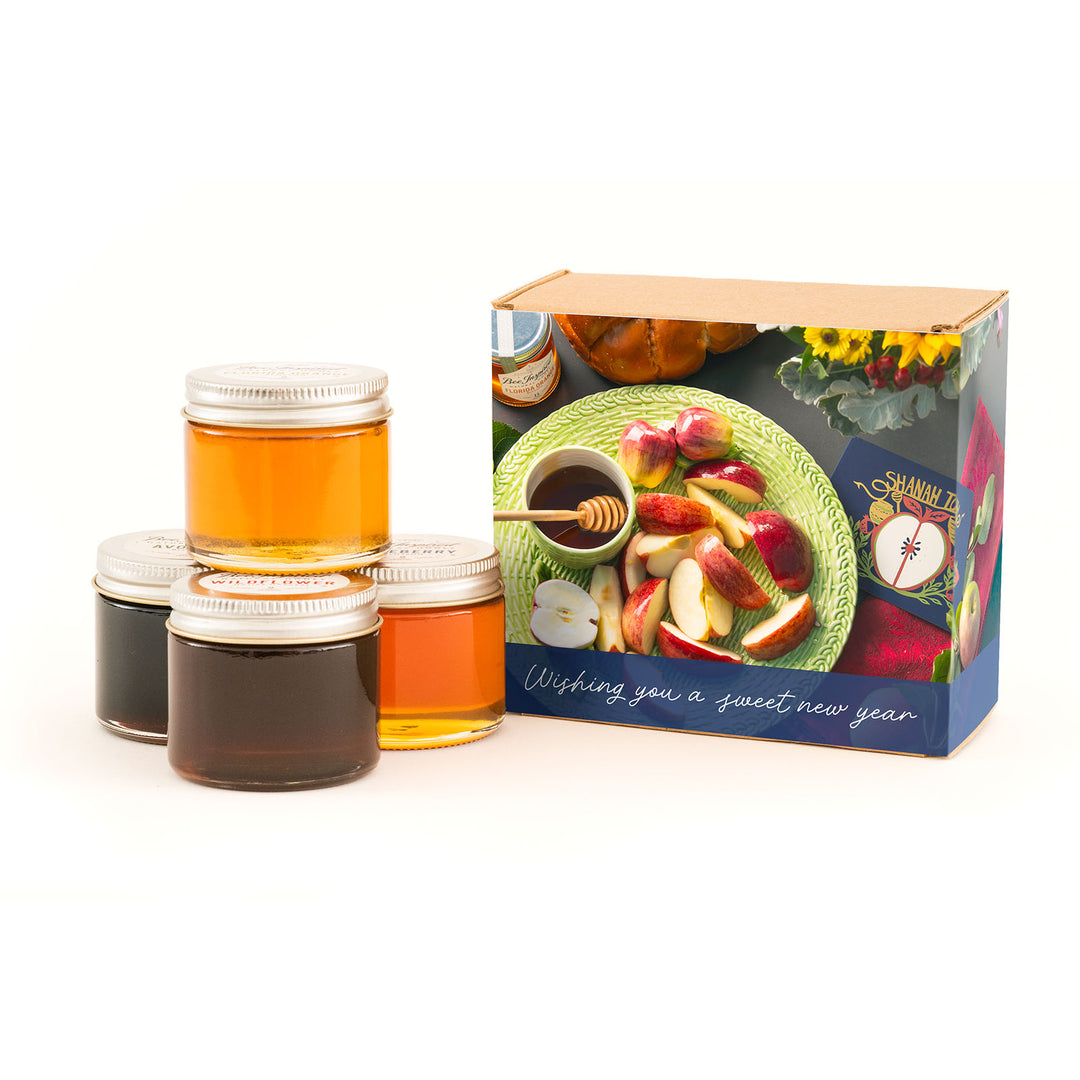
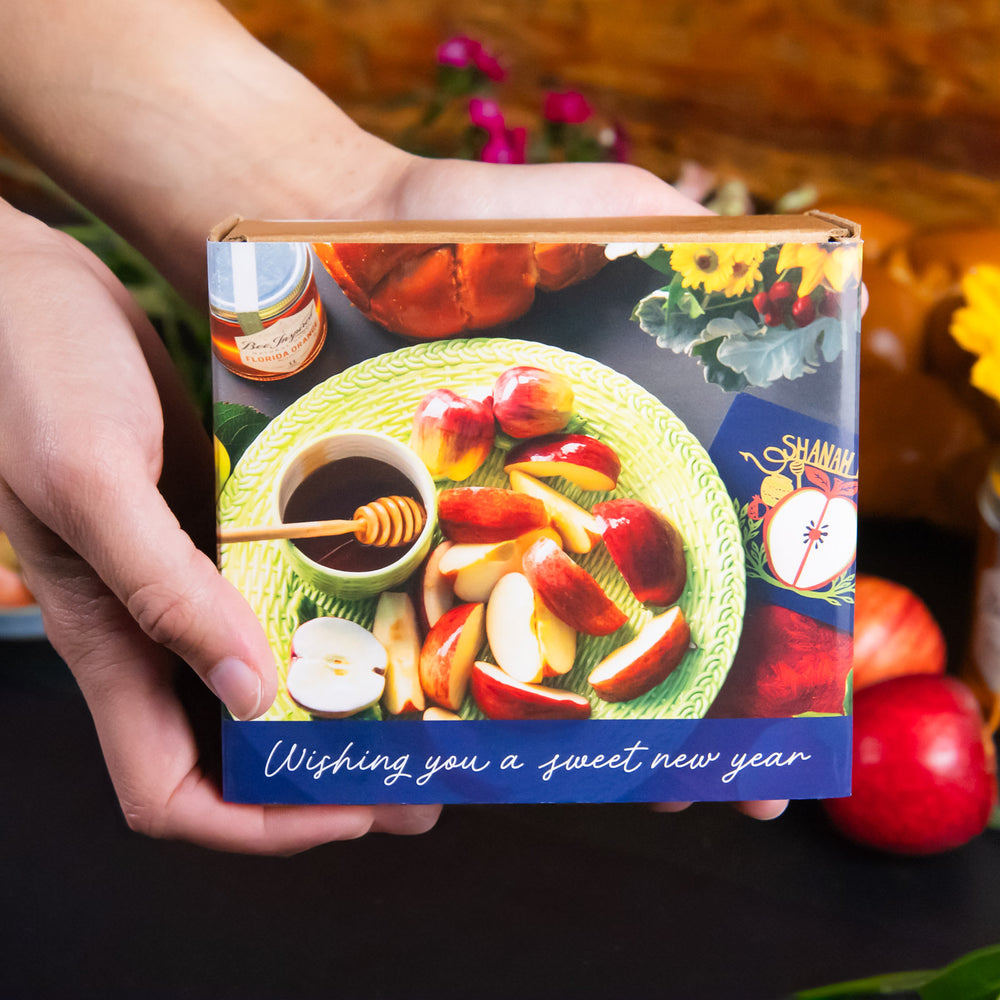
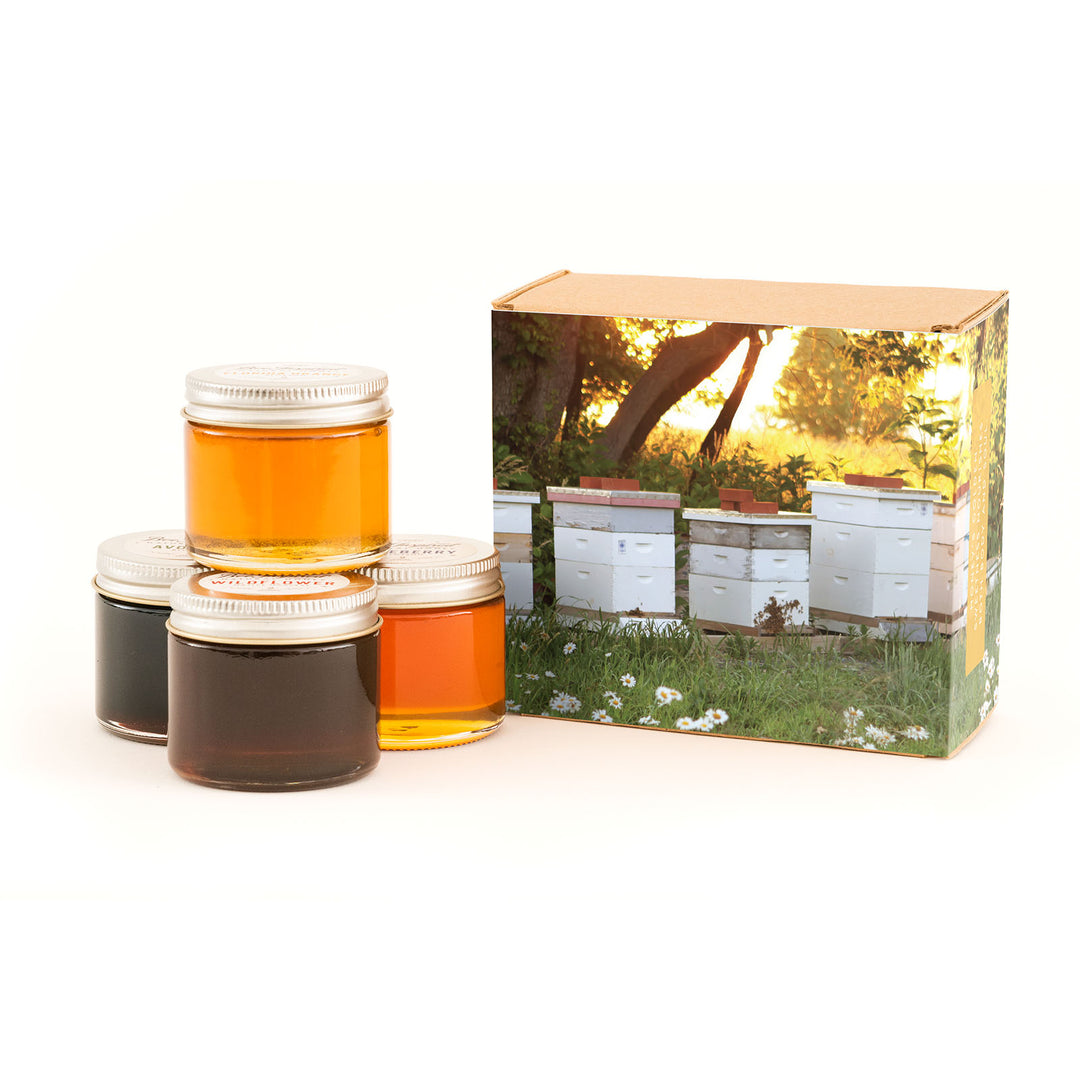
Our honey is minimally filtered, which means it keeps the natural pollen and small particles that fuller filtering would strip out. For a closer look at how processing changes honey, see our guide to minimally filtered honey versus regular honey. We carry kosher certified honey so that we can provide many families with honey that meets the standards for Rosh Hashanah. Our Sweet New Year Honey Gift Set has this occasion in mind with four different varietals of Star-K Kosher certified honeys and beautiful presentation specific to the holiday.
Fun Fact!
Bees themselves aren’t considered kosher, but their honey is. It can feel like a contradiction, since honey comes from bees. The key is that bees use their legs to collect nectar and pollen and carry plant nectar in a separate storage stomach to the hive. Because so much of the work happens within the comb, the finished honey is kosher.
Our Favorite Kosher Honey
Some of our favorite kosher honey comes straight from our Kent Island farm. Autumn and Spring are wildflower varietals named for the seasons in which they’re collected.
Spring Honey is light, floral, and grassy, a clear reflection of the season. Autumn Honey is earthier and richer, with a sweetness that echoes the asters, goldenrod, and daisies of the later flower season.
Another popular pick is our Orange Blossom Honey from Florida, known for its light, citrusy flavor.

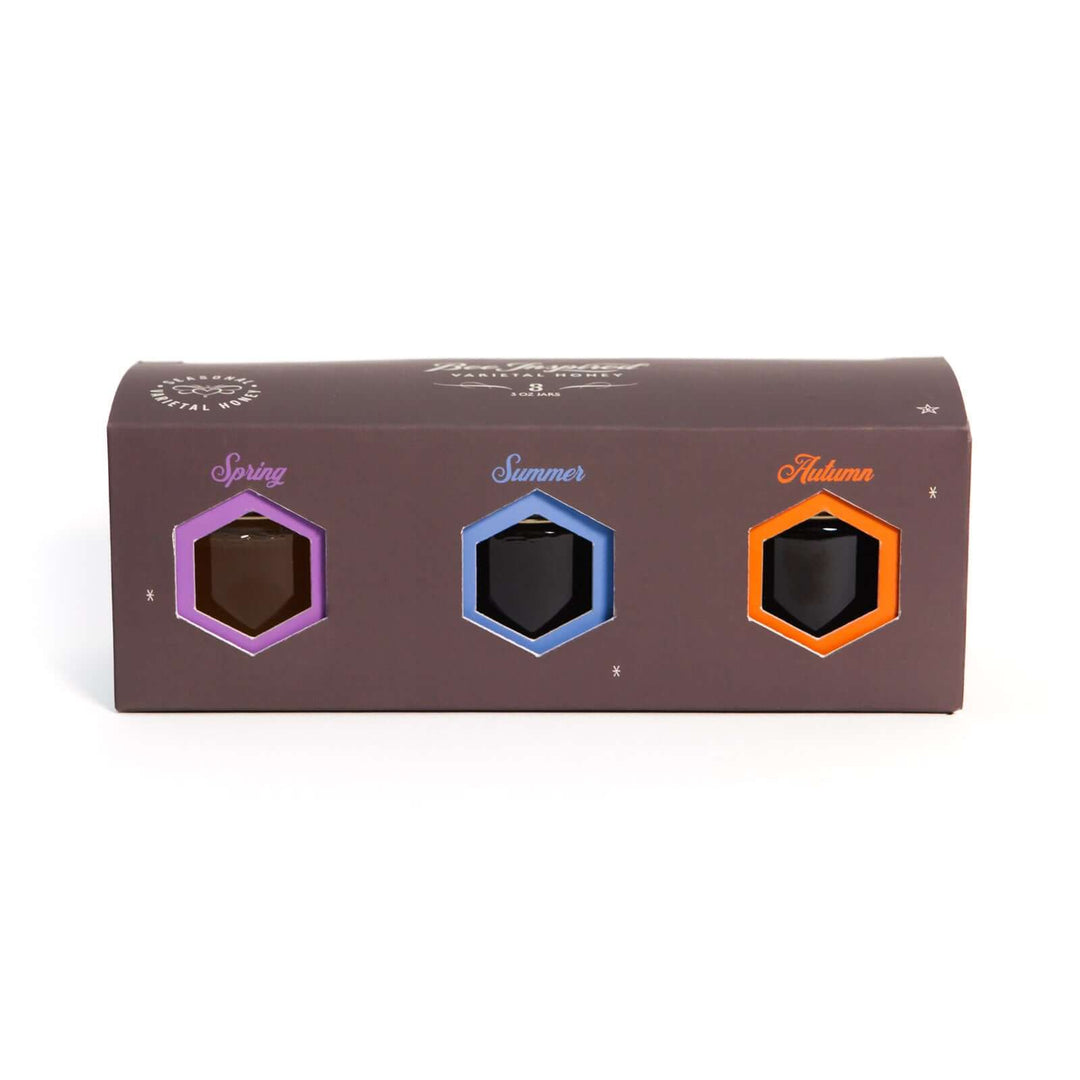
Our Seasonal Trio is a simple way to taste honey across spring, summer, and autumn.
Not Sure What to Do with Kosher Honey?
Reach for it in your favorite recipes for Rosh Hashanah. If you are preparing a Rosh Hashanah meal, you can try apple cake, apple spice cake, or apple tarts to keep the apples and honey going for dessert. Eastern Shore Honey shines in desserts, main courses, and even cocktails. If you’re trading out refined sugar, our guide to substituting honey for sugar walks through the swaps.
Here are a few of our favorites:
-
Cranberry Orange Biscotti, lovely with our limited edition Cranberry Honey

We reached for Coffee Blossom Honey when we made this coffee cake.
Is Honey Parve?
Yes. Honey is generally considered parve under kosher dietary laws, because it’s neither dairy nor meat.
Kosher diets keep dairy and meat separate, so foods are designated dairy, meat, or parve. Since honey comes from flower nectar and is neither dairy nor meat, it’s a neutral food. Our kosher honey is parve.

Our Blueberry Honey is a favorite on a cheese board: see how it pairs with different cheeses.
What Makes Honey Not Kosher?
Honey is naturally kosher in most cases, but a few scenarios can change that:
-
Non-kosher additives: honey processed with non-kosher flavorings or sweeteners.
-
Non-kosher feed: some certifications require confirmation that bees weren’t fed non-kosher substances.
-
Production process: non-kosher equipment or facilities that could lead to cross-contamination.
Kosher certification organizations inspect and supervise production to confirm a brand meets their standards. When in doubt, check Star-K’s database to confirm the honey you want is in fact kosher. Ready to shop? Browse our certified kosher honey collection.
More Articles You’ll Love
When buying flavored honey, check for kosher certification to be sure no non-kosher ingredients were used.

FAQs About Kosher Honey
Is honey kosher?
Yes. Honey is widely considered kosher by nature, because it comes from flower nectar rather than from the bee itself. For observant households, the standard practice is to choose honey that carries a reliable kosher certification, or hechsher, such as Star-K.
Does honey need a hechsher to be kosher?
Opinions differ. Some hold that honey is kosher regardless of how it was made, while others look for honey from a reliable kosher source. For anyone following the traditional laws of kashrut, choosing honey with a trustworthy hechsher is the safe path.
Is honey parve?
Yes. Honey is generally considered parve, meaning it’s neither dairy nor meat. That makes it a neutral food that can be served alongside either dairy or meat meals under kosher dietary laws.
What makes honey not kosher?
Honey can lose kosher status if it’s processed with non-kosher additives such as certain flavorings or sweeteners, if bees were fed non-kosher inputs that end up in the honey, or if production happens on non-kosher equipment that risks cross-contamination.
Is Bee Inspired honey certified kosher?
Yes. Our varietal and artisanal Eastern Shore Honey is Star-K Certified Kosher, and our honey lollipops are certified by the Orthodox Union. You can confirm our listing by searching “honey” and “Bee Inspired” in the Star-K database.
Is honeycomb kosher certified?
Honeycomb is not certified kosher by Star-K, because honey in comb form may contain bee parts and there is no practical way to filter it. Our jarred, minimally filtered honey is the certified option.
Where can I buy kosher honey for Rosh Hashanah?
Bee Inspired Goods sells Star-K certified kosher honey online at beeinspiredgoods.com and in person at the Honey House in Owings Mills, Maryland, with Rosh Hashanah honey gifts that ship anywhere in the US. Seasonal favorites include the limited fall Apple Blossom Honey and OU certified honey lollipops; order at least a week before the holiday to allow for shipping.