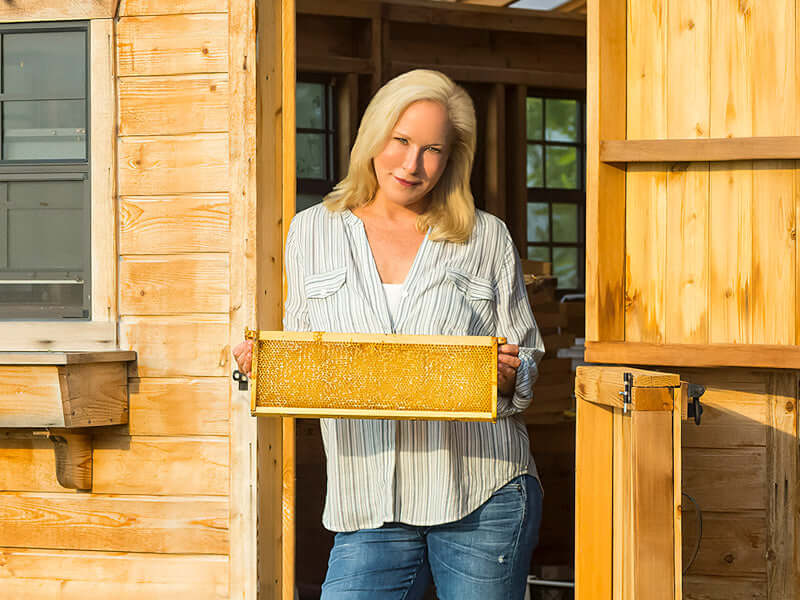


What can bees teach us about life? More than you might expect. I’ve spent years tending hives at Chesterhaven Beach Farm, and the longer I watch these tiny creatures work, the more I realize they’ve quietly mastered things most of us are still figuring out: gratitude, focus, resilience, and joy. Here are six life lessons from bees that I carry with me every day, and how you can bring a little hive wisdom into your own life.
Bee Grateful: Appreciate the Little Things
Honeybees remind us to appreciate the small stuff. To make just one pound of honey, bees visit about two million flowers and fly more than 55,000 miles. A single worker bee produces only about 1/12 of a teaspoon of honey in her entire lifetime. That’s a lot of work for something so sweet, and it’s a good reminder to pause and be thankful for the people, opportunities, and small moments that make our lives richer. Gratitude is the nectar that fuels our own hive. If numbers like these fascinate you, there are plenty more in our roundup of honey bee myths, lore, and facts.
Bee Productive: Focus on What Matters
Bees are the ultimate go-getters. They fly at around 15 miles per hour, collecting nectar and pollen to sustain their hive, and each bee sticks to one job at a time. There’s no multitasking in a hive: nurse bees nurse, builders build, and foragers forage. The queen, in her role, can lay well over a thousand eggs a day to keep the colony thriving. We don’t need to match that output, but we can borrow the focus. Pick the task in front of you, give it your full attention, and see how far you get.
Bee Resilient: Weather the Hard Seasons
Life isn’t always smooth sailing, and yes, sometimes we get stung. Bees know this better than anyone. A colony faces storms, predators, dwindling food, and long Maryland winters, and it responds by planning ahead, working together, and adapting. Every fall, our hives cluster tight and live off the honey they spent all summer storing, a process we walk through in our guide to winterizing the bees. Come spring, they rebuild. The challenges we face can work the same way: the highs and lows are all part of the journey, and every hard season teaches us something we carry into the next one.
Bee Fun-Loving: Communicate with Joy
Bees don’t just work hard. They know how to communicate in style. When a forager finds a great patch of flowers, she performs the famous waggle dance, a figure-eight routine that tells her sisters exactly how far to fly and in which direction. It’s one of the most remarkable examples of teamwork in nature, and it’s part of why the honeybee colony inspired the phrase hive mentality. Take a cue from the bees: find joy in how you connect with others, whether it’s through a laugh, a dance, or a heartfelt conversation. Let your unique energy shine.
Bee Kind to the Planet: Give Back to What Feeds You
Bees play a vital role in our ecosystem, pollinating the plants that feed us. We can honor their hard work with small changes of our own: planting pollinator-friendly flowers, skipping harsh pesticides, and supporting local beekeepers. If you’d like to go a step further, our guide to building a backyard bee habitat walks through exactly how to turn even a small yard into a pollinator haven. Every little action helps keep the hive of life buzzing.
Bee Timeless: Hold On to What Lasts
Stored properly in a sealed jar, honey essentially never spoils. Archaeologists have found honey in ancient Egyptian tombs that was still perfectly preserved. It’s a sweet reminder that some things, like kindness, creativity, and love, are timeless. When life feels overwhelming, reach for the things that bring you joy and comfort. For me, that’s often a quiet cup of tea with a spoonful of Eastern Shore honey from our own hives.
Carrying the Lessons Home
Let’s take these lessons from the hive and carry them into our own lives. By being grateful, productive, resilient, fun-loving, and kind, we can create a life that’s as sweet and purposeful as honey. So let’s get buzzing: there’s a whole world of flowers waiting for us to explore.
While it’s heartwarming to celebrate the joy bees bring to our lives, it’s also important to acknowledge the real challenges bees and beekeepers face today. From habitat loss to climate change and industry pressures, these issues impact not only the bees but also the sustainability of honey production.

Caring for this land and these communities is at the core of who we are. It’s why we created Roots & Wings , our giving initiative that connects every purchase to something that matters. See how we give back.

FAQs About Life Lessons from Bees: Wisdom from the Hive
What can bees teach us about life?
Bees model gratitude, focus, resilience, teamwork, and care for the environment. Each bee commits fully to one role, the colony plans ahead for hard seasons, and thousands of individuals cooperate without a manager in sight. Watching a hive is a daily reminder that small, consistent efforts add up to something remarkable.
How many flowers do bees visit to make a pound of honey?
Bees visit about two million flowers and fly more than 55,000 miles to produce a single pound of honey. One worker bee makes only about 1/12 of a teaspoon of honey in her lifetime, so every jar represents the combined effort of an entire colony.
What is the waggle dance?
The waggle dance is a figure-eight movement honeybees use to communicate. When a forager finds a rich source of nectar, she returns to the hive and dances to tell her sisters both the distance and the direction of the flowers, letting the whole colony benefit from one bee’s discovery.
Does honey ever go bad?
Honey stored in a tightly sealed container can last indefinitely. Because honey absorbs moisture from the air, an open or poorly sealed jar can lose flavor and aroma over time, so keep the lid on tight and store it at room temperature. If honey crystallizes, it hasn’t spoiled; gently warm the jar in water to return it to liquid form.