

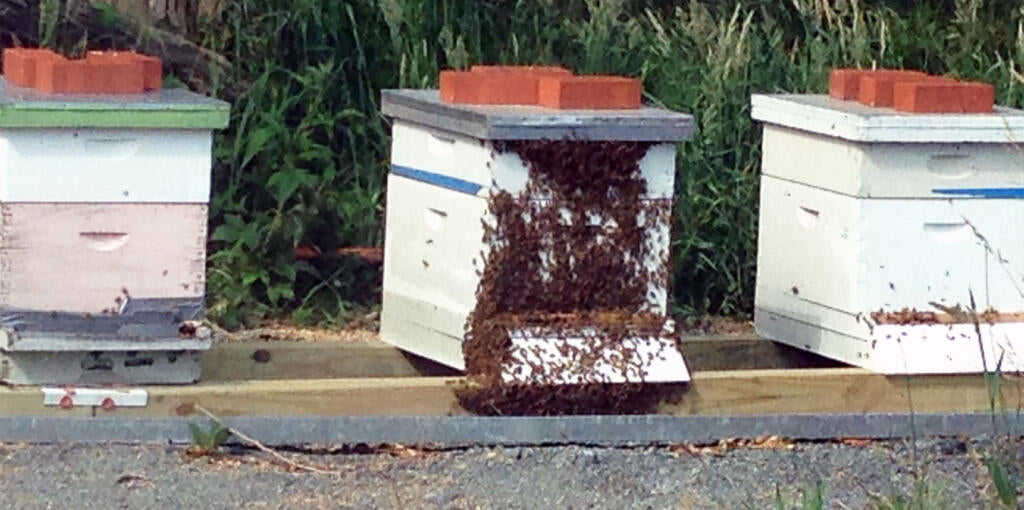
My morning run is when I clear my head, when I work out whatever conversations I need to have with myself. On one very hot morning that followed a very hot day, my “bee‑dar” caught something odd as I passed a row of hives. One of them looked like it had turned inside out. A thick, fuzzy mass of bees hung off the front of the box, so many that I wondered where they had all come from. My first thought was that something had gone wrong.

It turns out the bees were doing exactly what they were supposed to do on a scorching day. What I was looking at is called bee bearding, and once you understand it, that dramatic clump of bees on the porch stops being alarming and starts being one of the more reassuring sights in the apiary.
What Is Bee Bearding?
Bee bearding is when a large group of worker bees gathers on the outside of the hive, usually near the entrance and along the front wall, forming a shape that really does look like a shaggy beard hanging off the box. It happens most often on the hottest, most humid days of summer, and it is the colony’s way of managing the temperature and airflow inside their home.
Here is the logic. A hive has to stay within a narrow temperature range, roughly 90 to 95 degrees Fahrenheit in the brood nest, so the developing larvae stay healthy and the honey cures properly. When the outside air turns brutally hot, all those tiny bee bodies packed inside act like little space heaters, and fanning alone cannot move enough air to cool things down. So a portion of the workers simply steps outside. Fewer bodies inside means less heat and less congestion, which lets the bees still indoors fan air through the hive far more efficiently. Think of a crowded room on a summer night: the fastest way to cool it is for half the people to step out onto the porch.
Why Do Bees Beard?
A few conditions tend to bring on a beard, and often it is a combination of them at once:
Heat. This is the big one. When temperatures climb, bees move outside to lower the heat load in the brood nest.
Humidity. Bees keep the inside of the hive at a specific humidity so the brood does not dry out and so nectar can be cured into honey. On muggy days, and even during summer rain, some bees head outside to help draw moisture out of the hive.
A strong, growing population. Colonies build up their numbers through late spring and summer to field a big foraging workforce. A bigger population simply means a bigger beard on a hot day. This is why bearding is often a sign of a thriving, healthy colony rather than a troubled one.
Ventilation and space. A hive that runs hot or lacks airflow gives the bees more reason to gather outside. Giving a strong colony enough room to expand, and enough ventilation to breathe, keeps everyone more comfortable.
Is Bee Bearding Normal? Should I Worry?
In the vast majority of cases, bearding is completely normal and nothing to worry about. It is one of those behaviors that looks alarming to a new beekeeper and turns out to be a good sign. A strong colony working at its peak, curing honey at a blinding pace, will often sport a beard on the hottest afternoons and evenings. The bees are calm, they are cooling their home, and they will file back inside as the temperature drops overnight.
The one thing worth doing is a quick gut check on space. Ask yourself whether your bees have enough room to keep building comb and storing honey, and whether the hive has decent airflow. If the answer is yes and you see no other warning signs, you can pour a cold drink and enjoy the show.

Bearding vs. Swarming: How to Tell the Difference
For new beekeepers like me, the easiest mistake to make is confusing bearding with swarming. They can look similar at a glance, since both involve a big cluster of bees, but they mean very different things. Bearding is temperature management. Swarming is reproduction, the process by which a colony splits to form a new one.
The tells are mostly about location and energy. Bearding bees are static and quiet: they cluster right on the front of the hive or the landing board, mostly facing the same direction, and they stay put. A colony that is getting ready to swarm is loud and active, with bees streaming into the air in large numbers, and the cluster tends to gather away from the entrance, often on a nearby tree branch, rather than clinging to the box. Swarming also usually happens in the warmer middle of the day, while beards are most prominent in the hot afternoon and evening.
Bearding is also different from festooning, which happens inside the hive when bees link their legs into hanging chains during comb building. And it is the summertime mirror image of what bees do in the cold months, when they cluster together to generate warmth in winter. In both cases, the colony is using its own bodies to hold the hive at just the right temperature.

What I Learned From My Own Bearding Hive
Back to my inside‑out hive. It was the only one out of eighteen that looked like this, so my first instinct was that it was simply too hot, and we vented the lid. Then I called in the big guns. I sent a photo to my mentors and asked whether outsider bees might be robbing the hive, and I asked about the odds of swarming. I was told to look deeper and search for swarm cells. When I opened the hive, there were nearly as many bees on the outside as there were within.
This note came back from my mentor Michael Embry: “If you look at that hive with the ‘beard’ I would certainly look for swarm cells. This isn’t really swarm time. I think because of the hot and cold spring, swarming is late, late, late. Beekeepers normally deal with swarming around the early part of May.”
He went on: “Any other year I would say this is not the time to make a split. This year I am not so sure. Right now I am loaded with swarm cells. Normally you would make splits when swarm cells are present. This works fine at the onset of the honey flow, but now the honey flow is two‑thirds over. So unless you like feeding bees all summer, you should not be making splits at this time.”
I suggested that adding an empty honey super might give them the room they needed. Michael agreed and explained the trick to it: “If you give them an empty honey super, place it right over the brood boxes, which means the other full honey supers need to be placed above this empty one. The bees will see that they have more room to expand and will work on filling the empty super. They will keep curing and capping the honey in the full supers above until you remove it for extraction.”
He also reminded me that when the weather stays as hot as it had been, it is normal for some of the bees to cluster outside. It helps them lower the temperature inside the colony and move air more efficiently. I installed the empty super as instructed, gave the colony space to spread out, and the drama on the front porch settled down.

What to Do When You See Bearding
If your bees are bearding, the honest answer is that you usually do not need to do anything. Still, a few small moves can make a strong colony more comfortable on the hottest stretches:
Give them room. Make sure the colony has space to keep building comb and storing honey. Adding a super to a booming hive relieves congestion and gives the bees somewhere to put all that nectar.
Improve airflow. A screened bottom board or a little extra ventilation up top helps the bees move air. Some beekeepers open the entrance up during the peak of summer heat.
Offer shade and water. A nearby water source is a genuine help in hot weather, and afternoon shade takes some of the load off the colony.
Do not disturb the beard. Bearding bees are not aggressive, they are just hot. Hosing them down or forcing them back inside does nothing useful. Let them be.
Keep up your inspections. Because congestion can also be an early sign of swarm preparation, and because summer is when pest pressure builds, staying on top of your regular hive checks, including monitoring for Varroa mites, keeps you ahead of any real problems.
The more I keep bees, the more I appreciate moments like that morning run. A hive covered in bees looked, at first, like something was wrong. It was really a healthy colony doing exactly what generations of bees have done to keep their home cool and their honey curing. All of that careful temperature work is, after all, what eventually fills the jars of Eastern Shore honey we harvest here on the farm.

Caring for this land and these communities is at the core of who we are. It’s why we created Roots & Wings, our giving initiative that connects every purchase to something that matters. See how we give back.

FAQs About Bee Bearding: Why Are My Bees Clustering Outside the Hive?
What is bee bearding?
Bee bearding is when a large group of worker bees gathers on the outside of the hive, usually near the entrance, forming a shape that looks like a beard. It happens most often on hot, humid days and is the colony’s way of cooling the interior and improving airflow so the brood nest stays at the right temperature.
Is bee bearding normal?
Yes. In most cases bearding is completely normal and is often a sign of a strong, healthy colony. Bees step outside on hot afternoons and evenings to reduce heat and congestion inside the hive, then move back in as temperatures drop overnight.
What is the difference between bearding and swarming?
Bearding is temperature management, while swarming is reproduction. Bearding bees are calm and static, clustered on the front of the hive facing the same direction. Swarming bees are loud and active, streaming into the air and gathering away from the entrance, often on a nearby branch. Swarming also tends to happen in the middle of the day, while beards are most prominent in the hot afternoon and evening.
Why are bees hanging outside the hive at night?
On hot, humid nights, bees will beard on the front of the hive to keep the internal temperature and humidity down for the developing brood. Once the air cools enough, they file back inside.
Should I do anything if my bees are bearding?
Usually no. You can make a strong colony more comfortable by giving it room to expand, improving ventilation with a screened bottom board, and offering shade and a nearby water source. Avoid disturbing the beard, since the bees are simply cooling their home, and keep up your regular inspections.
Does bearding mean my hive is overcrowded?
Not necessarily. Heat and humidity are the most common causes of bearding, and a large, healthy population naturally produces a bigger beard. Congestion can be a contributing factor, so it is worth confirming the colony has enough space to keep building comb and storing honey, but a beard on a hot day is rarely a cause for alarm on its own.