



If you’ve ever wondered why a jar labeled “sourwood” tastes nothing like the jar next to it labeled “buckwheat,” the answer isn’t in the bottling. It’s in the bloom. Varietal honey, also called monofloral honey, is honey produced predominantly from the nectar of a single type of flowering plant. And making it is a craft that depends almost entirely on timing, place, and a beekeeper’s willingness to chase a few short weeks of flowers every year.
This guide walks through exactly how varietal honey is made, from how beekeepers choose where to place their hives to why some varietals only appear in good years. If you want the broader definition first, our guide to monofloral honey covers the basics. This post is about the production side, the part that happens long before the jar reaches a shelf.
What Makes a Honey “Varietal” in the First Place
A varietal honey is one where the bees have foraged predominantly from a single type of flowering plant during a specific bloom window. The flavor, color, and aroma all reflect that one nectar source. Buckwheat honey is dark, malty, and almost molasses-like because that’s what buckwheat nectar tastes like. Orange blossom honey is bright and citrusy because that’s what orange grove nectar tastes like in May.
The word “predominantly” matters here. Bees forage freely and don’t follow instructions, which means no varietal honey is ever 100% from one flower. But when hives are placed in the middle of a vast bloom, and removed before the next plant starts to flower, the resulting honey is overwhelmingly from that one source. That’s what makes it varietal.
There’s one thing worth knowing about how varietal honey gets to a shelf in the U.S. The USDA Agricultural Marketing Service publishes voluntary grade standards for extracted honey, which cover quality factors like moisture content, flavor, aroma, and clarity. Those grades describe quality, not floral source, which means the word “varietal” on a label isn’t federally defined. The trust on a varietal honey label comes from the beekeeper. That’s exactly why working directly with experienced producers, who know their land and their bloom calendar, matters so much.
The opposite of varietal honey is wildflower honey, also called polyfloral honey, which captures whatever happens to be blooming around the hive. Both are wonderful. They’re just different products of different intentions.

Step One: Knowing the Land and the Bloom Calendar
Before a beekeeper can produce a varietal honey, they have to know two things in detail: what’s growing within a few miles of where the hives will sit, and exactly when each of those plants will bloom.
Bees typically forage within a three-mile radius of the hive, sometimes farther if they have to. So if a beekeeper wants tupelo honey, the hives need to be near a stand of Ogeechee tupelo trees in the Florida panhandle, and they need to be there during the narrow two-to-three week spring bloom. Miss the window and there’s no tupelo that year. It really is that specific.
This is why most varietal honey producers spend the off-season studying their land. Local flowering patterns shift slightly year to year based on temperature, rainfall, and soil conditions, which means an experienced beekeeper is always reading the season ahead. Honey harvesting is the moment everyone sees, but the planning behind it starts months earlier.
For more than ten years, our apiary on Chesterhaven Beach Farm has been home to 40+ acres planted specifically to feed bees. We’ve planted nearly 1,000 lavender plants, several varieties of clover, fields of sunflowers, and a long list of wildflowers timed to bloom from early spring through late fall. That timing is intentional. It’s what lets us produce our distinct Spring, Summer, and Autumn farm honeys, each one a snapshot of what was blooming when the bees were working.

Step Two: Hive Placement
Hive placement is where the science becomes physical. Producing a true varietal honey means moving hives close enough to the target bloom that it becomes the bees’ dominant forage source. The logistics of this look different depending on the varietal.
For tupelo honey, beekeepers float hives into remote Florida swamps on river barges so they can sit in the middle of the Apalachicola River Basin tupelo bloom. For blueberry blossom honey, migratory beekeepers time hive placements to coincide with New Jersey’s spring bloom. For sweet clover honey, hives sit in the middle of hundreds of acres of clover during the flowering window.
The point is the same in every case: get the bees so surrounded by one nectar source that competing flowers barely matter. Place the hives too early and the bees feed on whatever bloomed before. Leave them too late and the next plant takes over the jar. Precision is everything.

Step Three: The Bees Do Their Part
Once the hives are in place, the bees take over. A foraging worker bee finds a nectar source, returns to the hive, and communicates the location to her sisters through what beekeepers call the waggle dance. If the source is rich enough, the rest of the colony follows. Within a day, thousands of bees are working the same bloom in coordinated waves.
Bees collect nectar in their honey stomachs, where enzymes begin breaking the sugars down. Back at the hive, they pass that nectar to other bees in a process called trophallaxis, which adds more enzymes and reduces the moisture content. The nectar gets deposited into hexagonal wax cells, and worker bees fan their wings to evaporate water until the moisture drops below about 18%. Then they cap the cell with beeswax, and the honey is ready.
The whole process is a kind of botanical translation. The flavor of the original flower’s nectar carries through. So does the color, the aroma, and even subtle mineral notes from the soil the plant grew in. This is why honey is so often compared to wine: the concept of terroir, the idea that a place expresses itself in what it produces, applies just as cleanly to honey as it does to a vineyard.
If you want to understand exactly how those flavor differences show up in the jar, our honey tasting guide walks through how to evaluate color, aroma, texture, and flavor like a professional. Pollination is the engine running underneath all of it.

Step Four: The Harvest, Timed to the Bloom
This is the make-or-break moment for varietal honey. The beekeeper has to pull the honey supers off the hive before the next major bloom kicks in, otherwise the next nectar source mixes into the jar and the honey is no longer monofloral.
On our farm, the spring harvest happens after the bees have been working black locust, lavender, fruit trees, and early wildflowers, but before the clover and summer plants take over. The resulting Spring Honey is light, floral, and unmistakably tied to those early-season blooms. By summer, we’re harvesting a different honey entirely.
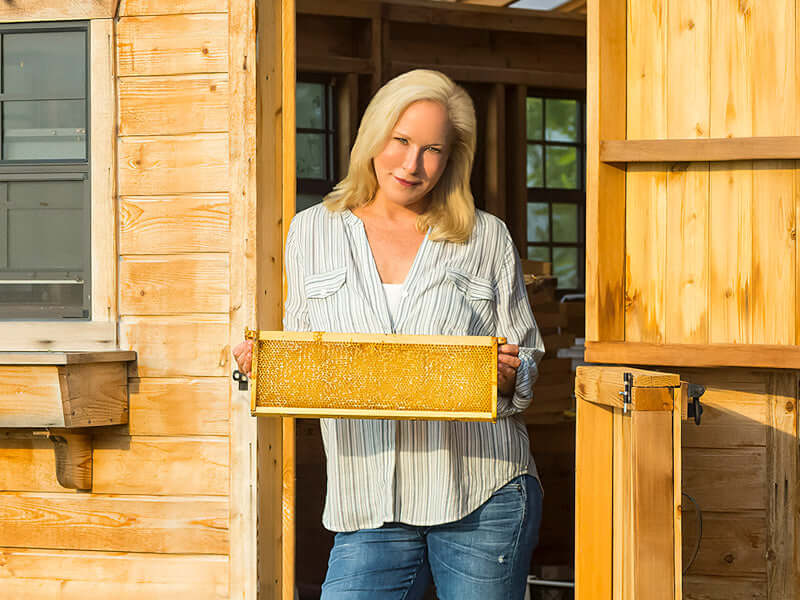
Honeycomb comes off the hive, the wax caps are gently uncapped, and the honey is extracted using centrifugal force. From there, it’s minimally filtered, jarred, and sealed. That’s the entire process. No heating, no pasteurization, no blending. The honey in the jar is the honey the bees made.

Why Varietal Honey Costs More
Varietal honey commands a premium price because the production window is short, the logistics are demanding, and the result is genuinely uncertain. A single late frost can wipe out a tupelo bloom. A summer drought can shut down a buckwheat field. A beekeeper might prepare for a varietal harvest for months, move hives across state lines, and still end up with nothing in years when the weather doesn’t cooperate. When a varietal sells out, it sells out until next harvest. That scarcity is real.
The careful hive management behind every successful harvest also takes time. Healthy colonies produce more honey, handle bloom-window stress better, and survive the long off-season between productive harvests. The quality of the honey is only as good as the health of the colony producing it.

The Varietal Honeys We Source
On the varietal side, we work with a small group of experienced beekeepers across the United States, from Maryland’s Eastern Shore to California, to bring together a collection of single-source honeys. A few worth knowing:
- Tupelo Honey from Florida’s Apalachicola River Basin, harvested during the tupelo tree’s narrow spring bloom
- Lavender Honey from Spain
- Fireweed Honey from Oregon is our newest and best-selling varietal
- Apple Honey from Upstate New York
- Sourwood Honey from the North Georgia highlands, harvested in mid-summer
- Orange Blossom Honey from spring citrus groves
- Blueberry Blossom Honey from New Jersey’s blueberry fields
- Buckwheat Honey, dark and malty, from New York state
- Coffee Blossom Honey from Guatemala’s highland coffee farms
- Sweet Clover Honey from the Dakotas
The full collection lives in our Eastern Shore Honey shop, and if you want to walk through every variety we carry plus a complete list of what’s out there, our complete guide to honey types is the deeper reference.
A Few Things Worth Trying at Home
If you’ve never tasted varietal honeys side by side, that’s the fastest way to understand what all of this work produces. Spoon a little of two contrasting varietals onto a plate, let them come to room temperature, and taste them clean. The differences in color, aroma, texture, and flavor will be immediate.
You can also support the bees behind your favorite varietal by planting a pollinator garden, even a small one. Bees forage from whatever is nearest, and small patches of native flowering plants add up across a neighborhood. The National Honey Board is also a good outside resource for varietal flavor profiles if you want to keep going.

Caring for this land and these communities is at the core of who we are. It’s why we created Roots & Wings, our giving initiative that connects every purchase to something that matters. See how we give back.
Frequently Asked Questions
How is varietal honey made?
Varietal honey is made by placing beehives in the middle of a single type of blooming plant during its flowering window, so the bees forage predominantly from that one nectar source. Beekeepers carefully time hive placement and removal so the honey doesn’t mix with nectar from the next plant to bloom. The honey is then minimally filtered and jarred without heating or blending.
What is the difference between varietal honey and monofloral honey?
They mean the same thing. “Varietal” and “monofloral” both describe honey produced predominantly from the nectar of a single type of flowering plant. “Single-varietal” and “single-source” are also used interchangeably.
How long does it take to make varietal honey?
The bees themselves can produce honey from collected nectar in a few days, but the actual production window for a varietal harvest is anchored to the plant’s bloom, which typically lasts two to four weeks once a year. Beekeepers spend most of the off-season planning hive placement, maintaining colony health, and reading local weather to be ready for that short window.
Why is varietal honey more expensive than regular honey?
Varietal honey takes more planning, more travel, and more risk than blended grocery store honey. The bloom window is short, the weather is unpredictable, and in difficult years some varietals simply aren’t produced. That scarcity, combined with the careful hive management required, is reflected in the price.
Can a single hive produce more than one varietal honey in a year?
Yes, if the beekeeper times the harvests carefully. A hive on a farm with staggered blooms can produce a spring harvest from early-season flowers and a separate summer or autumn harvest from later blooms, with each harvest tasting distinct. This is how our farm produces three different seasonal honeys from the same bees.
What does “terroir” mean for honey?
Terroir is a wine term for the way a specific place, including its soil, climate, and surrounding plants, expresses itself in what grows there. Honey shows terroir in the same way. Two jars of the same varietal from different regions or different years can taste noticeably different because of the conditions where the bees worked.