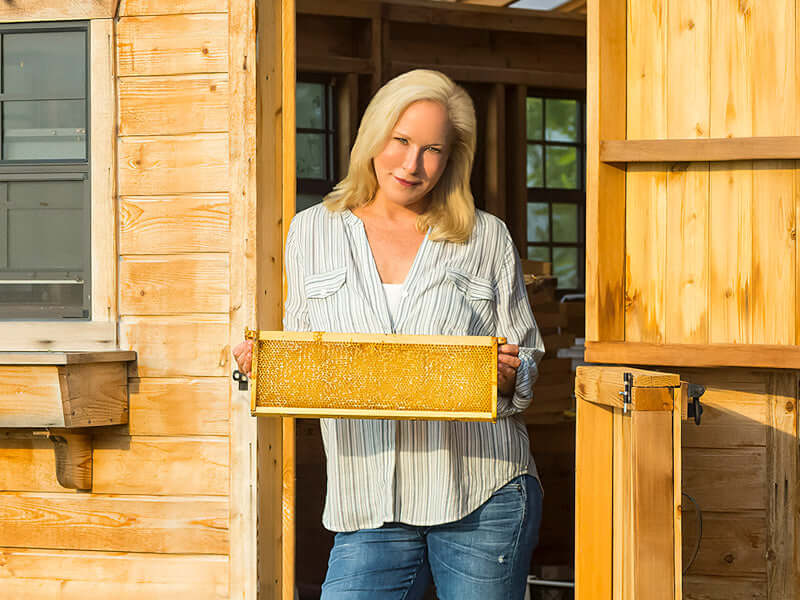


I run a farm, keep ledgers, read research papers about mite counts, and generally consider myself a practical person. And yet, if you stood quietly at the edge of my apiary on the right afternoon, you might catch me talking to my hives. Beekeeping is like that. It is one of the oldest occupations in the world, and it comes wrapped in centuries of folklore that even the most scientific beekeeper never quite shakes off. Here are the bee superstitions that have followed beekeepers for hundreds of years, where they came from, and, since you asked, the ones I still catch myself honoring.

Why Beekeeping Invites Superstition
Spend an hour watching a hive and you start to understand why our ancestors thought bees were magic. Tens of thousands of insects move with one purpose, build perfect hexagons in the dark, and somehow agree on decisions without a single meeting. A colony behaves so much like a single creature that we wrote a whole piece on hive mentality and what it teaches us about our own groups.
Add to that how much was riding on the bees. For most of history, a family’s hives meant their only sweetener, their candle wax, and often a piece of their income. When something matters that much and can vanish overnight, people build rituals around it. That is where nearly every superstition on this list was born.

Telling the Bees
The most famous bee superstition of all: when someone in the household died, married, or was born, the family went out to the hives and told the bees, sometimes draping the hives in black cloth for mourning. Skip the announcement, the belief went, and the bees might sicken, stop making honey, or abandon the hive altogether. John Greenleaf Whittier built his 1858 poem around the custom, and when Queen Elizabeth II died in 2022, the royal beekeeper formally shared the news with the palace hives. This one deserves its own telling, and it has one: read our full piece on the tradition of telling the bees.

Never Buy Bees with Ordinary Money
Old English folklore held that a colony bought with common coins would never thrive. Bees were supposed to be bartered for, traded for a pig or a sack of grain, or paid for in gold if money had to change hands at all. A swarm given freely was the luckiest of all, and stolen bees were considered doomed from the start.
Modern beekeepers, myself included, order packages and nucs with perfectly ordinary money, and the bees do fine. If you are curious how that works today, our guide to buying bees walks through it. Still, ask any beekeeper about their favorite colony and you will usually hear about the one that arrived as a gift, a trade, or a lucky caught swarm. Some part of the old belief survives in the way we tell those stories.

A Swarm in May Is Worth a Load of Hay
The full rhyme, which English beekeepers have been repeating for centuries, goes: a swarm of bees in May is worth a load of hay; a swarm of bees in June is worth a silver spoon; but a swarm in July is not worth a fly.
Here is the thing: this superstition is mostly just good biology in a costume. A swarm caught in May has an entire nectar season ahead of it to draw comb, raise brood, and store food for winter. A July swarm is starting from zero with the best blooms already behind it, and it often cannot build up in time. The rhyme was how beekeepers passed that hard-won knowledge down before anyone wrote manuals. If you want the science underneath it, we cover what makes bees swarm in detail.
A Bee in the House Means Company Is Coming
In folk tradition across Europe and America, a bee flying into your house was a sign that a visitor was on the way. Let the bee leave on its own and the visit would be a happy one. Kill it, and you invited bad luck, or at least a guest bearing bad news.
Whatever you make of the omen, the practical advice holds up: a bee indoors is lost, not hostile. Open a window, give her a minute, and she will find her own way back to work.

If a Bee Lands on You
Folklore is generous to the person a bee chooses. A bee landing on your hand was said to mean money was coming your way. A bee landing on your head foretold greatness. The Celts, characteristically, went darker: in their tradition, a bee hovering about a person’s head could be a sign of approaching death. You can read more of that older, stranger material in our roundup of honey bee facts and myths.
The unglamorous truth is that a bee landing on you is usually investigating a floral soap, a bright shirt, or the salt on your skin. Stay still, let her finish her inspection, and she will move along, no fortune required.
Never Quarrel Within Earshot of the Hive
An old belief held that bees would not stay with a quarrelsome family. Swearing, shouting, and household strife were all thought to drive colonies away or sour the honey. Some versions insisted the bees were offended by bad language specifically, which says something charming about how politely our ancestors imagined the hive.
Like the swarm rhyme, this one hides a kernel of truth. Bees genuinely respond to sudden movement and vibration, and colonies are calmer around people who work slowly and quietly. The superstition made households behave exactly the way good beekeepers behave. Whether the bees care about your vocabulary is another question, but they absolutely notice how you move.

The Ones I Catch Myself Honoring
So, a confession. I narrate my inspections out loud, hive by hive, the way you might talk to a horse you are working around. I keep my voice low and my movements slow, which is either sound technique or good manners depending on who you ask. And when something big happens on the farm, I mention it at the hives. I would not say I believe the bees need to know. I would say it has never once felt silly to tell them.
Most beekeepers I know keep a superstition or two like this, held loosely, half in fun. The rituals connect us to every beekeeper who came before, and they cost nothing but a few quiet words in the bee yard.
Where the Old Beliefs Come From
Nearly all of these superstitions trace back to a time when people saw bees as something more than insects. Celtic tradition cast them as messengers between the living and the spirit world. Sacred texts across a dozen civilizations treated honey as a substance apart, a story we explore in honey in religions around the world. And the sheer age of our relationship with bees, stretching back at least 8,000 years, gave the folklore plenty of time to grow. For the long view, start with our history of honey.
The Part That Needs No Superstition
The reason these beliefs endure is that the wonder underneath them is real. The bees really do behave like one mind. The hive really can vanish overnight or hand you an astonishing harvest. And the honey really does carry the record of a particular meadow in a particular season. You can taste that part without believing anything at all: our Spring Honey comes from the hives I keep at Chesterhaven Beach Farm, and the Honey Tasting Tower lines up five varietals from light to dark so you can taste how much the bees’ flower choices change the jar. No rituals required, though I will not judge you for thanking the bees.

FAQs About Bee Superstitions
What does it mean when a bee lands on you?
In folklore, a bee landing on your hand means money is on the way, and a bee landing on your head foretells success. In reality, the bee is usually investigating a scent, a color, or the salt on your skin. Stay still and she will move along on her own.
What does it mean when a bee flies into your house?
Folk tradition says a bee entering your home is a sign that a visitor is coming. Letting the bee leave on its own was considered good luck, while killing it invited misfortune. Practically speaking, a bee indoors is simply lost, so open a window and let her find her way out.
Why were people told not to argue near beehives?
An old belief held that bees would not stay with a quarrelsome family and that shouting or swearing near the hives could drive a colony away. There is a kernel of truth in it: bees respond to sudden movement and vibration, so calm, quiet behavior around hives really does keep colonies more settled.
Is the rhyme about a swarm in May being worth a load of hay true?
Broadly, yes. A swarm caught in May has a full nectar season to build comb and store food for winter, while a swarm in July starts too late to build up before cold weather. The old rhyme was a memorable way to pass down real beekeeping knowledge.
Do beekeepers still tell the bees?
Some do. The custom of announcing deaths, weddings, and births to the hives survives among beekeepers who enjoy the tradition, and it drew worldwide attention in 2022 when the royal beekeeper told the palace hives of Queen Elizabeth II’s death.