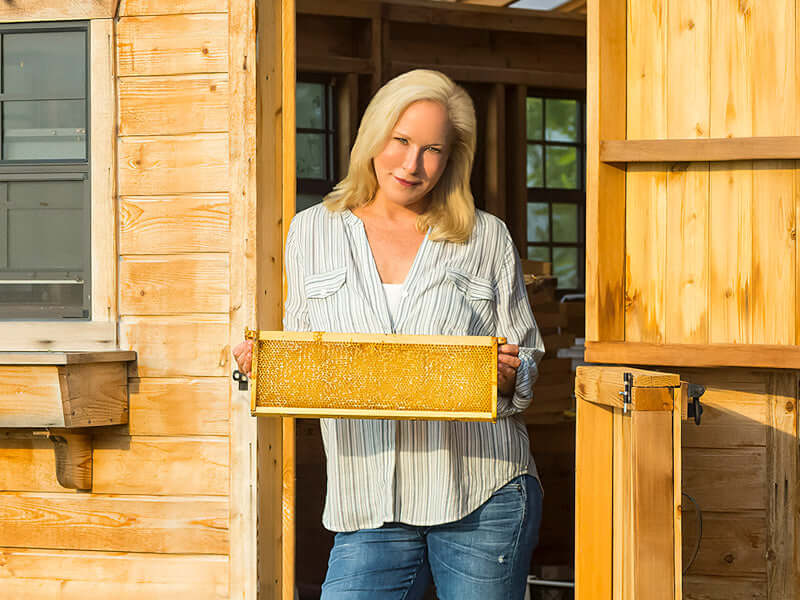




If you've ever wondered why spring honey looks, smells, and tastes different from the honey you buy at the grocery store — or from any other honey we make the rest of the year — the answer starts with the bees and what happens to them in May and June. Spring honey isn't just honey made in spring. It's a specific, seasonal expression of what's blooming at that exact moment, on that exact piece of land, during one of the most concentrated bloom windows of the year.
How Spring Honey Gets Made
Honey is always a reflection of its floral source. The nectar bees collect determines the color, flavor, aroma, and texture of the honey they produce. In spring, the floral sources available to a hive are very different from what's blooming in summer or fall — which is exactly why spring honey has its own character.
At Chesterhaven Beach Farm on Maryland's Eastern Shore, spring means black locust trees, fruit tree blossoms from our pear and apple groves, wildflowers, and more than 500 lavender plants all coming into bloom at roughly the same time. That convergence is what makes the honey possible — and what makes it temporary. The window when all of those plants are actively blooming simultaneously is only a few weeks long. Once it closes, that particular combination of nectar is gone until next year.
Kara times the harvest to catch that overlap at its peak. The honey is extracted in small batches, kept raw and minimally filtered, and jarred without anything added. What goes into the jar is exactly what the bees made.

What Does Spring Honey Taste Like?
Spring honey is floral — but in a pollen-forward, outdoor way, not in a perfume way. The flavor is bright and energetic, with a sweetness that's genuine rather than heavy. It's the kind of honey that tastes like something specific. People reach for descriptors like "like being outside in May" or "the first warm day" because the floral character is that distinct.
The texture is smooth and flowing. The color is golden. Because it's raw, the flavor is more alive than processed honey — nothing has been heated out of it.
That flavor is what makes it such a good fit in recipes where the honey is actually supposed to show up — a lemon lavender honey cake, a drizzle over honey strawberry scones, or a bright honey mustard for roasted carrots or soft pretzel bites. For a broader look at what it can do in the kitchen, see How to Use Spring Honey.

What Makes Spring Honey Different from Wildflower Honey?
This is a question worth answering directly, because they're related but not the same thing.
Wildflower honey is a category. It refers to honey made from a diverse mix of flowering plants rather than a single dominant source. Most wildflower honey is blended from multiple hives, multiple beekeepers, or multiple regions. It's a reliable, consistent product — and a good one — but it doesn't capture a specific moment in time.
Our Spring honey is a farm honey. It comes from one (our) apiary, one harvest window, one season. The floral sources are the specific plants growing on that specific piece of land. The flavor changes year to year depending on weather, bloom timing, and what the bees prioritized. That variability isn't a flaw — it's the whole point.

What's the Difference Between Spring and Fall Honey?
Spring and fall honeys are different products in almost every way that matters — flavor, color, floral source, and the character of the nectar itself. Spring nectar tends to come from trees and early-blooming flowers, producing a lighter color and brighter flavor. Fall nectar comes from goldenrod, aster, and other late-season plants, which tend toward a darker, more robust honey with a bolder, sometimes earthier taste. Neither is better — they're expressions of different seasons. For a full side-by-side breakdown, see Spring vs. Fall Honey.

Is Spring Honey Good?
The short answer: it's the one that sells out first. Every year.
The longer answer is that "good" depends on what you're looking for. Spring honey is excellent if you want something floral and bright that works in both sweet and savory contexts — drizzled over cheese, stirred into dressings, swirled into yogurt, or eaten straight. It's not a subtle background flavor. It has a point of view.
It's also raw, minimally filtered, Star K Kosher certified, and made from a single farm's bees. For people who care about where their food comes from and how it's made, those details matter.

Why It's a Honey Royale
Our Spring Honey carries the Honey Royale designation — a label we reserve for honeys we can't always source. These are honeys that depend on specific conditions coming together in a specific place at a specific time. When spring cooperates, we harvest. When supply runs out, we wait until next year. Honey Royales are never discounted, because their value comes from exactly the scarcity that makes discounting impossible to justify.
Frequently Asked Questions About Spring Honey
What is spring honey?
Spring honey is honey harvested during the spring bloom window, when early-season flowers are at peak nectar production. At Chesterhaven Beach Farm, that means black locust trees, fruit tree blossoms, wildflowers, and lavender all blooming at roughly the same time. The result is a raw, minimally filtered honey with a bright, floral flavor that's specific to that short window each year.
What does spring honey taste like?
Spring honey is floral and bright — pollen-forward rather than perfume-forward. The sweetness is genuine but not heavy, and the flavor is distinctive enough that people often describe it as tasting like being outside in May. It has a smooth, flowing texture and a golden color.
Is spring honey the same as wildflower honey?
Not exactly. Wildflower honey is a broad category referring to honey made from a mix of flowering plants. Most wildflower honey is blended from multiple hives or regions and is consistent year to year. Spring honey is a farm honey — it comes from one apiary, one harvest window, and reflects the specific plants blooming on that land during those few weeks. The flavor changes slightly from year to year depending on conditions.
Why does spring honey crystallize?
Crystallization is a natural process in raw honey and a sign that nothing has been added or heavily processed. Spring honey may crystallize over time due to its natural glucose content. To return it to liquid, place the jar in warm water and stir gently — do not microwave or use boiling water.
When is spring honey available?
Spring honey is harvested once a year during the spring bloom window at Chesterhaven Beach Farm on Maryland's Eastern Shore. It is a Honey Royale — a designation reserved for honeys produced in limited quantities that cannot always be guaranteed. Once the current harvest sells out, the next jar won't be available until the following spring.
Is spring honey raw?
Yes. Our Spring Honey is raw and minimally filtered, meaning it has not been heated or heavily processed. Natural pollen, enzymes, and the full character of the honey remain intact from hive to jar.
If you've been thinking about trying it, the time to order is before the current harvest sells out. Find our Spring Honey in the Bee Inspired pantry while the current batch lasts.