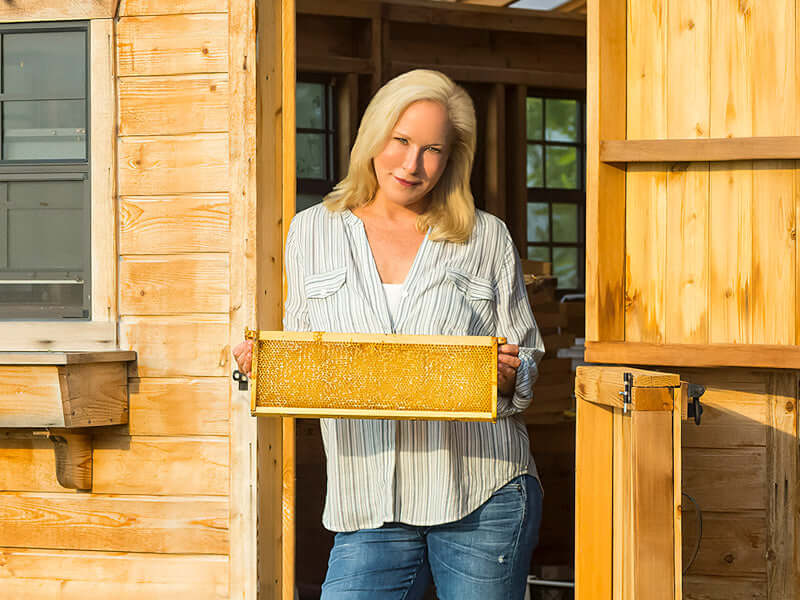


Both come from the same farm. The same beekeeper. The same hives on the same stretch of Maryland's Eastern Shore. But Spring Honey and Autumn Honey taste so different that people who love one don't always expect to love the other. That's not a flaw in either honey. It's the whole point.

Here's what actually separates them — and how to figure out which one belongs in your kitchen.
Why the Same Farm Produces Two Different Honeys
Honey reflects its floral source. The nectar bees collect determines everything: the color, the flavor, the texture, how long it stays liquid. Change the flowers, and you change the honey entirely.
At Chesterhaven Beach Farm, spring and fall bring completely different plants into bloom. In spring, the farm's black locust trees, fruit tree blossoms, wildflowers, and more than 500 lavender plants all flower at roughly the same time. In fall, those are long gone — replaced by goldenrod, aster, sunflower, buckwheat, and bamboo blossoms. Same land, same bees, completely different nectar.
That's why these are two distinct products rather than seasonal variations of the same thing. The bees aren't making the same honey twice a year. They're making whatever the farm is offering them at that moment.

Spring Honey: Bright, Floral, Gone Fast
Spring honey is defined by its bloom window. For a few weeks in April and May, when black locust, lavender, fruit blossoms, and wildflowers are all open at once, the bees produce a honey that is unmistakably of that season. Floral in a pollen-forward way, not a perfume way. Bright and energetic, with a golden color and smooth, flowing texture.
It's the honey people describe as tasting like being outside in May. Sweet, but not heavy. Complex enough to hold its own next to strong cheese, but light enough to drizzle over yogurt or swirl into tea without overwhelming anything.
Spring honey works especially well in recipes where the honey needs to show up — a lemon lavender honey cake, honey strawberry scones, or a bright vinaigrette. For more ideas, see How to Use Spring Honey.
Spring honey may crystallize over time — that's what minimally filtered honey does, and it's a sign of quality, not a problem. Warm the jar gently in hot water to bring it back to liquid.

Autumn Honey: Dark, Earthy, Even Rarer
Autumn honey is spring honey's moody counterpart. Where spring is bright and floral, autumn is dark and grounded — almost mahogany in color, thick in texture, with a flavor that reads as earthy, fruity, and complex in a way that's harder to pin down. Kara describes it as tasting like fall smells: wet leaves, overripe fruit, late-blooming flowers.
The floral sources are the scrappy survivors of the season — goldenrod, asters, hyssop, sunflower, black-eyed susan, buckwheat, and joe pye weed, still standing when everything else has finished. That mix produces a honey that is richer and more robust than anything the spring bloom window delivers. Notably, autumn honey doesn't crystallize the way spring honey can, so it stays liquid.
Where spring honey shines in lighter applications, autumn honey earns its place in savory cooking. Bourbon glazes, marinades, salad dressings that need depth, roasted vegetables, honey mustard sauces. It pairs well with strong cheeses, cured meats, and anything that can stand up to a honey with something to say.
Autumn honey is also harder to get. Spring happens every year. Autumn honey only happens when the summer was right — not too hot, not too dry — and the hives have excess to share. Even in a good year the harvest is small. Some years there is no harvest at all. If you would rather build a season around it than just a jar, our autumn harvest experience guide pulls the whole thing together.

Side by Side
| Spring Honey | Autumn Honey | |
|---|---|---|
| Floral sources | Black locust, lavender, fruit blossoms, wildflowers | Goldenrod, aster, sunflower, buckwheat, bamboo |
| Color | Golden | Dark amber, near mahogany |
| Flavor | Bright, floral, pollen-forward | Earthy, fruity, robust, complex |
| Texture | Smooth, flowing | Thick, almost molasses-like |
| Crystallization | May crystallize over time | Stays liquid |
| Best uses | Yogurt, tea, light baking, cheese boards, vinaigrettes | Glazes, marinades, savory cooking, bold cheese pairings |
| Availability | Every spring, may sell out | Only in good years, very limited |
| Kosher | Star K certified | Star K certified |
Which One Should You Get?
If you want something bright and versatile that works across sweet and savory applications, Spring Honey is the place to start. It's the more approachable of the two and the one that tends to become a staple — the jar people reach for without thinking about it.
If you cook, and you want a honey that can do something more interesting in a glaze or a dressing or alongside a serious cheese board, Autumn Honey is worth having when it's available. The caveat is that "when it's available" is genuinely uncertain — it's one of the rarest things we produce.
Both are Honey Royales: designations we reserve for honeys we can't always get, that are never discounted, and that are worth ordering before the current batch sells out.
You can find both in the Bee Inspired pantry: Spring Honey and Autumn Honey. And if you want to go deeper on spring honey specifically — what it is, how it's made, why it sells out — start with What Is Spring Honey?

FAQs About Spring vs. Fall Honey
What is the difference between spring honey and fall honey?
Spring and fall honey differ in floral source, color, flavor, and texture. Spring honey comes from early-blooming flowers like black locust, lavender, and fruit tree blossoms, it’s golden, bright, and floral. Fall honey comes from late-season plants like goldenrod, aster, and buckwheat, it’s darker, thicker, and earthier. Both are minimally filtered, harvested from the same farm, but they taste like entirely different honeys.
Which is better, spring honey or fall honey?
Neither is better — they're built for different uses. Spring honey is lighter, more floral, and more versatile across sweet applications. Fall honey is darker, more robust, and better suited to savory cooking, glazes, and bold cheese pairings. If you cook regularly with honey, having both covers a wider range of situations than either one alone.
Does spring honey or fall honey crystallize?
Spring honey may crystallize over time, which is normal for minimally filtered honey. To reliquefy it, place the jar in warm water and stir gently. Autumn honey tends to stay liquid due to its higher fructose content from late-season nectar sources.
Is fall honey rarer than spring honey?
Yes. Spring honey is harvested every year, though supply is limited and it may sell out before the next harvest. Autumn honey only happens when summer conditions were right for the late-season plants to produce enough nectar — which doesn't happen every year. Some years there is no autumn honey harvest at all.
Where does Bee Inspired's spring and fall honey come from?
Both honeys come from Chesterhaven Beach Farm on Maryland's Eastern Shore, where Kara keeps her own hives. They are single-origin, farm-specific honeys — not blended from multiple sources. Each is harvested in small batches and is Star K Kosher certified.