

Spring honey's flavor is specific enough that it's worth thinking about where you put it. The brightness and floral character that make it so good in some applications can get lost in others — and that would be a waste, especially given how little of it there is each year. Here's where it actually earns its place.
If you want the backstory on what makes it different from other honeys before diving into the kitchen, start with What Is Spring Honey?
 On a Cheese Board
This is where spring honey tends to stop people in their tracks. The floral brightness cuts through aged and funky cheeses in a way that milder honeys don't — it provides contrast rather than just sweetness. Sharp cheddar, blue cheese, aged gouda, creamy brie — all of them benefit from a drizzle. Add cured meats, fruit, and crackers and spring honey ties the whole board together without competing with anything on it.
If you want the bigger picture on which honeys work with which cheeses, that guide covers each cheese category with specific varietal pairings."

Over Yogurt, Ricotta, or Fresh Cheese
A spoonful over plain Greek yogurt or fresh ricotta is one of the simplest things you can do with spring honey and one of the most satisfying. The floral notes add complexity to something that would otherwise be just creamy and plain. Add fruit — strawberries and sliced peaches work especially well — and you have something that tastes like it took more effort than it did.

In Baking
Spring honey's floral character holds up in the oven better than you might expect, as long as you're not baking it into something so spiced or chocolate-forward that it disappears. The best applications are ones where the honey is meant to be tasted. A lemon lavender honey cake is the obvious choice — the floral notes in the honey reinforce the lavender rather than competing with it. Honey strawberry scones are another strong pairing, where a drizzle of spring honey in the glaze makes the strawberry flavor brighter. And in our gluten-free apple pie, Spring Honey sweetens the filling and, drizzled over the lattice, browns the crust in place of an egg wash.

In Salad Dressings and Vinaigrettes
Honey in a vinaigrette does two things: it balances the acidity and adds body. Spring honey does both while also adding a floral note that plays well against bitter greens — arugula, radicchio, endive. A basic formula that works: two parts olive oil, one part vinegar (white wine or champagne), a teaspoon of dijon, a drizzle of spring honey, salt and pepper. Shake and taste. The floral sweetness makes even a simple side salad feel intentional.

In Honey Mustard
Spring honey's brightness makes for a honey mustard that actually tastes like honey, not just sweet heat. Use it in a dipping sauce for soft pretzel bites or as a glaze for roasted carrots — the floral character holds its own against mustard and comes through in the finished dish.

In Tea
Spring honey dissolves cleanly and adds a floral dimension that pairs naturally with chamomile, lavender, and light green teas. It's less suited to black tea or anything with strong tannins, where the floral notes can get muddled. If you're drinking a floral or herbal tea and reaching for honey anyway, spring honey is the one to use.

Straight from the Jar
Worth mentioning because a lot of it ends up this way. Spring honey is good enough to eat on its own — off a spoon, spread on warm bread or a biscuit, drizzled over butter on toast. If you've never tasted a honey that actually tastes like something specific, this is a reasonable place to start.
Where Spring Honey Doesn't Belong
Anywhere it's going to get buried. Heavy spice cakes, dark chocolate applications, anything molasses-forward — the delicate floral character won't survive. For those applications, a darker, more robust honey like our Autumn Honey is better suited. The two honeys are complements, not substitutes — they're built for different jobs.

A Note on Supply
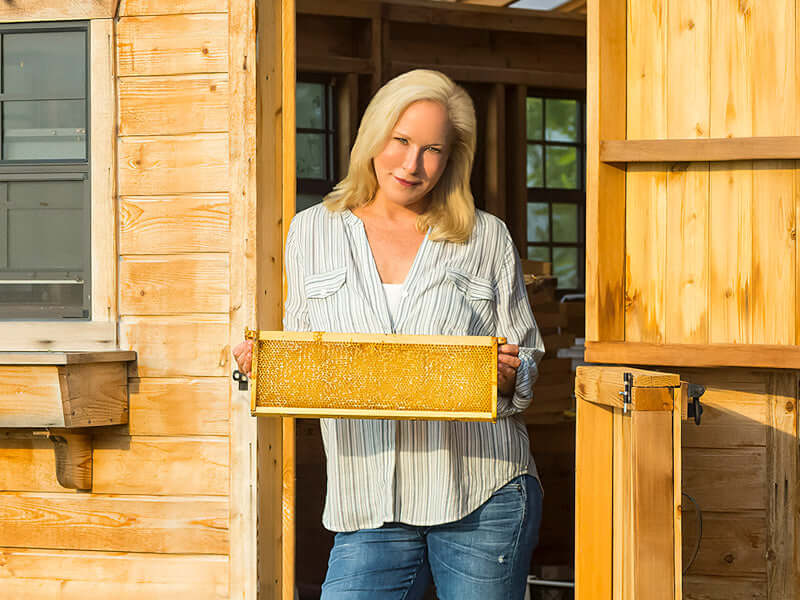
Spring honey is harvested once a year from Chesterhaven Beach Farm during the brief window when black locust, lavender, fruit blossoms, and wildflowers all bloom at once. When it sells out, it's gone until next spring. If you're cooking with it regularly, it's worth ordering before the current batch is gone.
Find our Spring Honey in the Bee Inspired pantry while this season's harvest lasts.

FAQs About How to Use Spring Honey
What is spring honey good for?
Spring honey is good for any application where the honey's flavor is meant to be tasted. It works especially well on cheese boards, over yogurt or ricotta, in vinaigrettes, as a glaze or dipping sauce, stirred into floral or herbal teas, and in baked goods where honey is a featured ingredient rather than just a sweetener. Its bright, floral character can get lost in heavily spiced or chocolate-forward recipes.
Can you bake with spring honey?
Yes, as long as the recipe is one where the honey's flavor can come through. Spring honey works well in cakes, scones, and baked goods with light or floral flavor profiles — lemon, lavender, strawberry, and similar ingredients. It's less suited to recipes with strong spices or chocolate, where its delicate character will be overwhelmed.
What cheese pairs well with spring honey?
Spring honey pairs well with cheeses that have enough character to stand up to something floral and bright. Sharp cheddar, aged gouda, blue cheese, and creamy brie are all good matches. The honey provides contrast rather than just sweetness, which is what makes it work on a cheese board.
What tea goes with spring honey?
Spring honey pairs best with floral and herbal teas — chamomile, lavender, and light green teas where the honey's floral notes complement rather than clash. It's less well suited to strong black teas with heavy tannins, where the delicate flavor can get muddled.
How do you store spring honey?
Store spring honey at room temperature, away from direct sunlight and heat. It does not need to be refrigerated. If it crystallizes, place the jar in warm water and stir gently to return it to liquid. Do not microwave or use boiling water.