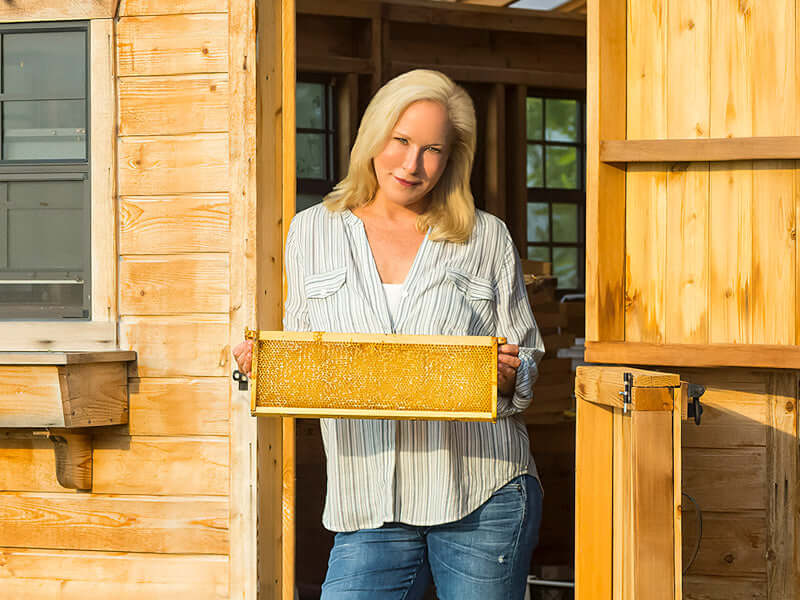


There’s a fig tree on the farm at Chesterhaven Beach Farm that we planted years ago from a graft. My friend Joyce gave it to us, cut from one of her most prolific trees, and that single graft has turned into the tree I now stand under every late summer with a basket and a slightly impatient expression. Figs ripen on their own schedule. They wait for nothing. And when they’re ready, they all seem to come in on the same day.
This is the recipe I make on those days, when there are more ripe figs than I can possibly eat off the branch. Fresh figs, a drizzle of our Spring Honey, a generous crack of black pepper, and a little feta or goat cheese broken over the top. Five minutes. No cooking. The kind of appetizer that comes together while the wine is still opening.

Why This Fig Appetizer Works
The combination of honey, pepper, and fig is older than most recipes you’ll cook this year. Figs were one of the first cultivated fruits in the Mediterranean world, and the pairing of honey and black pepper with fruit traces back through centuries of European and Middle Eastern tables. The reason it has stayed on those tables is simple: each ingredient does something the others can’t.
The figs bring soft, jammy sweetness with a faint floral note and that distinctive seedy texture. The honey pulls out the fig’s natural sugars and adds its own floral character. The pepper interrupts both with a sharp warmth that keeps the bite from going one-note sweet. And the salty crumble of feta or goat cheese ties the whole thing together. It’s a four-ingredient recipe that tastes like it took more thought than it did.
Ingredients You’ll Need
- Fresh figs: eight ripe figs, soft to a gentle squeeze with a sweet aroma at the stem. Brown Turkey, Black Mission, and Adriatic all work. If they’re rock-hard at the store, leave them on the counter for a day before using them.
- minimally filtered honey: about two tablespoons, drizzled. Our Spring Honey is what we use here on the farm because it’s bright and floral enough to stand up to the pepper without disappearing. Sourwood is excellent too if you want a buttery, caramel-leaning finish.
- Cracked black pepper: fresh from the mill. Pre-ground pepper is too quiet for this recipe; you want the actual texture and bite.
- Feta or goat cheese: about two ounces, crumbled. Feta is briny and firmer; goat cheese is creamier and tangier. Either works.
Optional: a thread of good olive oil and a few torn mint or basil leaves on top. Both are excellent additions but neither is required.
How to Make Honey Pepper Figs
Slice the figs in half from stem to base. Arrange them cut-side up on a serving plate. Drizzle the honey across the tops, letting it pool a little in the centers. Crumble the cheese over everything. Crack the pepper across the whole plate. If you’re using olive oil and herbs, finish with those last. Serve immediately.
That’s it. The recipe card below has exact measurements and notes, but if you remember the ratio (figs, honey, pepper, cheese), you don’t really need to look it up again.
Choosing the Right Honey
The honey is doing more work in this recipe than it might look like, so it’s worth picking one with character. A few options that work especially well:
- Spring Honey: bright, floral, with a clean sweetness that lifts the figs without weighing them down. This is what we reach for first on the farm.
- Sourwood Honey: buttery with a faint caramel-and-spice finish. If you want the dish to lean more toward dessert, this is the one.
- Wildflower Honey: bolder and more layered, with notes of black cherry and roasted nuts. Pairs especially well with goat cheese and a heavier crack of pepper.
If you’re new to varietal honey and aren’t sure where to start, our guide to types of honey and their flavor profiles walks through the differences. For the appetizer specifically, you want a minimally filtered honey with personality, not a generic supermarket squeeze bottle.
Variations Worth Trying
- Goat cheese instead of feta. Creamier, tangier, slightly less salty. Try it with Spring Honey for a softer overall flavor.
- Add fresh herbs. Torn mint or basil on top brings a green, aromatic note. Thyme works in a more savory direction.
- Spread it on toast. Same toppings, but pile them onto a slice of toasted sourdough or a crostini for a sturdier bite. Our fig focaccia uses a similar logic on a larger scale.
- Add prosciutto. A thin slice draped over each fig half adds salty cured-meat depth and turns the appetizer into something closer to a small plate.
- Build it into a cheese board. Plate alongside aged cheddar, blue cheese, walnuts, and a small dish of honey for dipping. Our guide to pairing honey with cheese covers what works with which varietal.
-
Roast your figs. Try roasting the figs as a dessert. Serve with whipped mascarpone.

When to Make This
Fresh fig season on Maryland’s Eastern Shore runs from late summer into early fall, with a smaller flush sometimes earlier in summer. Look for figs that feel soft to the touch but not mushy, with smooth skin and a sweet aroma at the stem. Once they’re ripe, they last only a couple of days, so this recipe earns its keep when the tree (or the farmer’s market) hands you more figs than you can use right away.
Outside of fig season, dried figs simmered briefly in honey can stand in, but the texture is closer to a chutney than a fresh appetizer. For something that holds the same flavor profile in a more shelf-stable form, our fresh fig compote recipe is the next stop.

Serving Suggestions
- As a starter with a glass of dry rosé, prosecco, or a light red.
- As part of a cheese board alongside other cheeses, nuts, and crackers.
- On crostini for a passable hors d’oeuvre that takes about ten minutes total.
- After dinner in place of dessert, especially with a small pour of port or a strong cup of coffee.
If you’re putting together a larger spread, our guide to building a honeycomb charcuterie board covers the broader assembly. And if you want to see what other recipes the fig tree has produced, the full collection of fresh fig recipes includes the smoothie, the focaccia, the compote, and a few crostini variations.
Enjoy some of our other recipes made with honey and figs:

The Fig Tree Story
I should say one more thing about the tree. My friend Joyce keeps her own fig trees, and one year she cut a graft and brought it over. We planted it on the farm not knowing what would happen. Maryland sits at about the northernmost edge where figs reliably grow, so it was a small gamble. The tree decided to thrive. It now stands taller than I am, and every year it gives us more figs than we can eat fresh, which is how recipes like this one get written in the first place. If you have a friend with a fig tree, ask them for a graft. If you have your own tree, share the cuttings. That’s how most fig trees end up where they are.

Fresh Figs with Honey and Black Pepper
4 servings
5 minutes
124
Mediterranean
Appetizer
Easy
Fig Season (Late Summer to Early Fall)

Ingredients
- 8 fresh figs, ripe
For Topping
- 2 tbsp Spring Honey
- 0.25 tsp freshly cracked black pepper, or to taste
- 2 oz feta cheese, crumbled (or substitute crumbled goat cheese)
Optional Garnishes
- 1 tsp extra-virgin olive oil
- 0.25 cup fresh mint or basil leaves, torn
Directions
Prep the Figs
- Rinse the figs gently under cool water and pat dry with a clean towel. Trim off the tough stem ends.
- Slice each fig in half lengthwise from stem to base, exposing the pink interior.
Plate and Top
- Arrange the fig halves cut-side up on a serving plate, leaving a little space between each one.
- Drizzle Spring Honey across the figs, letting it pool slightly in the centers.
- Crumble feta over the top, distributing it evenly.
- Crack fresh black pepper across the whole plate to taste.
Finish and Serve
- If using, drizzle a little olive oil and scatter torn mint or basil leaves on top.
- Serve right away while the figs are at their freshest.
FAQs About Honey Pepper Figs
What honey is best for honey pepper figs?
A bright, floral minimally filtered honey works best because it complements the figs without overpowering them. Our Spring Honey is what we use on the farm. Sourwood and Wildflower are also excellent if you want more depth or caramel character. Avoid heavily processed grocery-store honey here, since the recipe really lets the honey shine.
Can I make this fig appetizer ahead of time?
You can slice the figs and crumble the cheese a few hours ahead, but hold off on the honey, pepper, and any olive oil until just before serving. Once the honey hits the figs they start to release liquid, and the appetizer is at its best in the first thirty minutes after assembly.
What cheese goes best with figs and honey?
Feta and goat cheese are the easiest matches. Feta brings a briny, firmer crumble; goat cheese is creamier and tangier. Blue cheese works too if you want something more assertive, and a thin slice of brie under the figs turns the dish into a richer bite.
Are honey pepper figs gluten-free?
Yes. The recipe as written contains no flour, grains, or gluten-containing ingredients. If you’re serving on crostini or toast, choose a gluten-free bread or skip the bread entirely.
How do I know if a fresh fig is ripe?
A ripe fig feels soft to a gentle squeeze, has smooth skin without cracks or dark spots, and gives off a faint sweet aroma at the stem end. If your figs are firm at the store, leave them on the counter for a day or two. Once they’re ripe, use them within two to three days.
Can I use dried figs instead of fresh?
Dried figs can stand in if you simmer them briefly in a little water and honey to soften them, but the texture and flavor are different. For the closest match using shelf-stable figs, our fresh fig compote recipe is a better fit than this appetizer.
What can I serve with honey pepper figs?
A glass of dry rosé, prosecco, or a light red is the easy answer. The recipe also slots into a cheese board or charcuterie spread, served alongside aged cheddar, walnuts, and a small dish of honey for dipping. After dinner, it works as a light alternative to dessert with a small pour of port or strong coffee.
How long does fig season last?
On Maryland’s Eastern Shore, the main fig harvest runs from late summer into early fall, with a smaller flush sometimes earlier in the summer. Most fig trees produce one main crop in August and September. Once you spot ripe figs, the window is short, so make recipes like this one while you can.