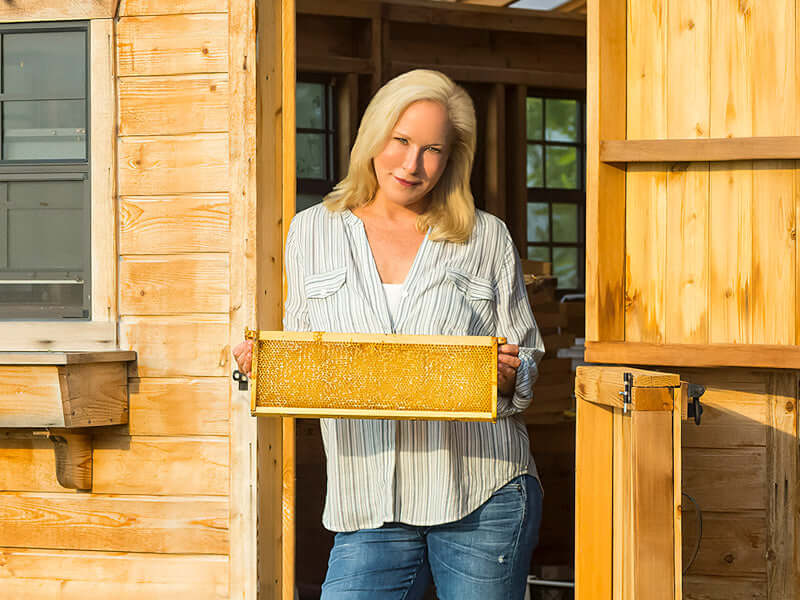


Honey bees have always captivated the human imagination. From ancient myths to modern-day superstition, these remarkable insects carry a cultural significance as rich as the golden Eastern Shore honey they produce. For beekeepers, environmentalists, nature enthusiasts, and curious minds alike, honey bees hold a treasure trove of fascinating stories and essential truths about our natural world.
Honey is a flavorful stand-in for sugar in many recipes. Try our American Chop Suey made with honey.
Whether you’re intrigued by their role as mythical messengers or fascinated by modern facts about honey, this guide highlights some of the most interesting myths, lore, and truths surrounding honey bees and their sweet creations.
Introduction to Honey Bees
Honey bees (Apis mellifera) are one of the most fascinating insects on the planet. These social bees are known for their intricate waggle dance, a unique form of communication that helps them share the location of nectar sources. With over 20,000 species of bees in the world, honey bees stand out not only for their honey production but also for their role in pollinating a vast array of plants. This pollination supports the growth of many of our favorite fruits and vegetables, making honey bees an important part of our ecosystem and food supply. In this section, we’ll explore the biology, behavior, and significance of honey bees in our world.

The Lore of Bees Through History
Throughout history, civilizations worldwide have assigned bees symbolic and spiritual meaning. From Celtic legends to Mayan mythology, bees have buzzed their way into stories, traditions, and beliefs.

Celtic Mythology
For the Celts, bees represented a bridge between the living and the spirit world. Here are some fascinating aspects of Celtic bee lore:
Messengers of the Afterlife: Bees were believed to carry messages between the living and the dead and were thought to possess wisdom from the spirits.
Signs of Fate: A bee hovering over someone’s head or landing on their hair was said to foretell a coming death.
“Telling the Bees”: Families shared important events, such as births or deaths, with their bees by “telling the bees” to keep them informed. This practice was believed to bring good fortune and protect against additional losses.

Other Ancient Cultures
The importance of bees across different civilizations also highlights their symbolic power:
Egyptian Mythology: Bees symbolized life, rebirth, and resurrection, tied to their role in pollination and honey production.
Greek and Roman Traditions: Bees were associated with fertility and the underworld, possibly owing to their intricate colony dynamics.
Mayan Lore: Ah-Muzen-Cab, the Mayan god of bees and honey, presided over beekeeping as an important cultural and spiritual practice in Mayan society.
Native American Cautionary Tales: Bees often appeared in traditional storytelling as symbols of balance with nature, warning against disrespecting the environment.
Islamic Beliefs: Surah An-Nahl, or “The Bee,” gives bees an elevated status in the Qur’an as a symbol of divine inspiration and guidance.
For a deeper look at how cultures around the world wove honey into their sacred traditions, read our companion piece on honey in religions around the world.

The Queen Bee
The queen bee is the heart of the hive: the largest bee in the colony, marked by a specific color each year with a dot on her back, and the only fertile female. Her primary role is to lay eggs, ensuring the colony’s growth and continuity. A queen bee can lay up to 2,000 eggs per day during peak season, a testament to her vital role in the hive’s survival. Unlike worker bees, which live for just four to six weeks during the summer, the queen bee can live for several years. Her pheromones regulate the behavior and activities of the worker bees, maintaining the social structure and keeping harmony within the hive. If the queen bee dies or is removed, the colony can quickly descend into chaos, underscoring her importance to the hive’s stability and success.
Busting Myths About Honey

Did you know honey has a long history in traditional beauty rituals? See how people use honey as a moisturizer.
It’s not just bees themselves that capture human curiosity. Honey, their delicious creation, is surrounded by myths and misconceptions. Let’s separate fact from folklore and explore the truth about honey.
Myth 1: Honey Never Spoils
Truth: While honey is remarkably long-lasting, improper storage can cause it to lose flavor and aroma. Honey readily absorbs moisture from the air, so it’s best kept in a tightly sealed container. Historical discoveries, like honey found in ancient Egyptian tombs, point to its long shelf life when stored properly.
Myth 2: Crystallized Honey Is Spoiled
Truth: Crystallization, or granulation, is a natural process driven by honey’s high sugar content. It doesn’t mean the honey has gone bad. It’s a sign of a minimally filtered product, and the honey is still perfectly good to eat. Simply place the jar in warm water to return it to a liquid state.
Myth 3: Darker Honey or White “Foam” Means It’s Gone Bad
Truth: Honey comes in many colors depending on the flower nectar source, region, and climate. There are many different types of honey. Darkened honey may simply be aged or have been exposed to heat. As for the white “foam” on top? Those are harmless air bubbles that rise during bottling, completely fine to eat.

Buckwheat and Autumn Honey are two of our darkest varietals. They’re wonderful for cooking and baking with honey.
Myth 4: It’s Dangerous to Use Metal Spoons with Honey
Truth: While honey is slightly acidic, using a metal spoon to scoop honey won’t cause corrosion or contamination from a quick dip. As a habit, though, avoid storing a metal spoon submerged in honey for long stretches.
Myth 5: All Bees Produce Honey
Truth: Of the roughly 20,000 known bee species in the world, fewer than 5% produce honey in harvestable amounts. Honey bees and stingless bees are the two main groups that make honey in quantities people gather. Many native bees, which are crucial local pollinators, don’t produce honey at all, yet they play a vital role in supporting biodiversity and plant pollination.

Honey Production
Honey production is one of nature’s most remarkable processes. Honey bees collect nectar from flowers using their long, tube-like tongues and store it in a second stomach, often called the honey stomach. Back at the hive, they pass the nectar to other bees through repeated regurgitation. This continues until the nectar’s water content drops. The bees deposit the nectar into beeswax cells and fan it with their wings to evaporate more water, transforming it into honey. A single pound of honey represents roughly two million flower visits. The flavor and color of honey vary with the flowers the bees visit, which is what makes each batch unique. To go deeper on the science, see our guide on what honey actually is.

Honeycomb is where honey is stored. Did you know you can eat honeycomb? Pair honey with cheese and try honeycomb from our Eastern Shore Honey collection on a delicious honeycomb charcuterie board.
Fascinating Facts About Honey Bees
Beyond myths, honey bees are incredible creatures with abilities that play vital roles in ecosystems. Cool bees, indeed.
Honey bees live in colonies where workers defend the hive against intruders, showcasing their complex social behaviors.
Worker bees handle a range of tasks, from foraging for pollen and nectar to feeding larvae and regulating hive conditions. They also produce bee bread, a protein-rich food for developing brood and nurse bees.
Worker bees use the pollen baskets on their hind legs to collect and transport pollen back to the hive.
Solitary bees, which make up the majority of bee species, have very different reproductive behaviors from social bees.
The western honey bee was brought to North America by early European settlers, which shaped local ecosystems in lasting ways.
Managed honey bee colonies face ongoing challenges, including colony collapse disorder.
Understanding the role of the worker bee is key to grasping the hive’s hierarchy and how it functions.

Do you know what festooning is?
Honey Bees Pollinate Many Crops We Love
Through pollination, honey bees support the growth of foods such as avocados, blueberries, squash, mangoes, and a wide range of vegetable crops. Their pollination work carries significant economic value across global agriculture. Without bees, access to many of these foods would be far more limited.
Honey Bees Communicate Through Dance
Known as the “waggle dance,” honey bees have a fascinating way of sharing information. Through their movements, they tell other bees the distance and direction of good nectar sources, helping the whole colony thrive.
A Bee Colony Acts Like a Superorganism
Although individual bees have specific roles, they work together so seamlessly that the colony behaves like a single organism. Each bee’s task, from gathering nectar to cleaning the hive, contributes to the health of the group. It’s a living example of hive mentality in action.
Honey Bees Can Recognize Landmarks
Bees use landmarks to locate their hives with remarkable accuracy, associating visual markers with home. It’s a skill that speaks to their adaptation and navigation abilities.

Our Spring Honey comes from hives on our Chesterhaven Beach Farm.
Bee Anatomy and Lifecycle
Honey bees have a complex anatomy divided into three main parts: the head, thorax, and abdomen.
The Head: Houses the brain, compound eyes, and antennae, which are essential for navigation and communication.
The Thorax: The powerhouse, containing the muscles that control the wings and legs for flight and movement.
The Abdomen: Contains the digestive and reproductive organs, as well as the stinger in worker bees.
The lifecycle of a honey bee moves through four stages: egg, larva, pupa, and adult.
Egg: The queen bee lays eggs in honeycomb cells, which hatch into larvae.
Larva: Nurse bees feed the larvae, which eventually spin cocoons to become pupae.
Pupa: During the pupa stage, the bee undergoes metamorphosis within its cocoon.
Adult: After metamorphosis, adult bees emerge ready to take on their roles within the colony.
Worker bees, which are female, live about four to six weeks during the summer, while drones, the male bees, live until they mate or are expelled from the hive in the fall.

Honey is a flavorful, portable way to sweeten the day. Our Honey Sticks are great for on-the-go.
Beekeeping and Honey Harvesting
Beekeeping, or apiculture, is the practice of maintaining bee colonies, typically in hives, for honey production and crop pollination. Beekeepers manage the health and productivity of the colonies, making sure the bees have enough food and are protected from pests and diseases. Honey harvesting is a meticulous process that begins with gently smoking the bees to calm them. Beekeepers then remove the honeycomb frames and use a centrifuge or extractor to separate the honey from the comb. This work takes dedication, patience, and a deep understanding of bee behavior. Beekeeping is not only a rewarding hobby but also a vital practice that supports agriculture and biodiversity.
The Importance of Protecting Bees
Bees don’t just produce honey. They’re vital to food production and biodiversity. Native bees, crucial local pollinators, play a significant role in supporting healthy ecosystems. However, pressures like habitat loss, pesticide use, and climate change have contributed to declines in some bee populations. It’s more important than ever to support conservation efforts, practice sustainable beekeeping, and spread awareness about why bees matter.
Sweet Wisdom
From myths to modern science, honey bees never cease to amaze us with their abilities and cultural significance. By better understanding these tiny pollinators and their sweet, golden creation, we can build a deeper connection with nature and a greater appreciation for all they do.
Want to do your part for the bees? Consider supporting local beekeepers, creating pollinator-friendly gardens, or simply choosing sustainably produced honey. Together, we can help ensure these remarkable creatures continue to inspire and thrive.
Caring for this land and these communities is at the core of who we are. It’s why we created Roots & Wings, our giving initiative that connects every purchase to something that matters. See how we give back.
FAQs About Honey Bees and Honey
How many bee species actually make honey?
Of the roughly 20,000 known bee species worldwide, fewer than 5% produce honey in harvestable amounts. Honey bees in the genus Apis are the main producers, along with stingless bees. The vast majority of bees, including most native and solitary species, make little or no honey but are still important pollinators.
Does honey really never spoil?
Honey is famously long-lasting thanks to its low moisture and high sugar content, and sealed jars found in ancient tombs have survived for thousands of years. That said, honey easily absorbs moisture from the air, so poor storage can affect its flavor and aroma. Keep it in a tightly sealed container at room temperature for best results.
Is crystallized honey still good to eat?
Yes. Crystallization is a natural process caused by honey’s high sugar content and is common in minimally filtered honey. It doesn’t mean the honey has gone bad. To return crystallized honey to a liquid state, set the jar in a bowl of warm water and stir gently.
Why are honey colors so different from jar to jar?
Color depends on the nectar source, region, season, and weather. Lighter honeys like Spring Honey tend to taste mild and floral, while darker honeys like Buckwheat and Autumn Honey are bolder and more robust. The same farm can produce very different honey from spring to fall.
What is the waggle dance?
The waggle dance is how honey bees share the location of good nectar sources with the rest of the colony. Through the angle and duration of their movements, a foraging bee communicates both the direction and distance to a food source, helping the whole hive forage efficiently.