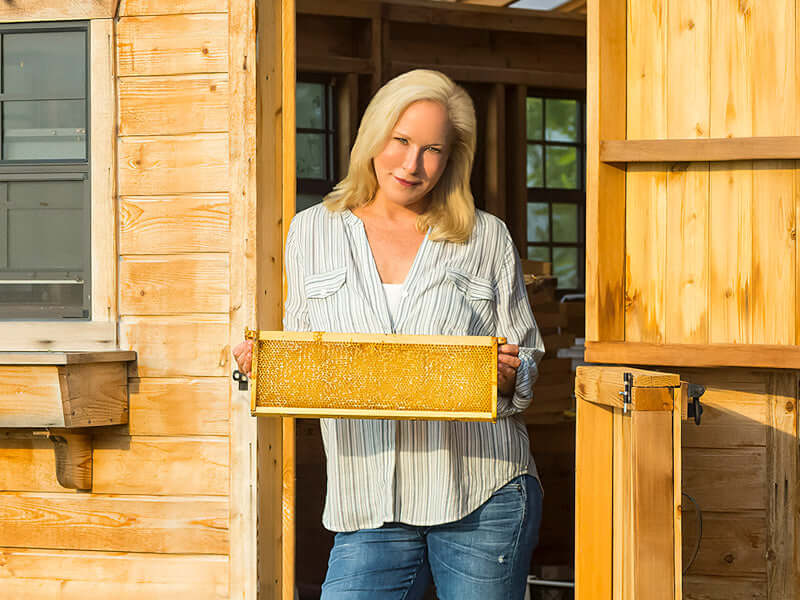


Last night we lost our beekeeping hero, Dale Large, after a years-long battle with cancer.
For the first couple of years of his illness, you would not have known that Dale was ill. I thank the bees for motivating him to push through every day. Even after his retirement, Dale still checked in to be sure the bees were well cared for.

As early as last season, Dale made our bee run for us because the bees arrived earlier than we anticipated and I could not get to our grower in time to pick them up. One of the first beekeeping lessons Dale taught me was that the bees do not always cooperate with your schedule.

It feels like yesterday that I met Dale. It was 2010.
I was painting with encaustic, a paint made with beeswax, tree resin, and pigment, and decided to “grow my own wax” for use in my art. After researching bees on the internet, I ordered a book and a hive, and when my husband got home from work I announced that I was going to become a beekeeper.
He asked, “Do you know what you’re doing?” I said, “No, but I’ll be okay.”
The next day my husband introduced me to Dale, a veteran beekeeper and an employee of David S. Brown Enterprises. Dale was kind and very patient with me. He asked me to follow him into his workshop, and from a red wagon he rolled out a couple of hives with frames full of wax comb that his bees had already drawn, ready for filling on Chesterhaven Beach Farm.
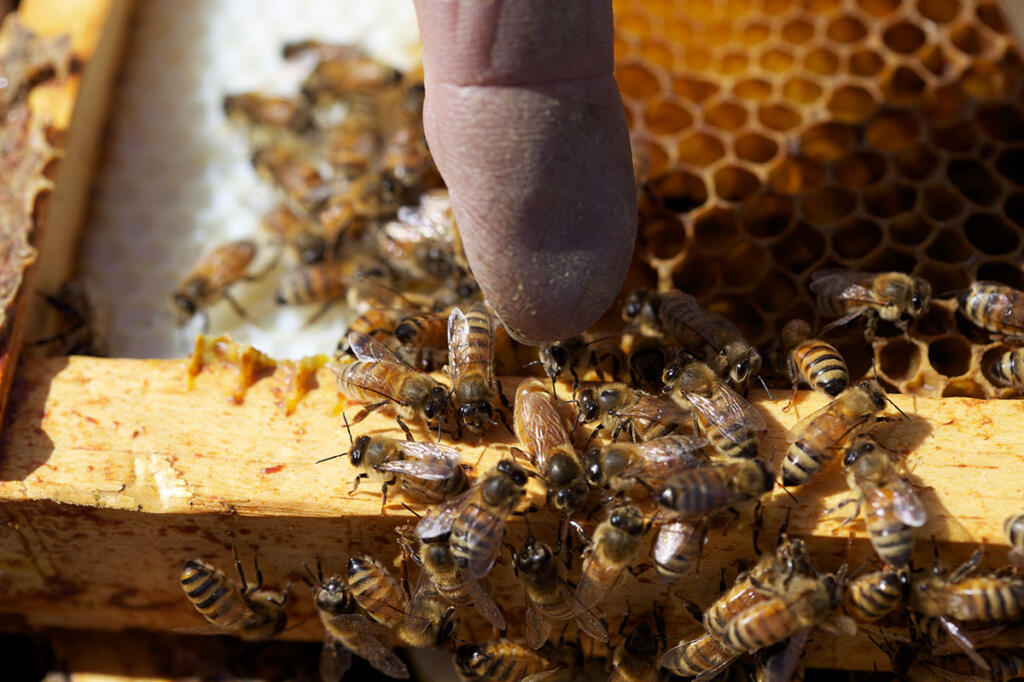
When we set the hives in place, I explained that I was only interested in the wax. That is when the important lessons started. Creating a sustainable apiary meant learning to manage the wax carefully. The only time we take wax from the bees now is when we recycle every other year, or when a hive dies.
One of those early lessons stuck with me for good. The bees store their honey in the brood chamber, the same space where they raise their young. One season, we went too long between checks, and the bees filled that entire chamber to the top with honey. They will do that when they run out of room to put it. It is not what you want. Lesson learned, the hard way, and Dale made sure I never forgot it.
That first season we did exceptionally well together. So well that someone decided to steal my bees. If you watch this clip on WBAL TV, you will see Dale, who was not at all interested in gaining publicity. Dale was camera shy, but he got past it for me. That was just the way he was.
Shortly after the piece aired, Dale heard from someone he had worked with long ago who saw him on TV, and it inspired that person to reach out and say hello. Dale appreciated hearing from someone he had known so long ago.
I do not know if Dale knew how many people loved him.

Helping me with the bees was not part of Dale’s job description.
Despite a two-hour drive from his home to the Eastern Shore, Dale made it his job to be with me in the bee yard for every single inspection for the first six years of this adventure. He never took money for his help. It meant so much to him, as a veteran beekeeper of more than fifty years, to know he was passing on what he knew to someone who would keep it going.
There were many trials and tribulations in getting our apiary up and running.
Raising bees on the Chesapeake Bay is very different from raising bees inland, further north on the outskirts of Pennsylvania. Dale would often mention that he never researched more answers to more questions than after our time together in the apiary.
In our first Honey House, after several successful harvests, we were on our way out the door after a long day of harvesting honey to find thousands of hungry bees attacking our empty supers outside the front door of our business complex. It looked like beemageddon. Think Alfred Hitchcock’s “The Birds,” only replace birds with bees.
I had no tools, no suit, no smoke. The only thing I had was a heap of trouble if I did not figure out how to fix this.
Dale came to the rescue, long after his day was already over. He showed up with smoke, suits, and a trailer to take the hives away and store them until we needed them again.

Dale Large was among the kindest, most selfless, caring, and loving humans I have known. I feel very fortunate for the time we had together. My heart goes out to his wife Brinda and his son Bobby.
I picture Dale in heaven with his bees, in a beautiful field filled with blooming flowers, at peace and out of pain.
Dale, until we meet again, rest in peace.
Caring for this land and these communities is at the core of who we are. It’s why we created Roots & Wings — our giving initiative that connects every purchase to something that matters. See how we give back.

FAQs About In Honor of Dale Large, Beekeeping Mentor
Who was Dale Large?
Dale Large was a veteran beekeeper with more than fifty years of experience who mentored Kara Brown, founder of Bee Inspired Goods, from her very first hive in 2010. He spent six years traveling to Chesterhaven Beach Farm on Maryland's Eastern Shore for every hive inspection, teaching her the beekeeping practices that shaped the farm.
How did Kara Brown get started in beekeeping?
Kara began beekeeping in 2010 to source her own beeswax for encaustic painting. A veteran beekeeper named Dale Large, introduced to her through her husband, brought over hives with already-drawn comb and taught her the fundamentals of hive management from that first season forward.
Where is Chesterhaven Beach Farm?
Chesterhaven Beach Farm is located on Maryland's Eastern Shore, where Bee Inspired Goods keeps its hives and harvests its single-varietal honey.
Why does Bee Inspired Goods honor Dale Large?
Dale Large volunteered his time for years without pay, teaching Kara Brown everything he knew about beekeeping and helping build the apiary that Bee Inspired Goods still relies on today. This post is a tribute to that mentorship.