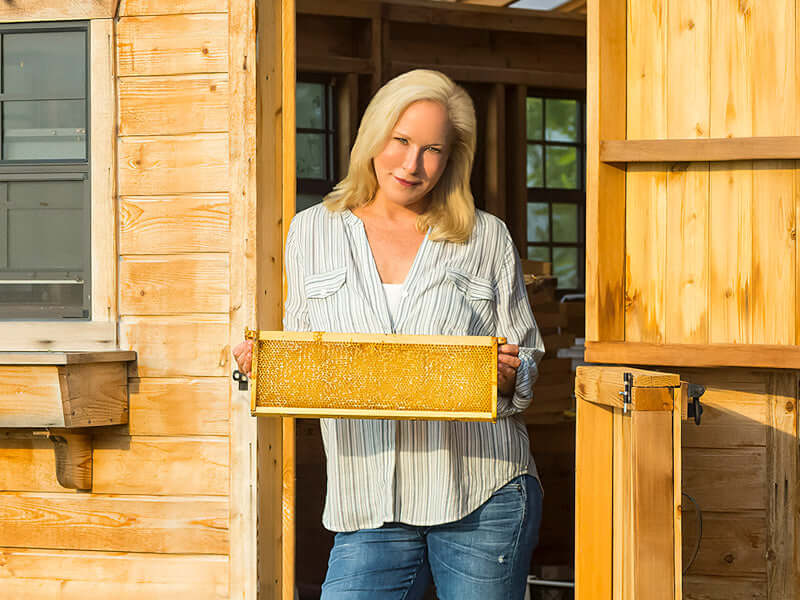




Looking for quality honey from nearby producers? This guide walks you through exactly how to find fresh, raw, local honey from beekeepers in your area, why buying honey from community producers is worth the small premium, and what to check before you hand over your money. We’ll also cover what “local honey” actually means, how to spot a real jar from a fake one, and where to start if you’re in Maryland or anywhere along the Eastern Seaboard.
Learn all about our farm on Maryland’s Eastern Shore.
What Does “Local Honey” Actually Mean?
“Local honey” isn’t a regulated term, which is part of the reason the phrase gets thrown around so loosely. In practice, most honey shoppers use it to mean honey harvested within a reasonable radius of where they live, usually within the same state or region, from bees that foraged on the plants blooming in that area.
The more useful definition is this: local honey comes from a beekeeper you can actually trace. You know where the hives sit. You know what’s blooming nearby. You can look at the label and name the county, the farm, or the floral source. That’s different from a bear-shaped bottle on a grocery shelf, where the honey may have passed through three countries and several blending facilities before it got there.
If you want a deeper breakdown of the vocabulary, raw vs. filtered, monofloral vs. polyfloral, crystallized vs. liquid, our honey glossary covers the full language.

Where to Find Local Honey Near You
Finding local honey is easier than most people realize once you know where to look. A few starting points, in order of reliability:
1. Farmers’ Markets
Farmers’ markets are the single best entry point for most shoppers. These weekly (or bi-weekly) markets usually feature at least one beekeeper selling their own jars, which means you can taste before you buy, ask questions, and build a relationship with the person who actually harvested the honey. Most markets list vendors on their website, so you can check in advance who’s bringing honey that week.
A couple of things to look for at a market booth: jars labeled with the farm name and location, a visible beekeeper (not a middle person), and honey that looks different from jar to jar. Real raw honey varies in color, texture, and clarity depending on the bloom. A table of identical, perfectly clear jars is a yellow flag.
2. Visit Apiaries and Farm Stands
Visiting an apiary gives you a different kind of confidence, you see the hives. You can ask about harvest practices, the flora the bees are pollinating, and how often jars are bottled. Many small apiaries also sell directly from a farm stand or on-site shop, often at lower prices than you’ll see at a market or retail store because there’s no middle margin.
3. Independent Retail Shops
Small, independent food shops, specialty grocers, co-ops, and beekeeping supply stores frequently carry honey from nearby apiaries. These curators tend to vet their sources more carefully than a big-box grocery chain, and the staff can usually tell you exactly where each jar came from. Bee Inspired’s own honey retail stores in Owings Mills, MD and Ellicott City, MD fall into this category, we sell our own Eastern Shore honey alongside varietals from small beekeepers we’ve worked with for years.
4. Local and State Beekeeping Associations
Most states have a beekeeping association, and many counties have their own chapter. Their websites usually maintain a directory of member beekeepers who sell honey. It’s a quick way to surface producers within a ten- or twenty-mile radius of wherever you live.
5. Direct From the Apiary, Online
A lot of small beekeepers now ship. If you can’t get to a market or a farm, ordering directly from a producer’s website is the next best thing, you’re still buying a known, traceable jar, and your dollars go straight to the beekeeper.

How to Tell If It’s Real, Raw, Local Honey
Local is only half the battle. The other half is making sure what you’re buying is actual honey and not one of the blended, diluted, or mislabeled products that have made honey one of the most adulterated foods on the market.
Signs You’re Holding Real Raw Honey
- It’s cloudy, not crystal clear. Raw honey holds onto bits of pollen and fine wax. Perfectly transparent honey has usually been ultra-filtered and heated.
- It eventually crystallizes. Real raw honey turns cloudy, then granular, then solid over time, depending on the glucose-to-fructose ratio. A jar that’s been sitting in your pantry for a year and is still completely liquid is suspicious. For the full explanation, see our guide on whether honey goes bad.
- It tastes like something specific. Real honey has a finish: floral, fruity, woody, earthy, something. Fake or heavily adulterated honey usually hits you with one flat note of sweetness and disappears.
Questions Worth Asking the Beekeeper
- Where are the hives located?
- What was blooming when this batch was harvested?
- Is it raw and minimally filtered, or has it been pasteurized?
- Is it a single harvest or a blend?
A beekeeper who knows their own operation will answer all four without hesitation.
Label Red Flags
Be cautious with labels that say only “Product of USA” with no specific farm, county, or state listed. Same goes for jars labeled “honey blend,” which usually means honey from multiple international sources mixed together. Price is also a signal: if a jar of “raw wildflower honey” costs the same as the generic brand next to it, one of them is hiding something.

Why Buy Local Honey?
Beyond the obvious pleasure of a better-tasting jar, buying local comes with a few practical reasons worth naming:
Fresher Flavor and Seasonal Character
Honey from a nearby beekeeper often reaches your pantry within weeks of harvest. The flavor is livelier, the aroma is more pronounced, and you get seasonal variation, spring honey tastes different from fall honey, even from the same apiary. Grocery store honey blends those differences out.
Natural Pollen and Enzymes Intact
Honey from nearby sources is usually raw and minimally filtered, which means the natural pollen, enzymes, and flavor compounds produced by the bees are still in the jar. For a full comparison, our guide to raw honey versus regular honey breaks down exactly what processing removes.
You’re Supporting Small-Scale Beekeepers
Small beekeepers don’t compete well on price against industrial imports. Every jar you buy directly from one of them supports the kind of careful, small-batch beekeeping that keeps regional bee populations healthy. That matters, because bees pollinate roughly a third of the crops we eat.
You Can Plant for the Same Bees
Once you’re buying from a local beekeeper, you can actually contribute on the back end. Planting a pollinator garden with native species gives those same honeybees more nectar sources, and, down the line, may show up in the flavor of a future jar.
A Tour of Regional Honey Along the East Coast
One of the interesting things about shopping local is that every region produces distinct honey. A short tour of what’s out there:
Maryland and the Eastern Shore
Our Spring Honey and Wildflower Honey come from hives at Chesterhaven Beach Farm on Kent Island, Maryland. Spring honey captures black locust, fruit blossoms, and early wildflowers; wildflower honey captures the later-season bloom with anise, cherry, and roasted nut notes. The native wildflowers of Maryland’s Eastern Shore are a big part of what makes regional honey taste the way it does.
New York and the Upper Mid-Atlantic
New York apiaries produce honey from alfalfa, clover, and buckwheat fields. Our hand-harvested Alfalfa Honey from New York is mild, pale, and slow to crystallize, a great all-purpose honey for anyone used to the grocery store version who wants to trade up.
Florida
Florida’s signature is Orange Blossom honey, produced when citrus trees bloom briefly in spring. Our Orange Blossom Honey comes directly from Florida, with bright citrus and floral notes that distinguish it from any Northern varietal.
The Appalachian Highlands
North Georgia and the Blue Ridge produce Sourwood Honey, a rare monofloral with a buttery, burnt-caramel finish. The bloom lasts about three weeks each July, which is why genuine sourwood is hard to find, and why it commands a premium even at the source.
Local Specialty Varieties Worth Looking For
As you explore local options, a few specialty varietals are worth keeping an eye out for.
Raw Honeycomb
Comb honey is honey still in its original beeswax cells, completely edible, wax and all. Pairing raw honeycomb with aged cheddar or blue cheese on a honey cheese board is one of the simplest elegant appetizers you can build. For a deeper dive, see what’s actually inside raw honeycomb.
Seasonal Royales and Limited Varietals
Some of the best local finds are varietals that only show up for short windows. Spring honey happens in spring and then it’s gone. Cranberry honey appears in fall. When you find a beekeeper producing a seasonal varietal, it’s worth grabbing more than one jar.

Cooking and Baking With Local Honey
The reason to keep a jar of local honey on hand, beyond flavor, is that it behaves differently in the kitchen than refined sugar and makes almost everything taste a little more interesting.
Stir honey into tea after the water has cooled slightly so the flavor compounds stay intact. In coffee, a darker honey like buckwheat adds depth; a lighter one like alfalfa just sweetens cleanly. When substituting honey for sugar in baking, use about three-quarters cup of honey for every cup of sugar, reduce the overall liquid by a couple of tablespoons, and drop the oven temperature 25°F since honey browns faster. Our full honey recipe collection has dozens of ideas from breakfast to cocktails.
Visit Us for Raw, Local Honey
If you’re in Maryland, the easiest way to try local honey is to stop into our Owings Mills or Ellicott City store. We stock over a dozen varietals at any given time, including our own Eastern Shore Honey from Chesterhaven Beach Farm alongside varietals from small beekeepers across the country. You can taste before you buy, and we’ll happily talk through which jar suits your kitchen.
If a store visit isn’t in the cards, our Honey Gift Set of four 3oz varietals is a low-commitment way to taste across regions, and our full honey gifts collection covers everything from party favors to tasting towers.
Supporting a local beekeeper, wherever you live, is one of the simplest ways to get better honey and help keep small-scale apiaries in business. The flavor difference shows up on the first spoonful.
Curious who’s behind Bee Inspired? Meet Kara, our founder and beekeeper.
The information in this article is for general educational and culinary purposes only and is not intended as medical or nutritional advice. Individual responses to any food, including honey, may vary.