

Most people reach for sugar or a flavored syrup when they want their coffee sweet. Honey is different — it doesn't just change the sweetness level, it changes the flavor of the cup. That's a feature, not a side effect, if you know which honey to reach for. This post covers how to use honey in coffee without making a mess of it, which varietals actually work and which ones don't, and one honey that closes the loop in a way that's worth knowing about.

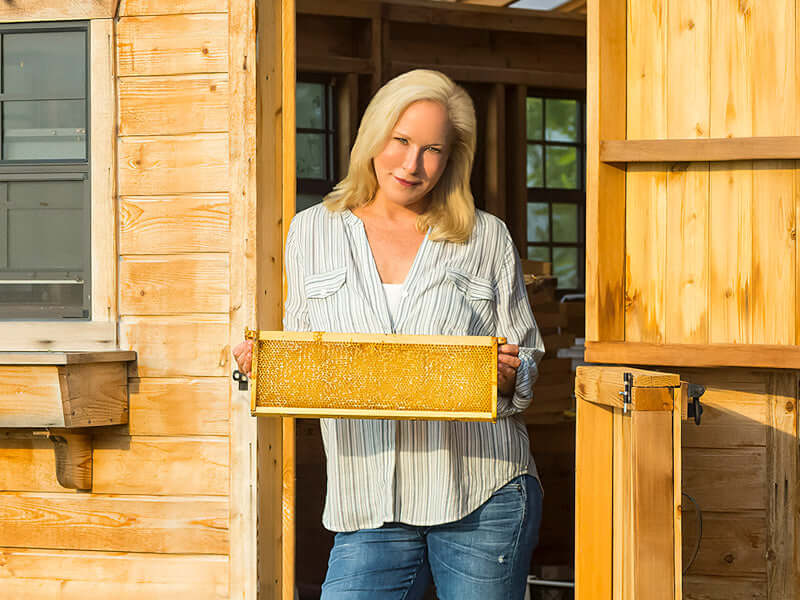
A note from the farm: at some point a few years ago, someone at Chesterhaven started putting wildflower honey in their morning coffee instead of sugar. They never went back. That's not a sales pitch — it's just what happens when you have fourteen jars of honey on the counter and one of them turns out to be exactly right.
Does Honey Actually Work in Coffee?
Two questions come up every time this topic surfaces, so let's answer them directly.
Does honey dissolve in hot coffee? Yes. Stir it in while the coffee is hot and it dissolves completely within a few seconds. Honey may take a little longer than processed honey because of its thicker texture, but it gets there. Add it before any milk or cream so it has direct contact with the hot liquid first.
Does honey taste good in coffee? That depends entirely on which honey you use. A mild clover honey adds clean sweetness and mostly gets out of the way. A wildflower honey brings its own flavor into the cup. A buckwheat honey makes a statement. The varietal you choose matters as much as how much you use — which is the whole point of the section below.
One thing worth acknowledging: high heat can affect some of the natural compounds in honey. At typical drinking temperatures, the impact is modest — you're not destroying the honey, just slightly altering it. The flavor trade-off is well worth it for most people. If that bothers you, let your coffee cool for a minute before adding.

How to Use Honey in Coffee
Start with one teaspoon and adjust from there. Honey is sweeter than sugar by volume, so you'll likely use less than you expect. Add it directly to hot coffee and stir before adding anything else.
For cold brew and iced coffee, honey doesn't dissolve well in cold liquid — you'll end up with a clump at the bottom. The fix is a quick honey simple syrup: stir equal parts honey and hot water until dissolved, then let it cool before adding to your cold drink. It takes two minutes and solves the problem entirely. The iced plant-based latte uses this approach and is a good template.
Honey works across brewing methods — drip coffee, pour-over, French press, espresso, Americanos, lattes. The only adjustment is the cold application caveat above.
The Best Honeys for Coffee — and What Each One Does
Not all honey tastes the same, and the varietal you choose will change your cup as much as the roast does. Here's how the main options break down, ordered from most approachable to most assertive.
Sweet Clover Honey — the neutral choice. Clean, mild, and sweet without adding much flavor of its own. If you want the sweetness of honey without changing what your coffee tastes like, clover is where to start. It works in everything and steps aside gracefully.
Wildflower Honey — the everyday choice. Familiar and floral, with enough character to be interesting without being overwhelming. Works well in medium roasts and drip coffee. Our wildflower has notes of anise and dark cherry that add a warm complexity to a standard cup — it won't taste like those things specifically, but the background depth is there. Spring Honey and Autumn Honey are both wildflower varietals from our farm, each tasting different based on the seasonal blooms.

Orange Blossom Honey — the bright choice. A light citrus note and clean floral sweetness that pairs particularly well with light roasts and pour-overs. The delicacy of orange blossom can get a little lost in a dark roast, but in a well-made light roast it adds something genuinely lovely. If you're a pour-over person, this one is worth trying.
Sourwood Honey — the elevated choice. Buttery and complex with a slightly spiced finish, sourwood is for people who already care about what's in their cup. It works beautifully in a medium roast where its nuance has room to come through. If you're the kind of person who notices the difference between coffee origins, you'll notice this.
Buckwheat Honey — the serious choice. Dark, bold, and almost molasses-like, buckwheat is the one pairing that meets dark roast and espresso on equal terms. It won't disappear into a strong cup — it adds to it. Not for everyone, but the people who love it tend to love it specifically in coffee and nowhere else.
Fireweed Honey — the refined, rare choice. Delicately sweet with a fait peppery finish and subtle notes of vanilla, Fireweed honey is perfect for light roasts. The nuanced tastes of chamomile and vanilla could be difficult to find in a dark roast, but if you enjoy taking the time to enjoy a light roast, the reward will be delightful.
Coffee Blossom Honey: The Full-Circle Honey
Every honey above is a varietal paired with coffee. This one is something else.
Coffee Blossom Honey is made from the nectar of coffee plant flowers — not the beans, the blossoms. When coffee trees bloom on highland farms in Guatemala in late winter, bees work the flowers and bring back nectar that becomes this honey. The result is a honey that tastes waxy, floral, and caramel-edged, with subtle notes that some people call jasmine and others call apricot. What it doesn't taste like, at least not directly, is coffee. But the connection is there — a flavor echo more than a direct hit, and one that becomes obvious once you know what you're drinking.
In coffee specifically, it doesn't compete with the cup — it completes it. The floral and caramel notes work with coffee's natural flavor compounds rather than sitting on top of them. Baristas reach for it because it highlights the coffee rather than masking it. It works best in light to medium roasts where its more delicate character isn't overwhelmed, though it holds its own in a well-made latte with any milk.
This is the one we'd reach for if you're buying honey specifically for coffee. For the full story on what it is, where it comes from, and why the bee-coffee plant relationship is more interesting than you might expect, see What Is Coffee Blossom Honey?

Honeys to Use with Care in Coffee
A few honeys that don't translate as well, in the interest of saving you a wasted cup.
Very strongly flavored honeys — manuka being the most common example — tend to overwhelm coffee rather than complement it. Manuka has a distinctly medicinal, almost herbal quality that competes with coffee in a way that doesn't resolve into anything pleasant for most people. Save it for other uses.
Infused or flavored honey blends (lavender honey, cinnamon honey, and the like) can work if the added flavor is intentional and you enjoy that combination, but they're less predictable. The honey's added flavor and the coffee's own character don't always cooperate. Pure varietal honeys are the more reliable path.
If you're looking for a caffeine-free alternative, our caffeine-free tea latte option uses the same frothed-milk technique with honeybush instead of espresso.
The Cup and the Hive
Coffee and honey have been sharing a supply chain for as long as there have been bees near coffee farms — which is a long time. The bees visit the blossoms, the farmers harvest both the coffee and the honey, and somehow those two things ended up in your morning cup from opposite ends of the same plant. That's not a marketing story. It's just how agriculture works when you pay attention to it.
If you want to start somewhere specific: shop Coffee Blossom Honey while it's in stock. For more coffee and honey recipes — iced drinks, whipped coffee, espresso cocktails — see the whipped honey coffee recipe, the iced latte, and the National Coffee Day post for more on the bees-and-coffee relationship.

FAQs About Honey in Coffee
Does coffee blossom honey taste like coffee?
Not directly. The flavor is floral, waxy, and caramel-edged — more jasmine than espresso. The coffee connection is more of an echo than a direct taste. That said, it pairs exceptionally well with coffee because of the shared floral origin.
Does coffee blossom honey contain caffeine?
Yes, in trace amounts. Coffee blossom nectar contains naturally occurring caffeine, and small quantities carry through into the honey. It's not enough to replace your morning cup, but it's measurably present and part of what makes this varietal unusual.
Is coffee blossom honey minimally filtered?
Ours is. It’s minimally filtered, no heat processing. It may crystallize over time, which is normal for minimally filtered honey. Place the jar in warm water to return it to liquid if it does.
Where does coffee blossom honey come from?
Our Coffee Blossom Honey is sourced from highland coffee farms in Guatemala, where bees work the annual coffee bloom in late winter and early spring.
How do you use coffee blossom honey?
In coffee and lattes, drizzled on toast or baked goods, on a cheese board with aged cheeses, stirred into black tea, or straight off a spoon. It's one of the more versatile honeys we carry.
Why is coffee blossom honey so expensive?
Supply is genuinely limited. One bloom per year, remote terrain, small-batch production. The price reflects what it actually takes to produce it — not a premium added for marketing reasons.