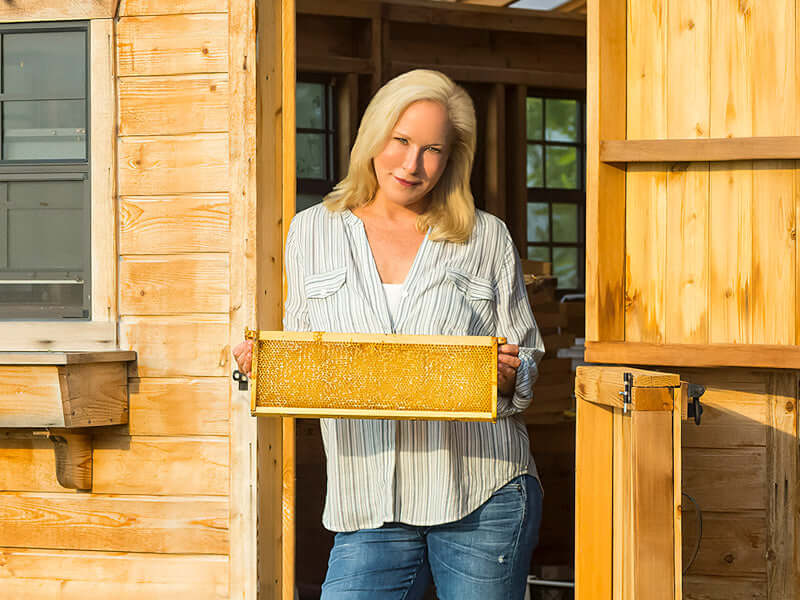


In late winter, when the altitude is still cold at night and the rainy season hasn't started yet, coffee plants in Guatemala's highland growing regions do something most people never see. They bloom. Small white flowers — five petals, faintly jasmine-scented — open across the trees all at once, and for a few weeks the whole farm smells like something between a flower garden and a cup of something you can't quite name. Beekeepers who work these farms know what that smell means. They've already moved their hives into position for harvesting a rare and delicious monofloral honey.

Coffee blossom honey comes from those flowers. Not from the beans, not from the roast, not from anything most people associate with coffee — from the blossom itself, visited by bees during that brief annual window before the cherries set. What comes back to the hive is a honey unlike anything most people have tried: waxy, floral, caramel-edged, with a flavor that develops on the tongue in layers and a connection to coffee that reads more like a family resemblance than a direct taste.
The Relationship Between Coffee Plants and Bees
The relationship between coffee plants and bees is one of the more elegantly self-interested arrangements in agriculture. Coffee plants produce nectar in their blossoms to attract pollinators. When a bee visits a flower to collect that nectar, it picks up pollen and carries it to the next flower — cross-pollinating the plant and helping the coffee cherry develop. The bee gets food. The plant gets pollinated. Simple enough.
What makes it more interesting is the caffeine.
Coffee blossom nectar contains naturally occurring caffeine — not in the quantity you'd find in a cup of coffee, but measurably present. Research has found that bees exposed to low doses of caffeine in nectar are significantly more likely to remember the scent of that flower and return to it. The coffee plant isn't just feeding the bee. It's training it. The caffeine improves the bee's memory of that specific floral scent, which means the bee comes back more reliably, which means more cross-pollination, which means better cherry development and more uniform fruit. The plant has essentially engineered its own repeat customer.
For highland coffee farmers, this relationship has practical consequences. Coffee blossoms have a short window — a few weeks, sometimes less, depending on altitude and weather. Without strong pollinator activity during that window, cherries don't set properly. Farmers who manage beehives alongside their coffee trees see measurably better yields: more cherries per tree, more uniform size, better overall crop. The bees aren't a nice addition to the farm. In a lot of cases, they're load-bearing.
The honey is what happens when you ask what the bees are taking home from that arrangement.

What Makes Coffee Blossom Honey Different
Most honey gets its character from what the bees are visiting. Wildflower honey reflects a rotating cast of whatever is blooming nearby. Orange blossom honey is defined by citrus groves in full bloom. Coffee blossom honey is defined by those small white flowers on highland coffee farms — and because the bloom is short and the farms are remote and the terrain is steep, the nectar the bees collect is concentrated in a way that shows up in the flavor.
The result is a honey that's medium-sweet with a waxy, floral character and real caramel depth. Most people pick up jasmine on the front. Some people taste cinnamon or apricot as it develops. There's often a mild spiced note in the finish. What most people don't taste, at least not directly, is coffee — and that surprises them. The connection is more like an echo than a direct flavor. The honey came from a coffee farm, and once you know that, you can find it. But it doesn't taste like your morning cup.
The texture is smooth and pours easily. The color is extra light amber — notably lighter than something like buckwheat or even wildflower. Under good light, it has a clarity and warmth that makes it one of the more visually striking honeys to put on a table.
It also carries that trace caffeine from the nectar. It won't replace your morning cup — the amounts are small — but it's there, and it's part of what makes this a genuinely unusual varietal rather than just a honey with a good story.

Why It Works So Well in Coffee
The pairing with coffee isn't just marketing logic. It's flavor compatibility that comes from a shared origin. Coffee blossom honey's floral and caramel notes work with coffee's inherent characteristics rather than competing with them — it sweetens without masking, which is the thing most sweeteners fail to do in a good cup of coffee.
It works in black coffee, cold brew, and lattes with any kind of milk. The waxy texture adds something to mouthfeel in a latte that plain sugar doesn't. In cold brew, it creates patterns when you drop it into the glass before stirring — visually satisfying in a way that's genuinely hard to explain until you've done it. For a simple starting point, the iced plant-based latte uses honey as the sweetener and is worth trying with coffee blossom specifically.
For a deeper look at how different honey varietals perform in coffee — and which ones to reach for depending on your brewing method and roast — see our guide on using honey in coffee.
Beyond the cup, coffee blossom honey is worth keeping on hand for a cheese board — it pairs well with aged cheeses where its complexity can hold its own — and for anything baked where caramel notes and a floral background work in your favor. Scones, muffins, biscuits. Or straight off a spoon, slowly, to actually pay attention to what it's doing.
Here are some of our own favorite recipes that use coffee honey:

Why It's Only Available in Limited Quantities
Coffee plants bloom once a year. That's the hard constraint. There's no second harvest, no off-season sourcing from another region. The window opens, the bees work, the window closes — and whatever honey was produced during those few weeks is what exists until next year.
The remote terrain of Guatemala's highland farms adds another layer. Mobile extraction equipment, steep access, small operations. These aren't industrial apiaries. The farmers who produce this honey are primarily coffee farmers for whom the bees are part of the farming system, not the main business. The honey that comes out of that is better for it, and scarcer for it.
Our Coffee Blossom Honey is Star K Kosher certified, minimally filtered, and sourced from those Guatemalan highland farms. It's available while it lasts — which, based on how it moves, is usually not long.


FAQs About What Is Coffee Blossom Honey?
Does coffee blossom honey taste like coffee?
Not directly. The flavor is floral, waxy, and caramel-edged — more jasmine than espresso. The coffee connection is more of an echo than a direct taste. That said, it pairs exceptionally well with coffee because of the shared floral origin.
Does coffee blossom honey contain caffeine?
Yes, in trace amounts. Coffee blossom nectar contains naturally occurring caffeine, and small quantities carry through into the honey. It's not enough to replace your morning cup, but it's measurably present and part of what makes this varietal unusual.
Is coffee blossom honey filtered?
Ours is minimally filtered, with no heat processing. It may crystallize over time, which is normal for minimally filtered honey. Place the jar in warm water to return it to liquid if it does.
Where does coffee blossom honey come from?
Our Coffee Blossom Honey is sourced from highland coffee farms in Guatemala, where bees work the annual coffee bloom in late winter and early spring.
How do you use coffee blossom honey?
In coffee and lattes, drizzled on toast or baked goods, on a cheese board with aged cheeses, stirred into black tea, or straight off a spoon. It's one of the more versatile honeys we carry.
Why is coffee blossom honey so expensive?
Supply is genuinely limited. One bloom per year, remote terrain, small-batch production. The price reflects what it actually takes to produce it — not a premium added for marketing reasons.