

Walk down any honey aisle and you’ll see the word “raw” on half the labels. It sounds simple enough, but here’s the part almost nobody tells you: raw honey is not one thing. There are degrees of raw, and some of them are a lot less appetizing than the marketing suggests. Whether you’re drizzling honey over yogurt, stirring it into tea, or swapping it in for sugar, understanding what raw actually means will change how you read a honey label forever.

What Is Raw Honey?
At its core, raw honey is honey that has never been pasteurized. It goes from the hive to the jar without being heated past the temperatures bees themselves keep inside the colony, so the natural pollen, aroma, and flavor compounds that make each harvest distinct stay right where the bees put them.
Regular honey, by contrast, is heated to high temperatures and pushed through fine filters before bottling. That processing creates a clear, uniform, shelf-stable product, and it also strips out most of what made the honey interesting in the first place. The differences between the two are significant, but they’re only one piece of the puzzle. To understand why honey quality varies so widely, it helps to learn how the honey industry really works, from production methods to sourcing practices.
Here’s where it gets interesting, though: “raw” covers a wide spectrum, and not every jar on that spectrum is something you’d want on your toast.
Not All Raw Honey Is Created Equal
Because the FDA has no formal standard of identity for the term, “raw” on a label can describe anything from carefully handled, lightly strained honey to honey that went straight from the extractor to the jar with everything still in it. And we do mean everything.
Honey fresh out of the comb can contain flakes of beeswax, propolis, bee legs and wings, and even eggs or larvae if the beekeeper wasn’t careful about which frames went into the extractor. Some shoppers have been taught that a cloudy jar with visible bits floating in it is proof of authenticity. We’d gently push back on that. Cloudiness can come from pollen and fine air bubbles, which are lovely. It can also come from insect parts, which are not.
Straining that debris out doesn’t make honey any less raw. Raw is about heat, not about leaving bee parts in the jar. A light pass through a strainer removes wax and bee fragments while the pollen, which is far smaller, flows right through. That’s the entire philosophy behind minimally filtered honey: take out what shouldn’t be there, keep everything that should.

All of our types of honey are pure, minimally filtered, and Star K certified kosher
Our Standard: Minimally Heated, Minimally Filtered, Certified Kosher
To us, raw honey means two things: minimally heated and minimally filtered. Our honey is never pasteurized, and it’s gently strained so the wax, bee parts, and eggs are removed while the natural pollen stays in.
There’s a meaningful third-party check behind that standard. To be certified kosher under rabbinical supervision, honey must be free of bee parts and eggs, must never be heated above 120-130 degrees Fahrenheit, and must contain no additives. Star K inspects our production process to confirm all of it. So when a jar carries our label, filtration isn’t a compromise on rawness. It’s the reason the honey qualifies for certification at all. Completely unstrained honey, the kind celebrated for its floating debris, can’t meet that bar. This is also why honeycomb can’t be certified kosher: there’s no way to minimally filter honey that’s still in the comb, though plenty of people happily enjoy it anyway.
So if you’ve been choosing the cloudiest, chunkiest jar at the farmers market because it feels closer to nature, consider this your friendly permission slip to want your honey clean. You can have honey that’s genuinely raw and free of larva. Those two things were never in conflict.

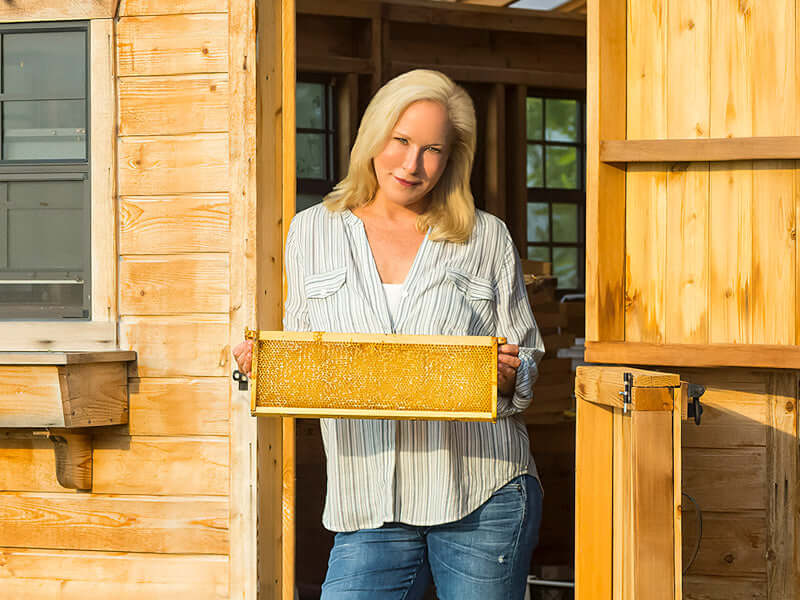
Kara Brown maintains a 102-acre Chesterhaven Farm on the Chesapeake Bay where she raises bees
How Regular Honey Is Processed
Regular honey earns its glassy, always-liquid look through several steps that raw honey skips. Pasteurization involves heating honey to high temperatures, typically 160 degrees Fahrenheit or higher, to extend shelf life and create a smooth, clear appearance. Ultra-filtration then pushes the honey through filters fine enough to remove the pollen itself.
This processing method:
- Eliminates the natural yeasts and seed particles that trigger crystallization
- Filters out pollen and propolis along with the debris
- Creates a uniform texture and color from jar to jar
- Extends shelf life for large-scale commercial distribution
The result is consistent and convenient, but it flattens the character of the honey. Because ultra-filtration removes the pollen, it also removes the fingerprint that ties a jar to the flowers it came from. Some commercial products go a step further and blend in sweeteners like corn syrup, which is a different product entirely. That’s a big part of why so many mass-market honeys taste identical: the individuality has been processed out.
Why Raw Honey Crystallizes and Regular Honey Doesn’t
If your jar of honey turns thick, grainy, or solid, congratulations: that’s one of the most reliable signs you bought the real thing. Crystallization happens when the glucose in honey slowly forms crystals, and the trace pollen in minimally filtered honey gives those crystals a natural starting point.
The speed depends on each varietal’s balance of glucose and fructose. Glucose is less soluble than fructose, so high-glucose honeys like fireweed and sunflower set quickly, often into a smooth, spreadable texture. High-fructose honeys like tupelo and sourwood can go season after season without crystallizing at all. Regular honey rarely crystallizes because the heat and ultra-filtration removed both the yeasts and the seed particles that start the process. A jar that stays perfectly clear and liquid for years is telling you exactly how much processing it went through.
Each jar of minimally filtered honey tells the story of the diverse flora the bees visited, and monofloral varietals take that a step further by capturing a single bloom in a single jar.
How to Read a Honey Label
Since “raw” isn’t a regulated term, the label alone can’t tell you the whole story. Here’s what to look for:
- “Raw” or “unpasteurized”: A good start, but ask what it means to that producer. Was the honey kept below hive temperatures? Was it strained to remove bee parts, or bottled with everything in it?
- “Unfiltered”: Be careful with this one. It sounds virtuous, but truly unfiltered honey may contain wax, insect fragments, and worse. Minimally filtered is the sweet spot: debris out, pollen in.
- “Pure honey”: This means no added sweeteners, but the honey may still be pasteurized and ultra-filtered.
- Certifications: A kosher hechsher like Star K means an independent agency verified that the honey is free of bee parts, wasn’t overheated, and contains no additives. That’s more accountability than the word “raw” alone provides.
- “Organic”: Organic certification concerns how the hives are managed, not how the honey is handled afterward, and it’s genuinely difficult to verify in the United States since bees forage for miles in any direction. Organic honey isn’t necessarily raw, and raw honey isn’t necessarily organic. Our raw honey vs. organic honey breakdown covers what each label actually certifies.
- Source transparency: Buying from a beekeeper you can trace beats any buzzword on a label.
Cooking with Raw Honey vs Regular Honey
Both types sweeten, but they behave differently in the kitchen:
Where Raw Honey Shines
- Finishing and drizzling: Over yogurt, oatmeal, cheese boards, and warm biscuits, where the varietal character is front and center
- Warm beverages: Stirred into tea or coffee after the drink has cooled slightly, so the delicate aromatics stay intact
- Dressings and marinades: Cold and low-heat preparations that let the floral notes come through
- Tasting straight from the spoon: The only way to truly compare a tupelo to a buckwheat
Where Regular Honey Gets By
- High-heat baking: Once honey goes into a 350 degree oven, the subtle differences fade, though raw honey bakes beautifully too
- Bulk sweetening: Applications where honey is only there for sweetness, not character
Honestly, we’d still reach for minimally filtered honey in every one of those cases. The flavor is simply better, and flavor is the whole point.
One Important Safety Note
No honey of any kind, raw or regular, should be given to infants under 12 months of age due to the risk of infant botulism. If you have a known sensitivity to bee products or pollen, check with your doctor before adding honey to your routine.
The Sweet Bottom Line
Raw honey and regular honey aren’t just two different products. They’re two different philosophies. One preserves the character of the flowers, the season, and the place the honey came from. The other trades all of that for uniformity.
And within the raw category, filtration is not the enemy. Minimally heated, minimally filtered honey gives you everything people love about raw honey, the pollen, the crystallization, the flavor that changes with the bloom, without the wax flakes and bee parts that some producers pass off as authenticity. Clean and raw can absolutely live in the same jar. Ours does, and Star K checks our work.
Ready to taste the difference? Browse our collection of minimally filtered artisan honey varietals and find the jar that tells your favorite story. And since honey essentially never expires when stored well, there’s no wrong time to start.

FAQs About Minimally Filtered vs Regular Honey
What is raw honey?
Raw honey is honey that has never been pasteurized and is kept close to natural hive temperatures from extraction to jar. It may be lightly strained to remove wax and bee parts, but the natural pollen and flavor compounds remain intact.
Is unfiltered honey better than minimally filtered honey?
Not necessarily. Truly unfiltered honey can contain beeswax flakes, bee parts, and even eggs or larvae. Minimal filtration removes that debris while the much smaller pollen particles pass through, so you keep the character of raw honey without the foreign material.
Does filtering honey make it not raw?
No. Raw refers to heat, not straining. Honey that is gently strained but never pasteurized is still raw. Honey only loses its raw status when it is heated to high temperatures or pushed through ultra-fine filters that strip out the pollen.
Why is some raw honey cloudy?
Cloudiness can come from natural pollen, fine air bubbles, or early crystallization, all of which are harmless. It can also come from wax and insect fragments in unstrained honey. Cloudiness alone does not tell you whether a jar is high quality.
Is raw honey kosher?
Only if it meets specific standards. Under rabbinical supervision, kosher honey must be free of bee parts and eggs, never heated above 120 degrees Fahrenheit, and free of additives, which requires careful filtration. Completely unstrained honey cannot meet that standard. Our honey is Star K certified kosher.
Can babies eat raw honey?
No. Infants under 12 months should not consume any honey, raw or regular, because of the risk of infant botulism. This applies to every brand and every type of honey.