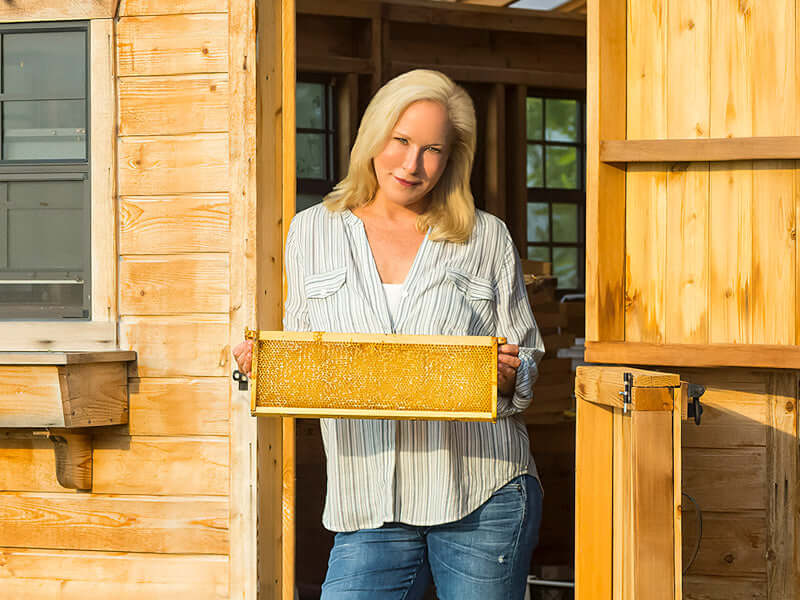


Preserving food is a tradition that has been passed down in my family for generations. Growing up connected to a farming community in central Pennsylvania, my grandparents and their children learned how to can, dry, and preserve produce straight from the garden. We still use my grandmother's old Mason and Ball jars, and that ritual of filling them every summer is one of my favorite things about this time of year.
Among all our family recipes, this Blackberry Blueberry Jam — we call it Black and Blue Jam — is the one we make every midsummer when wild blackberries are bursting off the vines. What makes our version a little different from the classic is the addition of lemon and lavender. It sounds fancy, but it's actually simple, and the flavor payoff is incredible. We also sweeten with Blueberry Blossom Honey instead of relying entirely on refined sugar — which gives the jam a deeper, more complex sweetness that just tastes like summer.
This blackberry blueberry jam recipe is easy enough for first-time canners and rewarding enough to make every single year. You'll end up with two half-pint jars of gorgeous deep-purple jam that keeps in your pantry all winter.

Why Add Honey to Blackberry Blueberry Jam?
Most jam recipes rely entirely on granulated sugar for sweetness. We use a combination of organic sugar and minimally filtered honey, and here's why: honey brings a rounded floral sweetness that plain sugar just can't replicate. When you're making a blackberry blueberry jam with honey, the honey enhances the natural berry flavor instead of just making it sweet. It also adds a slightly complex, almost earthy note that pairs beautifully with the tartness of the blackberries.
For this recipe, we love using our minimally filtered Blueberry Blossom Honey — it doubles down on that blueberry flavor and keeps everything cohesive. If you want to lean into the blackberry side of the recipe, our Blackberry Blossom Honey is a wonderful swap. For the best of both worlds, our Mixed Berry Honey is also delicious here.
Want to learn more about what makes blueberry honey so special? Check out our guide: What Is Blueberry Honey?

Why Lavender?
Lavender in jam sounds a little unexpected, but it's one of those combinations that just works. Lavender brings a soft floral note that makes this jam feel a little elevated — like something you'd find at a farmers market or a high-end brunch spot. We steep it into a quick tea first, which distributes the flavor gently throughout the jam without any overpowering bitterness.
The key is using food-grade dried lavender. A little goes a long way. If lavender isn't your thing, you can skip it entirely or experiment with other edible flowers like white clover blossoms, violets, or dandelion petals — all of which add character and aroma without overpowering the fruit.
How to Make Black and Blue Jam — Step by Step
See the full recipe card below for exact measurements. Here's a walkthrough of the process:
Step 1: Make the Lavender Tea and Prep Your Canning Equipment
Start by boiling a small amount of filtered water and pouring it over your dried food-grade lavender. Let it steep for about 10 minutes, then strain out the flowers and set the tea aside. While that's steeping, prepare your canner and wash and sterilize two half-pint mason jars. Keep the jars in hot water until you're ready to fill them — this prevents cracking when you ladle in the hot jam.
Step 2: Combine Your Ingredients
Add your blueberries, mashed blackberries, organic sugar, honey, and lavender tea to a large, heavy-bottomed saucepan over low heat. While the mixture starts to warm, zest one lemon to get a full teaspoon of zest, then squeeze the juice from that same lemon into a bowl to equal two teaspoons. For the second lemon, remove the rind, skin, and seeds to expose the pulp, then chop the pulp into ½-inch segments. Set these aside for later.
Step 3: Add the Pectin and Bring to a Boil
Mix two tablespoons of sugar with your powdered pectin, then stir that mixture into the fruit. Bring everything to a rolling boil over medium heat, stirring frequently. Once it's at a full rolling boil, stir constantly for five minutes. Then reduce the heat to low and stir in the lemon zest, chopped lemon segments, and lemon juice. Cook for another three minutes, then remove from heat and let cool for ten minutes.
Step 4: Test the Set
Before canning, do a quick gel test: spoon a small amount of jam onto a cold spoon (chilled in the freezer works well) and see if it sets up. If it's still too runny, you can return it to heat for a few more minutes. Skim off any foam from the surface.
Step 5: Can the Jam
Ladle the hot jam into your hot sterilized jars, leaving ¼ inch of headspace. Wipe the jar rims clean, then screw on lids and rings. Process in a boiling water bath for 10 minutes to seal. Remove from the water and let cool completely — ideally 12 to 24 hours. Check that all lids have sealed properly (the center should not flex up and down). Any unsealed jars should go straight into the refrigerator and be used within three weeks.

How to Serve Black and Blue Jam
The obvious answer is on toast — thick-cut sourdough with a generous spread of this jam and a little butter is hard to beat. But honestly, once you have a few jars in your pantry, you'll find yourself reaching for it constantly. Here are some of our favorite ways to use it:
- Spread on our Honey Blueberry Muffins — it's an incredible combination
- Swirled into Honey Blueberry Ice Cream for a gorgeous ripple effect
- Spooned over Berry Nutty Overnight Oats in place of fresh fruit
- Spread on our Beer Bread for a sweet-savory combination
- Used as a filling in baked goods or as a topping for pancakes and waffles
- Served alongside a cheese board — it pairs beautifully with mild soft cheeses
Variations to Try
One of the best things about making your own jam is the freedom to experiment. Once you've made the base recipe, here are some fun ways to riff on it:
- Add citrus brightness — a little orange or grapefruit zest in addition to lemon adds a different kind of freshness
- Mix in raspberries — swap half the blackberries for raspberries for a more complex berry flavor
- Stone fruit twist — replace the berries with peaches and apricots for a summer stone fruit version
- Different honeys — try our Sweet Clover Honey for a milder, more delicate sweetness, or explore more options in our complete guide to types of honey
- Different florals — dandelion petals, violet blossoms, or white clover flowers all make lovely substitutions for lavender

More Blueberry Recipes to Love
If you're on a blueberry kick (we don't blame you), we have plenty more to explore. Check out our full roundup of blueberry and honey recipes, or jump straight into one of these favorites:
- Blueberry Honey Smoothie
- Blueberry BBQ Sauce with Honey
- Honey Blueberry Ketchup
- Blueberry Honey Glaze - great for salmon and chicken thighs
- Celebrating National Blueberry Month
- Honey Blueberry Mojitos — a perfect pairing for summer
Curious about what makes Blackberry Honey special? We cover the flavor profile and kitchen uses in depth.
And if you want to keep a jar of our Blueberry Blossom Honey or Blackberry Blossom Honey on hand for all your summer cooking, you can find both in our Eastern Shore Honey collection.

Black and Blue Jam (Blackberry Blueberry Jam with Honey)
Kara
12 (makes approximately 2 half-pint jars)
40 minutes
1 hours
136
American
Condiment / Preserve
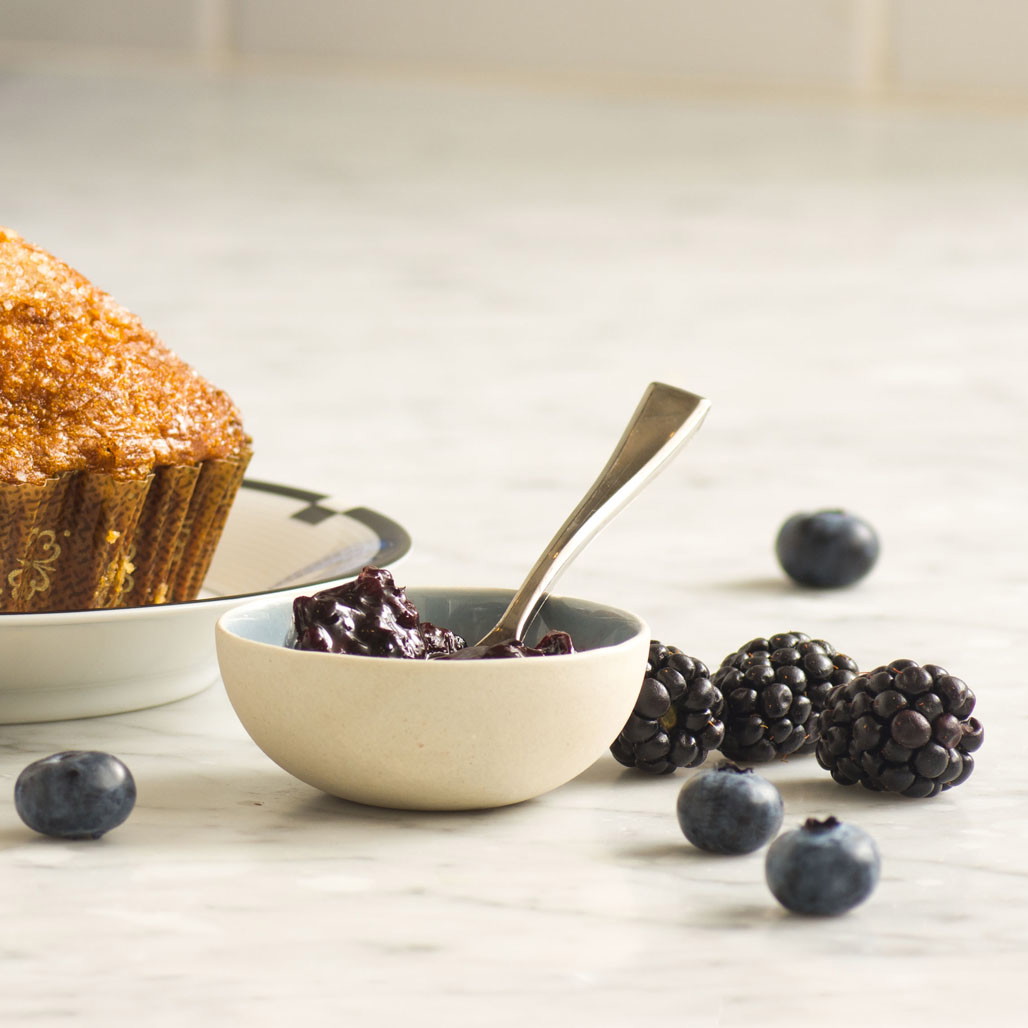
A small-batch blackberry blueberry jam made with minimally filtered honey and a hint of lavender. This classic summer preserve gets a unique twist from lemon and floral lavender tea — easy enough for first-time canners and delicious enough to make every year.
Ingredients
FOR THE TEA
- ¼ cup filtered water, boiling
- 1 tbsp food-grade dried lavender
FOR THE JAM
- 2 cups blueberries
- 1 cup blackberries, mashed
- 1 cup organic sugar (reserve 2 tbsp for pectin)
- ¼ cup raw honey (we use Blueberry Blossom Honey or Blackberry Blossom Honey)
- 2 tbsp powdered pectin (mixed with the reserved 2 tbsp sugar)
- 2 lemons (juiced and zested)
Directions
Prepare your canner and wash and sterilize 2 half-pint (or equivalent) mason jars. Keep jars in hot water until ready to use.
Make the Lavender Tea
Pour ¼ cup boiling water over 1 tbsp dried food-grade lavender. Let steep for 10 minutes, then strain and discard the flowers. Set tea aside.
Make the Jam
Place blueberries, mashed blackberries, sugar, honey, and lavender tea in a large, heavy-bottomed saucepan over low heat.
Zest enough lemon to get 1 full tsp of lemon zest. Set aside.
Cut the zested lemon in half and squeeze the juice into a bowl to equal 2 tsp. Set aside.
Take the second lemon and remove the rind, skin, and seeds to expose the pulp. Chop the pulp into ½-inch segments and add to the fruit mixture.
Mix 2 tbsp of sugar with the powdered pectin. Stir the pectin-sugar mixture into the fruit mixture and bring to a rolling boil over medium heat, stirring often.
Once at a full rolling boil, stir constantly for 5 minutes.
Reduce heat to low. Stir in the reserved lemon zest, chopped lemon segments, and lemon juice. Cook, stirring occasionally, for 3 minutes. Remove from heat and cool for 10 minutes.
Test the set: spoon a small amount of jam onto a chilled spoon and place in the freezer for 1–2 minutes. If it jells, you're ready to can. If it's still runny, return to heat briefly.
Skim off any foam from the surface.
Ladle hot jam into hot sterilized jars, leaving ¼-inch headspace. Wipe jar rims and threads clean. Screw on lids and rings.
Process in a boiling water bath for 10 minutes to seal.
Remove jars from the water and let cool completely, 12 to 24 hours. Check that all lids have sealed (the center should not flex). Any unsealed jars should be refrigerated and used within 3 weeks.
FAQs About Blackberry Blueberry Jam
Do I need pectin to make blackberry blueberry jam?
This recipe does use powdered pectin to help the jam set reliably. Blackberries and blueberries have moderate natural pectin levels, but adding commercial pectin gives you a consistent set every time. If you prefer to go pectin-free, you can cook the jam longer until it reduces and thickens naturally — just plan for more time over the stove and a smaller yield.
How long does homemade jam last?
Properly water-bath canned and sealed jars of this Black and Blue Jam will keep in a cool, dark pantry for up to a year. Once opened, refrigerate and use within three to four weeks. Any jars that did not seal properly should be refrigerated immediately and used within three weeks.
Can I make this jam without canning?
Yes — if you're not ready to get into canning, you can make a small batch of this jam and store it directly in the refrigerator in a clean jar for up to three weeks. Just skip the water bath processing step. It's a great way to try the recipe before committing to the full canning process.
What kind of honey works best in this jam recipe?
We use our Blueberry Blossom Honey for the most complementary flavor, but our Blackberry Blossom Honey is equally wonderful. Both are minimally filtered minimally filtered honeys from Maryland's Eastern Shore, so they bring real depth of flavor that you won't get from generic store honey.
Can I double this recipe?
Yes, but we recommend making jam in small batches for the best flavor and set. Doubling the batch increases cooking time, which can affect the final texture and the brightness of the fruit flavor. It's better to make two small batches back to back than one large one.