

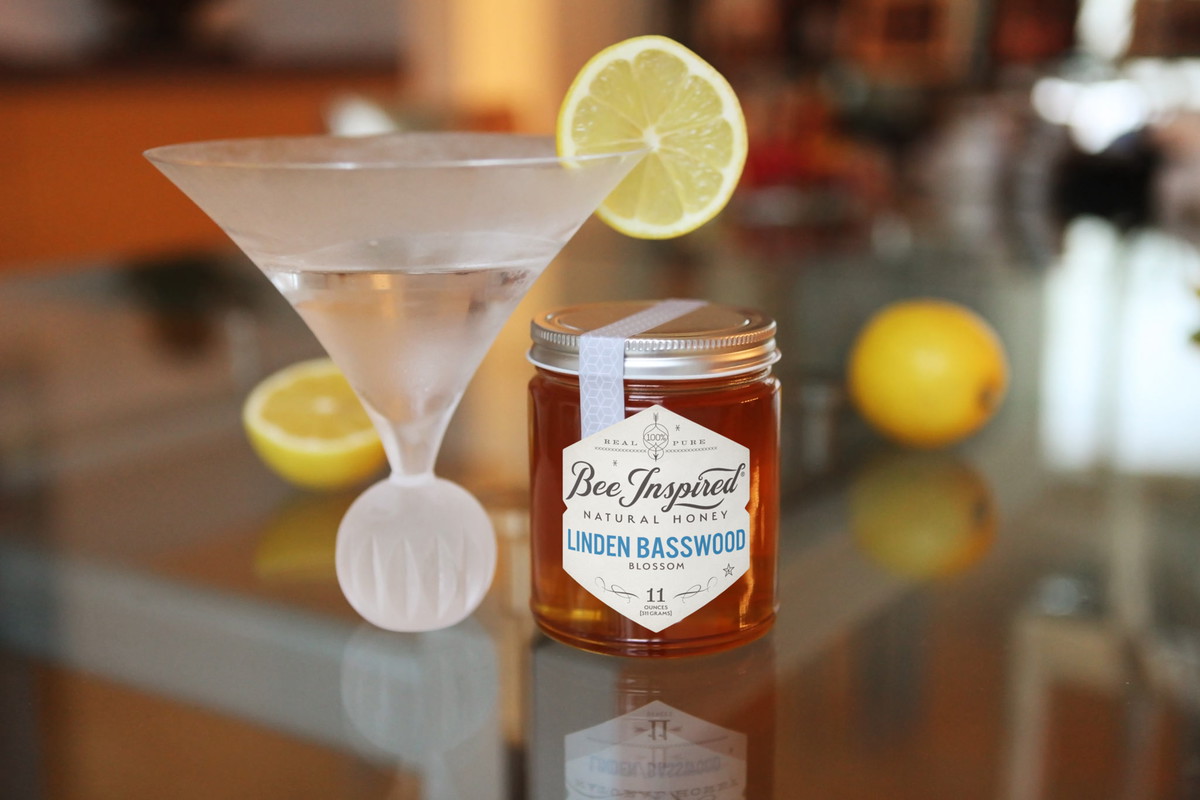
Some cocktails are built for a particular kind of evening. Not a big party. A quiet one — cold outside, something simmering on the stove, no real plans. This Basswood Honey Martini was made for exactly that. It brings together citron vodka, a golden turmeric honey syrup made with Linden Basswood Honey, and a muddled blend of lavender, rosemary, mint, and eucalyptus — fragrant, layered, and just complex enough to feel like you put in more effort than you actually did.
This recipe is adapted from The Martini Book by Sally Ann Berk. We've stayed true to its bones while leaning into ingredients we love from our Eastern Shore pantry.
If you're new to Basswood Honey, the short version is this: it looks mild and tastes anything but. Pale gold, almost clear, with an herbal, hay-like depth and a faintly minty finish that lingers. It is one of the more distinctive varietals we carry, and it happens to be exactly what a cocktail like this needs.
Why Basswood Honey Belongs in This Cocktail
Honey in cocktails is nothing new — bartenders have been using it as a sweetener for as long as there have been cocktails. What makes this one different is the specific honey. Most honey cocktail recipes call for a mild clover or wildflower variety that sweetens the drink without contributing much flavor of its own. Basswood Honey does contribute. Its herbal character has a natural affinity with the muddled lavender, rosemary, and mint in the shaker — the flavors echo each other rather than compete — and its brightness holds up well against the citrus edge of a citron vodka.
The honey also does something important from a technique standpoint. When it's dissolved into warm tea to create the syrup, it gives the drink a silky body you simply do not get from plain simple syrup. Every sip coats the palate in a way that feels rich without being heavy.
For a deep dive into what makes this varietal so distinct — where it comes from, when it blooms, why it's rarer than most — our full guide covers it: What Is Basswood Honey?

The Honey Turmeric Syrup: Why It Makes All the Difference
The syrup in this recipe is not an afterthought. It is the thing that separates this martini from a standard vodka-and-honey cocktail, and it is worth understanding before you make it.
Honey does not dissolve in cold liquid. Drop it straight into a shaker with ice and it will ball up, stick to the sides, and leave you with an unevenly sweetened drink. The solution is to pre-dissolve the honey into a warm liquid — in this case, brewed Beautea Ginger Turmeric Tea — before it goes anywhere near the ice. The result is a golden, pourable syrup that blends seamlessly into the cocktail and carries the tea's warmth and color into every sip.
Beautea is our bestselling loose-leaf tea, a hand-blended combination of ginger root, turmeric root, dried carrot, beet, pineapple, and calendula petals that brews into a deep amber with sweet, spiced notes. Using it as the syrup base instead of plain water adds another layer to the drink — one that plays beautifully off the herbal character of the basswood honey and the muddled botanicals in the shaker. You could use plain warm water and it would still be a good cocktail. Using the tea makes it a memorable one.
The ratio is simple: equal parts Basswood Honey and warm brewed Beautea. Stir until the honey is completely dissolved, then let it rest while you prep the rest of the cocktail.

The Herb Blend: What Each One Brings
The muddled herb bundle in this recipe is not decorative. Each ingredient earns its place:
Lavender brings a floral softness that echoes the honey's character. A little goes a long way — you want it as a background note, not the main event. Use culinary-grade dried lavender buds if fresh is not available.
Rosemary is the anchor. It is resinous and slightly piney, and it gives the blend a structure that keeps the floral elements from tipping into sweetness. A short sprig is enough.
Mint adds brightness and a clean lift that makes the cocktail feel refreshing even as it's warming. Fresh mint is best here.
Eucalyptus is the unexpected note — cooling and slightly medicinal in a way that plays off the citron vodka beautifully. A small leaf or two is plenty.
Together, these four create something that smells like a cold-weather kitchen and a garden at the same time. Muddle gently: a few firm presses to release the oils, not a sustained assault. Overworked herbs go bitter fast.

How to Make the Basswood Honey Martini
First: Chill Your Glass & Make the Honey Syrup
Put your martini glass in the freezer or an ice bin while you work — a properly chilled glass makes a genuine difference in how the cocktail holds up once it's strained, keeping it cold longer and slowing dilution. While the glass chills, brew a small amount of Beautea Ginger Turmeric Tea and, while the tea is still warm, stir in an equal part of Basswood Honey until fully dissolved. Set the syrup aside to cool slightly while you prep the shaker.
Second: Muddle the Herbs
Place the lavender buds, rosemary sprig, fresh mint, and eucalyptus in the bottom of a cocktail shaker. Press gently with a muddler to bruise the herbs and release their natural oils — a few firm presses are enough. You want fragrance, not pulp. Overmuddling is easy to do and it makes the finished drink taste sharp and green instead of aromatic and soft.
Third: Shake & Strain
Pour the citron vodka and honey turmeric syrup into the shaker over the herbs and give it a brief stir to combine. Add cracked ice and shake well until the outside of the shaker is cold to the touch — about 10 to 15 seconds. Strain into your chilled martini glass, leaving the herb material behind, and garnish with a fresh lemon wedge or a small sprig of rosemary or mint.

Variations Worth Trying
This cocktail is forgiving and adapts well. A few directions worth exploring:
Swap the spirit. Citron vodka is the classic base here, but a smooth rye or Tennessee whiskey works beautifully with the honey and herbs — earthier, warmer, and a little more assertive. If you want to explore honey and whiskey pairings more broadly, our whiskey honey drink recipes are a good starting point.
Adjust the herb blend. Don't have eucalyptus? A small sprig of thyme or a few fresh basil leaves can step in. The recipe is built around a balance of floral (lavender), resinous (rosemary), cool (mint), and sharp (eucalyptus) — as long as you hit those general notes, the cocktail will work.
Try a different honey. Basswood Honey is the ideal match for this flavor profile, but our Buckwheat Honey makes for a bolder, more robust version with a deeper color. Wildflower gives a lighter, more neutral sweetness. Each takes the cocktail somewhere a little different.
Make it a mocktail. Skip the vodka entirely. Shake the honey turmeric syrup, the muddled herbs, a squeeze of fresh lemon juice, and a splash of sparkling water together with ice, then strain into a coupe or a rocks glass. The herb-and-honey combination is genuinely interesting without alcohol — this is not a watered-down version, it is its own drink.
Serving & Pairing
This cocktail is at its best in the colder months — October through February, when the combination of warm spice and bright citrus feels exactly right. It works as a before-dinner aperitif or a slow evening nightcap. It is not a party cocktail; it is a one-or-two-at-a-time drink that rewards attention.
On the food side, it pairs well with anything salty and savory that can hold up against the herbal notes: a good aged cheese, a charcuterie board, olives, or roasted nuts. Avoid anything very sweet alongside it — the honey in the syrup is doing the sweetness work and competing flavors muddy the drink.
If you're building a full evening around these flavors, our Lavender Basswood Honey Scones make a beautiful companion — the lavender-and-basswood pairing is the same thread running through both recipes, which is not a coincidence. For a non-alcoholic bookend to the evening, our Ginger Lemon Honey Dr. Feelgood Tea covers similar warming, aromatic ground in concentrate form — make a mug before bed.

Make-Ahead Notes
The honey turmeric syrup can be made ahead and stored in a sealed jar in the refrigerator for up to two weeks. This makes it easy to mix individual cocktails quickly without having to brew tea every time. Give the jar a shake before using if it has been sitting — the honey can settle toward the bottom.
The herb muddle needs to happen fresh each time — muddled herbs do not hold, and pre-muddled herb mash left sitting will turn bitter and give you off flavors in the finished drink. Plan for 30 seconds of effort there right before you shake.
If you are making a batch for a small gathering, muddle a larger bundle of herbs in the bottom of a pitcher, add the syrup and vodka, stir well, then strain into individual shakers with ice and shake per serving. Do not attempt to batch-shake — the dilution is inconsistent and the ice management becomes a problem.

More Basswood Honey Recipes to Explore
If this cocktail introduced you to Linden Basswood Honey and you want to keep going, here is where to look next:
- What Is Basswood Honey? — the full story on where it comes from and what makes it distinct
- Lavender Basswood Honey Scones — the same lavender-and-basswood pairing in a baked form
- Ginger Lemon Honey Dr. Feelgood Tea — the non-alcoholic sibling of this recipe, made with the same honey
- Coconut Macaroons with Basswood Honey — a simple baking application that lets the varietal shine
- Almond Bliss Smoothie — basswood honey in something cold, for a completely different context
And if you make this — any version of it, whatever spirit you use, however you garnish it — share a photo with us using #beeinspired on Instagram. We love seeing what you do with it.
Flu-Beater Martini
Kara
1
5 minutes
5 minutes
19
AMERICAN
COCKTAIL, DRINKS
Feeling a little under the weather? This is my go-to cocktail to blow-out a cold. The magic is in both the honey and the tea that you use in cooperation with the alcohol. Take two and go to bed.
Ingredients
- 4 parts citron vodka
- 2 parts simple herbal tea honey syrup (made with 2 parts Basswood Honey 2 part warm turmeric tea)
- 1 bunch lavender, rosemary, mint, eucalyptus muddled herbal tincture
- 1 slice lemon fresh
Directions
Create honey syrup with turmeric tea and Basswood Honey and set aside
- Place herbs in the bottom of a cocktail shaker and muddle to release aroma and natural oils.
- Pour vodka and honey turmeric tea syrup into the cocktail shaker and stir.
- Add cracked ice and shake well.
- Strain into a chilled cocktail glass and garnish with a lemon wedge
FAQs About Basswood Honey Martini with Turmeric
Can I use a different honey in this martini?
Yes, though the choice matters more here than in most recipes because the honey is a primary flavor, not just a sweetener. Basswood Honey is the first choice because its herbal, lightly minty character reinforces the muddled herb blend instead of competing with it. If it's out of stock, Buckwheat Honey makes a bolder, earthier version — start with a touch less, as it's more intense. Wildflower works for a lighter, more neutral finish. Avoid very mild or delicate honeys like orange blossom here; they tend to get lost against the herbs.
Does it have to be citron vodka, or can I use regular vodka?
Regular vodka works fine — the cocktail will just be a little less citrus-forward. Citron vodka contributes a lemon-zest note that brightens the drink and plays off the lemon garnish. If you go with plain vodka, consider adding a small extra squeeze of fresh lemon juice to the shaker to compensate. A rye whiskey is also an excellent substitute if you want to move the drink in a warmer, spicier direction.
I don't have Beautea — can I use plain water for the syrup?
Plain warm water works perfectly well as the honey syrup base — the technique is the same, and the honey will dissolve just as easily. What you lose is the warm turmeric-and-ginger depth that Beautea adds to the background of the cocktail. Any good ginger or turmeric tea you have on hand will give you a similar result if Beautea is not available.
How do I muddle herbs properly without overdoing it?
Think of it as pressing rather than grinding. Place the herbs in the bottom of the shaker and use a muddler or the back of a sturdy spoon to press down firmly, give a slight twist, then lift. Repeat three or four times. You will see and smell the oils releasing — the herbs will look bruised and slightly darkened. Stop there. If you keep going, the plant material starts to break down and release bitter compounds from the stems and cell walls. Gentle is the word.
Can I make a big batch of this for a party?
You can batch the syrup well ahead of time — it keeps refrigerated for up to two weeks. For the cocktail itself, batch the vodka and syrup together in a pitcher with the muddled herbs (strain out the herbs before serving) and shake or stir per individual serving over ice. Do not dilute the batch with ice in advance or it will over-dilute and go flat. The muddling step should happen fresh as close to serving as possible.
What's the best garnish for this cocktail?
A lemon wedge or a twist is the classic choice and it works because it reinforces the citrus note already present from the citron vodka. A small rosemary sprig alongside it looks beautiful and gives the drink an aroma hit before the first sip. Lavender buds scattered on top are a nice touch if you have them. Keep it simple — this is a martini, not a tiki drink, and restraint in the garnish suits the flavor profile.
How do I make this into a mocktail?
Replace the vodka with sparkling water or a light ginger beer, adjust the syrup quantity to taste (start with a tablespoon, go from there), muddle the herbs as usual, and shake with ice. Strain into a chilled glass and garnish the same way. The herb-and-honey combination is genuinely interesting on its own — this is not a consolation-prize version of the cocktail, it holds up as its own drink.