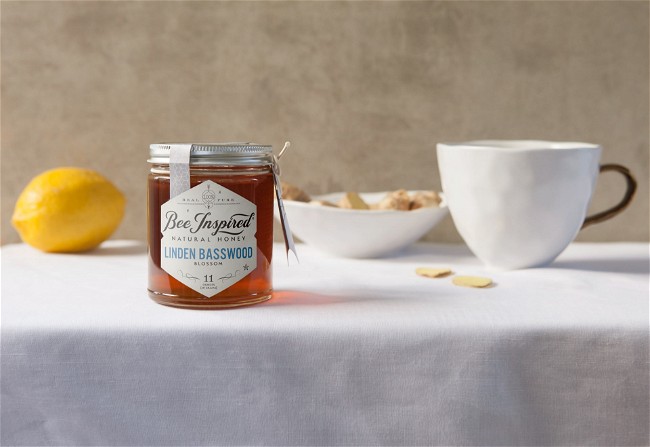




There's something genuinely hard to beat about wrapping your hands around a warm mug of ginger lemon honey tea on a gray winter morning. Three ingredients. No fancy equipment. Just bright lemon, warming ginger, and a good raw honey doing what they've always done — creating a drink that tastes like someone actually cared about making it.
At Bee Inspired Goods, we make ours a little differently. Instead of starting fresh every time, we build a concentrated honey infusion — layered into a jar, refrigerated, and ready to go for up to a month. We call it Dr. Feelgood Tea, and once you have a jar in the fridge, you'll wonder why you ever did it any other way.
Why the Concentrate Method Changes Everything
Most ginger lemon tea recipes have you slicing fresh ginger and lemon every single morning. That's fine, but it means you have to think about it at 6am, which not everyone wants to do. The concentrate method flips the script: spend ten minutes once, and you get 24 servings that develop richer, more layered flavor over time as the honey draws out the aromatics from the ginger and lemon.
The honey acts as a natural preservative while it infuses, pulling in the oils from the lemon peel and the sharpness of the ginger root. The result is a thick, syrupy mixture you just spoon into hot water when you're ready. The longer it sits, the more complex the flavor gets.
The Best Honey for This Recipe: Linden Basswood Honey
You can use any raw honey here, and we'll talk through a few great options — but our first recommendation is Linden Basswood Honey. It's one of the more distinctive varietals we carry: light in color, but surprisingly bold in flavor, with an herbal, hay-like character that comes through even after infusing with strong aromatics like ginger.
Basswood (also called linden) trees bloom for only a couple of weeks each year, which is part of what makes this honey genuinely rare. The flavor holds up beautifully in this recipe — it doesn't get lost the way a milder honey might, and it doesn't compete with the ginger the way a very dark honey would. To learn more about what makes it special, take a look at our full guide on what is basswood honey.
Other raw honey varietals that work well in this recipe:
- Wildflower Honey — rich and complex, adds a deeper, earthier note to the infusion
- Orange Blossom Honey — light citrus undertones that echo the lemon beautifully
- Spring Honey — mild, versatile, lets the ginger and lemon do most of the talking
If you're curious about which honey varietals pair best with different teas, our guide to the best honey for tea is a good place to dig in.

About the Ingredients
Fresh Ginger Root
You'll need two ginger roots, each about the size of half your hand — roughly 2 to 3 inches. Fresh ginger is worth the small extra effort here; the aromatic oils and sharp, spicy warmth it brings are not something you can replicate with ground ginger or paste. When sliced thin, it infuses into the honey beautifully over the first 24 to 48 hours.
Organic Lemon
Two large organic lemons, sliced thin with the peel on. This is important — the peel contains aromatic oils that give the infusion real depth and a floral citrus note that juice alone won't produce. Choose organic when you can, since the peel goes into the jar.
Raw Honey
You'll need 11 ounces (about 1 cup) of raw honey. Raw honey hasn't been pasteurized or ultra-filtered, which means it retains its natural enzymes, pollen, and the full flavor character of the flowers the bees visited. Those qualities come through in the final cup in a way that processed honey simply doesn't deliver.
How to Make Ginger Lemon Honey Tea Concentrate
Ingredients
- 2 large organic lemons, thinly sliced (seeds removed)
- 2 fresh ginger roots (each about half-hand size), peeled and thinly sliced
- 11 ounces (approximately 1 cup) raw honey — we recommend Linden Basswood Honey
- 1 quart-sized airtight glass jar
- Cinnamon sticks for serving (optional)
Instructions
Step 1: Prep your ingredients. Wash the lemons well — you're using the peel, so a thorough rinse matters even with organic fruit. Slice into thin rounds, about ¼-inch thick, and remove any seeds as you go. Peel the ginger using the edge of a spoon (it gets into the knobby parts better than a peeler), then slice thin.
Step 2: Layer your jar. In a clean, dry glass jar, start layering: lemon slices first, then ginger, alternating as you go. The alternating layers ensure everything is distributed evenly and infuses consistently.
Step 3: Add the honey. Pour honey over each layer as you build. Raw honey is thick, so take your time — use a clean spoon or chopstick to press everything down and work out any air pockets. Keep going until the honey covers all the fruit and ginger completely. This is what prevents spoilage and allows the infusion to work properly.
Step 4: Seal and refrigerate. Lid on, into the fridge. Over the next 24 to 48 hours, you'll notice the mixture loosening up as the lemon and ginger release their juices into the honey. That's exactly what you want — it's becoming your concentrate. The mixture will keep for up to one month.
To Make a Cup
- Heat water until just off the boil (around 200°F ideal — not a full rolling boil)
- Add 2 to 3 tablespoons of the honey-ginger-lemon mixture to your mug, including some of the ginger and lemon pieces
- Pour hot water over the mixture
- Stir and let steep for 3 to 4 minutes
- Garnish with a cinnamon stick if you like
Start with 2 tablespoons and adjust to taste. The longer it steeps, the more pronounced the ginger becomes. Over time, the mixture in the jar will develop a gel-like consistency — completely normal, and honestly a good sign.

Variations Worth Trying
Once you've made the base recipe a few times, it's easy to riff on it. A few combinations we like:
- Add fresh mint — a few leaves in the jar add a bright, cooling contrast to the ginger
- Add whole cloves or star anise — deepen the spice notes for a more complex cold-weather drink
- Swap in Meyer lemon — sweeter and more floral than standard lemon, creates a softer infusion
- Try sliced turmeric root — it adds an earthy warmth and a beautiful golden hue
- Add to cold sparkling water — the concentrate works as a syrup for a ginger-honey spritz, too
Experimenting with different honey varietals is half the fun — each one shifts the character of the final cup in ways you can't predict until you taste it.
Storage Tips
Always use a clean spoon when scooping from the jar to keep the batch fresh. Keep the lid sealed between uses. If you're running low, you can add a fresh pour of honey over the existing ginger and lemon for a second round of infusion — the flavor will be a bit gentler, but still good.
If the mixture crystallizes in the fridge (which raw honey sometimes does), just set the jar in a bowl of warm water for a few minutes until it loosens.
More Basswood Honey Recipes
Linden Basswood Honey is one of our most versatile varietals — the herbal, aromatic character translates across sweet and savory applications. If you're enjoying it in this tea, a few other recipes worth trying:
- Lavender Basswood Honey Scones — the honey's floral, herbal notes are a natural fit alongside lavender
- Honey Coconut Macaroons — a simple, crowd-pleasing cookie that pairs nicely with a warm mug of this tea
- Almond Bliss Smoothie — another way to enjoy basswood honey in a morning drink
- Flu Beater Martini — for evenings when you want the ginger and honey in cocktail form
Ready to get started? Pick up a jar of Linden Basswood Honey and keep the concentrate in your fridge all season.

Dr. Feelgood Tea FAQs
How long does ginger lemon honey tea concentrate last in the fridge?
Stored in a sealed airtight glass jar, the concentrate keeps for up to one month in the refrigerator. Always use a clean spoon when scooping to avoid introducing bacteria. Over time, the mixture will thicken into a gel-like consistency — that's normal and doesn't affect the flavor or quality.
What kind of honey is best for ginger lemon honey tea?
Any raw honey works well, but the variety you choose does change the character of the final cup. We recommend Linden Basswood Honey for its distinctive herbal, hay-like flavor that holds its own against bold ginger and citrus without overpowering either. For a milder cup, Orange Blossom or Spring Honey are great options. See our full breakdown in the best honey for tea guide.
Can you make ginger lemon honey tea ahead of time?
Yes — that's exactly the point of this recipe. The concentrate method lets you do all the prep once and have 24 servings ready to go for the entire month. The flavor actually improves over the first few days as the honey draws out more of the ginger and lemon oils, so making it ahead isn't just convenient, it genuinely produces a better cup.
How much honey do you put in ginger tea?
For this concentrate, start with 2 tablespoons per mug and adjust from there. If you want a stronger, more aromatic cup, go up to 3 tablespoons. Because the honey has been infusing with ginger and lemon for days, it carries a lot more flavor than plain honey stirred into tea — a little goes further than you might expect.
Do you need to peel the ginger?
Yes. The ginger skin can be slightly bitter and tough, and peeling it gives you a cleaner, smoother flavor in the infusion. The easiest way to do it is with the edge of a spoon — it gets into all the irregular curves without wasting the flesh the way a peeler tends to.
Can you use bottled lemon juice instead of fresh lemons?
We strongly recommend using whole fresh lemons, sliced with the peel on. The peel contains aromatic oils that are a significant part of what makes this concentrate flavorful and complex — bottled juice skips all of that and produces a noticeably flatter result. If you can only get bottled juice, the recipe will still work, but it won't be the same drink.
Can you add the concentrate to cold drinks?
Absolutely. While this recipe is designed for hot water, the concentrate works just as well stirred into cold sparkling water for a ginger-honey spritz, or mixed into cold still water as a natural flavored drink. It also makes a nice base for cocktails — our Flu Beater Martini uses a similar ginger-honey flavor profile if you want to go that direction.
Is this recipe safe for children?
This tea is appropriate for children over one year of age. Raw honey should never be given to infants under 12 months. For younger children, you may want to reduce the amount of ginger in the concentrate, as the spice level can be intense for small kids — starting with one root instead of two gives a milder result.
Why did my honey crystallize in the jar?
Crystallization is a natural characteristic of raw honey and has no effect on quality or flavor. If your concentrate firms up in the fridge, simply set the sealed jar in a bowl of warm (not hot) water for a few minutes until it loosens back up. Avoid microwaving it, which can unevenly heat the mixture and degrade the honey.