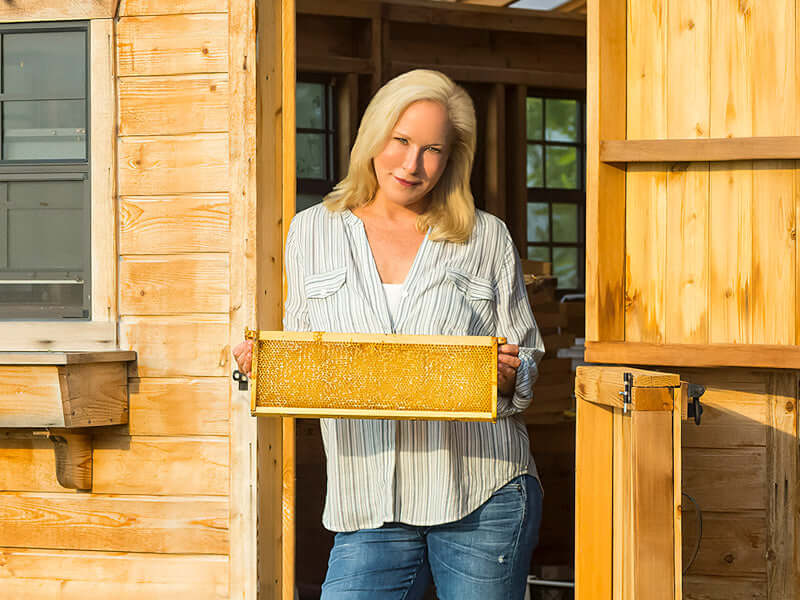


Some recipes just work. Coconut macaroons are one of them — a handful of simple ingredients, a hot oven, and twenty minutes later you have something that looks like it came from a bakery. What makes this version a little different is the honey. Specifically, our Linden Basswood Honey, a rare monofloral varietal with an intense herbal character and a flavor that defies its light color. If you haven’t baked with it before, this is a great place to start.

The honey here does double duty. It binds with the egg whites to give the macaroons their signature chewy interior, and it adds a depth of flavor you simply won’t get from sugar alone. The result is a golden, toasted exterior with a soft center — and a subtle herbal warmth underneath all that coconut sweetness. These are also naturally gluten-free and contain no flour, which makes them a classic choice for Passover or any time you want a simple, satisfying treat.
A Brief History of Coconut Macaroons
Coconut macaroons have an interesting origin story. The cookie was adopted by Italian Jewish families and became a Passover staple because it contains no leavening agents — no flour, no baking powder — which aligns with the dietary requirements of the holiday. Over time, the coconut macaroon traveled well beyond Passover tables. Today it’s enjoyed year-round in homes across the country, often dressed up with a dark chocolate drizzle or a dried cherry pressed into the top.
It’s also worth noting the difference between macaroons and macarons. A macaron (one “o”) is a French sandwich cookie made with almond flour and meringue — delicate, colorful, and notoriously finicky to make. A macaroon (two “o”s) is a sturdy, rustic coconut cookie. Different cookie, different technique, same delicious reward.
Curious about what makes basswood honey so distinctive? It’s one of the rarer varietals we carry — sourced from basswood (linden) trees during a brief two-week bloom window in late spring — and its bold, hay-like herbal flavor makes it a standout in both sweet and savory recipes.

Gathering Your Ingredients
This recipe comes together with just a few pantry staples. A quick note on the coconut: you’ll want to use both unsweetened and sweetened shredded coconut, and check the label on your sweetened coconut to make sure it hasn’t been sweetened with corn syrup. Beyond that, you’ll need egg whites, sugar, a pinch of salt, vanilla extract, and of course, your honey.
For the honey, basswood is the star here. Its herbal complexity adds a layer of flavor you’d never get from a standard clover honey. That said, if you’d like to explore how different honey varietals change the flavor of baked goods, our guide to baking with honey is a good starting point.
For an optional finishing touch, you can add a drizzle of dark chocolate (you’ll need a bar of dark chocolate and a splash of virgin coconut oil to thin it) and press a dried cherry, cranberry, or plum into the top of each macaroon before baking.
How to Make Coconut Macaroons with Basswood Honey
Step 1: Toast the Coconut
Preheat your oven to 350°F. Line a baking sheet with a Silpat mat or parchment paper. Spread the unsweetened and sweetened coconut evenly across the lined baking sheet and lightly toast in the oven for 5 to 10 minutes, keeping a close eye on it. You’re looking for a golden-brown color — pull it before it burns. Remove from the oven and set aside to cool. Once you’re ready to bake the macaroons, reduce the oven temperature to 325°F (leave it at 350°F if you’re using a convection oven).
Step 2: Whip the Meringue
Here’s the secret to a perfect meringue: a spotless bowl. Wipe out a medium mixing bowl with hot water and a squeeze of lemon juice, then dry it thoroughly. Any grease or residue will prevent the egg whites from whipping properly. Add the egg whites and a pinch of salt, then whip until they form firm peaks, adding the sugar slowly and evenly as you go. Fold in the cooled toasted coconut, then whisk in the vanilla and remaining salt until the mixture looks bubbly. Place the bowl in the refrigerator to chill for 30 minutes.
Step 3: Form the Macaroons
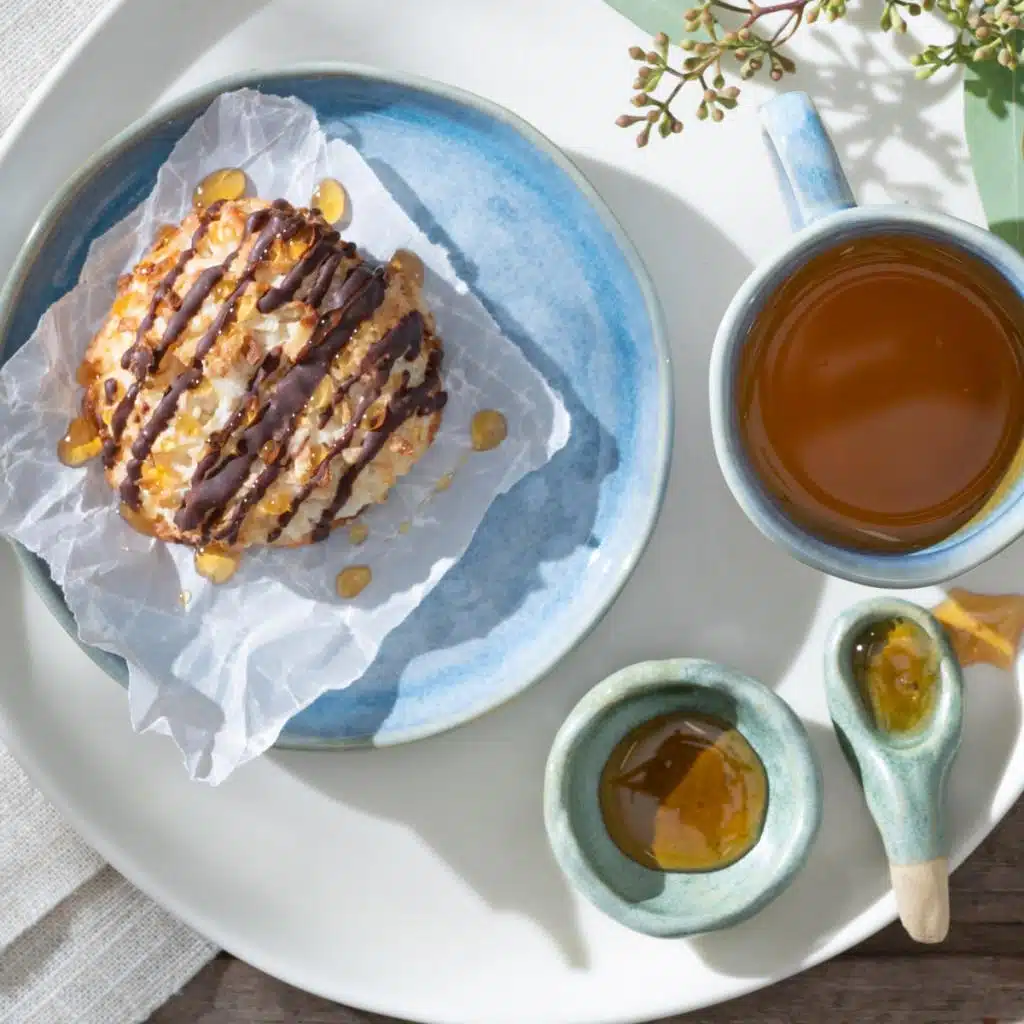
Line a fresh baking sheet with parchment paper. Using a medium cookie scoop (about 2 tablespoons), drop rounds of the coconut mixture onto the sheet, spacing them a couple of inches apart. If you’d like, press one or two dried cherries, cranberries, or plums into the top of each one. Melt the butter and basswood honey together in a small saucepan, then drizzle the mixture over each macaroon.
Step 4: Bake
Bake for 20 to 25 minutes, until lightly browned, or 10 to 12 minutes in a convection oven. The finished macaroons should be dry to the touch — moisture is the enemy here. On a particularly humid day, you may need a few extra minutes. If that’s the case, turn off the oven and leave the macaroons inside without opening the door until they’ve set completely.
Step 5: Optional Chocolate Drizzle
While the macaroons cool, melt a bar of dark chocolate with a small amount of virgin coconut oil in a double boiler or microwave in 30-second increments, stirring between each. Once the macaroons have cooled completely, drizzle the melted chocolate over the top or dip the bottoms for a more dramatic finish. Let the chocolate set fully before serving.
Serving & Pairing Ideas
These macaroons are wonderful alongside a warm cup of tea. The herbal notes in the basswood honey pair particularly well with floral and earthy teas — try them with our tea pairing guide for a few ideas. They also make a beautiful addition to a Passover dessert spread, a holiday cookie box, or an afternoon snack with friends.
If you enjoy baking and drinking with basswood honey, be sure to explore the other recipes in this series. Our Lavender Basswood Honey Scones bring a floral twist to the same rich herbal base, and the Almond Bliss Smoothie is a great way to use basswood honey in an entirely different context.
When you’re ready to stock up, you can shop our Linden Basswood Honey here. It’s a limited varietal — sourced during a brief seasonal bloom — so availability can vary.

A Few Tips for Macaroon Success
- Use unsweetened and sweetened coconut together. The mix of both gives you the right balance of texture and moisture. Sweetened-only coconut can make the batter too wet; unsweetened-only can dry out the finished cookie.
- Don’t skip the chill. Refrigerating the coconut-meringue mixture for 30 minutes before baking helps the macaroons hold their shape on the baking sheet.
- Watch the toast. Coconut goes from golden to burnt quickly. Stay close to the oven during that initial toasting step.
- Humidity matters. If you’re baking on a particularly muggy day, plan for a longer bake time and let the macaroons cool completely in the oven after turning it off.
- Warm your honey first. basswood honey may crystallize over time, which is a natural and normal sign of quality. If your honey has thickened, place the jar in warm water for a few minutes before using. A gentle warm will return it to a pourable consistency without affecting its flavor.
Want to explore more ways to cook and bake with minimally filtered honey? Check out our post on baking with honey, where we walk through substitution ratios, temperature tips, and varietal pairings across all kinds of recipes.
And if basswood honey has you curious about what else you can do with it, the Basswood Honey Martini and Dr. Feelgood Tea are two drink recipes that put its bold, herbal character to excellent use.
Coconut Macaroons Recipe
Kara
24
45 minutes
20 minutes
97
ITALIAN
DESSERT
These light cookies are gluten-free and delicious. They are actually good for you.
Ingredients
- 1 1/2 c unsweetened flaked coconut
- 1 1/2 c sweetened flaked coconut
- 4 egg whites
- 1/2 c organic sugar
- 1 tsp. vanilla extract
- 1/4 tsp. kosher salt
- 1/4 c dried fruit
- 2 tbsp. Bee Inspired Honey
- 2 tbsp. butter
Directions
Preheat oven to 350°F. Combine unsweetened and sweetened coconut on a baking sheet. Lightly toast in the oven for 5 to 10 minutes. Keep close watch that the mixture does not burn, though your goal is a nice golden brown color. Remove from the oven and set aside to cool. Reduce the oven temperature to 325°F. (If using a convection oven, leave at 350°F).
- Clean a medium size mixing bowl with hot water and lemon juice to be sure it’s very clean. Whip egg whites with a pinch of salt in bowl until the whites stiffen into firm peaks adding sugar slowly and evenly. Fold the toasted coconut into the egg white mixture. Whisk in vanilla and salt and whisk until the mixture is frothy. Place bowl in fridge to chill for ½ hour.
- Line a baking sheet with parchment paper drop medium scoop (2 tablespoon size) rounds of the coconut mixture onto the baking sheet. Press one or two dried cherries, cranberries, plums or other dried fruit into the top of each macaroon (optional). Melt butter and honey together. Drizzle the mixture over the top of each macaroon.
- Bake macaroons for 20 to 25 minutes, until lightly browned (watch carefully to avoid burning) or for 10 to 12 minutes if using a convection oven. Macaroons should be dry to the touch. You may need to bake them longer if it is a humid day.
FAQs About Coconut Macaroons with Basswood Honey
What is the difference between a macaroon and a macaron?
They sound almost identical, but they are completely different cookies. A macaron (one "o") is a French sandwich cookie made with almond flour, whipped egg whites, and sugar — delicate, smooth-shelled, and notoriously tricky to perfect. A macaroon (two "o"s) is a rustic, chewy coconut cookie made with shredded coconut and egg whites. Far easier to make, and in our opinion, just as delicious.
Can I use a different honey variety in this recipe?
You can, though the flavor of the finished macaroon will shift with whichever honey you choose. Basswood honey brings an intense herbal and hay-like character that pairs beautifully with toasted coconut. A lighter varietal like Orange Blossom will give you something more floral and subtle, while a darker honey like Buckwheat will add a bold, robust depth. If our Linden Basswood Honey is out of stock, Buckwheat is our top substitute recommendation for this recipe.
Are these coconut macaroons gluten-free?
Yes. This recipe contains no flour or leavening agents, which is part of why coconut macaroons have long been a classic Passover dessert. Just make sure the coconut and any other packaged ingredients you use are certified gluten-free if you are baking for someone with celiac disease or a serious gluten sensitivity, as cross-contamination can occur during manufacturing.
Why did my macaroons turn out soggy or wet?
Moisture is the biggest enemy of a good macaroon. A few things can cause this: the coconut mixture not chilling long enough before baking, high humidity in your kitchen, or pulling them from the oven too early. If your macaroons feel soft after the suggested bake time, turn the oven off and leave them inside with the door closed for an additional 10 to 15 minutes. They should be dry to the touch before you move them to a cooling rack.
Can I make these ahead of time?
Yes, and they actually hold up quite well. Store finished macaroons in an airtight container at room temperature for up to five days, or in the refrigerator for up to two weeks. If you have added a chocolate drizzle, layer them between sheets of parchment paper to prevent sticking. You can also freeze them for up to two months — just let them come to room temperature before serving.
My basswood honey has crystallized. Can I still use it?
Absolutely. Crystallization is a completely natural sign of minimally filtered honey — it means nothing has been removed or altered. To return it to a pourable consistency, simply place the jar in a bowl of warm (not boiling) water and let it sit for a few minutes, stirring occasionally. Avoid microwaving the honey directly, as high heat can affect its delicate flavor. Once it loosens up, it will work perfectly in this recipe.
What dried fruit works best pressed into the top of each macaroon?
Dried cherries are our favorite — their tartness cuts through the sweetness of the coconut and creates a beautiful contrast with the herbal notes of the basswood honey. Dried cranberries are a close second and add a pleasant tang. Dried plums work well too if you prefer something a little richer and more jammy. Any of these can be pressed gently into the top of each macaroon right before baking so they set into the cookie as it bakes.
Do I have to use both sweetened and unsweetened coconut?
The combination of both gives you the best texture and flavor balance. Sweetened coconut adds moisture and chew; unsweetened coconut gives structure and lets you control how sweet the final cookie is. If you only have one type on hand, unsweetened coconut alone will work — just be aware the macaroons may be a touch drier. Sweetened coconut alone is not recommended, as it can make the batter too wet and the finished cookie overly sweet, especially when paired with honey.