

There are two kinds of caramel candy: the corn-syrup kind that snaps the same way every time, and the honey kind that tastes like something. This recipe is firmly the second kind. Real butter, real cream, real sugar, and a half cup of Eastern Shore Honey doing the work corn syrup usually does, with a finish of coarse sea salt on top.
The honey is the whole point. It gives these caramels a floral, buttery depth that you simply do not get from a standard corn-syrup recipe. They taste like a farm kitchen, not a candy aisle. They wrap beautifully in wax paper, they keep for weeks, and they hold up to being mailed in a tin to someone you love.
If you have made caramel before and felt let down by the result, this is the recipe to try next.

Why Honey Belongs in Caramel
Traditional caramel candy recipes lean on corn syrup for one reason: it is an interfering sugar that helps prevent the granulated sugar from recrystallizing while you cook it down. Honey does the same job. It is roughly 38% fructose and 31% glucose, which means it brings the same anti‑crystallization behavior corn syrup is prized for, plus a layer of flavor corn syrup cannot offer.
The result is a caramel with a longer, rounder finish. The honey caramelizes alongside the sugar and contributes a faint butterscotch note before the cream and butter ever go in. Once everything comes together, you get a candy that is buttery, salty, sweet, and faintly floral all at once.
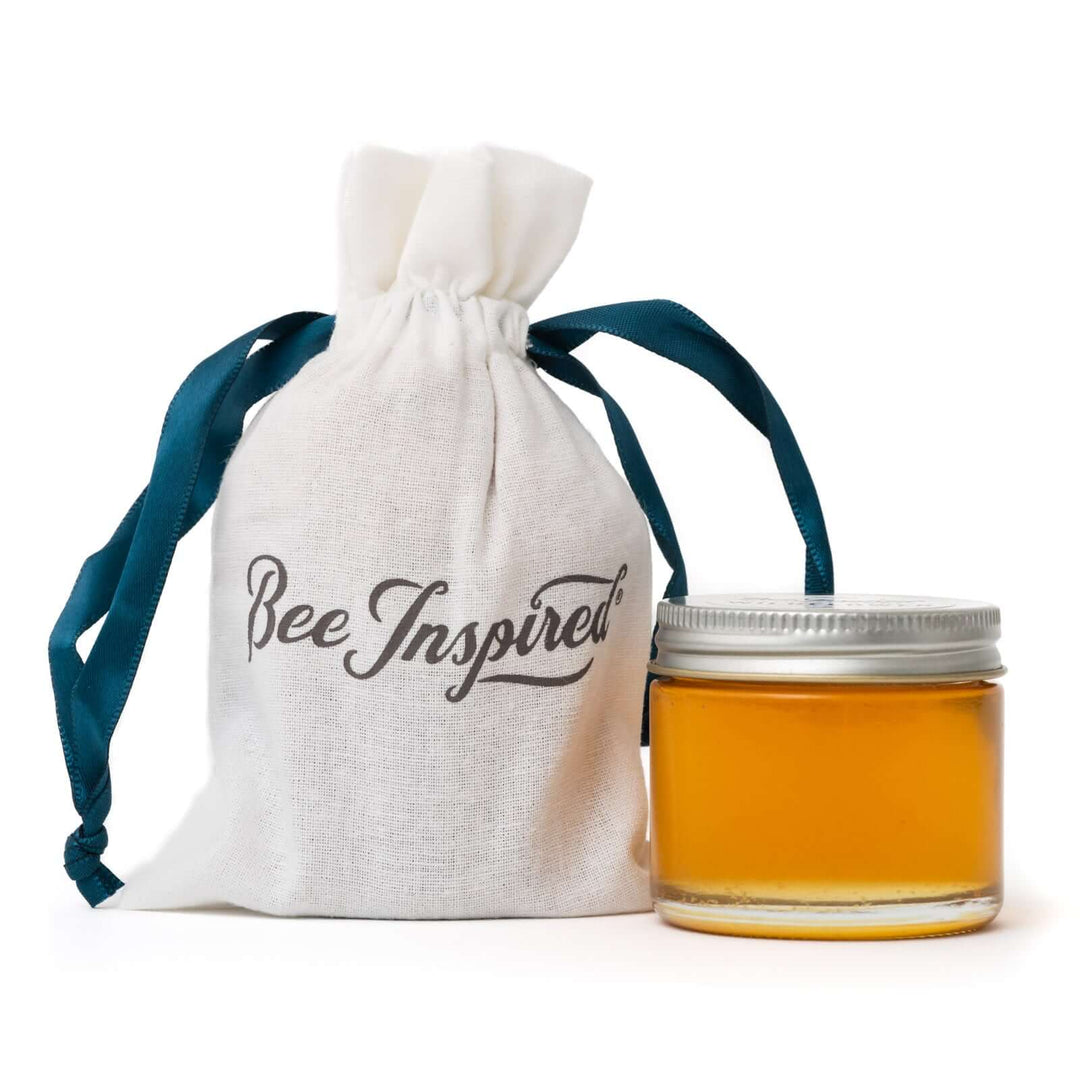
We used our own Lavender Honey for this recipe. Spring or Summer Honey both work beautifully here because their natural caramel notes layer right into what the sugar is already doing on the stove. For more on which honey to choose, our complete guide to honey varietals walks through every option.
Ingredients You’ll Need
This is a short list. Six pantry ingredients plus parchment paper and cooking spray to prep the pan.
- Wax or parchment paper
- Cooking spray
- 1 1/2 cups granulated sugar
- 1/2 cup Bee Inspired minimally filtered honey
- 1 stick unsalted butter, softened and cut into large chunks
- 1 cup heavy cream
- 1 teaspoon coarse sea salt
The honey is the star, so use a honey you actually want to taste. Spring Honey from our farm gives the caramels a light floral lift. Buckwheat Honey brings deeper caramel notes from the wildflowers and clover the bees worked through July. Wildflower honey works too, with a bolder, more complex finish.

How to Make Salted Honey Caramels
The full recipe card with measurements and times is at the bottom of this post. Here is the walkthrough so you know what to expect at the stove.
1. Prep your pan first. Line a 9 x 13 baking dish with parchment paper, leaving long overhangs on two sides so you can lift the cooled caramel block out later. Spray the paper with cooking spray and set the pan aside. If you want thicker caramels and do not mind fewer of them, use a 9 x 9 pan instead.
2. Caramelize the sugar and honey. Combine the sugar and honey in a large saucepan over medium heat. Stir until smooth and melted, then bring to a boil. Reduce the heat and simmer until the mixture darkens to a deep caramel color, about 5 minutes. Stay at the stove. Sugar and honey go from amber to burnt in seconds, and once it burns it is done.
3. Add the butter, one chunk at a time. Lower the heat and whisk in the butter pieces one by one. The mixture will bubble up dramatically. This is why you need a large pot.
4. Whisk in the cream. Once all the butter is incorporated, slowly whisk in the heavy cream. Expect more bubbling. Keep whisking until it settles into a smooth, glossy caramel.
5. Boil to the hard-ball stage. Return the pot to medium heat and bring it back to a boil. Continue boiling until the mixture reaches 244°F on a candy thermometer (the hard-ball stage). No thermometer? Drop a spoonful of caramel into a glass of cold water. If you can form it into a firm but pliable ball with your fingers, it is ready.
6. Pour, salt, and set. Pour the caramel into your prepared pan. Slide the pan into the fridge for about 10 minutes to set the surface, then sprinkle the top generously with coarse sea salt so it sticks. Pull the pan out and let the caramels finish cooling at room temperature for about an hour.
7. Cut and wrap. Lift the caramel block out using the parchment overhang. Use a sharp knife to cut it into squares. Wrap each piece in a small square of parchment or wax paper.
Tips for Caramel That Actually Sets
The single most common reason homemade caramels fail to set is undercooking. A candy thermometer is the simplest fix, and any drugstore version will do. Pull from the heat at 244°F for caramels you can wrap and store at room temperature. If you prefer a softer, chewier finish, pull a few degrees earlier (around 240°F).
Humidity matters too. Caramel hates humid kitchens. If it is pouring rain outside and your stovetop is steaming, the caramels may stay tacky no matter how long you boil them. Save candy projects for dry days when you can.
If you want a softer, pourable caramel rather than a wrapped candy, stop at the thread stage (around 230°F). That gives you our honey caramel sauce instead, perfect over ice cream or apples.
Variations Worth Trying
Once you have the base recipe down, this is a good candy to play with. A few favorites:
- Almond honey caramels. Stir 1/4 cup of finely chopped toasted almonds into the caramel just before you pour it into the pan.
- Chocolate chip caramels. Scatter 1/4 cup of mini chocolate chips across the surface right after you pour, while the caramel is still warm enough to grip them.
- Dark caramel. Stir 2 ounces of chopped 72% dark chocolate into the caramel after it comes off the heat, for a deeper, almost mocha-like finish.
- Vanilla bean. Scrape the seeds of half a vanilla bean into the cream before you add it for a warmer, more aromatic candy.
How to Store Honey Caramels
Wrapped in wax paper and stored in an airtight container at room temperature, these caramels will keep for about four weeks. Keep them somewhere cool and dry. If your kitchen runs warm, the fridge works for longer storage, but bring the caramels back to room temperature before serving so they soften to the right chew.
If you are planning to gift them (and you should), wrap individual pieces in parchment squares twisted at the ends, layer them in a small tin or jar with parchment between layers, and tie a ribbon around the outside. They look like something from a candy shop and they keep beautifully in the mail.

The Best Honey for Caramels
You can make these with any minimally filtered honey, but the honey you choose changes the finished candy. A few pairings we keep coming back to:
- Spring Honey for delicate floral notes that lift the buttery base.
- Lavender Honey for a "less sweet" finish
- Summer Honey for natural caramel notes that layer right into the sugar.
- Wildflower Honey for bolder, more complex caramels with hints of anise and roasted nuts.
- Sourwood Honey when you want that distinctive burnt-caramel finish front and center.
For a guided introduction to varietal flavor, our guide to tasting honey covers what to look for, jar by jar.
More Honey Candy and Caramel Recipes
If you love this one, a few more from our recipe collection:
- Our homemade caramel corn uses the same honey-instead-of-corn-syrup approach for a movie-night classic.
- Chocolate sticky apples bring honey caramel together with crisp fall apples and dark chocolate.
- Our pourable honey caramel sauce goes on ice cream, pancakes, apples, or, as Kara puts it, the tip of your nose.
- Lavender honey marshmallows for the other end of the candy-making spectrum.
- Want to keep going? Browse our full honey desserts roundup for more honey-sweetened treats.

Honey Caramels as a Gift
Sea salt honey caramels make one of the most reliably loved homemade gifts we make at the farm. They are a finished candy you can mail or hand-deliver, they look polished when wrapped, and they let someone taste a particular honey in a form they have probably never had before. Browse our honey gifts collection if you are also looking for ready-to-go options, or our honey gift guide for more ideas across price points and occasions.
Salted Honey Caramels
36 caramels
10 minutes
30 minutes
85
American
Dessert
Intermediate
Gifting and holidays

Ingredients
- Wax or parchment paper
- Cooking spray
- 1 1/2 cups granulated sugar
- 1/2 cup Bee Inspired Honey
- 1 stick unsalted butter, softened and cut into large chunks
- 1 cup heavy cream
- 1 teaspoon coarse sea salt
Directions
Prep the Pan
- Line a 9 x 13 baking dish with parchment paper, leaving long overhangs on two sides to lift the caramel block out later. Spray the paper with cooking spray and set aside.
Caramelize the Sugar and Honey
- Combine the sugar and honey in a large saucepan over medium heat. Stir until smooth and melted, then bring to a boil. Reduce heat and simmer until the mixture darkens to a deep caramel color, about 5 minutes. Watch closely. Sugar and honey go from amber to burnt in seconds.
Add the Butter and Cream
- Reduce heat to low and whisk in the butter chunks one at a time. The mixture will bubble up dramatically, which is why you need a large pot. Once all the butter is incorporated, slowly whisk in the heavy cream until the caramel is smooth and glossy.
Cook to Hard-Ball Stage
- Return the pot to medium heat and bring back to a boil. Continue boiling until the mixture reaches 244F on a candy thermometer (the hard-ball stage). No thermometer? Drop a spoonful of caramel into a glass of cold water. If you can shape it into a firm but pliable ball, it is ready.
Pour and Salt
- Remove from heat and pour the caramel into the prepared pan. Refrigerate for about 10 minutes to set the surface, then sprinkle generously with coarse sea salt so it sticks. Let the caramels finish setting at room temperature for about an hour, or until completely cool.
Cut and Wrap
- Lift the caramel block out of the pan using the parchment overhang. Cut into squares with a sharp knife and wrap each piece in a small square of parchment or wax paper. Store in an airtight container at room temperature for up to four weeks.
FAQs About Salted Honey Caramels Recipe
Why use honey instead of corn syrup in caramels?
Honey acts as an interfering sugar that helps prevent the granulated sugar from recrystallizing as it cooks, which is the same job corn syrup does in traditional caramel recipes. The difference is flavor. Honey brings a floral, slightly butterscotch character to the finished candy that corn syrup simply cannot match. The caramels taste more layered and complex, with a longer finish.
What temperature should honey caramels reach?
For caramels you can wrap and store at room temperature, cook the mixture to 244°F on a candy thermometer (the hard-ball stage). If you prefer a softer, chewier finish, pull from the heat a few degrees earlier, around 240°F. For a pourable caramel sauce instead of wrapped candy, stop at the thread stage around 230°F.
Can I make honey caramels without a candy thermometer?
Yes. Use the cold water test instead. Drop a small spoonful of the cooking caramel into a glass of cold water. If you can scoop it out and shape it into a firm but pliable ball with your fingers, the caramel has reached the hard-ball stage and is ready to pour. A candy thermometer is more reliable, but the water test has worked for generations of candy makers.
What kind of honey is best for honey caramels?
Any minimally filtered honey works, but the variety you choose changes the finished candy. Spring Honey adds a delicate floral lift. Summer Honey brings natural caramel notes that layer beautifully with the cooked sugar. Wildflower honey gives a bolder finish with hints of anise and roasted nuts. Sourwood honey leans into burnt-caramel territory. Use a honey you actually want to taste, because you will taste it.
How long do homemade honey caramels last?
Wrapped individually in parchment or wax paper and stored in an airtight container at room temperature, honey caramels keep for about four weeks. Store them somewhere cool and dry. If your kitchen runs warm, the refrigerator works for longer storage, but let the caramels return to room temperature before serving so they soften back to the right chew.
Why did my honey caramels not set?
The most common cause is undercooking. If the mixture did not reach the hard-ball stage (244°F), the caramels will stay tacky or pourable rather than firm enough to wrap. Humidity is the second culprit. Caramel struggles to set on humid days, so save candy projects for dry weather. If your caramels stayed soft, treat them as caramel sauce over ice cream or apples instead.
Are honey caramels gluten-free?
Yes. The ingredients in this recipe (sugar, minimally filtered honey, unsalted butter, heavy cream, and sea salt) are naturally gluten-free. If you are making them for someone with celiac disease, double-check that your honey and butter are processed in gluten-free facilities, since cross-contamination during manufacturing is the main risk with otherwise gluten-free ingredients.
Can I make honey caramels as a holiday gift?
Honey caramels are one of the most reliable homemade gifts to make. Wrap each piece in a small square of parchment paper twisted at the ends, layer them in a tin or jar with parchment between layers, and tie a ribbon around the outside. They keep for weeks at room temperature, mail well, and let the recipient taste a particular honey variety in a form they have probably never had before.