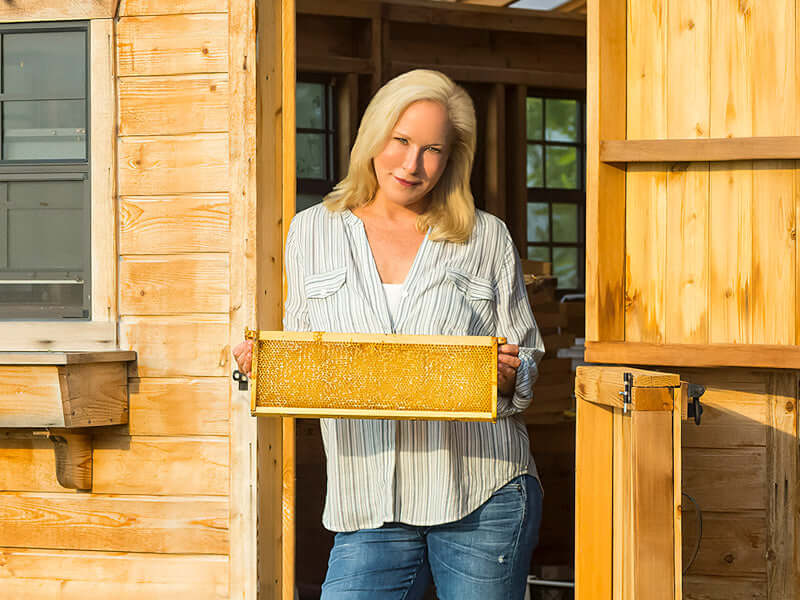


There’s a brief stretch in late summer where the fig tree on Chesterhaven Beach Farm decides, all at once, that it’s ready. Within a few days we go from a few ripe figs at a time to a full bowl on the counter, all of them perfect, all of them needing to be eaten right now. This is the recipe we make first.
Honey roasted figs with whipped mascarpone is the dish that turns a small handful of figs into something dinner-party worthy in about 30 minutes. The figs go into a hot oven with butter and a generous pour of minimally filtered honey. They come out jammy, caramelized at the edges, and sitting in a thin syrup that you’ll absolutely want to spoon over everything. Underneath them: a cloud of mascarpone whipped with more honey, lemon zest, and a splash of vanilla. Together, they’re a dessert that tastes much more complicated than it actually is.

Why This Recipe Works
Most fig recipes online either keep the fruit raw (a quick assembly, but you miss the deeper flavor) or roast it without giving the dairy any attention. The version we make on the farm does both, and that combination is what makes it good enough to serve to people you want to impress.
Roasting concentrates the figs. The natural sugars caramelize, the texture softens to something between jam and fruit, and the honey reduces into a glaze. Whipping the mascarpone with a little honey, lemon zest, and vanilla turns a heavy, rich cheese into something light and spoonable that holds the warm figs without melting into them. The temperature contrast, warm fruit on cool cream, is the whole point.
The Honey Matters
This recipe is essentially three ingredients carrying the dish, so the honey you use changes the whole result. Our top pick is Sourwood Honey. Sourwood is a monofloral honey from sourwood trees in the Appalachian highlands of North Georgia, and it has a buttery, almost burnt-caramel finish with a faint anise note that does something quietly remarkable when it hits warm fruit and a creamy cheese. It also caramelizes cleanly in the oven without turning bitter.
If Sourwood is sold out (it sometimes is, since the trees only bloom for about three weeks each July), our Wildflower Honey is the next best move. It’s bolder than a generic clover honey, with notes of black cherry and roasted nuts that work well alongside figs. Our Spring Honey from our own farm is the third option: lighter and floral, gentler in the oven, and lovely if you want the fig flavor to lead.
What you want to avoid is the squeeze-bear stuff from the grocery store. Ultra-filtered, heat-processed honey has had most of its character cooked out. In a recipe this simple, that absence shows up.
Ingredients
For 4 servings, you will need:
- 8 ripe fresh figs (Black Mission, Brown Turkey, or whatever your market has)
- 3 tablespoons Sourwood Honey, plus 1 tablespoon for the mascarpone
- 1 tablespoon unsalted butter, melted
- 1 sprig fresh thyme (or rosemary)
- 4 oz mascarpone cheese, room temperature
- Zest of 1 lemon
- 1/2 teaspoon vanilla extract
- 1/4 cup chopped pistachios, for garnish
- Flaky sea salt, for finishing

How to Make Honey Roasted Figs
This is one of those recipes where the only real risk is overthinking it.
- Heat the oven to 375°F. Line a small baking dish or rimmed sheet pan with parchment.
- Prep the figs. Trim the stems, then cut each fig in half lengthwise. Arrange them cut-side up in the dish, snug but not crowded.
- Make the glaze. Whisk the melted butter with 3 tablespoons honey. Spoon a small amount over each fig half so the cut surface is coated and a little pools in the dish. Tuck the thyme sprig in among the figs.
- Roast for 15 to 18 minutes. The figs should soften, the cut surfaces should look glossy and slightly caramelized at the edges, and the syrup in the pan should bubble and thicken. If your figs are very ripe, check at 12 minutes. Underripe figs may need closer to 20.
- Whip the mascarpone while the figs cook. In a medium bowl, combine the mascarpone, 1 tablespoon honey, lemon zest, and vanilla. Whisk by hand for about 30 seconds until it lightens and softens. You want a soft peak, not a stiff one. Refrigerate until the figs come out.
- Plate it. Spread a generous spoonful of whipped mascarpone on each plate or shallow bowl. Arrange 4 fig halves on top. Drizzle with a little of the warm honey syrup from the pan, scatter pistachios, finish with flaky salt. Serve immediately while the figs are still warm.
Tips That Actually Matter
Buy the ripest figs you can find. Soft to gentle pressure, smelling slightly sweet at the stem, no cracks at the base. Underripe figs won’t develop the same jammy texture, no matter how long you roast them. If your figs need help, give them a day on the counter before you cook.
Bring the mascarpone to room temperature. Cold mascarpone seizes when you add cold honey, and you’ll end up with a lumpy bowl. Pull it out of the fridge 30 to 45 minutes before you start.
Don’t skip the salt. A pinch of flaky salt at the end is what keeps this from sliding into too-sweet territory. It’s the difference between a good plate and a great one.
The pan syrup is the secret. When you take the figs out of the oven, scrape every drop of that thickened honey from the pan and use it. That’s the most concentrated flavor in the whole dish.
Make-Ahead and Entertaining Notes
The whipped mascarpone can be made up to 24 hours in advance. Keep it covered in the fridge and give it a quick stir before serving. The figs are best roasted right before serving, but you can prep them in the dish with the glaze, cover, and refrigerate for a few hours, then pop them in the oven when guests sit down.
For a dinner party of 8, this scales straightforwardly: double everything and use a larger dish, but don’t crowd the figs. They steam instead of roast if they’re touching. Two pans is better than one packed pan.

Ways to Serve
As a plated dessert with a small glass of dessert wine or moscato. As the showstopper on a fall cheese and honey board alongside aged blue cheese and toasted walnuts. Spooned over a slice of toasted brioche for a slow Sunday breakfast. Arranged over thick Greek yogurt for a more breakfast-leaning version. Or, our personal favorite, eaten standing at the counter with a spoon, before anyone else gets to the kitchen.
What to Do with the Honey Once You Have It
If you bought a jar of Sourwood Honey for this recipe and you want to put the rest to work, our candied pistachios with sourwood honey are the most natural next step (and they’d also be lovely scattered over these figs). For something that captures the same warm, honey-forward dessert mood, our honey baked apples follow the same logic with a different fruit, and the rest of our honey desserts collection is full of recipes built around varietal honey.
If figs are your thing this season, our other fresh fig recipes with honey cover smoothies, focaccia, compote, and crostini. For a different way to serve your figs, try the honey pepper figs for an easy appetizer. And if you want to understand what the different honeys actually taste like before committing to a varietal, our Honey Tasting Tower walks you through five at once.
Honey Roasted Figs with Whipped Mascarpone
4 servings
10 minutes
18 minutes
336
American
Dessert
Easy
Late summer entertaining

Ingredients
For the Roasted Figs
- 8 ripe fresh figs, halved
- 3 tablespoons raw Sourwood Honey
- 1 tablespoon unsalted butter, melted
- 1 sprig fresh thyme
For the Whipped Mascarpone
- 4 ounces mascarpone cheese, room temperature
- 1 tablespoon raw Sourwood Honey
- Zest of 1 lemon
- 1/2 teaspoon vanilla extract
To Finish
- 1/4 cup chopped pistachios
- Flaky sea salt
Directions
Prep
- Heat oven to 375 degrees F. Line a small baking dish with parchment paper.
- Trim the stems from the figs and cut each in half lengthwise. Arrange them cut-side up in the dish, snug but not crowded.
Glaze and Roast
- Whisk the melted butter with 3 tablespoons honey. Spoon a small amount over each fig half so the cut surface is coated and a little pools in the dish. Tuck the thyme sprig in among the figs.
- Roast for 15 to 18 minutes, until the figs soften, the cut surfaces look glossy and slightly caramelized at the edges, and the syrup in the pan bubbles and thickens. Check at 12 minutes if your figs are very ripe.
Whip the Mascarpone
- While the figs roast, combine the mascarpone, 1 tablespoon honey, lemon zest, and vanilla in a medium bowl. Whisk by hand for about 30 seconds until lightened and softened to a soft peak. Refrigerate until plating.
Plate and Serve
- Spread a generous spoonful of whipped mascarpone on each plate or shallow bowl. Arrange 4 fig halves on top.
- Drizzle with warm honey syrup from the pan. Scatter chopped pistachios and a pinch of flaky sea salt. Serve immediately while the figs are still warm.
FAQs About Honey Roasted Figs with Whipped
What is the best honey for roasted figs?
Sourwood honey is our top choice. Its buttery, burnt-caramel finish caramelizes cleanly in the oven and stands up well to figs and mascarpone. Wildflower or Spring honey are excellent alternatives, especially if you prefer a brighter or more floral flavor. Avoid ultra-filtered grocery store honey, which has had most of its flavor cooked out before you ever open the jar.
Can I make honey roasted figs ahead of time?
Yes, with a small caveat. The whipped mascarpone can be made up to 24 hours ahead and kept covered in the fridge. The figs are best roasted just before serving, but you can prep them in the baking dish with the honey and butter glaze a few hours ahead, cover, refrigerate, and slide them into the oven when you sit down to dinner.
What kind of figs work best for roasting?
Black Mission and Brown Turkey are the most common at supermarkets and both roast beautifully. Adriatic and Kadota also work. The variety matters less than the ripeness: you want figs that feel soft to gentle pressure and smell faintly sweet at the stem. Underripe figs won’t develop the same jammy texture, no matter how long they bake.
Are roasted figs with mascarpone served as an appetizer or dessert?
Both work. As a dessert, plate two figs per person with a generous spoonful of whipped mascarpone and a drizzle of warm pan syrup. As an appetizer, build smaller individual portions on toasted brioche or crostini, or serve the figs and mascarpone alongside a cheese board. The recipe is identical; only the serving format changes.
Can I substitute mascarpone with something else?
Whole-milk ricotta, whipped with a little honey and lemon zest, is the closest one-for-one substitute. Crème fraîche, full-fat Greek yogurt, or whipped cream cheese also work, though each shifts the flavor slightly. Goat cheese is a more assertive option that leans the dish savory, which can be lovely as an appetizer.
How long do roasted figs last in the fridge?
Up to 3 days in an airtight container, though the texture is best the day they are made. Reheat gently in a 300°F oven for 5 to 7 minutes, or eat them cold straight from the fridge spooned over yogurt. The whipped mascarpone keeps separately for up to 4 days.
Do I need to peel the figs before roasting?
No. Fresh fig skin is thin, edible, and softens beautifully in the oven. Peeling is unnecessary and would lose too much of the fruit’s structure during roasting.