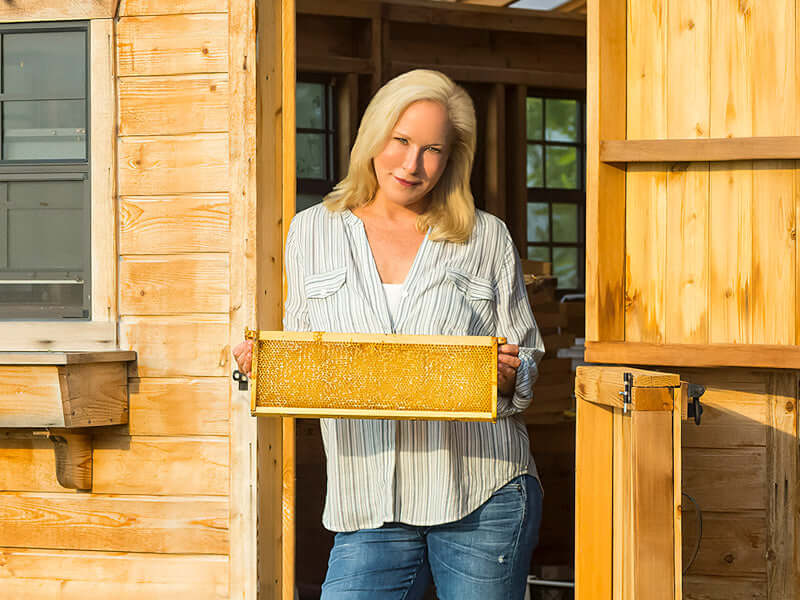


When citrus groves across Central Florida burst into bloom each late winter, something quietly remarkable happens. The air fills with the sweet perfume of millions of orange blossoms, and honeybees begin the seasonal work of transforming delicate citrus nectar into one of the most distinctive monofloral honeys in the country. Orange Blossom Honey captures the essence of sunshine and spring in every golden spoonful, with a flavor that’s unmistakable the moment you taste it.
Taste the Essence of Orange Season
Capture the bright, sunlit flavor of citrus groves with our Orange Blossom Honey. Made from nectar collected during the brief spring bloom when orange trees flower across Florida, this honey brings delicate citrus notes and light floral sweetness that tastes exactly like walking through an orchard in full bloom.
Minimally filtered, and never heated above hive temperature. The subtle orange essence pairs beautifully with tea, yogurt, and baked goods, or simply enjoy it by the spoonful to extend orange season year-round. This is sunshine you can taste.
Shop Orange Blossom Honey →This guide explores everything you need to know about orange blossom honey: what it actually tastes like, how it’s made, where it comes from, and the most useful ways to put it to work in your kitchen. Whether you’re discovering varietal honeys for the first time or you already have a shelf of them, orange blossom is one of the easiest places to start, and one of the most rewarding to come back to.

What Does Orange Blossom Honey Taste Like?
If you’ve only had generic store-bought honey, the first spoonful of orange blossom honey can be a small revelation. It’s one of the most recognizable monofloral honeys on the shelf, with a flavor profile that tells you immediately what flowers the bees were working.
Orange blossom honey tastes light, floral, and softly citrus-kissed. The sweetness lands brightly rather than heavily. Behind it, there’s a delicate jasmine-like floral character and a warm citrus lift that lingers on the finish, more like orange blossoms in bloom than like the fruit itself. The texture is smooth and pourable. The color runs from pale gold to light amber, sometimes with faint orange-tinted highlights.
Tasting notes most people pick up include:
- Light, clean sweetness with no heaviness
- Soft citrus undertones that suggest orange zest, not orange juice
- A floral lift that reads as jasmine, neroli, or orange blossom water
- A clean finish with no bitterness
The aroma alone is worth the price of the jar. Cracking the seal releases the unmistakable fragrance of an orange grove in spring, sweet, floral, and faintly citrusy. That scent is one of the reasons orange blossom honey works so well in tea, baking, and anywhere else the smell of the honey is part of the experience.
Does Orange Blossom Honey Taste Like Oranges?
This is one of the most common questions people ask, and the short answer is no, not the way you might expect. Orange blossom honey does not taste like orange juice or like biting into an orange. It’s made from the nectar of orange tree flowers, not the fruit, and the flavor reflects that distinction.
What you get instead is a light, floral honey with a citrus lift in the background, more orange blossom than orange. It’s the blossom before it becomes fruit: bright, fragrant, and warm on the tongue. People often describe it as tasting like the smell of a citrus grove rather than the taste of citrus itself. That’s why it works so well alongside actual citrus in cooking and baking. The honey echoes the flavor of orange without competing with it, which is something granulated sugar can’t do.
What Does Orange Blossom Taste Like Compared to Other Honeys?
On the spectrum of varietal honeys, orange blossom sits firmly in the light-and-floral category. It’s milder than dark, robust varieties like buckwheat or sourwood, but more aromatic and floral-forward than ultra-mild honeys like alfalfa or sweet clover. Among lighter honeys, it’s the one most people can identify in a blind tasting, because the citrus-and-jasmine signature is so distinctive.
Compared to our farm-harvested Spring Honey, which is bright, floral, and pollen-forward in a way that reflects everything blooming at once on Maryland’s Eastern Shore, orange blossom is more singular. The flavor is concentrated around one bloom rather than spread across many, which makes it easier to recognize and easier to pair.

What Makes Orange Blossom Honey a True Monofloral
Orange blossom honey is a monofloral honey, meaning bees gathered the nectar predominantly from a single flower source. In this case, that source is the small white blossoms of orange trees (Citrus sinensis) during their brief spring bloom. Bees visit other flowers within their three-mile foraging range, but when hives are placed in or beside a grove during peak bloom, the resulting honey reflects the character of those blossoms almost exclusively.
The window is narrow. Orange trees typically bloom for four to six weeks between February and April, when temperatures sit between roughly 65°F and 85°F. That’s how long beekeepers have to position their hives and let the bees work. Miss the bloom, and you don’t get this honey. Miss this batch, same story. It’s one of the reasons authentic Florida orange blossom honey has become increasingly hard to find.
Florida remains the primary U.S. source for orange blossom honey, with additional production in California, Texas, Spain, and Mexico. The Sunshine State’s extensive citrus groves once provided abundant nectar, though late-winter cold snaps, disease pressure on citrus trees (particularly citrus greening), and reduced grove acreage have all made this honey more precious year over year.
From Blossom to Bottle
The process starts with the relationship between the bees and the trees. Each orange blossom has five white petals and prominent stamens, with nectar secreted at the base to attract pollinators. Honeybees visit, using their long proboscis to reach the nectar, and pollinate the flowers as they move from blossom to blossom. That pollination is part of why citrus growers welcome beekeepers into their groves: the bees produce honey, and they help set the next year’s fruit at the same time.
As bees collect nectar, they store it in a specialized honey stomach separate from their digestive stomach. On the flight back to the hive, enzymes from glands in the bee’s head begin breaking down complex sugars in the nectar into simpler ones, primarily glucose and fructose. Back at the hive, forager bees pass the nectar to house bees, who continue the enzymatic work and deposit the nectar into honeycomb cells.
Then comes the dehydration. Worker bees fan their wings above the cells to evaporate water out of the nectar. Fresh nectar contains 60 to 80 percent water; finished honey contains less than 18 percent. When the moisture is right, bees cap the cells with fresh beeswax, sealing the honey for long-term storage. That’s the honey beekeepers harvest, minimally filtered to preserve the pollen, enzymes, and flavor compounds that make each varietal taste like the flowers it came from.

How to Use Orange Blossom Honey
Orange blossom honey is one of the easiest varietal honeys to put to use, in part because its character is bright and balanced rather than dominant. It works in places where a darker honey would overwhelm and brings a floral lift that plain sweetener never could. Here’s where it earns its place.
In Tea, Coffee, and Cocktails
This is where orange blossom honey shines most easily. The floral-citrus character dissolves cleanly into hot drinks and complements the flavors already in the cup rather than burying them. It’s a natural match for Earl Grey, where the bergamot oil and the honey’s citrus notes echo each other. In green or white tea, it adds gentle sweetness without flattening the tea’s own delicate flavors.
For cold drinks, make a honey simple syrup by stirring equal parts orange blossom honey and warm water until fully combined. It mixes into lemonade, iced tea, and cocktails without seizing up. Our Blossoms + Bourbon Cocktail was built specifically around the way this honey pairs with citrus and aged spirits, and it’s a good place to start if you want to taste what the honey can do in a drink.
On a Cheese Board
Match intensity for intensity. Orange blossom honey is delicate, so the cheeses that work with it are also on the gentler end. The classic pairing is fresh goat cheese or a young chevre, where the honey’s sweetness softens the tang. It also works beautifully alongside creamy brie or camembert, mild blue cheeses like a gentle gorgonzola dolce, and aged sheep’s milk cheeses like manchego. For a fuller pairing playbook, our honey and cheese pairing guide walks through which honey goes with which cheese and why.
To plate it: arrange the cheeses with crusty bread, sliced fresh fruit, and a small bowl of orange blossom honey on the side. Citrus segments, particularly blood orange and mandarin, look beautiful and taste even better next to this honey.
In Baking and Cooking
Orange blossom honey performs well in muffins, scones, quick breads, and lighter cakes where its floral character can come through. It pairs especially well with citrus-forward bakes, anything that already calls for orange or lemon zest. When substituting honey for sugar, the standard conversion is 3/4 cup honey for every 1 cup of sugar, with the liquid in the recipe reduced by 1/4 cup, the oven temperature dropped by 25°F, and a pinch of baking soda added to balance the acidity. Our full baking with honey guide covers the technique in detail.
On the savory side, orange blossom honey makes an excellent glaze for roasted chicken or pork. Whisk it with Dijon mustard, minced garlic, and fresh thyme, then brush it on during the last 15 minutes of roasting. It’s also a strong vinaigrette base: whisk together orange blossom honey, olive oil, fresh lemon juice, and a small spoon of Dijon for a dressing that holds together and balances acidic ingredients. Toss it with arugula, candied nuts, goat cheese, and citrus segments for a salad that tastes like spring.
For Breakfast and Yogurt Bowls
Drizzle orange blossom honey over Greek yogurt with fresh berries or sliced stone fruit. The sweetness balances the yogurt’s tang and the honey’s citrus character lifts the fruit. It’s also lovely on French toast, pancakes, biscuits, or fresh ricotta. Our honey breakfast recipes are full of ideas if you’re building a fuller morning around it.

Why Orange Blossom Honey Crystallizes (And What to Do About It)
Orange blossom honey tends to crystallize fairly quickly compared to some other varietals, because it has a higher proportion of glucose. This is completely normal. Crystallization is a sign of real, minimally processed honey, not a flaw, and the honey remains perfectly good to eat. Some people actually prefer the spreadable texture and the way the sweetness softens once crystallized.
To return crystallized honey to liquid, warm the jar gently in a water bath between 110°F and 120°F, stirring occasionally until the crystals dissolve. Avoid microwaving, which heats unevenly and can damage the natural enzymes that make minimally filtered honey what it is. Skip the refrigerator too; cold temperatures speed up crystallization. A kitchen cabinet at room temperature, away from direct sunlight, is exactly right.
Honey itself doesn’t spoil. Stored properly, it lasts indefinitely. Archaeologists have famously found edible honey in sealed jars in ancient Egyptian tombs, which is as close to forever as a pantry item gets.
Orange Blossom in the Citrus Blossom Collection
The bright, refreshing character of orange blossom honey inspired our Citrus Blossom Collection, which brings the fragrance of citrus groves into a small body-care lineup. It’s the same fresh, floral feeling that makes the honey so appealing, translated into the shower.
The Citrus Blossom Body Scrub combines natural sugar crystals with conditioning ingredients for gentle exfoliation. The fresh juicy citrus fragrance reads like a spring morning in a Florida orange grove. Pair it with the Citrus Blossom Body Butter for a complete routine. The body butter is rich without being greasy, made with emollient ingredients chosen for the way they condition the appearance of the skin.

Tasting Orange Blossom Alongside Other Varietals
The best way to understand orange blossom honey is to taste it next to other monofloral varieties. Our Honey Tasting Tower is built for exactly this: a curated flight of five varietals arranged from light to dark, with tasting notes to guide you through. Tasting orange blossom next to wildflower, sourwood, or buckwheat is the fastest way to feel how dramatically the flower source shapes the final flavor.
When you taste honey side by side, work in order. Start with the lightest color first; flavor intensity tends to track with depth of color. Look at each honey, then smell it, then take a small amount on a clean spoon and let it coat your tongue. Notice the finish: some honeys land sweet and disappear, while others leave specific flavors lingering. Orange blossom tends to leave a soft floral-citrus note that holds for a few seconds after you swallow.
Our full guide to types of honey goes deeper into the differences across varietals, and our honey tasting guide walks through the method in more detail.

The Florida Bloom Window
Each spring, the orange groves of Central Florida go through one of the more spectacular blooms in American agriculture. White flowers cover every tree, fragrance carries from the road, and for four to six weeks the entire grove turns into a working nectar source. Beekeepers position their hives among the trees, the bees do what bees do, and the honey that comes out tastes like the bloom that made it.
It’s also a year-over-year question whether the harvest will happen at the same volume. Late-winter cold snaps can damage blossoms and stress hives. Citrus greening disease (Huanglongbing) has reduced Florida’s grove acreage significantly over the past decade. Urban development has converted former agricultural land into housing. Together, these pressures make authentic Florida orange blossom honey rarer and more valued than it once was.
Despite all that, beekeepers and citrus growers continue to work together. The partnership benefits both sides: the bees get a concentrated nectar source for a few critical weeks, and the groves get pollination services that improve fruit set. It’s the kind of seasonal, mutually dependent agriculture that’s easy to romanticize and worth protecting either way.
Where to Buy Authentic Orange Blossom Honey
Not all jars labeled “orange blossom honey” deliver the same thing. Some are heavily filtered, heat-treated, or blended in ways that flatten the flavor that makes this varietal worth seeking out. The closer the honey is to how the bees actually made it, the more of the floral-citrus character survives.
Our Orange Blossom Honey is sourced from Florida citrus groves, where beekeepers position hives among the trees during the spring bloom. Each 11 oz jar is raw and minimally filtered, with the pollen, enzymes, and flavor compounds intact. We don’t heat-treat or ultra-filter, which is why the honey may crystallize over time. That’s exactly what real minimally filtered honey is supposed to do.
Visit the Honey House in Owings Mills
You can taste the full collection in person at our Owings Mills, Maryland store. The Honey House at 10200 Grand Central Avenue Suite 102 stocks over a dozen monofloral varietals, artisanal teas, hand-crafted body care, and seasonal gift collections. Staff can walk you through the differences if you’re trying to figure out which honey fits your kitchen.

Keep Exploring
Orange blossom is one of many monofloral honeys, and tasting it alongside others is the fastest way to find your favorites. Browse the full Eastern Shore Honey collection to discover other varieties worth a place on the shelf, or read our complete guide to types of honey for a fuller picture of how varietal honey works.
Ready to bring the flavor of Florida orange groves into your kitchen? Shop our Orange Blossom Honey and taste the bloom for yourself.

FAQs About Orange Blossom Honey
What does orange blossom honey taste like?
Orange blossom honey tastes light, floral, and softly citrus-kissed, with a clean finish and no bitterness. The sweetness lands brightly rather than heavily, and there’s a jasmine-like floral character behind the citrus lift. It tastes like the smell of an orange grove in bloom, more than like the fruit itself.
Does orange blossom honey taste like oranges?
Not the way most people expect. Orange blossom honey does not taste like orange juice or like biting into a fresh orange. It’s made from the nectar of orange tree flowers, not the fruit, so the flavor reflects the blossom: light, floral, with a soft citrus aroma in the background. People often describe it as tasting like the smell of orange blossoms rather than the taste of orange fruit.
What does orange blossom taste like?
Orange blossom itself, as a flavor, reads as bright, floral, and aromatic, with citrus notes that suggest orange zest more than orange juice. It’s the same character you find in orange blossom water or neroli essential oil: jasmine-adjacent, slightly warm, slightly perfumed. Orange blossom honey captures that flavor directly from the nectar source, which is why a jar of it smells so much like an orange grove in spring.
Is orange blossom honey actually made from oranges?
It’s made from the nectar of orange tree blossoms, not the fruit itself. When orange trees bloom in late winter and early spring, the flowers secrete nectar to attract pollinators. Bees collect that nectar and transform it into honey through enzymatic processing and dehydration in the hive. The resulting honey reflects the character of the blossoms rather than the fruit they eventually become.
Why does orange blossom honey crystallize so quickly?
Orange blossom honey has a higher proportion of glucose relative to fructose, which makes it more prone to crystallization than some other varietals. Crystallization is natural for minimally filtered honey and does not mean it has spoiled. Warm the jar gently in a bowl of warm water to return it to a liquid pour.
Can I bake with orange blossom honey?
Yes, and it works especially well in citrus-forward bakes like lemon scones, orange muffins, and almond cakes where the floral notes can come through. When substituting for sugar, use 3/4 cup honey for every 1 cup of sugar, reduce other liquids by 1/4 cup, and drop the oven temperature by 25°F because honey browns faster than sugar. Our full baking with honey guide covers the technique in detail.
What cheese pairs best with orange blossom honey?
Match the delicacy of the honey with milder cheeses. Fresh goat cheese, young chevre, brie, camembert, mild blue cheeses, and aged manchego all pair well. The honey’s sweetness softens tangy and salty notes without bulldozing the cheese underneath. For bolder cheeses like sharp blue or aged cheddar, reach for a more assertive varietal like buckwheat or wildflower instead.
Where does Bee Inspired’s orange blossom honey come from?
Our Orange Blossom Honey is sourced from Florida citrus groves, where beekeepers position hives among the orange trees during the spring bloom window. The honey is harvested at the end of the bloom period and kept separate from other spring honeys to preserve the monofloral character. Each 11 oz jar is minimally filtered, and Star K Kosher certified.
How should I store orange blossom honey?
Store it at room temperature in a sealed container, away from direct sunlight. A kitchen cabinet or pantry shelf is ideal. Skip the refrigerator, because cold temperatures speed up crystallization. Stored properly, honey lasts indefinitely. If it crystallizes, warm the jar gently in a water bath to bring it back to a pourable consistency.