

A drizzle of honey on a wedge of cheese is one of those tiny moves that makes a board feel like more than the sum of its parts. The sweet softens the salt. The floral lifts the funk. The texture changes the whole mouthfeel of a bite. But "honey on cheese" is not one flavor, it is a few hundred, and which honey you reach for matters more than most people realize.
This is the complete guide to honey and cheese pairing: how the matchups actually work, which honeys go with which cheeses, and how to build a board that looks effortless and tastes intentional. Most of these pairings use varietals from our Eastern Shore Honey collection, harvested from our farm and trusted beekeepers around the country.

How Honey and Cheese Pairing Works
Cheese and honey are both about contrast. Most cheeses bring salt, fat, and either tang, funk, or sharpness. Honey brings sweetness, floral aroma, and a particular flavor profile that depends entirely on what flowers the bees visited. The pairing works when those two profiles balance, and falls flat when one steamrolls the other.
The simplest rule: lighter honey for milder cheese, bolder honey for stronger cheese. A delicate Orange Blossom Honey works against fresh ricotta or a soft chèvre. A darker, more assertive honey like Buckwheat can stand up to aged cheddar or a strong blue.
The other thing worth knowing: every honey we carry is minimally filtered, which means each varietal carries a flavor specific to its nectar source. Our complete guide to honey varieties goes deeper on what each honey actually tastes like, which makes choosing one for a cheese board more intentional and less guesswork.

The Best Honey for Cheese, by Cheese Type
Rather than memorize every combination, work backward from the cheese on your board. Here is how the most common cheese categories pair with our varietal honey.
Blue Cheese: Bold and Salty
Blue cheese is the cheese that most people get wrong, and the one where honey makes the biggest difference. The bold, pungent character of a Stilton or Gorgonzola needs honey with enough personality to hold its own. A neutral grocery store honey will get steamrolled.
Our Blueberry Blossom Honey is the standout pairing here. The buttery, fruity character of a true monofloral blueberry honey meets the salt and funk of blue cheese head-on, and the two balance each other in a way that neither manages alone. We've written more about why this pairing works in our deep-dive on cheese pairings for blueberry honey.
Other blue cheese matches: Buckwheat Honey for an even darker, more molasses-leaning pairing, or Spring Honey if you want the floral side to play against the funk rather than match its intensity.

Brie and Triple Crèmes: Creamy and Mild
Brie wants something floral. The fat content of a triple crème dulls strong honey notes, so a delicate, fragrant honey actually comes through better than a heavy one. Wildflower Honey is the classic pairing, with its light floral complexity working with the cream rather than fighting it.
For something more special-occasion, Tupelo Honey on warm brie is one of the small luxuries of life. Tupelo's buttery, almost jasmine-and-citrus character is exactly the floral note that creamy cheese is asking for. Bake a wheel of brie with a generous drizzle of Tupelo honey on top, ten minutes at 350°F, and serve with crackers.

Goat Cheese and Feta: Tangy and Bright
Tangy cheeses need a honey with brightness, not weight. Goat cheese with a bold, dark honey tastes muddled. Goat cheese with something light and floral tastes balanced.
Our Spring Honey is the go-to here. Drawn from our farm's black locust, fruit blossoms, lavender, and wildflowers all blooming at roughly the same time, it has the kind of floral brightness that picks up the tang in fresh chèvre instead of competing with it. Blackberry Honey is another strong choice if you want a hint of berry character to play against the cheese.
Aged Cheddar and Hard Cheeses: Sharp and Complex
Sharp cheddar, aged gouda, Manchego, Pecorino, Parmigiano. These cheeses are intense, so the honey needs to have enough character to register, but not so much that it bullies the cheese.
Sourwood Honey on aged cheddar is one of the more memorable pairings on our list. Sourwood's buttery, burnt-caramel finish with subtle anise and clove notes against the sharpness of a really good aged cheddar produces something that genuinely makes people pause.
For autumn boards, Autumn Honey with its darker, earthier profile from goldenrod and aster is excellent against aged hard cheeses. Cranberry Honey brings a bright, tart edge that works especially well with cheddar around the holidays.

Ricotta and Fresh Cheeses: Light and Soft
Ricotta is the easiest cheese on the board to pair, because almost any honey works with something that mild and creamy. The question is what direction you want to take it.
For a sweet ricotta application (toast with ricotta, honey, and berries), reach for something light: Orange Blossom Honey or our Sweet Clover Honey. For savory (grilled zucchini wrapped around ricotta with chopped sun-dried tomato and a drizzle of honey), something with more body, like Blackberry Honey, is more interesting.

Building a Honey and Cheese Board
The visual is half the appeal. A honey and cheese board does not need to be elaborate to look like it took effort, but it does benefit from a small amount of intention.
Start with a base. A wooden board, a marble slab, or a piece of slate, the last of which gives the honey color something to play against. Choose three to five cheeses across the categories above (one creamy, one tangy, one aged, optionally one blue), and put each cheese in a different spot on the board so they aren't fighting for the same nectar.
Honey works in two formats on a board. Either drizzle directly across each cheese ahead of time, or set the honey out in small pinch pots with separate dippers and let guests serve themselves. The second approach is better if you have multiple varietals, because guests can taste and pair as they go.
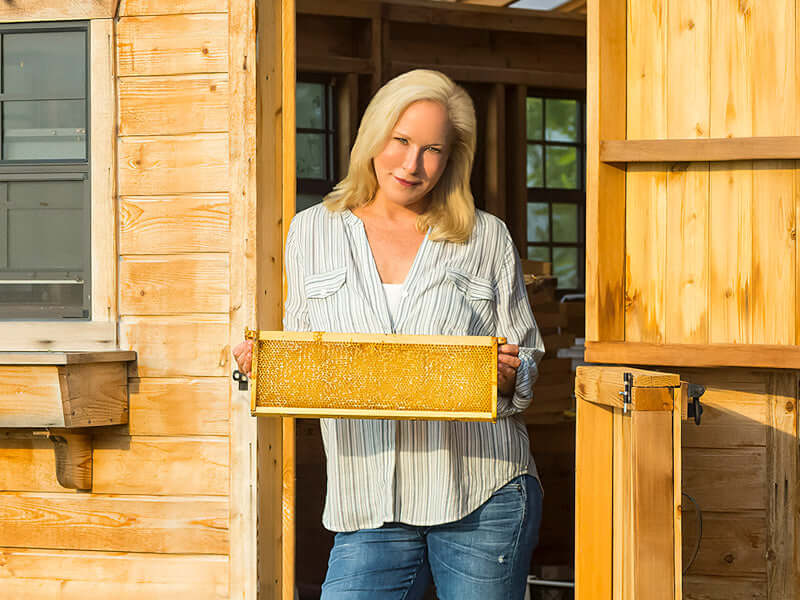
Honeycomb is the showpiece move. The whole comb is edible, including the wax, and guests can cut off a piece and lay it directly on top of a cracker and cheese. We've written a separate guide on building a honeycomb charcuterie board that goes deeper on this approach.

Personalized cheese board, made in the USA by wordswithboards.com.
What Else Goes on the Board
Cheese and honey are the anchors, but the rest of the board is what gives guests something to keep coming back to. The basics:
- Bread and crackers. A sliced toasted baguette, plain water crackers, and one textured option (seeded or rosemary). Three is plenty.
- Fresh fruit. Sliced pears, halved figs when in season, grapes, apple wedges. The juice and acid cut through the cheese and honey.
- Dried fruit. Apricots, dates, dried cranberries. They concentrate sweetness in a different direction than honey does.
- Nuts. Walnuts and Marcona almonds are the safest bets. Toast or warm them slightly for better aroma. Cashews work for sweeter pairings.
- Cured meats. Prosciutto, soppressata, bresaola, depending on the board's general direction. The salt of cured meat and the sweet of honey are reliable together.
For more on rounding out a pairing experience beyond cheese, our guide to top honey pairing ideas covers fruit, nuts, tea, and savory applications in more depth.

Wine and Drink Pairings
Wine choice depends on what is dominant on the board. A few reliable directions:
- Sparkling (Champagne, Prosecco, Cava). The acidity and effervescence cut through the fat in cheese and lift the honey's floral notes. This is the most flexible choice.
- Off-dry Riesling or Gewürztraminer. A small amount of residual sugar in the wine echoes the honey and softens the funk in blue cheese.
- Pinot Noir. For boards with cured meats and harder cheeses, the lighter tannin and red fruit work without overwhelming.
- Port or Sauternes. If the board leans toward dessert (ricotta, mascarpone, walnuts, dried fruit, dark honey), a dessert wine is the right finish.
Tea also works, especially for an afternoon spread. Our Raven Earl Grey, with its bergamot and lavender, is excellent against creamy cheeses and a drizzle of Spring Honey.

A Few Specific Pairings to Get You Started
If you want to skip the strategy and just put something good in front of guests:
- Stilton + Blueberry Honey + walnuts. The pairing the honey was made for. Bold, fruity, balanced.
- Warm Brie + Tupelo Honey + sliced pear. Bake the brie ten minutes, drizzle Tupelo on top, fan pear slices around the edge.
- Aged Cheddar + Sourwood Honey + Marcona almonds. The sharp-buttery-spiced combination is genuinely memorable.
- Fresh Goat Cheese + Spring Honey + thyme. Spread the chèvre on a cracker, drizzle, finish with a few thyme leaves.
- Ricotta + Orange Blossom Honey + fresh strawberries. Best on a slice of grilled sourdough.
- Manchego + Cranberry Honey + dried fig. Holiday board in a single bite.
If you fall in love with one or two of these and want to keep exploring, our Honey Tasting Tower includes five varietals side by side, which makes building boards easier because you already know what each one tastes like. The Honey Royale Gift Set, with Sourwood, Tupelo, and Spring Honey, is the move if you are pairing for a serious cheese person.
The point of a cheese and honey board is not perfection. It is the small accident of a stronger blue meeting a sweeter honey, or a bite of cheddar with sourwood that makes someone go quiet for a second. Start with the pairings above, then trust your own palate. The best board is the one your friends keep coming back to. Shopping for someone specific? We put together a guide to the gifts for berry lovers.


FAQs About Honey and Cheese Pairing
What honey goes best with cheese?
It depends on the cheese. Lighter, more delicate honeys like Wildflower, Orange Blossom, and Sweet Clover work with mild and creamy cheeses (brie, ricotta, fresh chèvre). Bolder honeys like Buckwheat, Sourwood, and Blueberry Blossom Honey hold up against aged cheddar, blue cheese, and other strong-flavored varieties. The general rule: match intensity to intensity.
Can you put honey on blue cheese?
Yes, and blue cheese is one of the cheeses that benefits most from honey. The salt and pungency of blue cheese needs sweetness with personality to balance against, not a neutral honey. Blueberry Blossom Honey and Buckwheat Honey are the strongest pairings, with Spring Honey as a lighter, more floral alternative.
What kind of cheese goes with minimally filtered honey?
Almost any cheese pairs well with minimally filtered honey, but some categories shine more than others. Soft and creamy cheeses (brie, ricotta), tangy cheeses (goat cheese, feta), aged hard cheeses (cheddar, gouda, Manchego), and blue cheeses are the most reliable matches. The key is matching the honey's intensity to the cheese's character.
How much honey should I put on a cheese board?
Less than you think. A small drizzle directly across each cheese is enough, or set out a small pinch pot of honey (about two tablespoons) with a dipper alongside the board so guests can serve themselves. For multiple varietals, use separate pots and dippers so the flavors stay distinct.
What is the best honey for brie cheese?
Wildflower Honey is the classic everyday pairing for brie because its light floral character does not get lost in the fat of a triple crème. For something more memorable, Tupelo Honey on warm baked brie is one of the more sophisticated honey-and-cheese combinations, with a buttery, almost jasmine-like character that picks up the cream rather than competing with it.
Should I serve honey at room temperature or warmed?
Room temperature is standard. Warmed honey is for specific applications like baked brie, where the warmth helps it spread and blend with melted cheese. For a typical cheese board, minimally filtered honey at room temperature pours and drizzles cleanly, and the flavor comes through more accurately.
What goes on a honey and cheese board besides cheese?
A complete board usually includes three to five cheeses, two or three breads or crackers, fresh fruit (pears, figs, grapes), dried fruit (apricots, dates), nuts (walnuts, Marcona almonds), and optionally cured meats (prosciutto, soppressata). Minimally filtered honeycomb in the center is a strong centerpiece because guests can cut off a piece and add it directly to a cracker.
Does the honey be minimally filtered?
minimally filtered honey is recommended because it carries the flavor of the specific flowers the bees visited, which is the whole point of pairing it with cheese. Heavily processed grocery store honey gets heat-treated and ultra-filtered, which strips out most of the floral character and leaves a generic sweetness behind. For a cheese board, every honey we recommend here is minimally filtered.