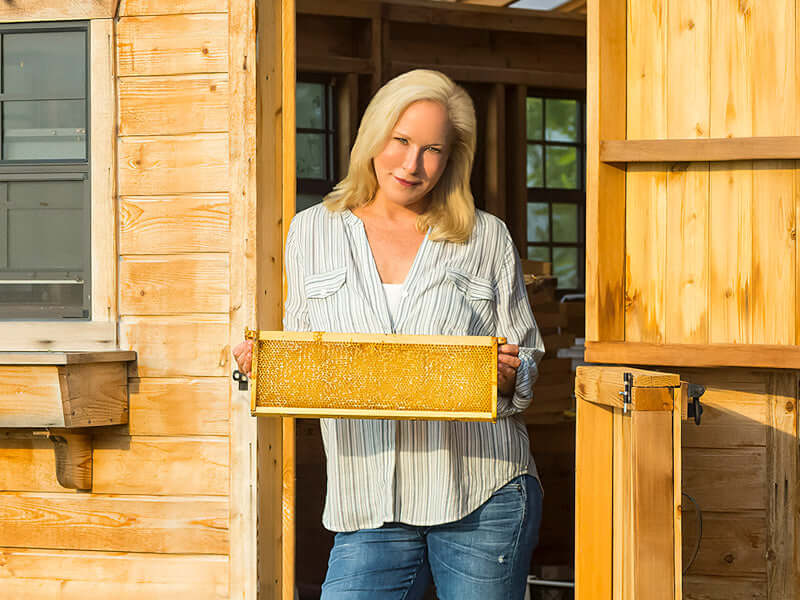




When you think of honey, you probably imagine a jar filled with thick, golden liquid — but have you ever stopped to wonder where it actually comes from? Before it reaches your spoon, honey lives inside a masterpiece of engineering called honeycomb, a waxy structure built entirely by bees to store their precious nectar. It's a fascinating world of hexagonal cells and tireless work, and today we're diving deep into exactly how this natural marvel is made.
With its mesmerizing hexagonal structure, honeycomb is not only a marvel of nature but plays a crucial role in the world of bees and honey. This captivating creation serves as a storehouse for honey, pollen, and other bee-produced products. Its symmetrical pattern and golden hue make it a stunning spectacle, fascinating both beekeepers and admirers of the natural world. Explore honeycomb with us as we answer questions like how honeycomb is made, what the benefits of the structure are, and more!

The Importance of Honeycomb
Honeycomb holds immense significance in the intricate lives of bees. Serving as the foundation of their hive, it plays a vital role in bee society. Its hexagonal cells provide bees with a structured space to raise their brood, store food, and safeguard their precious resources. Female worker bees are responsible for maintaining these brood cells, making beeswax, feeding the larvae, and storing honey — ensuring the colony's food reserves and nurturing the next generation of bees.
The efficiency of honeycomb allows bees to maximize storage capacity while conserving precious energy and resources. Honeycomb also acts as a natural insulation material, helping regulate the temperature within the hive.
What makes honeycomb so special? It's more than just a structure that houses honey and bees — it's a natural marvel that has fascinated scientists and beekeepers for centuries. Honey contains naturally occurring flavonoids and is a source of zinc, calcium, and magnesium. The beeswax in honeycomb is widely used as an ingredient in skincare products for its emollient properties — we use it in several of our own skincare products for exactly that reason.
Understanding honeycomb unveils the intricate balance and symbiotic relationship between bees and the natural world.
How Are Honeycomb Cells Made?
It begins with worker bees that collect nectar from flowers, which they carry back to the hive in their honey stomachs. Once inside the hive, the bees regurgitate the nectar and pass it among themselves, adding enzymes that transform it into honey. The bees then use wax secreted from their abdomens to build honeycomb cells, gradually enlarging the cell bottoms and constructing the cell walls, following specific behavioral rules to shape the honeycomb into hexagonal structures.

How Exactly Do Honey Bees Make Honeycomb?
It all starts with the beeswax they produce. Beeswax is a natural wax that comes from the glands of worker bees. They emit it in tiny flakes from their abdomen and chew it to make it soft and pliable. The bees then use their sharp mandibles to shape the beeswax, which turns soft when warm and hardens when cool. They bend and mold it into the hexagonal shape by constructing the cell walls that we are so familiar with. Once the hexagonal shape is in place, the worker bees begin to fill each cell with nectar, pollen, and propolis.

The Honeycomb Structure: Hexagonal Cells
The hexagonal shape of honeycomb cells has always fascinated naturalists and mathematicians alike. The hexagonal pattern is not only visually appealing but offers several advantages in terms of space, stability, and efficiency. It is the most efficient way to use beeswax, providing the maximum amount of space with the least amount of wax possible. As hexagons fit together seamlessly without leaving any gaps or wasted space, honeybees can store the maximum amount of honey in the minimum amount of space.
The structure of honeycomb exemplifies nature's ingenious design, balancing elegance, efficiency, and strength.
Honeycomb cells are also multifunctional. Each cell serves as a storage container for honey, pollen, and propolis, and also provides a nursery for young bees. The hexagonal shape allows for proper airflow, helping prevent heat buildup and keeping the hive cool. The precision and efficiency with which bees create honeycomb showcase the impressive instincts and cooperative efforts of these remarkable insects.

Inside the Comb Worker Bees Build
Within the honeycomb structure, a world of natural wonders unfolds. The primary content of honeycomb is comb honey, stored by the bees in the hexagonal cells and carefully capped with a thin layer of beeswax to protect it from moisture and contaminants.
In addition to honey, honeycomb may contain bee pollen stored in separate cells — a naturally occurring substance rich in proteins, vitamins, and minerals that exists in the hive as part of the bees' food stores. Learn more about eating honeycomb and what you'll find inside.
Bees also use honeycomb to store propolis, a resinous mixture, and royal jelly, a substance fed to developing larvae.

Benefits of Honeycomb
Honeycomb offers more than just great flavor. Raw honey contains naturally occurring enzymes, flavonoids, and trace minerals including zinc, calcium, and magnesium — all present because the honey has never been heated or heavily filtered. It's a wholesome natural sweetener in its purest form.
What's inside: In addition to honey, honeycomb contains naturally occurring trace amounts of bee pollen, propolis, and beeswax — components that exist in the hive exactly as the bees made them. It's a whole-food experience that bottled honey simply can't replicate.
Beeswax in skincare: Beeswax is a well-known ingredient in skincare, widely used in balms, scrubs, and moisturizers for its emollient properties. We use it ourselves in several of our skincare products for exactly that reason.
In the kitchen: Honeycomb works beautifully as a natural sweetener and garnish — on cheese boards, in desserts, over oatmeal, or paired with charcuterie. The waxy texture adds something no liquid honey can.

Can You Eat Honeycomb?
Yes, fresh honeycomb is edible! The wax cells contain honey and both are completely safe to consume. It can be enjoyed as is, spread on bread, or incorporated into recipes. It can crystallize and get a grainy, sugary texture. The beeswax portion is also edible — some people chew the honey and spit out the wax, others swallow it whole. Either way is perfectly fine.
Where Can I Buy Honeycomb?
We source our honeycomb from small-scale beekeepers in Pennsylvania and Minnesota who harvest only when there is genuine surplus, so the colony always comes first. You can find our seasonal honeycomb in the shop here, or visit us in person at our Owings Mills, Maryland location.
What Is Raw Honeycomb and Raw Honey?
Raw honeycomb is unprocessed, taken directly from the beehive, maintaining its natural state with honey, beeswax, pollen, and other hive components intact. It offers the full range of flavors and textures found in the hive — nothing added, nothing removed.

Incorporate Honeycomb Into Your Life
From the intricate process of creation by bees to its remarkable hexagonal structure, honeycomb showcases efficiency, strength, and beauty. Here are some ways you can enjoy it and store it for next time:
- Top this Sweet and Spicy Chili with a chunk
- Try it on top of this Dairy-Free Panna Cotta
- Top plain Greek yogurt with chopped honeycomb and Honey Nut Granola
- Try it on top of our blackberry pancakes or any of our hot oatmeal dishes
- Use it as a garnish on this fruit and spinach salad
- For a sweet treat, top these grilled peaches with a chunk
- Add honeycomb to a charcuterie or cheese board
- Cut a chunk and add it to your next hot toddy
Honeycomb is one of nature's most remarkable creations — centuries of evolution distilled into a perfectly engineered structure of wax and honey. But understanding the science behind those hexagonal cells is only half the fun. The real magic happens when you taste it for yourself. Our seasonal honeycomb comes from small-scale beekeepers in Pennsylvania and Minnesota who harvest with the colony's health first. Find it in the shop here — it's the sweetest way to appreciate the work of the honeybee.