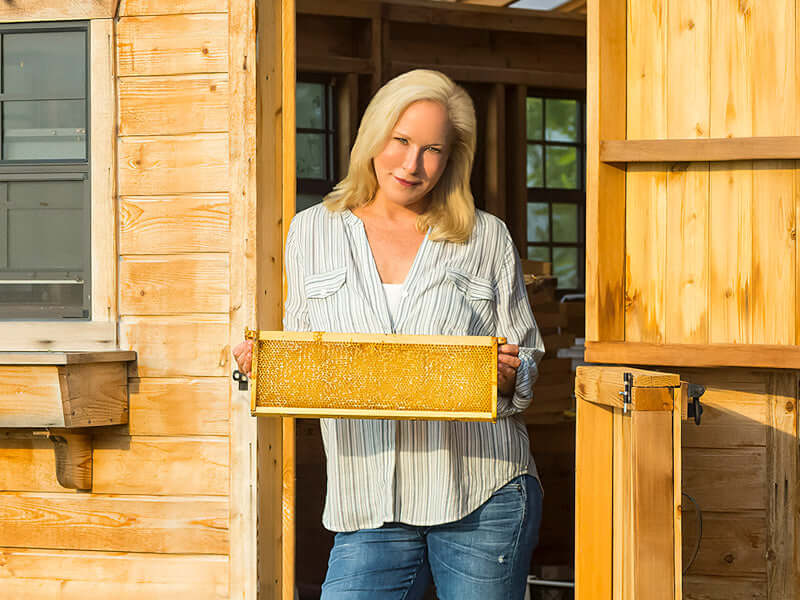


Baking with honey opens up a world of rich flavor, incredible moisture, and golden color that granulated sugar simply can’t match. This guide covers everything you need to bake with honey successfully: choosing the right varietal, adjusting your technique, troubleshooting common problems, and the recipes we reach for again and again here at the farm.

Why Bake with Honey? The Sweet Science Behind the Swap
When you bake with honey instead of granulated sugar, you’re not just making a simple swap. Honey is a natural humectant, meaning it attracts and retains moisture from the air, keeping your baked goods soft, tender, and fresh for days longer than sugar-based treats.
Honey also brings something sugar never can: character. Each varietal carries its own flavor, from the delicate floral notes of wildflower honey to the robust, molasses-like richness of buckwheat honey. And because honey tastes sweeter than sugar, you can use less of it to reach the same level of sweetness.

A few more reasons bakers love the swap: honey browns beautifully, giving cakes and breads a deep golden crust. It lends a tender, fine crumb to muffins and quick breads. It even keeps its liquid, pourable form at room temperature, so it blends smoothly into batters and doughs. And honey is naturally gluten free, which makes it an easy sweetener for special diets; learn more in our guide to honey and gluten-free baking.

Applying the Substitution in Baking
For the complete conversion ratios, including liquid adjustments, baking soda additions, and temperature changes, see our full honey for sugar substitution guide. Once you have the math, the technique guidance below will help you apply it successfully in baking.
Choosing the Best Honey for Baking
Not all honey behaves the same in the oven. Understanding different honey varieties will help you select the perfect match for your recipes, and learning how to taste honey can help you identify the flavor notes that will carry through the crumb.
Light and Mild Honey Varietals
Perfect for delicate baked goods where you want subtle sweetness without overpowering other flavors:
- Tupelo Honey: Delicate fruity notes, ideal for cakes and muffins
- Blueberry Honey: Light, buttery sweetness perfect for scones and pastries
- Sweet Clover Honey: Mild, warmly spiced flavor that complements most baking
- Blackberry Honey: Berry undertones that reinforce fruity flavors in muffins and cakes
Dark and Robust Honey Varietals
Best for recipes where you want the honey flavor to shine as the hero ingredient:
- Buckwheat Honey: Molasses-like depth, excellent for gingerbread and chocolate desserts
- Wildflower Honey: Bold, layered character, perfect for robust breads and coffee cakes
- Coffee Blossom Honey: Subtle coffee notes, ideal for chocolate and espresso-flavored treats

Pro Tips for Perfect Honey Baking Results
Measuring Honey Like a Pro
Lightly grease your measuring tools with oil or cooking spray before measuring honey. This simple trick ensures every drop slides out easily, giving you accurate measurements and easier cleanup. For small, precise portions, honey sticks hold about a teaspoon each, which takes the guesswork out of little additions.
Achieving the Right Texture
Avoid over-mixing your batter when using honey. The natural moisture content means your batter needs gentler handling to maintain the perfect texture. Mix just until ingredients are combined.
Choose room temperature ingredients whenever possible. Cold eggs and butter can make honey seize and clump, while room temperature ingredients let it incorporate evenly for consistent texture and flavor throughout the batter.
Storage and Freshness
Because honey holds onto moisture, honey-based baked goods stay soft and fresh longer than their sugar-based counterparts. Store your treats in airtight containers at room temperature for up to 5 days, or refrigerate for extended freshness.

Troubleshooting Common Honey Baking Challenges
My Baked Goods Are Too Dense
- Reduce honey quantity slightly (use ⅔ cup instead of ¾ cup per cup of sugar)
- Ensure you’re adding adequate baking soda to counteract honey’s natural acidity
- Check that your baking powder is fresh and active
Over-Browning: Yes, Honey Browns Faster Than Sugar
- If your bake is still darkening after the standard 25°F reduction, lower the oven temperature by a further 10-15°F
- Tent loosely with foil if the top is browning too quickly during baking
- Position racks in the center of your oven for even heat distribution
Sticky or Gummy Texture
- Reduce other liquids in your recipe by an additional 2-3 tablespoons
- Allow baked goods to cool completely before removing from pans
- Dust surfaces lightly with flour when working with sticky doughs

Must-Try Honey Baking Recipes
Honey Beer Bread: Perfect for beginners, this no-yeast quick bread showcases honey’s ability to create a tender, flavorful loaf with beautiful golden color.
Dairy-Free Oatmeal Chocolate Chip Cookies: These chewy, satisfying cookies demonstrate how honey creates superior texture and extended freshness.
Lemon Lavender Honey Cake: An elegant dessert that highlights honey’s compatibility with floral flavors, made with culinary lavender from our farm.
Earl Grey Cake with Honey: A bergamot-infused loaf that showcases how tea and honey interact in the crumb.
Oat Bran Honey Muffins: A moist, gluten-free oat bran muffin sweetened with honey and pureed prunes.
Honey Baked Apples: Whole apples stuffed with dried fruit and nuts, drizzled with honey, and baked until the kitchen smells like fall.
Gluten-Free Apple Pie: A white rice flour crust and a Spring Honey filling, with a drizzle of honey over the lattice in place of an egg wash.

Advanced Honey Baking Techniques
Creating Honey Glazes and Syrups
Enhance your finished baked goods with honey-based glazes. Combine equal parts honey and butter, warming gently until smooth. Brush over warm cakes and breads for added moisture and shine.
For honey syrups, simmer honey with water and a touch of lemon juice until slightly thickened. Drizzle over pound cakes or use to soak cake layers for extra flavor and moisture.
Incorporating Honey into Frostings
Replace powdered sugar partially with honey in buttercream frostings. Start with 2-3 tablespoons honey per cup of powdered sugar, adjusting consistency with additional cream or more sugar as needed.

The Science Behind Honey’s Baking Magic
Understanding why honey works so well in baking helps you become a more intuitive baker. Honey is composed primarily of fructose and glucose, both reducing sugars that brown more readily than table sugar. That is why honey-sweetened bakes develop those beautiful golden-brown crusts and deep toasted flavors, and also why you lower the oven temperature when you make the swap.
The hygroscopic nature of honey means your baked goods will stay moist longer, making them perfect for baking ahead or gifting. That same moisture retention is why honey-based treats often taste even better on the second day.

From Our Hive to Your Oven
Baking with honey isn’t just about substituting one sweetener for another. It’s about baking with an ingredient that has a story: a season, a bloom, a flavor all its own. Whether you’re crafting everyday treats or special occasion desserts, honey brings depth, moisture, and golden color that transforms ordinary recipes into something worth remembering.
Start with simple conversions using familiar recipes, then experiment with different honey varietals to discover your favorites. With these techniques in your back pocket, your bakes will taste better, look better, and stay fresh longer.
And remember to thank the bees who make this incredible ingredient possible. Without their tireless work, none of these sweet creations would exist!
Related Resources and Honey Baking Recipes
Honey for Baking
For the best baking results, start with pure, minimally filtered honey. Browse our collection of honey varietals and find the flavor that matches what you love to bake.
Featured Honey Baking Recipes
- Honey Apple Cake: A family recipe with layers of sweet apples, perfect for Rosh Hashanah
- Honey Coffee Cake: Perfect for brunch or afternoon tea, made with Coffee Blossom Honey
- Paleo Pumpkin Muffins: A grain-free option sweetened with honey and topped with pecans
- Gluten-Free Pumpkin Roll: An impressive spiral dessert that showcases honey’s natural sweetening power
More Honey Baking Inspiration
Ready to keep going? Our honey desserts roundup collects a dozen honey-sweetened treats, our pumpkin recipes with honey cover fall baking from pie to roll, and our citrus and honey recipes brighten the winter months. To match a varietal to whatever you bake next, see our honey pairing guide, or explore the complete collection of honey recipes for more inspiration, from breakfast treats to elegant desserts.
Mini Apple Honey Bundt Cakes
Kara Brown
12
30 minutes
245
AMERICAN
DESSERT
These adorable individual honey cakes showcase the delicious flavor of your Bee Inspired Honey in perfect single-serving portions. They're ideal for gatherings or gifting.

Ingredients
Apple Honey Bundt Cake
- 2½ c all-purpose flour
- 1¼ tsp salt
- 1 tsp baking powder
- ¼ c baking soda
- ½ c water
- 4 large eggs
- ⅓ c unsweetened pureed apples
- ¼ c organic canola oil
- ¼ c fresh-squeezed orange juice
- 1½ tsp Rodelle Pure Vanilla Extract
- 1¾ c Bee Inspired Honey
Honey Glaze
- 1 c confectioners' sugar
- 4½ tsp water
- 1 tsp Pure Vanilla Extract
- Pinch salt
Directions
Adjust oven rack to middle position and heat oven to 350 degrees. Heavily spray a mini Bundt pan with baking spray and coat with flour.
In a large bowl, whisk together flour, salt, baking powder, and baking soda.
In a separate bowl, whisk together water, eggs, pureed apples, organic canola oil, fresh-squeezed orange juice, and vanilla until combined. Whisk Bee Inspired Honey into egg mixture until fully incorporated.
Whisk honey mixture into flour mixture until combined. Fill each mini Bundt cavity about ⅔ full with batter. Do not fill to the edge, these will rise to fill the cavity at 2/3 full.
Bake until a toothpick inserted into the center comes out clean, about 15-20 minutes. Start checking at 15 minutes as mini cakes bake faster than a large Bundt.
Let cakes cool in the pan on a wire rack for 10 minutes. Using a small offset spatula, gently loosen the cakes from the sides of the pan and invert onto the rack. Let cool completely, about 30-45 minutes.
For the glaze: Whisk together confectioners' sugar, water, vanilla, and salt until smooth. If too thick, add a few more drops of water
- if too thin, add a bit more confectioners' sugar.
Place cooled mini cakes on a wire rack over a baking sheet (to catch drips). Spoon glaze over each cake, allowing it to drip down the sides. Let sit until glaze is set, about 15-20 minutes.
Optional: Garnish each mini cake with a slice of dried apple or lemon balm sprig before serving.
FAQs About Baking with Honey
Can I use crystallized honey for baking?
Yes. Set the sealed jar in a bowl of warm water and stir gently until the honey returns to liquid, then measure and use as normal. Avoid the microwave, which heats unevenly.
Does honey burn faster than sugar?
Honey browns faster than sugar because its fructose caramelizes at a lower temperature. Lower your oven temperature by about 25°F, check your bake early, and tent the top loosely with foil if it darkens too quickly.
Can I replace all the sugar with honey in any recipe?
Most cakes, muffins, quick breads, and cookies take the swap well. Recipes that depend on sugar for structure or crunch, like meringues and some crisp cookies, need modified techniques or a partial substitution.
Does the type of honey really matter in baking?
Yes. Mild varietals like Sweet Clover and Tupelo keep the sweetness in the background, while bold varietals like Buckwheat and Coffee Blossom flavor the whole crumb. Match the intensity of the honey to the intensity of the bake.
How long do honey-baked goods stay fresh?
Because honey is a humectant, honey-sweetened bakes often stay moist two to three days longer than their sugar-based counterparts. Store them in an airtight container at room temperature for up to five days.