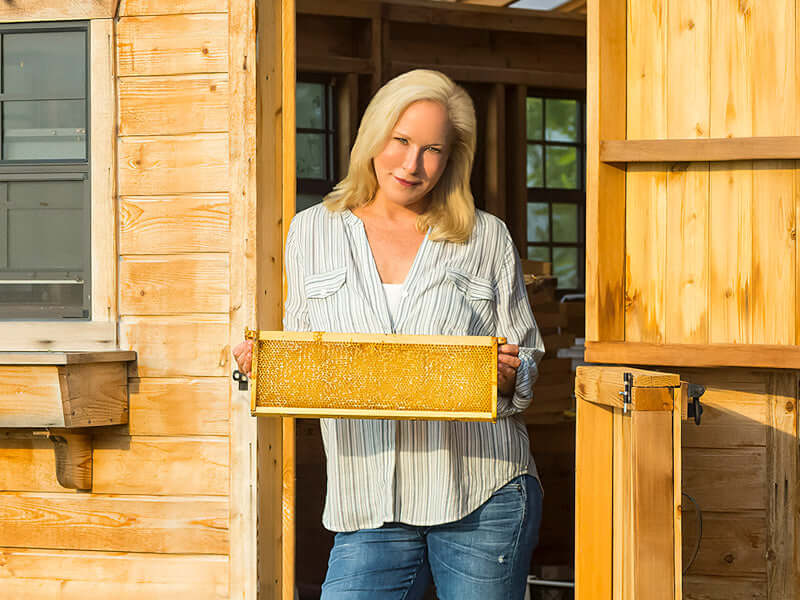


Wine reflects the soil, the slope, and the weather that shaped the vineyard. Honey works the same way. Every jar carries the story of the flowers that surrounded a hive: the meadows, the fruit trees, the wild brambles, the single crop blooming for one short window. It is the result of a hive’s ongoing pollination work, as bees travel within a three-mile radius of home, gathering nectar flower by flower and turning it into something no two batches ever match exactly.
That is the whole premise behind learning how to taste honey: you are not just tasting sweetness. You are tasting a place. This guide walks you through the method like a sommelier would walk you through a wine flight, then takes you varietal by varietal from the palest, most delicate jars to the darkest and boldest. By the end, you will taste honey differently, and you will know more about it than almost anyone at the table.

How to Taste Honey Like a Sommelier
Tasting honey is a sensory practice, and like wine tasting, it rewards slowing down. You do not need special equipment. A small spoon, a neutral palate cleanser like plain crackers or water, and a few minutes of attention are all it takes. The goal is to notice what is actually there: the color in the light, the aroma rising off the spoon, the way the flavor unfolds and then lingers (or doesn’t).
Here is the approach we use, and the same one our Honey Tasting Tower was built around: a flight of five raw varietals arranged light to dark, with a printed guide tucked inside the tube.
The Five Steps
- Look. Hold the jar or spoon up to the light and notice the color and clarity. Honey ranges from nearly white to pale gold, warm amber, deep copper, and finally a brown so dark it reads almost black. Color is your first clue: lighter usually means milder, darker usually means bolder.
- Smell. Breathe in over the spoon before you taste. Some varietals whisper, all soft meadow and distant blossom. Others announce themselves with grassy, fruity, or molasses-like intensity.
- Taste. Take a small amount on a clean spoon and let it coat your tongue rather than swallowing right away. Notice the first impression, then how it shifts.
- Feel the texture. Is it thin and runny, thick and slow, buttery, or crystallized into something spreadable? Mouthfeel is part of the experience and varies dramatically from one varietal to the next.
- Notice the finish. Some honey lands sweet and disappears. Others leave specific notes (caramel, hay, citrus, smoke) lingering for several seconds. The finish is often where the most interesting varietals reveal themselves.
A Few Tasting Tips
- Always taste light to dark. A delicate orange blossom tasted after a buckwheat will simply vanish.
- Cleanse your palate with a plain cracker or a sip of water between jars.
- Take notes. Writing down what you taste sharpens your palate faster than anything else.
- Compare side by side. Tasting two contrasting varietals back to back is the quickest way to feel how much the flower source shapes the flavor.

Monofloral vs. Artisanal: What You’re Actually Tasting
Monofloral (or varietal) honey comes primarily from a single nectar source. Beekeepers place their hives near one dominant bloom, and because bees travel three miles or more for nectar, achieving a true monofloral honey takes vast fields of a single flower, careful timing, and a little luck. The reward is a distinctive, recognizable profile: orange blossom tastes like orange blossom, buckwheat like buckwheat. If you want to go deeper, our guide to what monofloral honey is breaks down how it’s made and why it costs more.
Artisanal honey celebrates abundance instead, blending nectar from countless plants around the hive. These honeys capture the essence of a place and a season, shifting from jar to jar like a vintage wine, and they often represent the grand cru of a beekeeper’s offerings. Our farm’s seasonal honeys live here: see how spring and fall honey differ from the very same hives.
Everything below is raw, minimally filtered, and Star K Kosher Certified. Lighter, more delicate jars come first; the bold, dark, and complex ones close out the flight. Use it as a roadmap for your own tasting.
The Varietal Guide: Light to Dark
Start Here: Gentle & Beginner-Friendly
Alfalfa Blossom Honey (Monofloral) From rolling agricultural fields comes this versatile, nearly-white treasure, born from purple alfalfa blossoms. Alfalfa is known as the “queen of forages,” and the honey is as dependable as the crop, the perfect place to begin learning your palate.
- Color: Pale gold to nearly white, soft and clean
- Aroma: Fresh grass and fertile earth after rain
- Taste: Light, creamy sweetness with whispers of grass and vanilla
- Tasting note: Start here, and notice the gentle sweetness and clean finish

Black Locust Honey (Monofloral) Each spring, black locust trees burst into fragrant, wisteria-like blooms for a brief flowering window. The honey has a high fructose content that keeps it from crystallizing, holding its smooth, liquid-silk consistency for a long time.
- Color: Golden amber with brilliant clarity
- Aroma: Fresh grass with earthy undertones
- Taste: Delicately floral with distinctive vanilla notes
- Tasting note: Notice the silky texture and how the vanilla develops on your palate

Holly Honey (Monofloral) The golden child of any apiary, this comes from the tiny white blossoms of native Ilex glabra. Many beekeepers consider it their crown jewel, and it’s the kind of comforting honey you reach for on granola, in tea, or straight off the spoon.
- Color: Warm amber, like liquid caramel
- Aroma: Buttery richness with gentle sweetness
- Taste: Smooth and warming, with notes of butterscotch and brown sugar
- Tasting note: Compare this buttery profile against the lighter, grassier jars before it

Ukrainian Sunflower Honey (Monofloral) Ukraine grows sunflowers the way other regions grow wheat, fields that stretch to the horizon. Because the bloom is so vast, the bees rarely forage anywhere else, producing a true monofloral honey that’s consistent jar to jar. Want the full story? Read what sunflower honey is.
- Color: Bright, sunny golden yellow
- Aroma: Sunny and mild, lightly floral
- Taste: Clean, smooth, and mildly sweet with subtle nutty, earthy undertones
- Tasting note: It crystallizes fast, which is the point; notice the creamy texture when it sets

Florida Orange Blossom Honey (Monofloral) From sun-drenched citrus groves comes this medium-bodied favorite, capturing orange blossoms at their peak. It’s bright, fragrant, and one of the most recognizable monoflorals on the shelf. Curious about its story and uses? See our full orange blossom honey guide.
- Color: Light to medium gold, like a Florida sunrise
- Aroma: Sweet, mild floral with citrus whispers
- Taste: Warm and round, with jasmine and orange blossom notes together
- Tasting note: The soft citrus lift on the finish makes it a great mid-flight comparison

The Berry Symphony
Blackberry Blossom Honey (Monofloral) Harvested during the brief window when wild blackberry brambles burst into delicate white flowers, this honey captures the untamed beauty of bramble country, a taste of summer’s promise before the berries themselves appear.
- Color: Deep amber with ruby highlights
- Aroma: Fresh berry essence with floral undertones
- Taste: Smooth and rich, with berry, floral, and subtle wax notes

Blueberry Blossom Honey (Monofloral) New Jersey’s blueberry fields yield this honey with its luxurious, buttery texture. The bees work the delicate pink and white bell-shaped blossoms that herald the summer berry harvest, and the flavor comes from the blossoms, not the fruit.
- Color: Reddish amber, like autumn maple leaves
- Aroma: Mild fruit with subtle complexity
- Taste: Very sweet and buttery, bright with notes of jasmine and sour cherries

Cranberry Blossom Honey (Monofloral) From vibrant cranberry bogs comes this limited edition jar, harvested during the brief bloom when tiny pink flowers carpet the wetlands. It captures autumn’s spirit, balancing sweetness against the cranberry’s characteristic tang.
- Color: Reddish amber with warm copper tones
- Aroma: Warming spices with fruit undertones
- Taste: Sweet and rich with spicy notes and a subtle cranberry tang

Raspberry Blossom Honey (Monofloral) Hand-harvested from lush raspberry fields, this limited edition honey captures summer in liquid form. The delicate white flowers of raspberry canes yield a honey that balances sweet and tart.
- Color: Amber to medium amber, like liquid sunshine
- Aroma: Fresh fruit berries with floral complexity
- Taste: Sweet and sour harmony with a sophisticated savory finish

Mixed Berry Honey (Monofloral) A symphony of American berry farms, capturing strawberry, blueberry, raspberry, and blackberry blossoms in one harmonious jar. Each taste evokes summer preserves and berry-picking afternoons.
- Color: Rich brown with mahogany depths
- Aroma: Vibrant fruit berries in full bloom
- Taste: Sweet and jammy with layered berry undertones

The Royale Tier: Rare & Refined
These are our rarest honeys, tied to short harvest windows and specific places. They reward slow, attentive tasting more than any other jars in the flight.
Lavender Honey from Spain (Monofloral) The newest addition to our Honey Royale tier and the only imported honey we carry, produced from wild Spanish lavender that blankets the hillsides of central Spain and the Spanish-Portuguese border each May. If you want to understand the difference between this and infused versions, read lavender honey vs. lavender-infused honey.
- Color: Light gold
- Aroma: Gentle, floral lavender character
- Taste: Buttery and layered, less sweet than most honeys, with a bright, almost citrus-like finish
- Tasting note: The lavender reveals itself slowly; give it a moment before deciding what you taste

Fireweed Honey (Monofloral) Fireweed is one of the first plants to return after a wildfire, spreading magenta across Oregon’s burned and cleared mountainsides from June through August. Beekeepers chase the bloom season to season, which makes this rare even among rare honeys. Often called the “champagne of honeys.” The full story is in what fireweed honey is.
- Color: Pale gold, sometimes with a faint greenish tint when fresh
- Aroma: Light and delicate
- Taste: Light and buttery with restrained sweetness, a faint peppery finish, and quiet hints of vanilla and chamomile
- Tasting note: This is the jar that rewards patience most; the subtle notes only surface if you slow down

Tupelo Honey (Monofloral) The crown jewel of our Royale collection, from the wetlands of Northwest Florida’s Apalachicola River Basin. Harvested during the brief two-to-three week bloom of the white Ogeechee tupelo tree, it has a high fructose-to-glucose ratio that keeps it from crystallizing, holding its smooth texture for a long time.
- Color: Crystal-clear amber with golden brilliance
- Aroma: Delicate floral with subtle fruity undertones
- Taste: Buttery, velvety texture with fruity notes and a candy-like sweetness
- Tasting note: Focus on the mouthfeel; that buttery texture sets Tupelo apart from everything else

Spring Honey (Artisanal) The pride of our Eastern Shore farm, capturing spring’s awakening in liquid form. Harvested annually by our team, it blends nectar from black locust, lavender, early wildflowers, and fruit trees. Vibrant with native pollen, this Bee Inspired® exclusive is terroir at its finest, and a Honey Royale.
- Color: Bright, clear green-amber like spring’s first light
- Aroma: Floral musk with vibrant pollen, rich and earthy
- Taste: Strongly floral and perfectly sweet, with a light astringent finish

Autumn Honey (Artisanal) Spring honey’s moody counterpart, made by the same hives on the same Eastern Shore farm, but from the scrappy survivors of late season: goldenrod, aster, sunflower, buckwheat, and other fall blooms. A Honey Royale. See how it compares in our spring vs. fall honey guide.
- Color: Dark, almost mahogany
- Aroma: Earthy and autumnal
- Taste: Earthy, fruity, and complex with notes of caramel, thick in texture
- Tasting note: Kara describes it as tasting the way fall smells, wet leaves and late-blooming flowers

Complex & Distinctive
Sourwood Honey (Monofloral) From the Appalachian highlands comes this premium Royale variety, often declared the finest honey by serious tasters. Sourwood trees bloom in mid-summer, their drooping clusters of white flowers yielding a honey of remarkable smoothness.
- Color: Rich red-brown, like polished mahogany
- Aroma: Sweet confection with warm undertones
- Taste: Exquisitely sweet with distinctive caramel-like, butterscotch tones
- Tasting note: Let it coat your palate to catch the long, clean finish

Coffee Blossom Honey (Monofloral) From Guatemala’s highland coffee plantations, harvested when coffee trees burst into fragrant white blossoms. It bridges two worlds, satisfying honey lovers and coffee drinkers alike, though it doesn’t taste like coffee so much as echo it.
- Color: Rich brown, like freshly ground coffee beans
- Aroma: Intriguing depth with aromatic warmth
- Taste: A sophisticated blend of waxy, floral, and caramel-like notes

Sweet Clover Honey (Monofloral) From the vast fields of the Dakotas, created from yellow sweet clover’s abundant nectar. It looks light but reads bold, and it crystallizes quickly, a sign of its purity. A little goes a long way.
- Color: Pale gold to light amber, variable like prairie sunsets
- Aroma: Bold and intensely floral
- Taste: Very sweet and waxy, layered with vanilla, caramel, and a touch of molasses

Linden/Basswood Honey (Monofloral) A rare varietal that took years to restock, from the nectar-rich basswood trees (also known as linden). When these trees bloom, they perfume entire neighborhoods, and the honey defies expectations.
- Color: Golden amber with herbal transparency, sometimes pale and almost greenish
- Aroma: Distinctly herbal and complex
- Taste: Sweet hay and herbal intensity, with notes of mint and a quiet warmth

The Dark Masters
Buckwheat Honey (Monofloral) The boldest, darkest honey we carry. Buckwheat’s small white flowers yield an intensely dark honey with personality to match. In recent years it has become harder to source, so if you find it in your flight, consider yourself lucky.
- Color: Very dark amber, almost black
- Aroma: Sharp, earthy intensity
- Taste: Like molasses, with malt, dark chocolate, and a slightly astringent, complex finish
- Tasting note: This is your last and boldest jar; taste it after everything else or it will overwhelm the rest

The Artisanal Wildflower
Wildflower Honey (Artisanal) Sourced from dedicated beekeepers across Maryland and Pennsylvania, each jar reflecting its season and region. Like a vintage wine, it varies with nature’s rhythm: lightest and most delicate in spring, growing darker and bolder as the year unfolds.
- Color: Medium to deep golden brown, shifting with the seasons
- Aroma: Medium to strong floral bouquet, ever-changing
- Taste: Mild and sweet with a smooth finish, complex in its simplicity, with notes of anise and dark cherry

Bring the Flight Home
Each honey here represents countless hours of work by thousands of bees, the skill of dedicated beekeepers, and the terroir of one specific place. When you taste with intention, you are not just tasting sweetness; you are tasting the morning dew on meadow flowers, the afternoon sun on fruit trees, the whole ecosystem behind the jar.
The easiest way to start is with a curated flight. Our Honey Tasting Tower is one of our most popular honey gifts: five raw varietals arranged light to dark, each pure and Star K Certified Kosher, with a printed tasting guide tucked inside. Prefer to taste the seasons? The Seasonal Honey Tasting Trio walks you through spring, summer, and fall in three small jars. Or build your own flight straight from our Eastern Shore Honey collection.
Once you know how to taste honey, you start reaching for the right jar on purpose: the delicate one for a cheese board, the bold one for a marinade. Our guides to the best honey for tea and what to pair with honey pick up exactly where this one leaves off.

FAQs About Tasting Honey
How do you taste honey properly?
Taste honey the way you would taste wine: in order, from lightest to darkest. Look at the color, smell the aroma off a clean spoon, then let a small amount coat your tongue. Notice the texture and the finish, and cleanse your palate with a plain cracker or water between varietals. Tasting light to dark keeps a bold honey from overwhelming the delicate ones.
What is the difference between monofloral and artisanal honey?
Monofloral (or varietal) honey comes primarily from a single nectar source, like orange blossom or buckwheat, which gives it a distinctive, recognizable flavor. Artisanal honey blends nectar from many plants around the hive, capturing the character of a place and season and shifting from batch to batch.
Why does lighter honey taste different from darker honey?
As a general rule, lighter honey tends to be milder and sweeter, while darker honey carries bolder, more complex notes like caramel, malt, and earth. It is not a perfect rule (Tupelo is light but rich), but color is a reliable starting point when you taste your way through a flight.
What order should I taste honey varietals in?
Always go light to dark. Start with pale, delicate jars like Alfalfa, Sunflower, or Orange Blossom, move through the medium ambers, and finish with the darkest and boldest, like Buckwheat. A delicate honey tasted after a strong one will simply disappear on your palate.
Does crystallized honey affect the tasting experience?
Crystallization is natural in raw, minimally filtered honey and is a sign it has not been heat-treated. It changes the texture, often making honey spreadable and creamy, which is part of the experience with varietals like Sunflower and Sweet Clover. To return it to liquid, set the jar in a warm water bath rather than the microwave.
What is the best way to start learning how to taste honey?
Begin with a curated flight arranged light to dark so the progression does the work for you. The Honey Tasting Tower includes five raw varietals and a printed tasting guide, and the Seasonal Honey Tasting Trio walks you through spring, summer, and fall. Tasting two contrasting honeys side by side is the fastest way to develop your palate. Visit our Honey Glossary for more information.
Explore the delicate process of honey harvesting